


Why China is Hobbling its Tech Sector

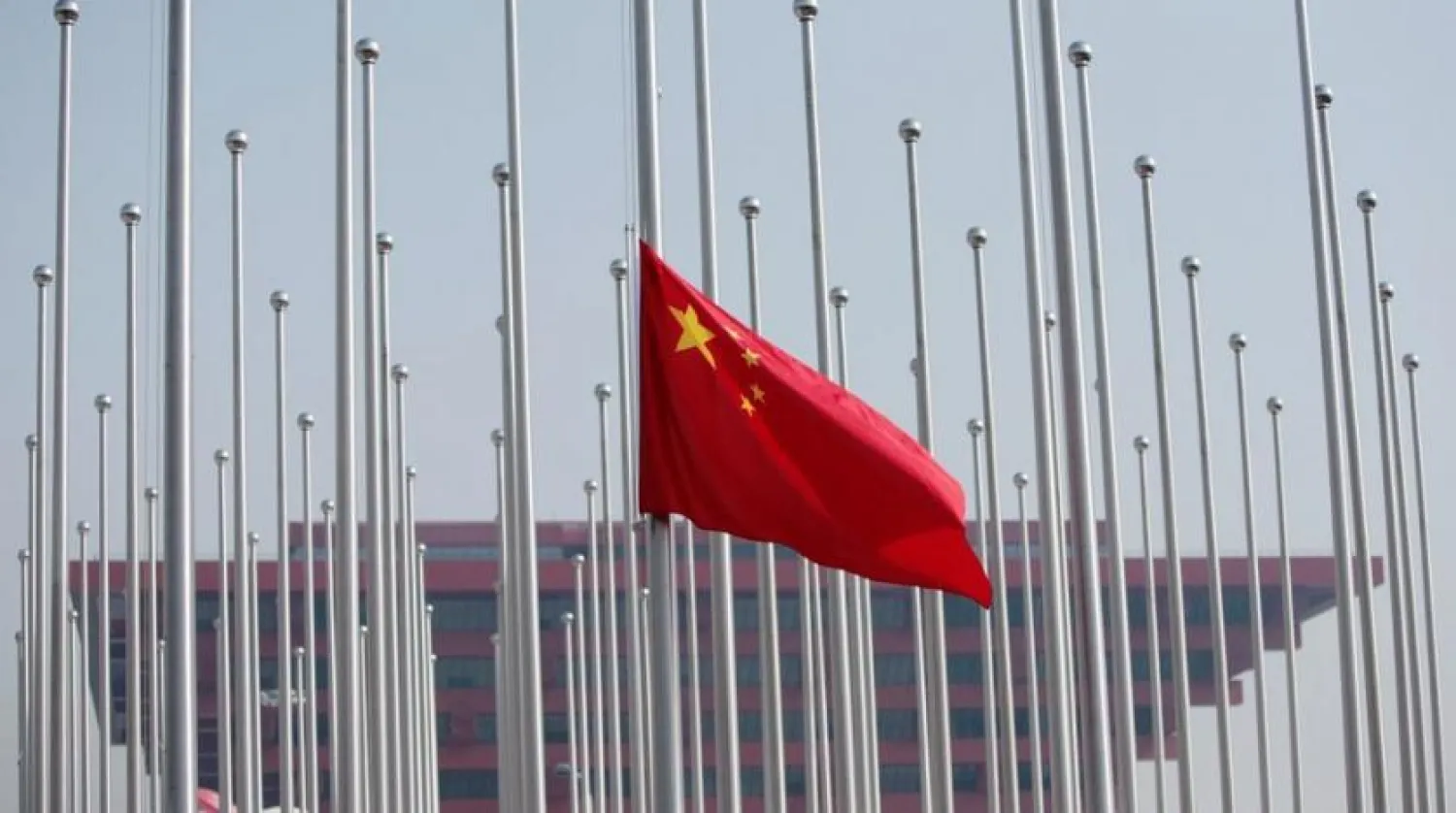
The Chinese flag is raised in front of the China Pavilion during a flag raising ceremony at the Shanghai World Expo site in Shanghai April 30, 2010. (Reuters)
TT

Why China is Hobbling its Tech Sector

The Chinese flag is raised in front of the China Pavilion during a flag raising ceremony at the Shanghai World Expo site in Shanghai April 30, 2010. (Reuters)

Scuttled listings and share prices hammered by official threats: Beijing has launched a withering and very public assault on some of China's biggest tech names.

The travails of ride-hailing giant Didi Chuxing this week carried a cautionary tale for digital big hitters: what goes up, can come down... and fast.

Days after a New York IPO that raised $4.4 billion, Didi's app was banned from stores in its vast Chinese market over data collection issues, prompting shares to tank and lawsuits from furious investors, according to Agence France-Presse.

Similar cybersecurity investigations were announced on platforms of two more US-listed Chinese firms a day later.

Motivated by monopoly and data fears or national pride and the control reflexes of the all-powerful Chinese Communist Party, Beijing is wounding its own firms.

Here are a few reasons why.

- Party control? -
At face value, the aim is to tidy up a once-freewheeling space where companies holding big amounts of sensitive user data blossomed in an enormous domestic market with little regulation.

More recently, Beijing has beefed up its network security regime while expressing concern over excessive data collection, ostensibly to protect users from abuse -- mirroring US worries over popular Chinese apps.

But analysts say deeper forces are also at play.

"There's nothing the party likes less than things getting out from under their control," said Kendra Schaefer of consultancy Trivium China, referring to the ruling Communist Party.

The aim appears to be establishing a control mechanism, and one potential outcome is a cybersecurity review that could allow authorities to put the brakes on IPOs.

While Beijing has encouraged firms to go global, a rush of tech firms listing abroad likely caught regulators' eye.

"These IPOs are happening without sufficient regulatory clearance," Schaefer told AFP.

"At least in the view of Chinese regulators."

- Big data, big problems? -
As China's tech giants gain troves of personal data on every aspect of life -- from transport habits to payments -- there is growing unease in President Xi Jinping's government over who controls it.

The concern partly stems from whether key data could leak beyond the country's borders.

In an unusual move, China's internet watchdog cited national security for its recent probe on Didi, eventually deeming its collection of personal data a violation of regulations.

The company's shares tanked 24 percent Tuesday, after an IPO initially met with fanfare.

Now US shareholders are suing Didi for failing to disclose ongoing talks with Chinese regulators.

The screws have been tightening across China's tech architecture, with over 100 apps in May ordered to rectify problems with data collection, including prominent names like ByteDance's Douyin.

Last year, Alibaba's financial arm Ant Group had its $34 billion IPO sunk, preceding an anti-monopoly probe into the tech behemoth.

"Before this, we saw government intervention in the Ant Group listing... it's very difficult to say why the timing is as such, but they are all data-related," said Hong Hao of financial services firm Bocom International.

- Monopolies and risk? -
Authorities have since expanded their antitrust crackdown beyond Alibaba, with top policymakers vowing to curb monopolies and "prevent the disorderly expansion of capital".

Companies including tech giant Tencent have been penalised over business deals that allegedly violated anti-monopoly regulations, while Alibaba in April received a record $2.78 billion fine.

The e-commerce firm had come under fire for forcing the practice of "choosing one of two" -- compelling merchants to work only with one platform and not its rivals.

While such infractions had long been a feature of the industry, companies have since pledged to abide by anti-monopoly guidelines, including not to behave unfairly.

- What next? -
The damage is more than cosmetic.

"Chinese internet companies will officially bid farewell to their stage of barbaric growth," said former entrepreneur and Zhejiang University expert Fang Xingdong.

In a commentary he said establishing a "sense of compliance" will become an important strategy for such firms going forward.

For now, Beijing has pledged to step up supervision of Chinese firms listed abroad and strengthen management of cross-border data flows.

It did not provide details but in an early indication of action to come, Bloomberg News reported that regulators were planning to revise foreign listing rules to close a loophole used by tech giants to attract foreign capital.

The changes would allow authorities to block a Chinese company listing overseas, even if the unit selling shares is incorporated abroad.

- Who else could be hit? -
Chinese companies could play safe by listing closer to home in the near term, given that the regulatory space is "extremely volatile and uncertain", said Schaefer of Trivium.

But this trend may not persist in the future, she said.

This week, US-listed electric vehicle company XPeng started trading in Hong Kong.

Companies including bike-sharing platform Hello Inc and audio service Ximalaya appear to have put US listing plans on hold, Bloomberg reported -- but others like convenience store Bianlifeng are pushing ahead.

Hong of Bocom International believes a Hong Kong listing could hedge against regulatory pressures from Beijing and Washington.

"Last year was a big year for many of these US-listed Chinese companies coming back to Hong Kong, and this year I think the process is actually accelerating," he said.




WhatsApp Will Allow Users to Go by Usernames Instead of Phone Numbers, Closing a Privacy Blind Spot

A WhatsApp icon is displayed on an iPhone, Nov. 15, 2018, in Gelsenkirchen, Germany. (AP)
TT

WhatsApp Will Allow Users to Go by Usernames Instead of Phone Numbers, Closing a Privacy Blind Spot

A WhatsApp icon is displayed on an iPhone, Nov. 15, 2018, in Gelsenkirchen, Germany. (AP)

WhatsApp users will soon get the option of going by usernames instead of phone numbers, the company said Monday, announcing plans to address a privacy blind spot.

The app said it has started allowing users to reserve unique usernames, which can be used to contact WhatsApp users when the feature is launched later this year.

WhatsApp, which says it has more than 3 billion users globally, has until now allowed users to be contacted by anyone who has their phone number.

The app, owned by Meta Platforms, said in a blog post that over the “coming months” users will get the option to be found and contacted only by their username, and not their number. It wasn't more specific about the timeline.

“We have designed this as a core privacy feature,” Alice Newton-Rex, WhatsApp's vice president of product, told reporters.

There won't be a directory of usernames on the app, and the app won't suggest names as you type.

“People will need to know your exact username to contact you for the first time,” she said.

WhatsApp's current privacy settings are limited to blocking individual users and silencing unknown callers. The app also allows users to add a profile name, but that's only displayed in chat groups for other people who don't have the user's contact info saved.

While Americans still prefer text messaging to WhatsApp, the app is widely used in Europe, Asia and much of the rest of the world.

Catchy online handles are highly coveted and users will likely scramble to claim a desirable one.

“I think a lot of people will go and get usernames and that’s why we decided to open reservations early,” Newton-Rex said.

Companies, organizations and creators with existing accounts on Meta's social media platforms, Instagram and Facebook, will get the chance to claim their usernames on WhatsApp.

Usernames need to be between three and 35 characters. To prevent impersonation, WhatsApp will hold back usernames for high-profile people or groups such as celebrities, public figures and government entities.


BT, Verizon Join Forces to Create $4 Billion Int’l Joint Venture

The Verizon logo is seen on the 375 Pearl Street building in Manhattan, New York City, US, November 22, 2021. REUTERS/Andrew Kelly
TT

BT, Verizon Join Forces to Create $4 Billion Int’l Joint Venture

The Verizon logo is seen on the 375 Pearl Street building in Manhattan, New York City, US, November 22, 2021. REUTERS/Andrew Kelly

BT and Verizon on Monday announced a deal to combine their international enterprise operations into a 50:50 joint venture, focusing on serving multinational clients and bringing together $4 billion in combined annual revenue.

Verizon has agreed to pay BT an equalization payment of $625 million, and both companies ⁠will hold equal ⁠voting rights in the new venture, which will serve more than 3,000 customers in over 180 countries, Reuters reported.

The deal marks a milestone for BT chief executive ⁠Allison Kirkby, who has been steadily refocusing the 180-year-old British telecoms group on its home UK market while shedding international assets.

Verizon CEO Dan Schulman, who has been pushing his own turnaround at the US wireless carrier, said the venture was "the clear answer" for international customers ⁠who ⁠need secure, flexible connectivity that works across borders and cloud environments.

BT and Verizon named Martijn Blanken as chief executive officer-designate of the new company. Blanken will join BT Group from September 1, 2026, and work with both parent companies as they prepare to launch the joint venture.


South Korea Unveils Massive AI and Chip Investment Drive

South Korean President Lee Jae Myung (C), alongside Samsung Electronics Co. Chairman Lee Jae-yong (L) and SK Group Chairman Chey Tae-won, attends a meeting at the presidential office Cheong Wa Dae in Seoul, South Korea, 29 June 2026.  EPA/YONHAP
South Korean President Lee Jae Myung (C), alongside Samsung Electronics Co. Chairman Lee Jae-yong (L) and SK Group Chairman Chey Tae-won, attends a meeting at the presidential office Cheong Wa Dae in Seoul, South Korea, 29 June 2026. EPA/YONHAP
TT

South Korea Unveils Massive AI and Chip Investment Drive

South Korean President Lee Jae Myung (C), alongside Samsung Electronics Co. Chairman Lee Jae-yong (L) and SK Group Chairman Chey Tae-won, attends a meeting at the presidential office Cheong Wa Dae in Seoul, South Korea, 29 June 2026.  EPA/YONHAP
South Korean President Lee Jae Myung (C), alongside Samsung Electronics Co. Chairman Lee Jae-yong (L) and SK Group Chairman Chey Tae-won, attends a meeting at the presidential office Cheong Wa Dae in Seoul, South Korea, 29 June 2026. EPA/YONHAP

South Korea rolled out sweeping chip and AI mega-projects on Monday, as President Lee Jae Myung pledged to cement overwhelming industry ⁠leadership with investments spanning ⁠hundreds of billions of dollars over several years.

The announcement marks Lee's boldest push yet to align South Korea's AI and chip ambitions with his pledge to narrow regional disparities and revive economies beyond the Seoul metropolitan area.

Lee was joined by ⁠the leaders of Samsung Electronics and SK Hynix, the world's two largest memory chipmakers, for the televised announcement.

"We must secure the core elements of AI faster than any other country," Reuters quoted the president as saying. "Semiconductors, physical AI, and AI data centers are the triple axis for our great leap forward."

The projects are expected to attract investments including by Samsung and SK over the next several years. Lee said the country's ⁠southwestern ⁠city of Gwangju and South Jeolla province will also invest 520 trillion won ($336.70 billion) in the projects.

As part of the overall initiative, the southwest would be the home to new massive chip production clusters, Lee said, in part to utilize the rich power resources yet untapped there.

Local media have reported the planned investments could exceed 1,000 trillion won ($651.41 billion) over coming years.