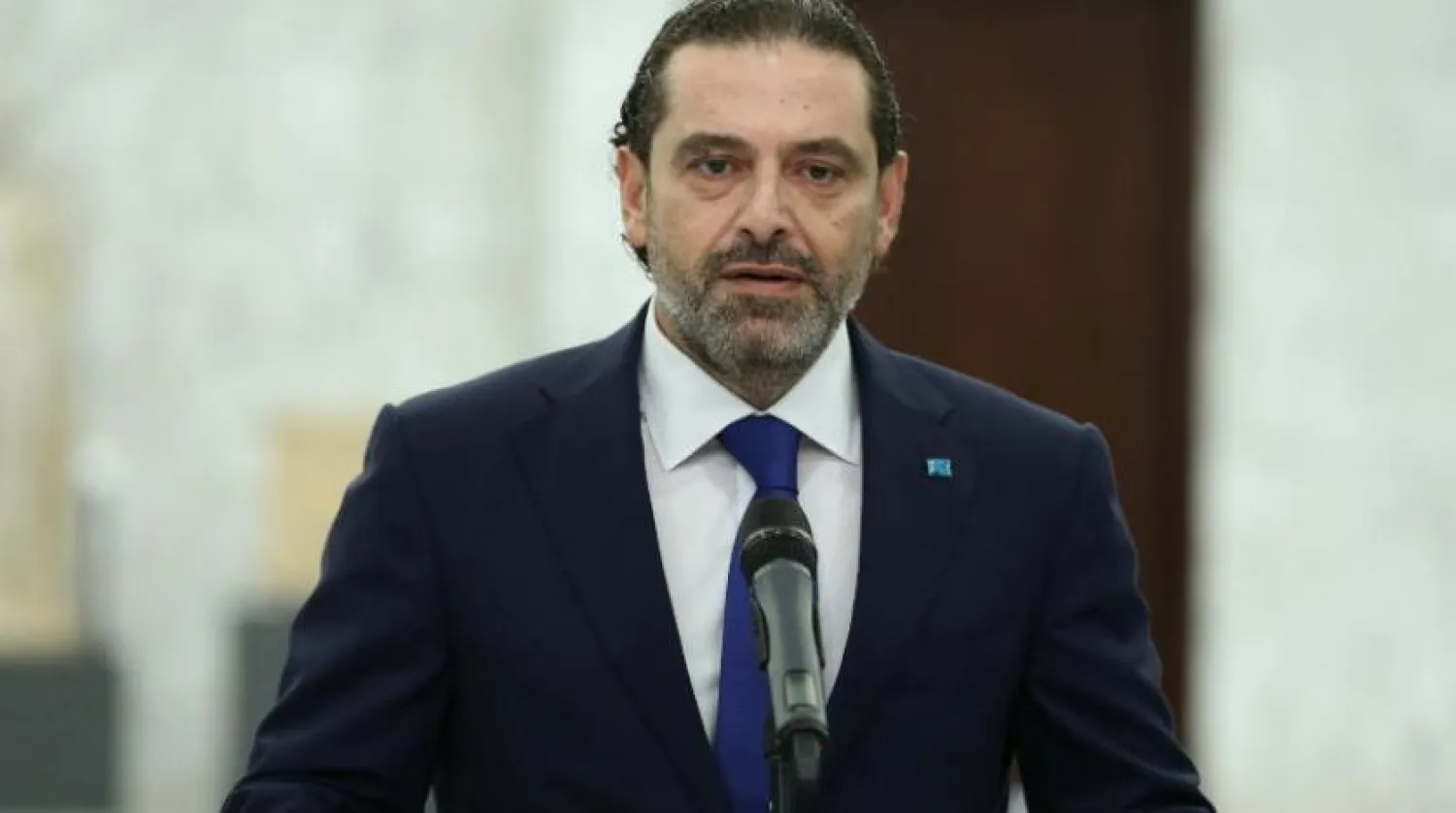
Hariri Steps Down, Plunging Lebanon Deeper Into Crisis

Lebanon's Saad Hariri. Reuters
TT

Hariri Steps Down, Plunging Lebanon Deeper Into Crisis

Lebanon's Saad Hariri. Reuters

Premier-designate Saad Hariri abandoned his effort to form a new government on Thursday, plunging Lebanon deeper into crisis.

"It is clear we will not be able to agree with his Excellency the president," Hariri told reporters after meeting with President Michel Aoun at Baabda Palace for barely 20 minutes. "That is why I excuse myself from government formation."

Lebanon is suffering an economic depression the World Bank has described as one of the most severe in modern history. Its currency has lost more than 90% of its value in less than two years, leading to spiraling poverty and crippling shortages.

With no obvious alternative for the post, there is little hope of a government that can start fixing the economic situation.

The country’s economic troubles have been made worse by the political bickering.

Hariri said Aoun had requested fundamental changes to a cabinet line-up he had presented to him on Wednesday. Aoun had told Hariri that they would not be able to agree, Hariri said.

After Hariri's announcement on Thursday, Aoun said that Hariri was not ready to discuss any changes to the government proposal he submitted a day earlier.

Hariri proposed that Aoun take one more day to accept the suggested proposal but Aoun said, "what is the use of one additional day if the door to discussions was closed," a statement by the presidency said.

The president will set a date for parliamentary consultations as soon as possible after Hariri gave up on cabinet formation, the statement said.

Hariri was designated to form the new government in October, after the resignation of Prime Minister Hassan Diab in the aftermath of the Aug. 4 Beirut port explosion. Diab continues in a caretaker capacity.

Immediately after news broke of Hariri’s stepping down, the Lebanese pound hit a new low, selling for 20,000 to the dollar on the black market.


Tunisian Journalist, a Critic of Saied, Sentenced to 1 Year in Prison

Tunisian journalist Haythem El Mekki
TT

Tunisian Journalist, a Critic of Saied, Sentenced to 1 Year in Prison

Tunisian journalist Haythem El Mekki

Prominent Tunisian journalist Haythem El Mekki and critic of President Kais Saied said on Wednesday that he was sentenced to one year in prison over posts he made on social media.

El Mekki, known for his political commentary, was a regular host on Mosaique FM's flagship "Midi Show" before he left the station.

Authorities opened an investigation against him in 2024 under Decree 54 -- a law Saied enacted to combat "false news" -- after he decried poor conditions at a public hospital morgue in the coastal city of Sfax.

A lower court had dismissed the case, but an appeals court handed him the 12-month jail term, he said on Facebook.

The National Syndicate of Tunisian Journalists condemned the ruling in a statement, warning of a "worrying trend" and a "climate of intimidation and self-censorship.”

Mekki has been prosecuted three times since 2023, in each case over comments he had made online or in the media.

Although Mekki has recently distanced himself from the media, he remains active on social networks. He is also a member of the editorial board of Rachma, an independent Tunisian media platform.

Freedom of expression was celebrated as a main achievement of the 2011 uprising that toppled president Zine El Abidine Ben Ali in Tunisia. But since Saied's July 25, 2021 power grab, several NGOs and the opposition have lamented a decline in rights and freedoms.


Trump’s Remarks on Soleimani Spark Debate in Iraq

US President Donald Trump welcomes Iraqi Prime Minister Ali al-Zaidi to the White House on Tuesday. (AP)
TT

Trump’s Remarks on Soleimani Spark Debate in Iraq

US President Donald Trump welcomes Iraqi Prime Minister Ali al-Zaidi to the White House on Tuesday. (AP)

Despite US President Donald Trump’s praise for Iraqi Prime Minister Ali al-Zaidi during their White House meeting on Tuesday, remarks about the 2020 killing of Iranian Quds Force commander Qassem Soleimani and former Popular Mobilization Forces (PMF) deputy chief Abu Mahdi al-Muhandis triggered a broad political debate in Iraq.

Greeting al-Zaidi at the White House, Trump described him as “a warrior” and praised the “tremendous chemistry” between them, predicting that the Iraqi premier would remain in office “for a long period of time.”

Turning to the January 2020 US drone strike near Baghdad International Airport, Trump again defended the operation, saying: “And I killed him in my first administration. Had I not, it might be a different story today... I actually think the leaders of Iran were afraid of Soleimani.”

Without mentioning al-Muhandis by name, Trump added: “By the way, a very bad person went with him. They happened to meet at the airport, and a very bad person from Iraq, a leader there, was killed in the same incident.”

He then turned to al-Zaidi with a smile and asked: “So, I don’t know if I did you a favor or not. I’ve never asked you that question before. Maybe you know the answer better than I do.”

Al-Zaidi replied: “At that time, I wasn’t working in politics. This visit is about the future and what we can do together. We’re not concerned with the old past. We’ve had enough of the suffering it caused.”

Munqith Dagher, head of the Independent Institute of Administration and Civil Society Studies (IIACSS) research group, said al-Zaidi had handled the exchange better than many had expected.

Writing on X, he argued that, whether instinctive or the product of media training, the prime minister’s body language and responses spared both himself and Iraq unnecessary embarrassment during one of Trump’s characteristic attempts to put visiting leaders on the spot.

Dagher added that al-Zaidi’s answer could have been even stronger had he delivered it with greater seriousness.

Writer and researcher Adnan Tomeh offered a different assessment, arguing that politics is measured first and foremost by the careful choice of words. He said al-Zaidi could have given a more diplomatic answer that preserved room for maneuver but instead appeared to sidestep the question.

The strongest criticism came from Iran-aligned factions.

Al-Muhandis’ family issued a sharply worded statement accusing Trump of revealing his fear of the consequences of his “crimes,” particularly in Iraq, while rebuking al-Zaidi for distancing himself from the country’s past.

The family also claimed the Washington visit was intended to dismantle the PMF as an “ideological force,” to further US efforts aimed at controlling Iraq’s oil wealth, and to advance calls for disarming armed groups under the slogan of restricting weapons to the state.

Akram al-Kaabi, secretary-general of the US-designated Harakat al-Nujaba, also condemned Trump’s remarks, describing Soleimani and al-Muhandis as “symbols of the resistance.”


Arab League Secretary-General Reaffirms Support for Sudan’s Unity, National Institutions

Arab League Secretary-General Nabil Fahmy speaks during a press conference at the Arab League headquarters in Cairo, Egypt, Monday, July 13, 2026. (AP Photo/Amr Nabil)
TT

Arab League Secretary-General Reaffirms Support for Sudan’s Unity, National Institutions

Arab League Secretary-General Nabil Fahmy speaks during a press conference at the Arab League headquarters in Cairo, Egypt, Monday, July 13, 2026. (AP Photo/Amr Nabil)

Secretary-General of the League of Arab States Nabil Fahmy reaffirmed the organization’s support for Sudan’s unity, sovereignty, and territorial integrity during a phone call with Sudanese Minister of Foreign Affairs and International Cooperation Mohieldin Salem.

He also reiterated the Arab League’s support for preserving Sudan’s national institutions and rejection of any external interference in the country’s internal affairs, the Saudi Press Agency reported on Wednesday.

During the call, Salem congratulated the Arab League chief on assuming office and wished him success in leading Arab joint action.

Fahmy stressed the importance of securing an immediate ceasefire, ensuring the delivery of humanitarian aid, and protecting civilians to pave the way for a Sudanese-owned political process that would achieve security, stability, and development.

He also affirmed the readiness of the Arab League’s General Secretariat to support efforts aimed at ending the crisis and to coordinate with regional and international parties in a manner that serves Sudan’s interests.