Egypt Ranks Among Top 10 Competitive MENA Countries in Business

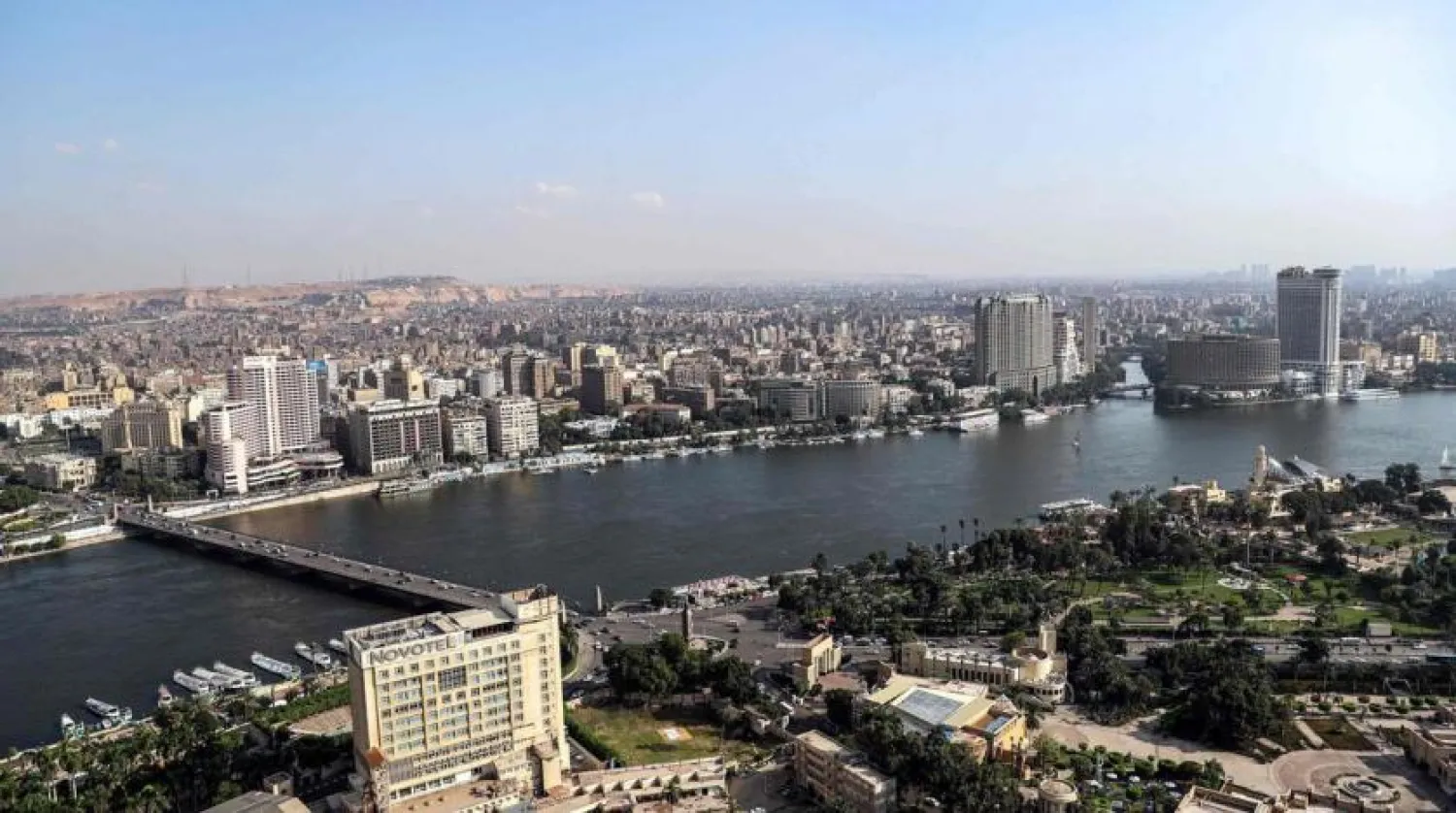
A general view of Cairo, Egypt. (File photo: AFP)
TT

Egypt Ranks Among Top 10 Competitive MENA Countries in Business

A general view of Cairo, Egypt. (File photo: AFP)

Egypt improved its position in the 2021 Coursera Global Skills Report, ranking among the top 10 competitive countries in the Middle East and North Africa (MENA), according to a report by Information and Decision Support Center (IDSC).

According to the business skills report, Egypt has ranked 47th among 108 world countries.

Egypt came in the category of competitive countries in business and data science, ranking 47th and 49 respectively.

The report's rankings are based on the efficiency of skills with future influence or skills in business, technology, and data science through four categories: most advanced countries, competitive countries, emerging countries, and developing countries.

Egypt jumped 38 places in the index of the safest countries in the world in 2021, despite the Covid-19 pandemic and the large numbers of infections.

Egypt ranked 65th globally in 2021 among 134 countries, compared to 103rd out of 128 countries in 2019. Iceland, the UAE, and Qatar were the top 3 countries globally on the index in 2021.

The world's safest country index includes three main factors: Personal security, wars, and natural disasters, as well as risk factors stemming from COVID-19 pandemic.


US Futures Fall and World Shares are Mixed as Markets Await Trump's Word on Replacing Fed Chief

People trade on their smartphones inside the Taiwan Stock Exchange office in Taipei, Taiwan, 05 January 2026.   EPA/RITCHIE B. TONGO
People trade on their smartphones inside the Taiwan Stock Exchange office in Taipei, Taiwan, 05 January 2026. EPA/RITCHIE B. TONGO
TT

US Futures Fall and World Shares are Mixed as Markets Await Trump's Word on Replacing Fed Chief

People trade on their smartphones inside the Taiwan Stock Exchange office in Taipei, Taiwan, 05 January 2026.   EPA/RITCHIE B. TONGO
People trade on their smartphones inside the Taiwan Stock Exchange office in Taipei, Taiwan, 05 January 2026. EPA/RITCHIE B. TONGO

US futures dropped while European shares opened higher on Friday after markets retreated in Asia ahead of a possible announcement by US President Donald Trump on his nominee to replace Jerome Powell as chair of the Federal Reserve.

Oil prices dropped and the prices of gold and silver weakened.

The future for the S&P 500 sank 0.8% while that for the Dow Jones Industrial Average was 0.7% lower, The Associated Press said.

Trump chose Powell to lead the US central bank in 2017 but has relentlessly assailed him for not cutting interest rates as quickly as the president would like. The appointment to replace him must be confirmed by the Senate.

In early European trading, Germany's DAX picked up 0.8% to 24,506.41, while the CAC 40 in Paris advanced 0.4% to 8,107.50. Britain's FTSE 100 edged 0.2% higher, to 10,189.05.

The CEO of Indonesia's stock market, Imam Rachman, resigned Friday “As part of a commitment toward recent market conditions,” the exchange said in an announcement.

Jakarta's benchmark gained 1.2% following news of his resignation. It had been trading at all-time highs but sank 7.4% on Wednesday and 1.1% on Thursday after MSCI, a US provider of global equity, fixed income and real estate indices, warned about market risks such as a lack of transparency.

Chinese markets retreated, with the Hang Seng in Hong Kong shedding 2.1% to 27,387.11. Shares in major ports operator CK Hutchison Holdings dropped 4.6% after Panama’s Supreme Court ruled that the concession held by a subsidiary to operate ports at either end of the Panama Canal was unconstitutional.

That advanced a US effort to block any influence by China over the strategic waterway.

The Shanghai Composite index slipped 1% to 4,117.95.

Tokyo's Nikkei 225 fell back, losing 0.1% to 53,322.85 as stocks related to artificial intelligence declined. Testing equipment maker Advantest lost 4.5% and computer chip equipment maker Disco Corp. lost 1.7%.

South Korea's Kospi gave up most of its gains late in the session, edging just 0.1% higher to 5,224.36 after the Yonhap News Agency reported that a first day of talks with US Commerce Secretary Howard Lutnick aimed at resolving trade tensions had not yielded an agreement. The talks are due to continue Friday.

Earlier this week, President Donald Trump said he planned to raise tariffs on South Korean exports if the US ally did not swiftly ratify a trade agreement worked out months ago.

In Australia, the S&P/ASX 200 declined 0.7% to 8,869.10.

Taiwan's benchmark lost 1.5%, while India's Sensex fell 0.3%.

On Thursday, US stocks finished with relatively modest moves.

The S&P 500 slipped 0.1% after flirting with its record high in the morning and dropping by as much as 1.5% later in the day. The Dow Jones Industrial Average rose 0.1% and the Nasdaq composite fell 0.7%.

Investors will likely focus on the Fed and who is to lead it, though earnings are also a major driver of market activity this week. Companies are under pressure to deliver solid growth in profits following record-setting runs for their stock prices.

In other dealings early Friday, the price of gold slipped 5% after it rallied briefly to nearly $5,600 on Thursday. Gold’s price topped $5,000 for the first time just this week.

Silver, which has been zooming higher in its own feverish run, tumbled 11%.

Prices for precious metals have been surging as investors look for safer investments while weighing a wide range of risks, including a US stock market that critics say is expensive, political instability, threats of tariffs and heavy debt loads for governments worldwide.

The US dollar has seen its value sink over the last year because of many of the same risks that drove gold’s price higher. Early Friday, the dollar was trading at 154.14 Japanese yen, up from 153.09 yen. The euro slipped to $1.1922 from $1.1971.

Oil prices slipped after jumping more than 3% on Thursday due to worries about tensions between the United States and Iran, which could ultimately constrict the flow of crude. Defense Secretary Pete Hegseth warned the US military “will be prepared to deliver whatever the president expects,” just a day after President Donald Trump told Iran to “make a deal” on its nuclear program.

US benchmark crude oil lost 59 cents to $64.83 per barrel. Brent crude, the international standard, shed 61 cents to $68.98 per barrel.


Jazan Port: Saudi Arabia’s Strategic Gateway to Horn of Africa

A vessel carrying an export shipment departs Jazan Port (SPA). 
TT

Jazan Port: Saudi Arabia’s Strategic Gateway to Horn of Africa

A vessel carrying an export shipment departs Jazan Port (SPA). 

Saudi Arabia is accelerating efforts to transform Jazan Port in the Kingdom’s south from a regional maritime hub into a global logistics artery linking continents.

Through coordinated initiatives led by relevant authorities, the Kingdom is leveraging the port’s unique strategic location, not only as one of its most successful national projects but also as a key economic gateway to the Horn of Africa and global markets.

By redesigning import and export procedures and removing barriers facing investors, Saudi Arabia is laying the cornerstone for a new phase of trade flows extending from its economic core to distant international markets.

The Horn of Africa includes Somalia, Ethiopia, Eritrea, Djibouti, Kenya and Sudan, whose proximity to Jazan Port on the Red Sea strengthens its role as a strategic link between Saudi Arabia and African markets.

The Jazan region’s geographic closeness to the Horn of Africa also helps attract high-quality investments, particularly with the establishment of special economic zones aimed at boosting exports of agricultural, fisheries and other products.

Mohammed Mudhafar, head of the Environment, Water and Agriculture Sector Committee at the Jazan Chamber of Commerce, said the committee is working with relevant authorities to remove obstacles and facilitate import and export operations at the port. He noted that differences in decisions among multiple agencies had created challenges for investors.

Among the main obstacles, Mudhafar said, was the 21-day quarantine imposed on imported livestock at Jazan, which increased costs for companies and pushed them toward other ports.

He said this constraint was removed after coordination with the Ministry of Environment, Water and Agriculture and the National Center for Plant Pest and Animal Disease Prevention and Control (Wiqaa).

He added that coordinated efforts among government entities have helped resolve these issues, encourage investors and streamline trade flows through Jazan Port.

From the private sector perspective, Khaled Al-Nashiri, head of Khaled Al-Nashiri Trading Company, said the port has become a major commercial gateway to the Horn of Africa.

He pointed to clearer investment strategies, simplified procedures, direct communication with investors, and improved infrastructure and warehouse facilities.

He added that strong government support has facilitated import and export operations, driving rising demand following initial shipments of Saudi-made flour, food products and animal feed to Horn of Africa countries.

Once a key gateway in the 1980s and 1990s, Jazan Port is now re-emerging with greater capacity and organization, positioning itself as a major hub for trade in the coming years.


IMF Reaffirms Confidence in Emerging Markets ahead of AlUla Conference

Jihad Azour, Director of the IMF’s Middle East and Central Asia Department, speaks during one of the conference sessions last year (Asharq Al-Awsat)
TT

IMF Reaffirms Confidence in Emerging Markets ahead of AlUla Conference

Jihad Azour, Director of the IMF’s Middle East and Central Asia Department, speaks during one of the conference sessions last year (Asharq Al-Awsat)

The International Monetary Fund said emerging economies are showing exceptional resilience in the face of global volatility, as it cast the upcoming AlUla Conference for Emerging Market Economies as a key forum for recalibrating policy amid rapid financial and trade shifts.

Days ahead of Saudi Arabia’s decision to open its stock market to all categories of foreign investors on February 1, the IMF said the move would mark a turning point in boosting competitiveness and attracting stable capital inflows.

The AlUla Conference is scheduled to take place on February 8 and 9, 2026, amid heightened global economic uncertainty. The event will bring together policymakers from around the world, particularly from emerging markets, alongside leading economists and academics.

The importance of the conference lies in its role as a “policy laboratory,” offering space for deep reflection away from short-term market pressures, to review fast-moving trends and coordinate international efforts to safeguard investment and trade flows.

The IMF remains optimistic about emerging market performance, forecasting growth of about 4% over the next two years.

In a previous report, the Fund described this performance as “solid” by historical standards, noting that most regions had seen upward revisions to growth forecasts, reflecting a stronger-than-expected ability to absorb external shocks.

Between tariff shocks and artificial intelligence risks

In a virtual panel discussion held ahead of the conference, IMF Chief Economist Pierre-Olivier Gourinchas said the global economy had managed to “shake off” the immediate effects of tariff shocks, aided by the private sector’s agility in reorganizing supply chains and by a surge in investment in artificial intelligence that generated strong export flows, particularly in Asia.

He added that the decline in the dollar over the past year had helped ease financial pressures in many emerging markets, though the impact was “uneven,” especially for commodity exporters.

Gourinchas cautioned, however, that growth had become “narrow-based,” concentrated in a limited number of sectors, such as technology, raising questions about whether returns would continue to meet elevated expectations.

He warned that any market correction could trigger capital outflows and tighter financial conditions.

He also highlighted labor market risks, warning that the spread of artificial intelligence could displace jobs over time, creating additional challenges for policymakers.

Strong resilience

For his part, Jihad Azour, Director of the IMF’s Middle East and Central Asia Department, expressed a very optimistic outlook for the Gulf Cooperation Council economies, noting they recorded strong performance in 2025 with growth of 3.4%, supported by economic diversification efforts and resilience to geopolitical shocks.

Responding to a question, Azour said GCC growth was expected to rise by another one percentage point to 4.4% in 2026, driven by strong non-oil sector performance and continued diversification efforts.

He said performance differences among GCC states currently depend on oil price developments and the level of financial buffers available to each country.

Azour added that massive Gulf investments in artificial intelligence technologies represent a strategic preparation for the transformative economic shocks the sector is expected to generate globally, providing additional growth opportunities for the region.

Regarding the regional role of GCC countries, he said they are major investors both within the region and beyond through foreign direct investment, as well as a vital source of financing for many countries.

Saudi market resilience

Asked about the ability of emerging markets to withstand global market shocks, Azour said the Saudi stock market had demonstrated high resilience, remaining strong and stable and only marginally affected by recent shocks that hit some emerging markets.

Indonesian equities fell sharply in Thursday trading after MSCI warned of a potential downgrade of the market’s classification, marking the worst two-day performance in nearly three decades.

Azour pointed to the upcoming opening of the Saudi stock market to non-resident investors on February 1, saying the move would significantly boost the market’s growth potential and deepen its financial base.

He stressed that maintaining international investor confidence and avoiding sudden capital outflows requires continued transparency and regulatory development, adding that Saudi Arabia’s market is now a key pillar of global emerging-market indices and is well positioned to withstand external pressures thanks to its macroeconomic strength and ongoing financial liberalization.

AlUla: an exceptional opportunity

Azour said the AlUla Conference represents an exceptional opportunity for policymakers worldwide, especially from emerging economies, to engage in deep reflection on current challenges.

He said the central theme of the conference would focus on identifying “the policies countries need to put in place” to confront trade shocks, address accelerating changes in the financial sector, and seize technological opportunities while fully recognizing their side effects.

He emphasized the importance of collective thinking among policymakers, experts, and academics in a “fast-moving world,” aiming to calibrate policies and raise certainty through coordination not only in public policy, but also in trade and investment.

Azour said the IMF looks forward to providing decision-makers with the opportunity to reflect and reassess the pace of recent economic trends, noting that the initiative comes at a time when global uncertainty has “reached its peak.”