Drone Attack Targets Iraq Base Hosting US Troops

US army forces supervise during a training session at the Taji camp, north of Baghdad . AFP file photo
TT

Drone Attack Targets Iraq Base Hosting US Troops

US army forces supervise during a training session at the Taji camp, north of Baghdad . AFP file photo

A drone attack has been carried out on a military base in Iraqi Kurdistan that hosts American troops, without causing any casualties, the US-led coalition said Saturday.

The attack comes with Iraqi Prime Minister Mustafa Al-Kadhemi expected to meet US President Joe Biden in Washington on Monday to discuss a possible full US troop withdrawal from his country.

“An unmanned aerial system impacted a coalition base in Kurdistan” in the early hours of Friday, coalition spokesman US Colonel Wayne Marotto said in a statement reported by AFP.

“There were no casualties and no damage as a result of the attack,” he said, adding “the United States and coalition forces will stay vigilant and maintain the inherent right to self-defense.”

Iraqi Kurdish media outlets said the attack targeted a base at Al-Harir, 70 kilometres (45 miles) northeast of Erbil, the capital of the autonomous Kurdistan region.

It was the latest in a spate of attacks on US military and diplomatic facilities in Iraq, blamed on pro-Iranian armed groups within a state-sponsored paramilitary force.

The United States still has around 2,500 troops deployed in Iraq, out of 3,500 men in the international coalition set up in 2014 to fight ISIS.

Their departure is demanded by the pro-Iranian factions, which have been blamed for some 50 attacks against US interests in Iraq since the beginning of the year.

The Iraqi Resistance Coordination Committee on Friday threatened to continue the attacks unless the US withdraws all its forces and ends the “occupation.”

Most of the US troops deployed in the coalition, which helped defeat ISIS in Iraq in 2017, were withdrawn under former US president Donald Trump.

Those that remain are officially classed as advisers and trainers for Iraq’s army and counter-terrorism units.


Syria: Israeli Forces Shell Quneitra Countryside

An Israeli military vehicle is seen near the border between the Israeli-occupied Golan Heights and Syria, May 4, 2025. REUTERS/Shir Torem/File Photo
TT

Syria: Israeli Forces Shell Quneitra Countryside

An Israeli military vehicle is seen near the border between the Israeli-occupied Golan Heights and Syria, May 4, 2025. REUTERS/Shir Torem/File Photo

Israeli forces fired several artillery shells on Wednesday at the area around eastern Tell al-Ahmar in the southern Quneitra countryside in southern Syria.

The Syrian Arab News Agency (SANA) said that “occupation forces fired two projectiles that landed on agricultural land around eastern Tell al-Ahmar, causing no injuries".

Israel continues to violate the 1974 Disengagement Agreement through repeated incursions into southern Syria, raids on and arrests of civilians, land bulldozing and shelling, among other attacks, the agency said.

Syria has repeatedly called for Israeli forces to withdraw from its territory, stressing that all measures taken by Israel are null and void and have no legal effect under international law. Damascus has also urged the international community to fulfil its responsibilities and compel Israel to withdraw fully from southern Syria.


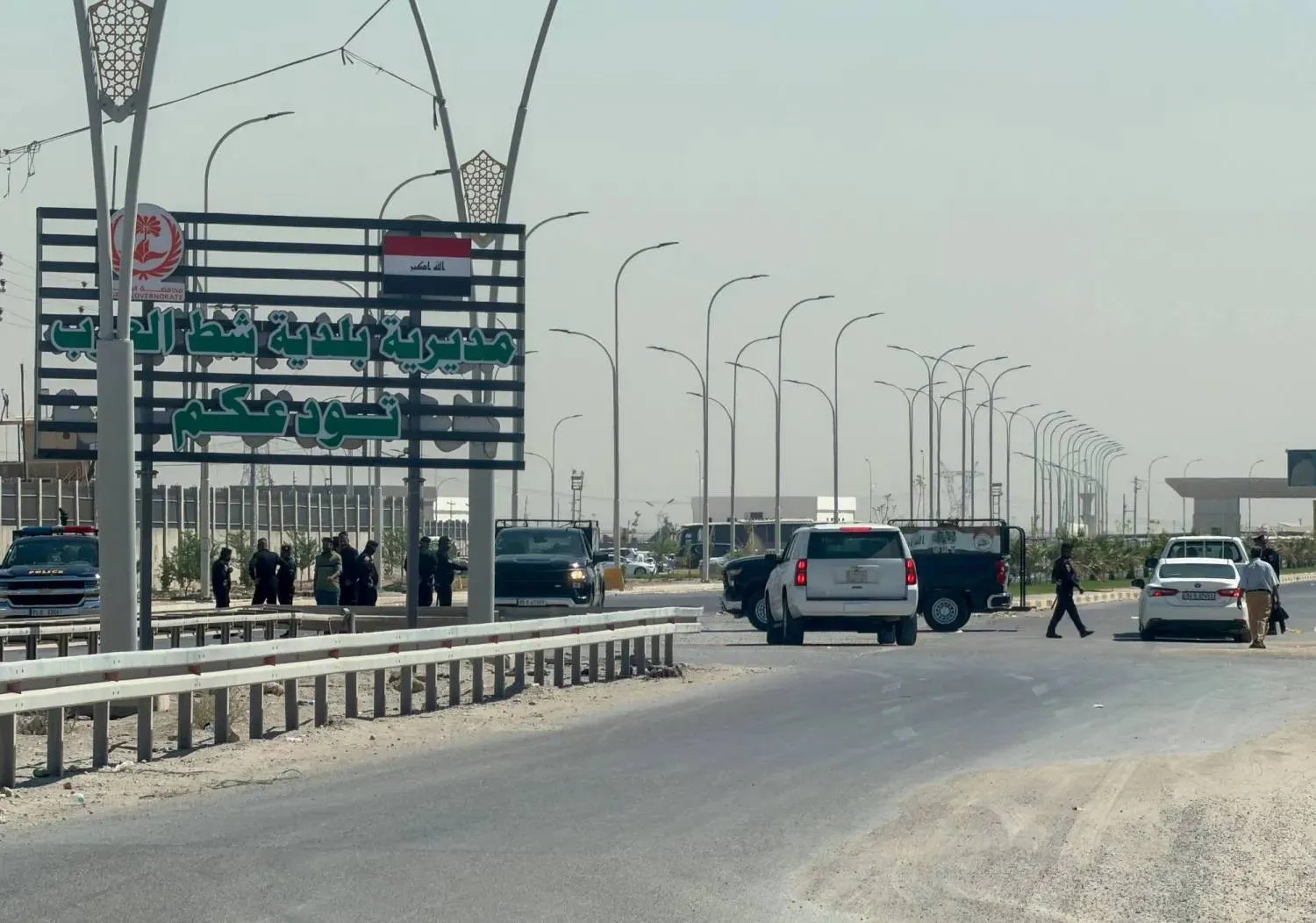
Iraq Closes Sheeb Border Crossing with Iran to Check Security

 Security personnel stand near the Shalamsheh border crossing between Iraq and Iran, after Iraqi authorities ordered its closure as a precautionary measure following the latest drone attacks on Saudi Arabia, in Basra, Iraq, September 12, 2026. (Reuters)
Security personnel stand near the Shalamsheh border crossing between Iraq and Iran, after Iraqi authorities ordered its closure as a precautionary measure following the latest drone attacks on Saudi Arabia, in Basra, Iraq, September 12, 2026. (Reuters)
TT

Iraq Closes Sheeb Border Crossing with Iran to Check Security

 Security personnel stand near the Shalamsheh border crossing between Iraq and Iran, after Iraqi authorities ordered its closure as a precautionary measure following the latest drone attacks on Saudi Arabia, in Basra, Iraq, September 12, 2026. (Reuters)
Security personnel stand near the Shalamsheh border crossing between Iraq and Iran, after Iraqi authorities ordered its closure as a precautionary measure following the latest drone attacks on Saudi Arabia, in Basra, Iraq, September 12, 2026. (Reuters)

Iraq has closed the busy Sheeb border crossing with Iran to review security and install detection equipment to stop the smuggling of prohibited materials, ‌an Iraqi ‌border official said ‌on ⁠Wednesday.

Sheeb would be ⁠closed to passengers, vehicles and commercial trucks until further notice, two other sources at the crossing said.

Iraq ⁠ordered the closure ‌of ‌another crossing with Iran, Shalamsheh, ‌in September as a ‌precaution after drone attacks on Saudi Arabia, two security sources said at ‌the time. Riyadh said the drones had been ⁠launched ⁠from Iraq.

The current security measures at Sheeb are weak and inadequate, the Iraqi border crossings official told Reuters.


Arab League Chief Condemns Israeli Attacks on South Lebanon, Urges Action

Arab League Secretary-General Nabil Fahmy listens to a Lebanese Army officer pointing out areas occupied by Israeli forces in Zawtar al-Gharbiyeh, South Lebanon, alongside Social Affairs Minister Haneen Sayed (AP). 
TT

Arab League Chief Condemns Israeli Attacks on South Lebanon, Urges Action

Arab League Secretary-General Nabil Fahmy listens to a Lebanese Army officer pointing out areas occupied by Israeli forces in Zawtar al-Gharbiyeh, South Lebanon, alongside Social Affairs Minister Haneen Sayed (AP). 

Arab League Secretary-General Nabil Fahmy condemned Israeli attacks on South Lebanon as “unacceptable,” calling for concrete Arab action to support the country, strengthen its army and help displaced residents return home.

Fahmy made the remarks during a visit to the southern city of Tyre, where he met senior Lebanese Army officers at the Benoit Barakat barracks, accompanied by Social Affairs Minister Haneen Sayed.

Fahmy said he had chosen Lebanon as one of his first foreign destinations since taking office to see firsthand the challenges facing its people.

His visit to the south, he explained, was meant to reassure residents that the Arab world and the international community recognized their suffering and were prepared to provide tangible support.

He pointed to a September resolution by the Arab League’s ministerial council that addressed Lebanon’s crisis and its underlying causes, particularly repeated Israeli attacks on civilians and infrastructure.

After touring the town of Zawtar and the city of Nabatieh, Fahmy described the destruction he witnessed as “distressing.”

He accused Israel of systematically demolishing residential areas, seizing land and seeking to displace civilians, potentially paving the way for further occupation.

Despite the devastation, he expressed confidence that Lebanese residents would remain attached to their land.

The Arab League was working with the Lebanese government to explore reconstruction efforts and ways to restore stability, he added.

While rebuilding would require action across several sectors, Fahmy stressed that Arab solidarity could not be limited to statements of condemnation.

“This is the beginning of a sustained process, not the end of the road,” he said, reaffirming the League’s commitment to Lebanon.

Army seeks support, post-UNIFIL arrangements

Brig. Gen. Nicolas Tabet, commander of the Lebanese Army’s South Litani Sector, welcomed the visit as a sign of Arab solidarity at a time of mounting security and humanitarian challenges.

He said Israeli attacks had left widespread destruction and displaced thousands of Lebanese, while continued occupation and security threats prevented families from returning safely to their villages.

The situation was also hampering the army’s deployment to the internationally recognized border.

Tabet called for Arab and international pressure to halt Israeli attacks, secure a full withdrawal from Lebanese territory and uphold the country’s sovereignty.

Despite difficult conditions and limited resources, the army remained committed to its duties, he said, urging the Arab League to mobilize diplomatic support, strengthen the military and help rebuild the south.

He also called for lasting security arrangements after the mandate of the United Nations Interim Force in Lebanon (UNIFIL) ends.

Such arrangements, developed with the UN and international partners, would be essential to preventing a security vacuum and implementing Security Council Resolution 1701.

Describing Fahmy’s visit as a rare and welcome gesture, Tabet said it offered reassurance that Lebanon had not been left to face its challenges alone.