


Khamenei Blames ‘Cowardly’ US for Pause in Nuclear Talks

Iranian Supreme Leader Ali Khamenei delivers a televised speech in Tehran, Iran, January 8, 2021. Official Khamenei Website/Handout via REUTERS
TT

Khamenei Blames ‘Cowardly’ US for Pause in Nuclear Talks

Iranian Supreme Leader Ali Khamenei delivers a televised speech in Tehran, Iran, January 8, 2021. Official Khamenei Website/Handout via REUTERS

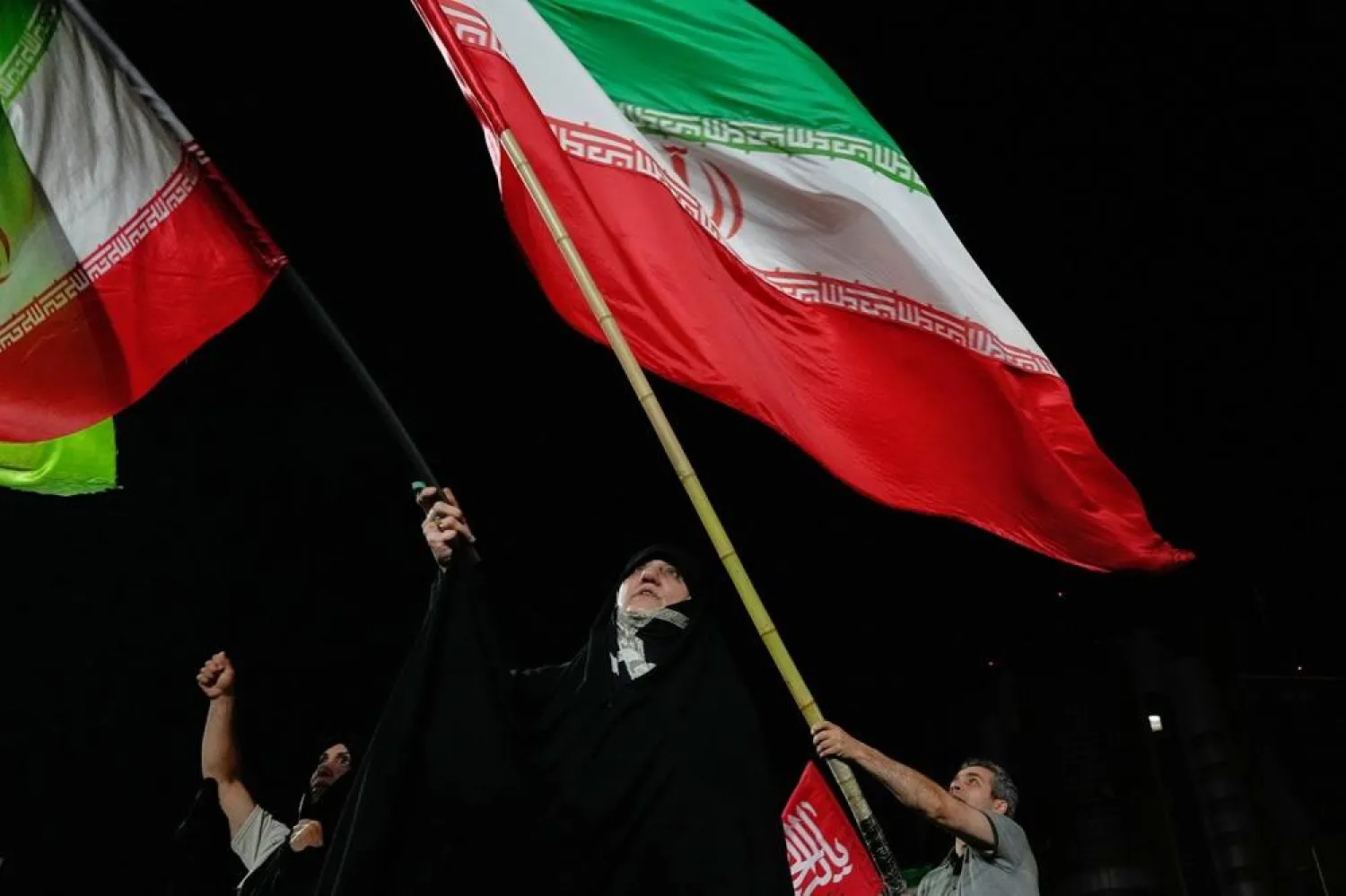
Iran's supreme leader on Wednesday declared Tehran would not accept Washington's "stubborn" demands in talks to revive a 2015 nuclear deal and said the United States had failed to guarantee that it would never abandon the pact again.

"The Americans acted completely cowardly and maliciously," state TV quoted Ali Khamenei as saying.

"They once violated the nuclear deal at no cost by exiting it. Now they explicitly say that they cannot give guarantees that it would not happen again."

Since April 9, Tehran and six world powers have been in talks to revive the nuclear pact ditched three years ago by then US President Donald Trump, who argued it favored Iran.

The sixth round of indirect talks between Tehran and Washington adjourned on June 20, two days after hardline cleric Ebrahim Raisi was elected president.

Parties involved in the negotiations have yet to announce when the next round of negotiations will resume.

Like Khamenei, Raisi has backed the revival of the nuclear pact but officials have said that his government might adopt "a hardline" approach. Khamenei, not the president, has the last say on Iran's state matters, including the nuclear policy.

Iranian and Western officials have said significant gaps remained to reinstate the deal, under which Iran agreed to curb its nuclear program to make it harder to obtain fissile material for a weapon in return for relief from tough sanctions. Iran says it has never sought nuclear weapons and never would.

Harsh sanctions reimposed by Trump since 2018 have prompted Tehran to violate the deal's limits. However, Tehran says its nuclear steps are reversible if Washington lifts all sanctions.

US President Joe Biden seeks to reinstate and eventually broaden the pact to put more limits on Iran’s nuclear work and its missile development and constrain its regional activities.

Khamenei again flatly rejected adding any other issues to the deal, Reuters reported.

"In the recent nuclear talks, the Americans staunchly insisted on their obstinate stance. When making promises and on paper they say they will remove sanctions, but in practice they have not and they will not," Khamenei said.

Khamenei said Washington is "stubborn" and insists on adding a sentence to the existing nuclear deal.

"By adding this sentence, they want to provide an excuse for their further interventions on the nuclear deal and (Iran's) missile work and regional issues," Khamenei said. "Then if we refuse to discuss those issues, Americans will accuse Iran of violating the nuclear deal and they will say the agreement is over."

Trump Floats Renaming Strait of Hormuz as 'Trump Strait'

President Donald Trump walks from Marine One to board Air Force One at Cleveland Hopkins International Airport in Cleveland, Tuesday, Aug. 11, 2026. (AP Photo/Mark Schiefelbein)
TT

Trump Floats Renaming Strait of Hormuz as 'Trump Strait'

President Donald Trump walks from Marine One to board Air Force One at Cleveland Hopkins International Airport in Cleveland, Tuesday, Aug. 11, 2026. (AP Photo/Mark Schiefelbein)

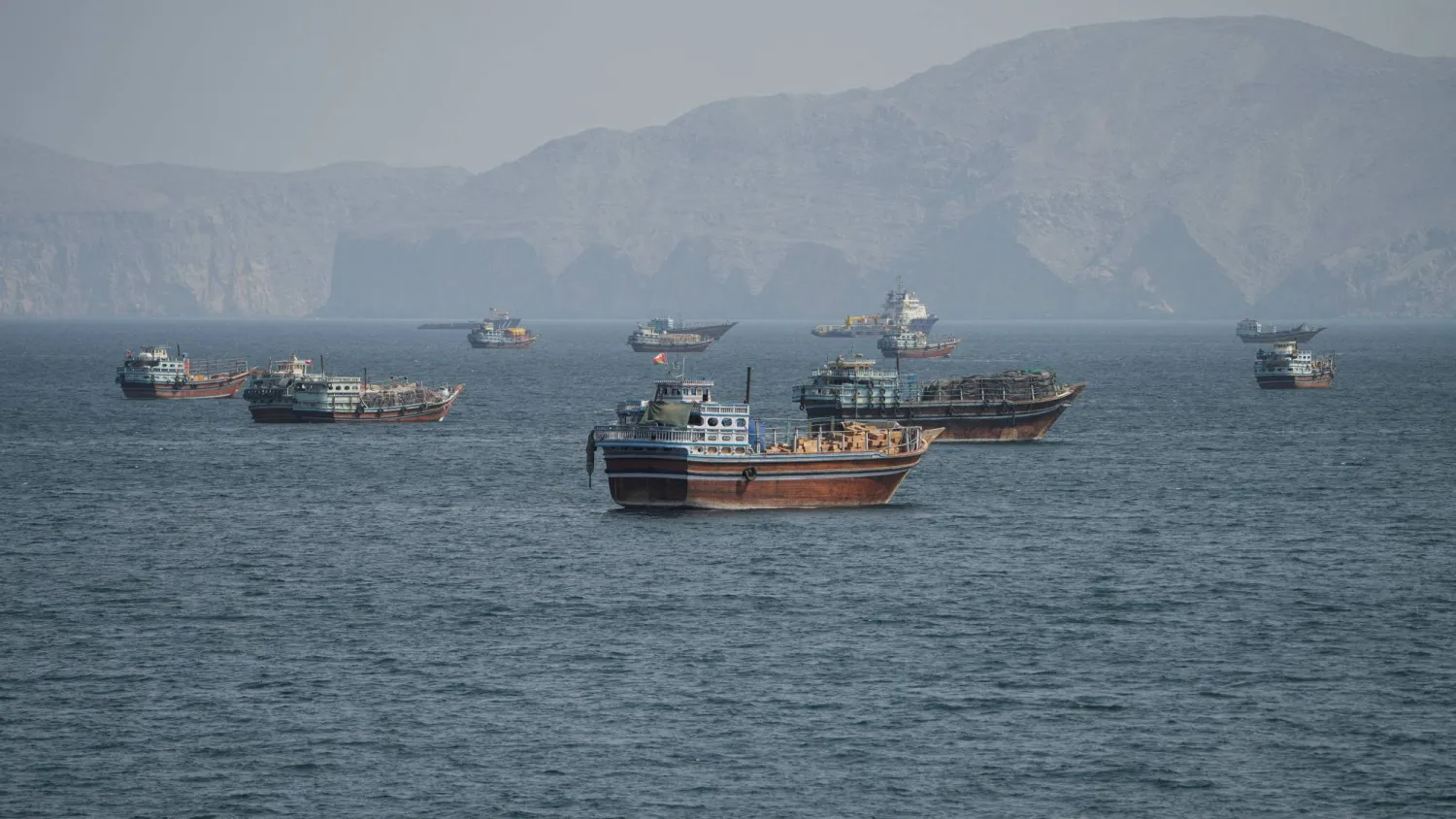
US President Donald Trump on Wednesday suggested renaming the Strait of Hormuz as "Trump Strait" despite ongoing clashes with Iran -- then hours later implied he wasn't serious.

Trump has made a series of geographical name changes to international bodies of water in his second term, at least partly with the aim of trolling other countries.

The latest suggestion came as Trump insisted the US had full control of the crucial waterway, even as fresh clashes raged there with Iran, said AFP.

"Now that we have it under U.S.A. control, should we change the name Hormuz Strait to TRUMP STRAIT??? Like America itself, it would be 'hotter' than ever before!" Trump said on his Truth Social network.

The White House later posted a map of the Gulf on social media with his suggested name, adding: "It's got a nice ring to it."

Trump has in recent weeks repeatedly threatened to claim sovereignty over the Strait of Hormuz, even posting a map showing the waterway as a "new US territory."

Trump, however, later played down the idea of rebranding the Strait of Hormuz.

"It was just thrown out there," Trump said with a chuckle after an AFP reporter asked him in the Oval Office if he was serious about renaming it.

But a number of the 80-year-old Republican's previous suggestions have been dismissed as being humorous before they ended up happening for real.

Last week Trump signed an order renaming Lake Ontario as "Lake America" amid a trade war with neighboring Canada, just days after apparently raising the idea in jest.

- Iran war grinds on -

Trump also renamed the Gulf of Mexico as the "Gulf of America" on his first day back in the White House in January 2025. Neither Mexico nor Canada have accepted the changes.

He has also gone on a spree of renaming things after himself, including the Kennedy arts center in Washington, while the US Treasury meanwhile on Wednesday issued $1 coins featuring Trump's face to mark the 250th anniversary of US independence.

The Iran war remains a deadly serious issue, with no sign of ending more than six months after the initial US-Israeli assault.

Fighting has flared again after weeks of calm, with US forces launching fresh strikes near the Strait of Hormuz on Tuesday in response to what Trump said were new minelaying efforts by Iran.

Iran said one of the US strikes killed four people at a wedding, branding it a "war crime", and launched a wave of retaliatory strikes at US bases in Jordan, Kuwait, Bahrain and Iraq.

At home, Trump has presided over a steep rise in US fuel costs as a result of the war and his Republican Party looks likely to lose at least partial control of Congress in the November midterm elections.

Iran has effectively shut down the choke point, through which a fifth of the world's oil passes, in retaliation for the war Trump started along with Israel in late February.

Trump said on Wednesday that the United States was ready to attack Iran again -- while adding that the renewed campaign would not last "too long."

"It was a very heavy attack last night, and we're prepared to do another one any time we want," Trump told reporters in the Oval Office.


US Treasury Issues $1 Coin with Trump’s Face on It

The US Mint has started producing a new $1 coin featuring President Donald Trump's image. (AP Graphic/Treasury Department, File)
TT

US Treasury Issues $1 Coin with Trump’s Face on It

The US Mint has started producing a new $1 coin featuring President Donald Trump's image. (AP Graphic/Treasury Department, File)

The US Treasury on Wednesday issued $1 coins featuring the face of President Donald Trump, the latest move in an unprecedented campaign by the Republican billionaire to put his personal stamp on national institutions.

The coins were minted to mark the 250th anniversary of the founding of the United States celebrated this year.

A roll of 25 $1 coins was available for sale for $61 -- a mark-up of 144 percent -- with a 100-coin bag available for $154.50.

When the Treasury announced the plan it was unclear if the coins would have monetary value or would be purely commemorative, but on Wednesday the US Mint said the coins were "also in circulation."

The move to put Trump's countenance on a coin with monetary value runs counter to federal law that says no living president may appear on US currency.

Trump has aggressively defied precedent and legal challenges in his push to remake US institutions in his second term, putting his name on the Kennedy Center for the Arts and demolishing the East Wing of the White House to make room for a new ballroom, among other moves.

The new coin features Trump's face on one side, with the words "Liberty" and "In God We Trust." It also features the dates 1776-2026, marking 250 years of US independence.

The other side of the coin features a version of the US presidential seal, depicting an eagle clutching arrows and an olive branch while covered by a shield that says "250."

This is just the latest in Trump's campaign to put his face and name on US currency.

In May, Treasury Secretary Scott Bessent said his department was pursuing a plan to issue a new $250 bill with Trump's face on it.

He conceded that the move would require Congress to change the law barring living persons from appearing on currency.

The US Treasury did not immediately respond to a request for comment on whether the new $1 coin violates that law.

In March, the Treasury announced that US paper money would soon bear Trump's signature -- another first for a sitting US president.


Türkiye’s Relations with Russia, China Don’t Mean Turning Its Back on the West, Erdogan Says

Turkish President Recep Tayyip Erdogan meets with Russian President Vladimir Putin on the sidelines of the Shanghai Cooperation Organization (SCO) summit in Bishkek, Kyrgyzstan, September 1, 2026. (Murat Cetinmuhurdar/Turkish Presidential Press Office/Handout via Reuters)
TT

Türkiye’s Relations with Russia, China Don’t Mean Turning Its Back on the West, Erdogan Says

Turkish President Recep Tayyip Erdogan meets with Russian President Vladimir Putin on the sidelines of the Shanghai Cooperation Organization (SCO) summit in Bishkek, Kyrgyzstan, September 1, 2026. (Murat Cetinmuhurdar/Turkish Presidential Press Office/Handout via Reuters)

Türkiye is not backing away from the West as it seeks deeper ties with the East, Turkish President Recep Tayyip Erdogan said Wednesday as he headed back from a Shanghai Cooperation Organization summit.

The conference in Kyrgyzstan saw Erdogan hold a one-on-one meeting with Russian President Vladimir Putin at which they discussed further nuclear cooperation.

In comments made to journalists aboard the presidential plane, Erdogan reiterated Türkiye’s goal of becoming a full member of the Shanghai Cooperation Organization, or SCO, whose ten current members include Russia, China, India and Iran.

“I would also like to particularly emphasize that Türkiye’s membership perspective in the organization does not mean a break from a bloc or turning our backs on the West,” the president said.

Turning to the war in Ukraine, during which Ankara has maintained friendly relations with both Moscow and Kyiv, Erdogan said it was his and Putin’s “expectation ... that the war between Russia and Ukraine ends peacefully as soon as possible.”

He also underlined the importance of maritime security in the Black Sea, where civilian shipping has come under increasing attack.

“There is a need for a mechanism that will permanently ensure the safety of commercial maritime transport in the Black Sea,” Erdogan said, adding that it would be “beneficial” to prevent a “resurgence of the grain crisis.”

Türkiye brokered a grain deal in 2022 that opened Ukrainian ports and allowed the movement of Russian food and fertilizer. The agreement, which Putin pulled out of a year later, was vital for global food supplies, especially in Africa, the Middle East and Asia.

The SCO, founded in 2001, also includes Kazakhstan, Kyrgyzstan, Tajikistan, Uzbekistan, Pakistan and Belarus. The growing bloc has been billed as a counterweight to US global influence, although its goals and programs remain vague.