


Arab Children’s Magazines under Criticism

Arab Children’s Magazines under Criticism
TT

Arab Children’s Magazines under Criticism

Arab Children’s Magazines under Criticism

In her book "Values in Arab Children Magazines" recently issued by "Al Nabigha" Publishing house, Egyptian writer Najlaa Allam focuses on the need to encourage children on partaking in cultural activities, and to support and discover the talented among them, along with constantly providing public libraries with the latest releases, motivating journalism institutions and research entities interested in children content, and supporting them to issue new magazines that cover the little ones' cultural needs. She also called for reaching a joint mechanism to distribute children’s magazines across the Arab world.

Allam also believes that encouraging the freedom of speech among children would emphasize moral and social values in them, and positively affect their personalities. But she warned that "providing them with a sort of political and social awareness should meet their capacities, noting that correcting the concepts of rights and duties could be done through magazines that target them and aim to enhance the values that fit the spirit, traditions, and habits of the community."

Comprehensive bibliography

In her book's five chapters, the writer introduces a first-of-its-kind bibliography that explores children magazines issued in the Arab world between 1970 and 2000, and discusses their content, problems, and functions, with a special focus on contemporary magazines.

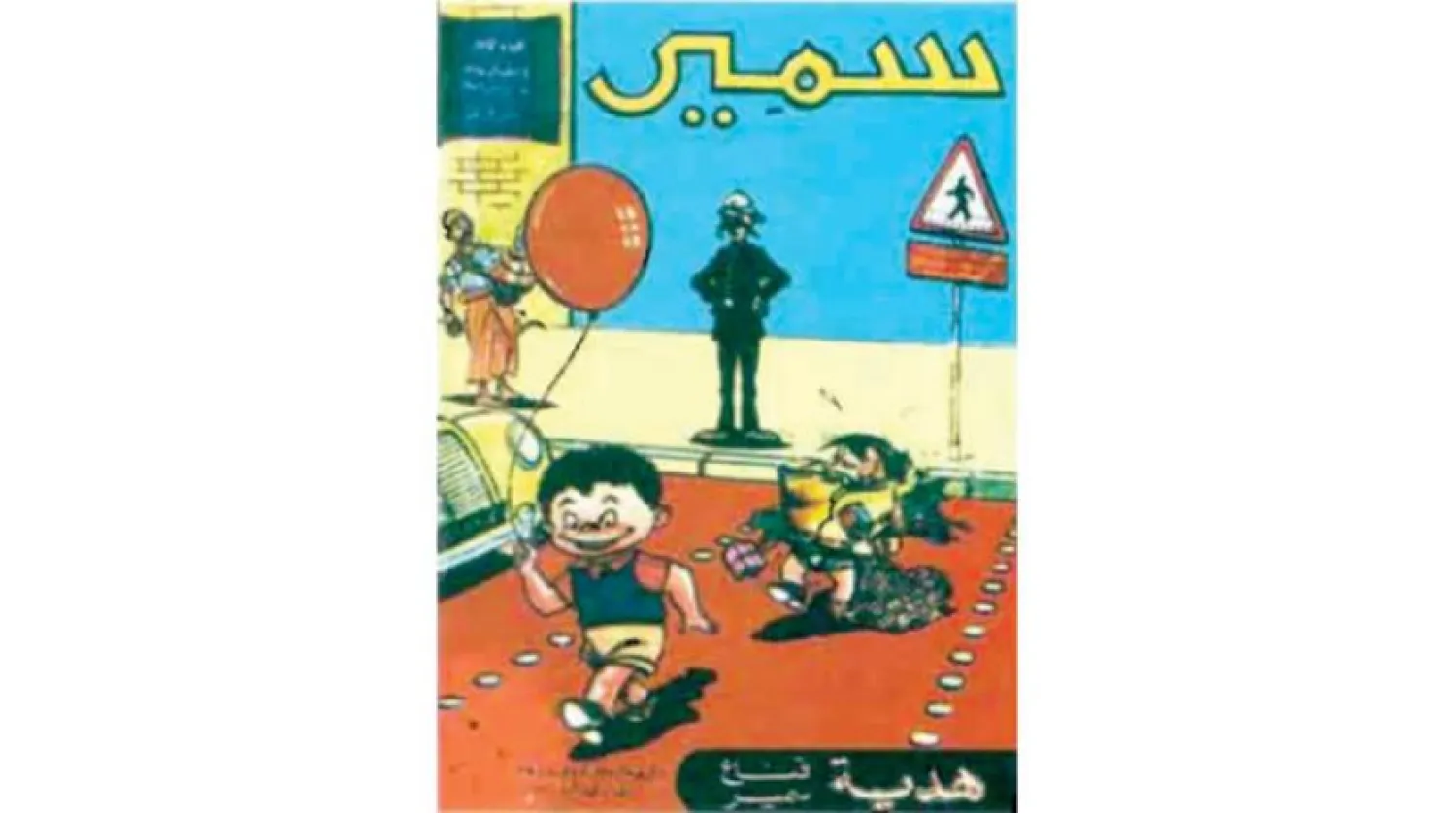
To examine values in contemporary Arab magazines targeting children, the writer reviewed magazines that are still available in the markets including "Majid," "Little Arab,"Alaa Eldin," "Qatr al-Nada," and "Samir." She assessed the structure of each one of them, and found that they are markedly similar and sometimes identical. When comparing them, she noticed that the visual patterns dominated the journalistic and literary content, as children magazines usually prioritize publishing illustrations on other materials. Some chose adventure and exciting topics, and sought to adjust children's behaviors by giving negative and positive examples, and some used caricatures for entertainment, like the "Alaa Eldin", "Qatr el-Nada", and "The Little Arab magazine, while "Samir" didn't use it at all. Educational caricatures are very rare.

Special style

Najlaa Allam sees that the five mentioned magazines have maintained a special style by using rich illustrations on most of their pages. Editors of "Majid" allocate a huge space for illustrations that comfort the child's eyes and entertain him. On the other hand, the writer noticed that "Samir" collaborates with the same artists from "Dar Al Hilal," who repeat the same images on most pages, which could lead to boredom among young readers. The "Qatr el-Nada" magazine has added a new spirit with the help of young artists, who constantly introduce new creative illustrations.

Alaa Eldine publishes various graphics signed by prominent artists as well. It is worth mentioning that "Majid," "Qatr el-Nada," and "The Little Arabic" dedicated pages to publish children drawings. In "Majid," they are displayed on the back cover under the title "Club of Painters"; in "The Little Arabic," they are found under the title "Club of Little Painters;" While "Qatr el-Nada" dedicated two whole pages titled "The Club of Artists." "Samir" and "Alaa Eldine" didn't show any interest in publishing children drawings.

According to the writer, most of the magazines provide high quality illustrations, and descriptive images related to the topics they cover.

Allam said the Arabic magazines have sought to highlight many values in several sections using literature, journalism, and visual art. For instance, "The Little Arabic" has always focused on the values of courage and generosity by reflecting them in the Little Arabic character. Readers can also enjoy the "My Scientific Role Model" section, which motivates kids to develop an advanced personality, and to engage in research and exploration.

Adventure and Smile

"The Little Arabic" highlights negative values in illustrated stories, like "Heroisms of Ayoub." Ayoub is a kid who pretends to be brave and courageous, but eventually has to admit to his friends that he is a liar. The story is suitable for children in middle and late childhood, who are capable of distinguishing the right and bad behaviors.

In most sections, "The Little Arabic" emphasizes values using literary works such as stories and poems, along with illustrations.

On the other hand, Allam found that "Alaa Eldine" wasn't interested in emphasizing good values in images and drawings, but focused on adventures and funny topics.
"Majid" has worked on teaching children specific values like good manners and generosity, while "Samir" preferred to use illustrated advices and recommendations to introduce children to some good values.

For its part, "Qatr el-Nada" sought to highlight different values in a section titled "Political Understandings," featuring clear explanations of many political concepts and terms that children usually hear in the media, or from older family members. This section focuses on nurturing the love of knowledge as well. The magazine also introduces the "Nobel Prize" section teaching children about prominent figures in the field of science and literature.


Culture Being Strangled by Kosovo's Political Crisis

The cinema has been waiting for much-needed repairs for years. Armend NIMANI / AFP
TT

Culture Being Strangled by Kosovo's Political Crisis

The cinema has been waiting for much-needed repairs for years. Armend NIMANI / AFP

Kosovo's oldest cinema has been dark and silent for years as the famous theater slowly disintegrates under a leaky roof.

Signs warn passers-by in the historic city of Prizren that parts of the Lumbardhi's crumbling facade could fall while it waits for its long-promised refurbishment.

"The city deserves to have the cinema renovated and preserved. Only junkies gathering there benefit from it now," nextdoor neighbor butcher Arsim Futko, 62, told AFP.

For seven years, it waited for a European Union-funded revamp, only for the money to be suddenly withdrawn with little explanation.

Now it awaits similar repairs promised by the national government that has since been paralyzed by inconclusive elections in February.

And it is anyone's guess whether the new government that will come out of Sunday's snap election will keep the promise.

'Collateral damage'

Cinema director Ares Shporta said the cinema has become "collateral damage" in a broader geopolitical game after the EU hit his country with sanctions in 2023.

The delayed repairs "affected our morale, it affected our lives, it affected the trust of the community in us," Shporta said.

Brussels slapped Kosovo with sanctions over heightened tensions between the government and the ethnic Serb minority that live in parts of the country as Pristina pushed to exert more control over areas still tightly linked to Belgrade.

Cultural institutions have been among the hardest-hit sectors, as international funding dried up and local decisions were stalled by the parliamentary crisis.

According to an analysis by the Kosovo think tank, the GAP Institute for Advanced Studies, sanctions have resulted in around 613 million euros ($719 million) being suspended or paused, with the cultural sector taking a hit of 15-million-euro hit.

'Ground zero'

With political stalemate threatening to drag on into another year, there are warnings that further funding from abroad could also be in jeopardy.

Since February's election when outgoing premier Albin Kurti topped the polls but failed to win a majority, his caretaker government has been deadlocked with opposition lawmakers.

Months of delays, spent mostly without a parliament, meant little legislative work could be done.

Ahead of the snap election on Sunday, the government said that more than 200 million euros ($235 million) will be lost forever due to a failure to ratify international agreements.

Once the top beneficiary of the EU Growth Plan in the Balkans, Europe's youngest country now trails most of its neighburs, the NGO Group for Legal and Political Studies' executive director Njomza Arifi told AFP.

"While some of the countries in the region have already received the second tranches, Kosovo still remains at ground zero."

Although there have been some enthusiastic signs of easing a half of EU sanctions by January, Kurti's continued push against Serbian institutions and influence in the country's north continues to draw criticism from both Washington and Brussels.

'On the edge'

Across the river from the Lumbardhi, the funding cuts have also been felt at Dokufest, a documentary and short film festival that draws people to the region.

"The festival has had to make staff cuts. Unfortunately, there is a risk of further cuts if things don't change," Dokufest artistic director Veton Nurkollari said.

"Fortunately, we don't depend on just one source because we could end up in a situation where, when the tap is turned off, everything is turned off."

He said that many in the cultural sector were desperate for the upcoming government to get the sanctions lifted by ratification of the agreements that would allow EU funds to flow again.

"Kosovo is the only one left on the edge and without these funds."


Saudi Culture Ministry Concludes Intangible Cultural Heritage Documentation Project in Al-Ahsa

Saudi Culture Ministry Concludes Intangible Cultural Heritage Documentation Project in Al-Ahsa
TT

Saudi Culture Ministry Concludes Intangible Cultural Heritage Documentation Project in Al-Ahsa

Saudi Culture Ministry Concludes Intangible Cultural Heritage Documentation Project in Al-Ahsa

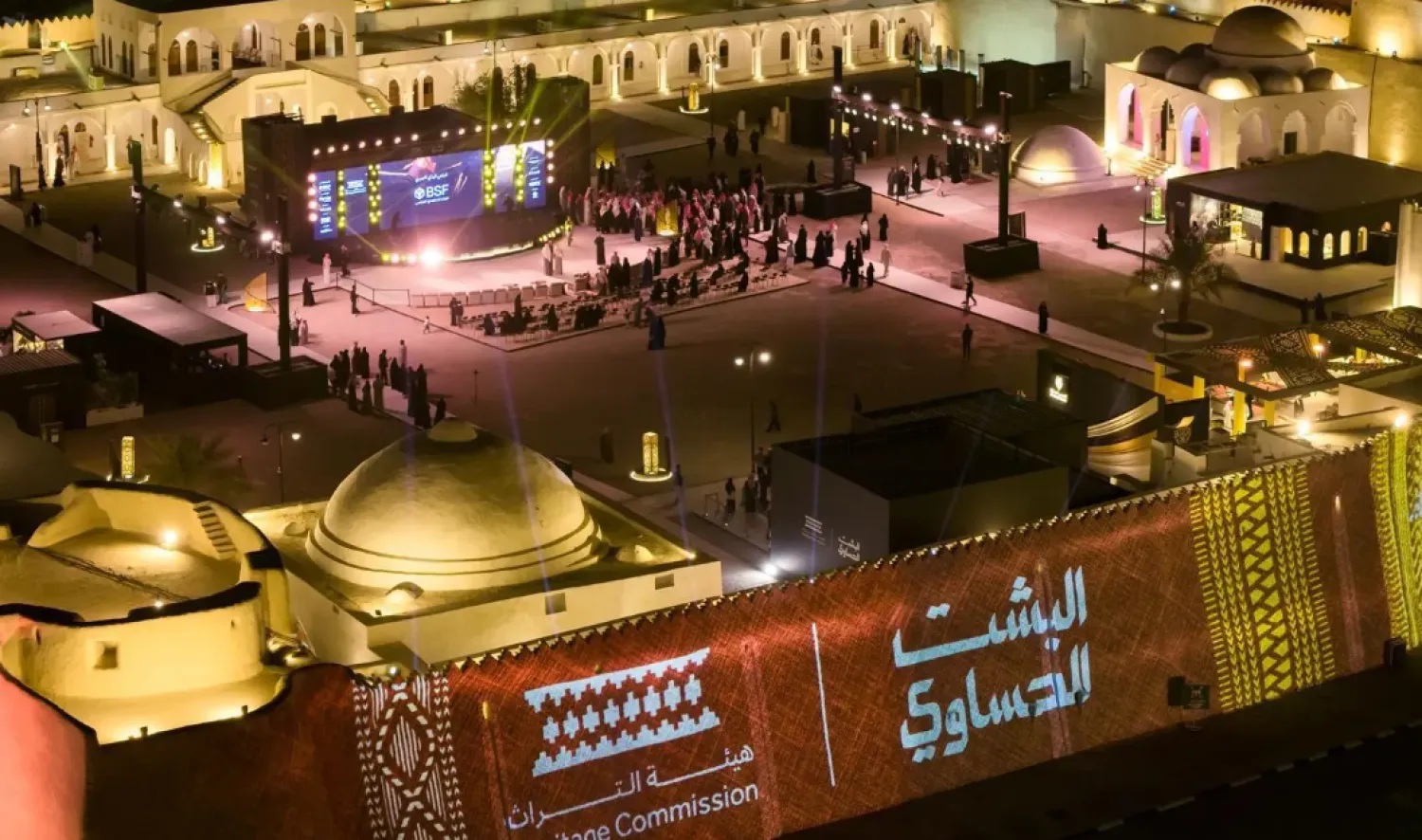
The Saudi Ministry of Culture concluded the project to survey, document, and archive intangible cultural heritage in Al-Ahsa Governorate by holding a workshop in the governorate, attended by stakeholders and relevant entities, as part of the ministry’s efforts to preserve national cultural heritage and strengthen Saudi cultural identity, reported the Saudi Press Agency on Thursday.

The project included a field survey covering various cities and villages across Al-Ahsa, during which diverse elements of intangible cultural heritage were identified and documented. These included oral traditions, performing arts, skills associated with traditional cultural crafts, social practices, and knowledge related to nature and the local environment.

The work was carried out in cooperation with concerned entities, specialized experts, and local practitioners.

The workshop reviewed the project’s final outcomes and presented reports on documentation and digital archiving activities.

It discussed mechanisms to ensure the sustainability of these efforts and the transmission of this cultural legacy to future generations, contributing to greater community awareness of the value and importance of intangible cultural heritage.


Hail Region Pavilion Showcases Heritage Artifacts at Camel Festival

The pavilion aims to connect visitors to Hail's history and social legacy - SPA
TT

Hail Region Pavilion Showcases Heritage Artifacts at Camel Festival

The pavilion aims to connect visitors to Hail's history and social legacy - SPA

Hail Region pavilion at the Ministry of Interior’s Security Oasis exhibition, part of the 10th King Abdulaziz Camel Festival in Al-Sayahid, features heritage artifacts that reflect the region's renowned hospitality.

The display includes ancient trays and copperware from nearly seventy years ago.

According to SPA, these traditional food preparation and serving vessels have garnered significant interest from visitors. They document daily life in old Hail and its deep-rooted social traditions, particularly in gatherings and special occasions.

The pavilion aims to connect visitors to Hail's history and social legacy, fostering appreciation for national heritage and ensuring cultural preservation for future generations.