


UAE Establishes National Human Rights Institution

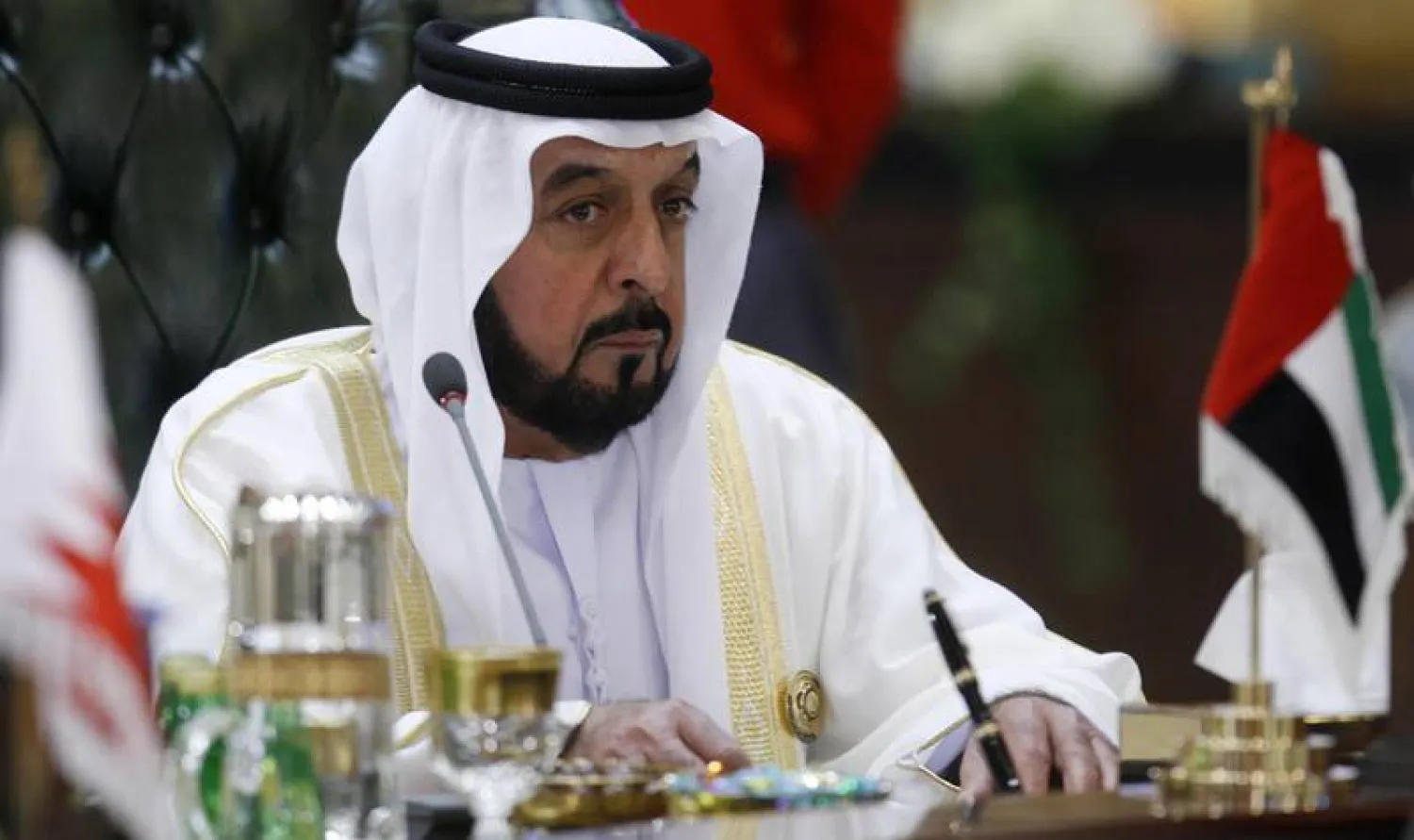
President Sheikh Khalifa said the new institution, based in Abu Dhabi, will promote and safeguard human rights. AFP
TT

UAE Establishes National Human Rights Institution

President Sheikh Khalifa said the new institution, based in Abu Dhabi, will promote and safeguard human rights. AFP

President Sheikh Khalifa bin Zayed Al Nahyan has set out plans to establish a National Human Rights Institution in the UAE.

To achieve its objectives, the NHRI shall participate, along with the relevant authorities, in the development of a national action plan to promote and protect human rights in the country, to propose a mechanism for its implementation, and to promote a culture of human rights and submit proposals, recommendations, and advice to the relevant authorities.

Sheikh Khalifa issued a federal law to set up the independent body, which will have its headquarters in Abu Dhabi.

As part of its blueprint for the future, the institution will provide information to authorities on whether national laws are aligned with international treaties and conventions on human rights to which the UAE is a signatory.

It will track human rights breaches and report them to relevant authorities.

The institution could open further branches across the country as part of a long-term vision to advance human rights.

The institution shall be an independent legal entity, which has financial and administrative autonomy in the exercise of its functions, activities, and competencies.

The NHRI aims to promote and protect human rights and fundamental freedoms following the provisions of the UAE Constitution, laws and legislation in force in the UAE, as well as relevant international conventions.

The federal law issued by Sheikh Khalifa states that the NHRI should have a board of trustees comprising at least 11 people, half of whom will work on a full-time basis.

The term of membership of the NHRI shall be four years, renewable once, beginning from the date of the issuance of the resolution.

The human rights institutions that are established per the Paris Principles are treated as official state-created organizations for the promotion and protection of human rights.

Such institutions enjoy financial and administrative autonomy in exercising their mandates and are guided by the Paris Principles for the National Human Rights Institutions, which were adopted in 1993.

The NHRI aims to promote and protect human rights and fundamental freedoms following the provisions of the UAE Constitution, laws and legislation in force in the UAE, as well as relevant international conventions.

The establishment of this key mechanism stems from the UAE’s eagerness to develop its institutional structure of human rights in a way that will enhance the country’s position and highlight its role in advancing it.

In developing the law, the UAE set out to follow the best practices of other countries that have developed similar institutions.

The UAE also sought advice from international organizations, most notably the Office of the UN High Commissioner for Human Rights, which provided legal and technical assistance to draft the NHRI law.


Governor of Hadhramaut Launches Military Operation to Take Control of STC Positions

A supporter of the Southern Transitional Council (STC) stands in the back of a pickup truck in the Khor Maksar district of the second city of Aden on August 29, 2019. (AFP file)
TT

Governor of Hadhramaut Launches Military Operation to Take Control of STC Positions

A supporter of the Southern Transitional Council (STC) stands in the back of a pickup truck in the Khor Maksar district of the second city of Aden on August 29, 2019. (AFP file)

The Yemeni News Agency said on Friday that the Chairman of the Presidential Leadership Council, Rashad al-Alimi, issued a decision assigning the Governor of Hadhramaut, Salem Al-Khanbashi, to assume the general command of the National Shield forces in the governorate.

The official agency stated that the decision grants Al-Khanbashi “full military, security, and administrative powers to achieve the restoration of security and order in the governorate”.

It added that the decision stipulates that the assignment will end “once the reasons that led to it cease, or upon the issuance of a decision by the Chairman of the Presidential Leadership Council, the Supreme Commander of the Armed Forces, canceling this assignment”.

In a recorded speech following his appointment, Al-Khanbashi confirmed that the Southern Transitional Council deliberately rejected all responsible solutions aimed at de-escalation. He pointed out that STC forces had prepared plans intended to create widespread chaos in Hadhramaut.

He also announced that the National Shield forces had launched a military operation called “Receiving the Camps,” aimed at taking over military sites in a peaceful and organized manner. He added that “the military operation is not a declaration of war, but a responsible preventive measure”.

He further stressed that “the operation does not target any political or social component, nor civilians” in Hadhramaut.

This came after the National Field forces had expressed their readiness on Thursday to take over military sites and checkpoints from the Southern Transitional Council forces in Hadhramaut and Al-Mahrah.


Saudi Crown Prince, Emir of Qatar Discuss Fraternal Ties, Regional and Global Developments

Combined photo of Prince Mohammed bin Salman bin Abdulaziz Al Saud, Crown Prince and Prime Minister of Saudi Arabia on the right, and Emir of Qatar Sheikh Tamim bin Hamad Al Thani to the left. (SPA)
TT

Saudi Crown Prince, Emir of Qatar Discuss Fraternal Ties, Regional and Global Developments

Combined photo of Prince Mohammed bin Salman bin Abdulaziz Al Saud, Crown Prince and Prime Minister of Saudi Arabia on the right, and Emir of Qatar Sheikh Tamim bin Hamad Al Thani to the left. (SPA)

Prince Mohammed bin Salman bin Abdulaziz Al Saud, Crown Prince and Prime Minister of Saudi Arabia, received a phone call on Thursday from Emir of Qatar Sheikh Tamim bin Hamad Al Thani, the Saudi Press Agency said.

They discussed ways to strengthen fraternal ties between the two countries and addressed recent regional and international developments.


Saudi Leadership Offers Condolences to Bangladesh on Death of Former PM Khaleda Zia

An aerial view shows mourners gathered for the funeral ceremony of Bangladesh's former Prime Minister Khaleda Zia at the Parliament House premises in Dhaka on December 31, 2025 a day after her death. (AFP)
TT

Saudi Leadership Offers Condolences to Bangladesh on Death of Former PM Khaleda Zia

An aerial view shows mourners gathered for the funeral ceremony of Bangladesh's former Prime Minister Khaleda Zia at the Parliament House premises in Dhaka on December 31, 2025 a day after her death. (AFP)

Custodian of the Two Holy Mosques King Salman bin Abdulaziz Al Saud sent on Thursday a cable of condolences to Bangladesh’s President Mohammed Shahabuddin on the death of former Prime Minister Khaleda Zia.

He extended his sincere condolences and sympathy to the president and the family of the deceased.

Prince Mohammed bin Salman bin Abdulaziz Al Saud, Crown Prince and Prime Minister, sent Shahabuddin a similar cable.