


Saudi Arabia Stresses Ongoing Commitment to Work with UN to Restore Peace in Yemen

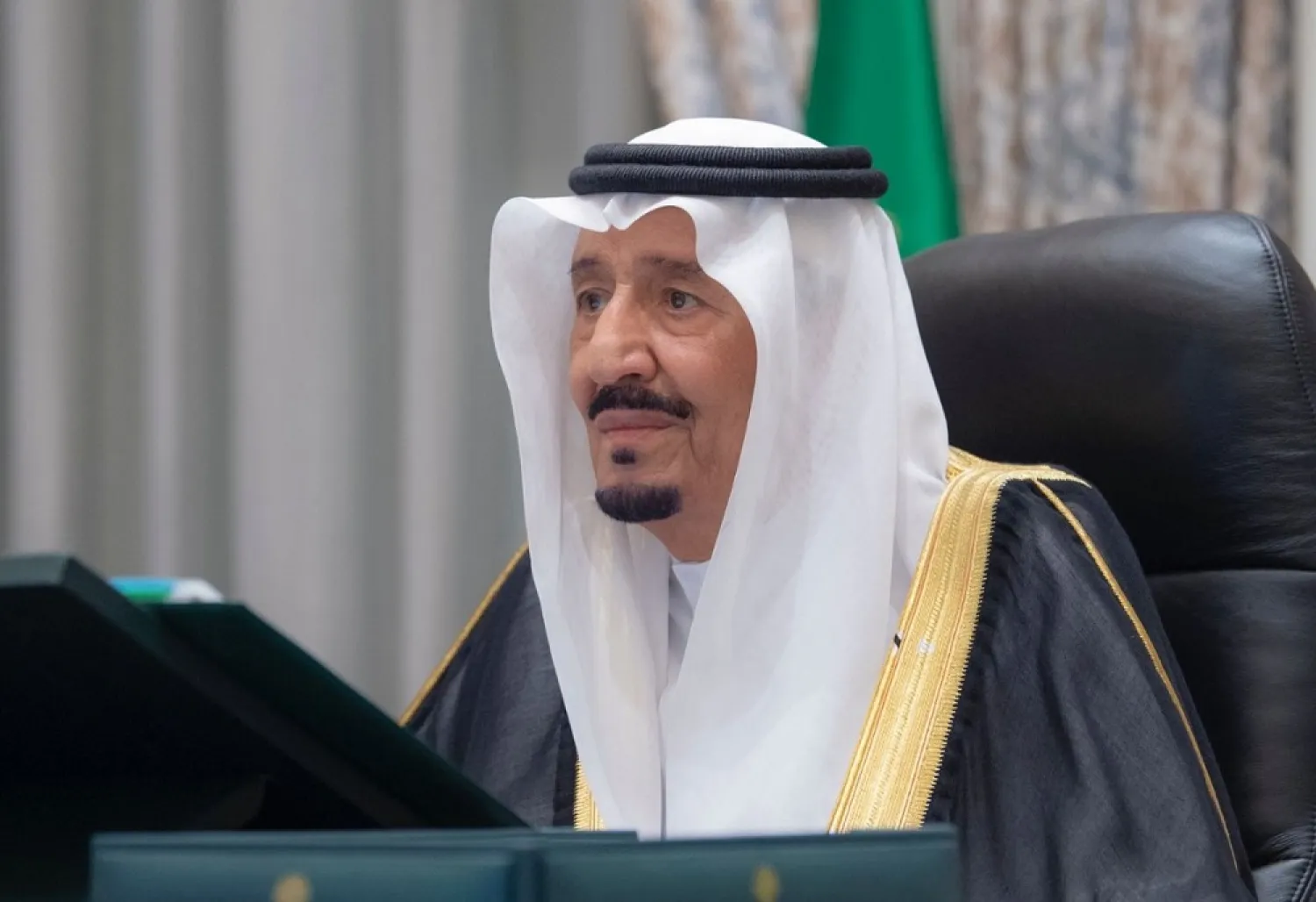
King Salman chairs a cabinet meeting on Tuesday. (SPA)
TT

Saudi Arabia Stresses Ongoing Commitment to Work with UN to Restore Peace in Yemen

King Salman chairs a cabinet meeting on Tuesday. (SPA)

The Saudi government stressed on Tuesday its continued commitment to work with the United Nations to restore peace in Yemen.

Custodian of the Two Holy Mosques King Salman bin Abdulaziz chaired the cabinet meeting that was held virtually amid the ongoing coronavirus pandemic.

The Kingdom preserves the right to defend its security and citizens against attacks by the Iran-backed Houthi militias in line with international humanitarian law, continued the government.

Restoring peace in Yemen is a priority to the Kingdom, it stressed.

Acting Media Minister Dr. Majid al-Qasabi said the ministers underscored the message by the Kingdom’s permanent ambassador to UN Security Council in wake of the Houthis’ attack against the Eastern Province, Jazan and Najran.

The message called on the international community to assume its responsibilities against the Houthis and the sides supplying them with weapons. The militias must be deprived of means to carry out their hostile cross-border acts that undermine international efforts to reach a comprehensive political solution in Yemen and that threaten international security and peace.

Qasabi said the government also covered the latest local and international developments related to the pandemic. It noted the continued drop in cases in the Kingdom as more vaccines are administered. Around 40 million shots have been administered.

The government approved the establishment of the General Authority for Defense Development.

The entity will enjoy financial and administrative independence and be tied to the prime minister. It is aimed at specifying the goals of research, development and innovation activities related to defense technologies and systems and outlining their strategies and policies.

As part of its Vision 2030, the Kingdom has kicked off a massive plan to develop its military sector in response to various threats and to protect its interests and security. The plan includes bolstering and modernizing its defense capabilities, hiring more Saudis to the sector and diversifying the number of international partnerships to that end.

Established in 2017, the Saudi Arabian Military Industries (SAMI) has been tasked with developing the military industries sector, reducing the Kingdom’s reliance on the outside to secure its defenses and nationalizing 50% of military spending within ten years.



Saudi Arabia, Iraq Underscore their Continued Security Coordination

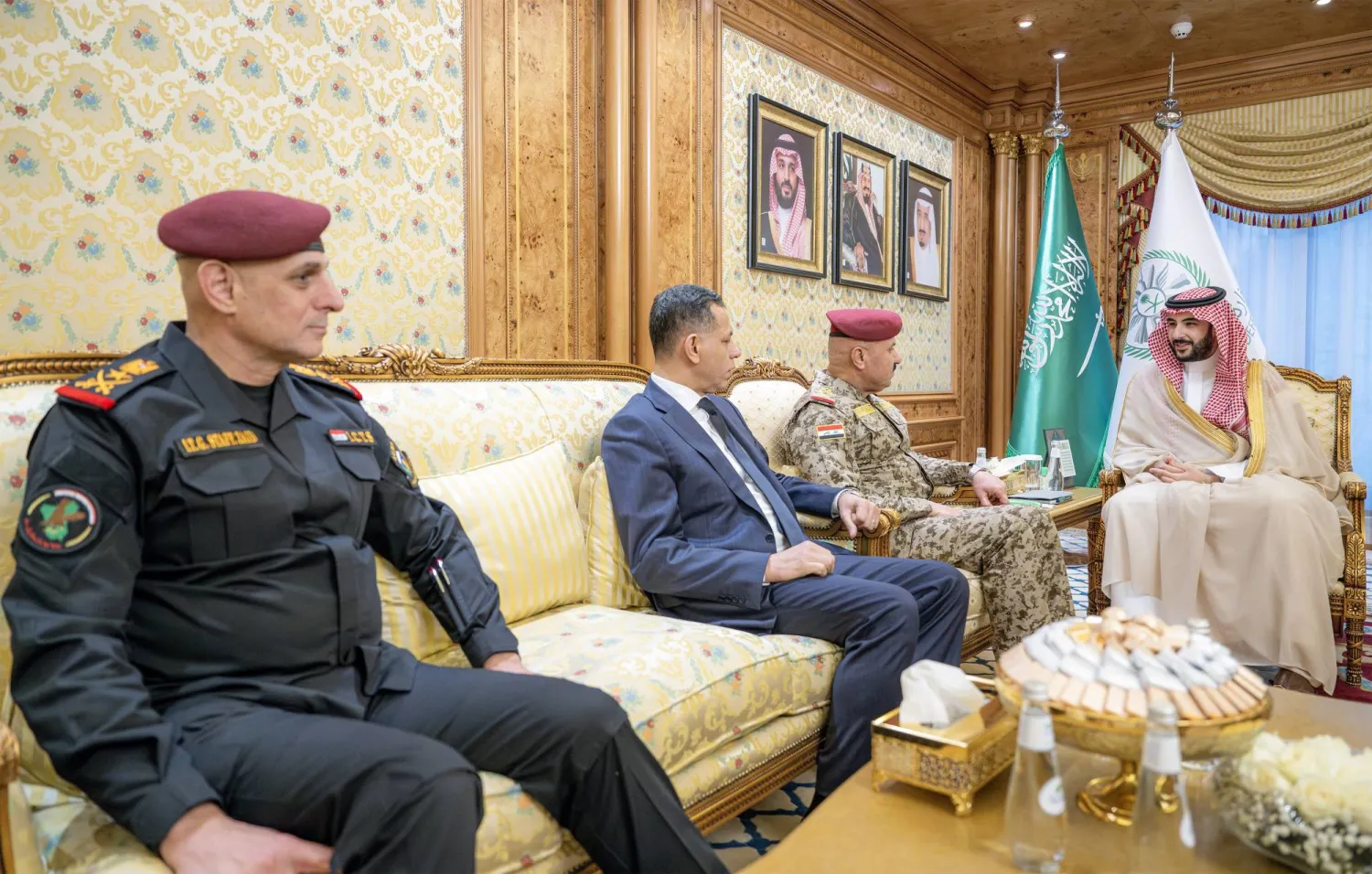
Saudi Defense Minister Prince Khalid bin Salman and Iraqi Armed Forces Commander General Abdul Amir al-Shammari meet in Riyadh on Thursday. (Saudi Defense Ministry)
TT

Saudi Arabia, Iraq Underscore their Continued Security Coordination

Saudi Defense Minister Prince Khalid bin Salman and Iraqi Armed Forces Commander General Abdul Amir al-Shammari meet in Riyadh on Thursday. (Saudi Defense Ministry)

Saudi Defense Minister Prince Khalid bin Salman held talks in Riyadh on Thursday with Iraqi Armed Forces Commander General Abdul Amir al-Shammari.

They discussed bilateral relations between their countries in the military and defense fields. They also tackled regional developments.

“We underscored the importance of continuing coordination and cooperation between our countries to serve common interests and achieve regional security and stability,” Prince Khalid said in a post on the X platform.

“Iraq will remain a dear neighbor,” he added, saying: “We share fraternal bonds with its government and people.”

Saudi Arabia will always stand by Iraq to support its security, stability, development and prosperity, he declared.

Al-Shammari had arrived in the Kingdom earlier on Thursday to discuss security files and issues of common interest.


Egypt, UAE Urge US and Iran to Restore Calm

Egyptian Foreign Minister Dr. Badr Abdelatty and UAE Deputy Prime Minister and Minister of Foreign Affairs Sheikh Abdullah bin Zayed Al Nahyan during a previous meeting in Abu Dhabi. (Egyptian Foreign Ministry)
TT

Egypt, UAE Urge US and Iran to Restore Calm

Egyptian Foreign Minister Dr. Badr Abdelatty and UAE Deputy Prime Minister and Minister of Foreign Affairs Sheikh Abdullah bin Zayed Al Nahyan during a previous meeting in Abu Dhabi. (Egyptian Foreign Ministry)

Egypt and the United Arab Emirates have called for a return to compliance with the Memorandum of Understanding between the United States and Iran, in order to pave the way for resuming political and diplomatic tracks and to prevent the expansion of the conflict.

This came during a phone call on Thursday between Egyptian Foreign Minister Dr. Badr Abdelatty and UAE Deputy Prime Minister and Minister of Foreign Affairs Sheikh Abdullah bin Zayed Al Nahyan, according to a statement by the Egyptian Ministry of Foreign Affairs.

The statement said that the call "comes within the framework of ongoing consultation and coordination between the two brotherly countries regarding bilateral relations and regional developments."

The ministers exchanged views on the latest developments in the region, and stressed "the importance of intensifying efforts aimed at de-escalation and containing tensions."

They underscored "the importance of respecting the rules of international law and safeguarding the security, safety, and freedom of international navigation."

The call also addressed developments in the Gaza Strip and the West Bank amid ongoing escalatory measures and Israeli violations. The FMs affirmed "the importance of completing the implementation of all obligations of the first phase of US President Donald Trump’s peace plan in Gaza, in accordance with the announced roadmap, to contribute to stabilizing the situation and preparing conditions for transitioning to the next phases of the plan."

According to the Egyptian Foreign Ministry statement, they stressed the need for halting Israeli escalatory measures and practices in the West Bank.

They rejected "any actions that would undermine the chances of achieving peace and the two-state solution, emphasizing the importance of preserving the territorial unity of the Palestinian territories in Gaza and the West Bank."

They covered developments in Sudan, where the ministers exchanged views on the latest updates of the crisis and the regional and international efforts being made to handle it. They stressed "the importance of continued coordination and consultation to contribute to supporting the security and stability of Sudan and alleviating the humanitarian suffering of the Sudanese people."

The ministers agreed to continue close coordination and consultation during the coming period on various issues of common interest, contributing to the support of regional security and stability.

On the level of bilateral relations, the FMs praised the depth and distinctiveness of the brotherly and strategic relations binding their two countries, and the continuous development they are witnessing across various fields.

They underlined "a shared keenness to continue strengthening the frameworks of bilateral cooperation and building upon the existing momentum in relations to achieve the interests of both countries and their brotherly peoples."


Saudi Arabia: Royal Orders Reconstitute Cabinet Under Crown Prince Mohammed bin Salman

Joint photo of King Salman bin Abdulaziz Al-Saud and Saudi Crown Prince Mohammed bin Salman bin Abdulaziz Al-Saud - File Photo
TT

Saudi Arabia: Royal Orders Reconstitute Cabinet Under Crown Prince Mohammed bin Salman

Joint photo of King Salman bin Abdulaziz Al-Saud and Saudi Crown Prince Mohammed bin Salman bin Abdulaziz Al-Saud - File Photo

Custodian of the Two Holy Mosques King Salman bin Abdulaziz Al Saud issued three royal orders on Thursday, including the reconstitution of the Cabinet under the chairmanship of Crown Prince and Prime Minister Mohammed bin Salman bin Abdulaziz Al Saud, with its current members.

The orders follow two previous royal orders concerning the formation of the Cabinet, as well as related royal orders, and Article 9 of the Council of Ministers Law, which stipulates that the term of the Cabinet shall not exceed four years, during which it shall be reconstituted by royal order.

The new royal orders included relieving Bandar Alkhorayef of his position as Chairman of the Board of Directors of the Local Content and Government Procurement Authority and appointing Prince Abdulaziz bin Salman bin Abdulaziz as Chairman of the Board.

They also included relieving Mohammed ElKuwaiz of his position as Chairman of the Capital Market Authority and appointing Mazen Al-Sudairi as his successor, with the rank of minister.