Libya’s Haftar Says Suspends Military Role ahead of Polls

LNA commander Haftar in Athens in January 2020. (AFP)
TT

Libya’s Haftar Says Suspends Military Role ahead of Polls

LNA commander Haftar in Athens in January 2020. (AFP)

Commander of the Libyan National Army (LNA) Khalifa Haftar said Wednesday he was suspending his military activities, a step which could lead to his candidacy in elections later this year.

In a statement, Haftar said he had named an interim replacement as head of the LNA until December 24, the date of the legislative and presidential vote.

Libyan media said the step opens the way for Haftar to run as a presidential candidate under a controversial new law.

Parliamentary speaker Aguila Saleh earlier this month ratified legislation governing the presidential ballot and which critics say bypassed due process to favor his ally Haftar.

They cite a clause stipulating that military officials may stand in presidential polls, on condition that they withdraw from their roles three months beforehand -- and that, if unsuccessful, they will receive backpay.

That would allow for a presidential run by Haftar, whose forces control eastern Libya, where the parliament is based, as well as parts of the south.

Haftar had waged a year-long assault on Tripoli before reaching a formal ceasefire with his western opponents in October last year.

Libya has seen months of relative peace since the agreement, with a new unity government taking power early this year charged with leading the country until the December elections.

The lull in violence and a United Nations-led transition process have sparked hopes that Libya could move on after a decade of violence that followed the fall and killing of longtime leader Moammar al-Gaddafi in a 2011 revolt.

But on Tuesday Libya’s parliament passed a no-confidence vote in the unity government, raising questions about plans for the December ballot.

A majority of lawmakers who attended the lower house session -- overseen by Saleh -- in the eastern city of Tobruk voted to withdraw confidence from the Tripoli-based unity administration of interim Prime Minister Abdulhamid Dbeibah, spokesman Abdallah Bliheq said.

An upper house based in the capital rejected the vote, saying it violated established procedures, and laying bare once more the extent of divisions between the country’s east and west.

Germany, which has played a leading role in diplomacy to end Libya’s conflict, called Wednesday for the elections to go ahead.

"The international community expects Libyan officials in Tripoli and the rest of the country to work for presidential and legislative elections to take place as scheduled on December 24," German Foreign Minister Heiko Maas said as he co-chaired a high-level meeting on Libya at the UN.

Maas also called for renewed efforts to remove foreign mercenaries from Libya.

The United Nations estimates there are more than 20,000 mercenaries, including Russians, Syrians, Chadians and Sudanese, as well as foreign troops, most of them Turkish, deployed in Libya.


Gaza Health Officials Say 3 Killed in Israeli Drone Strike

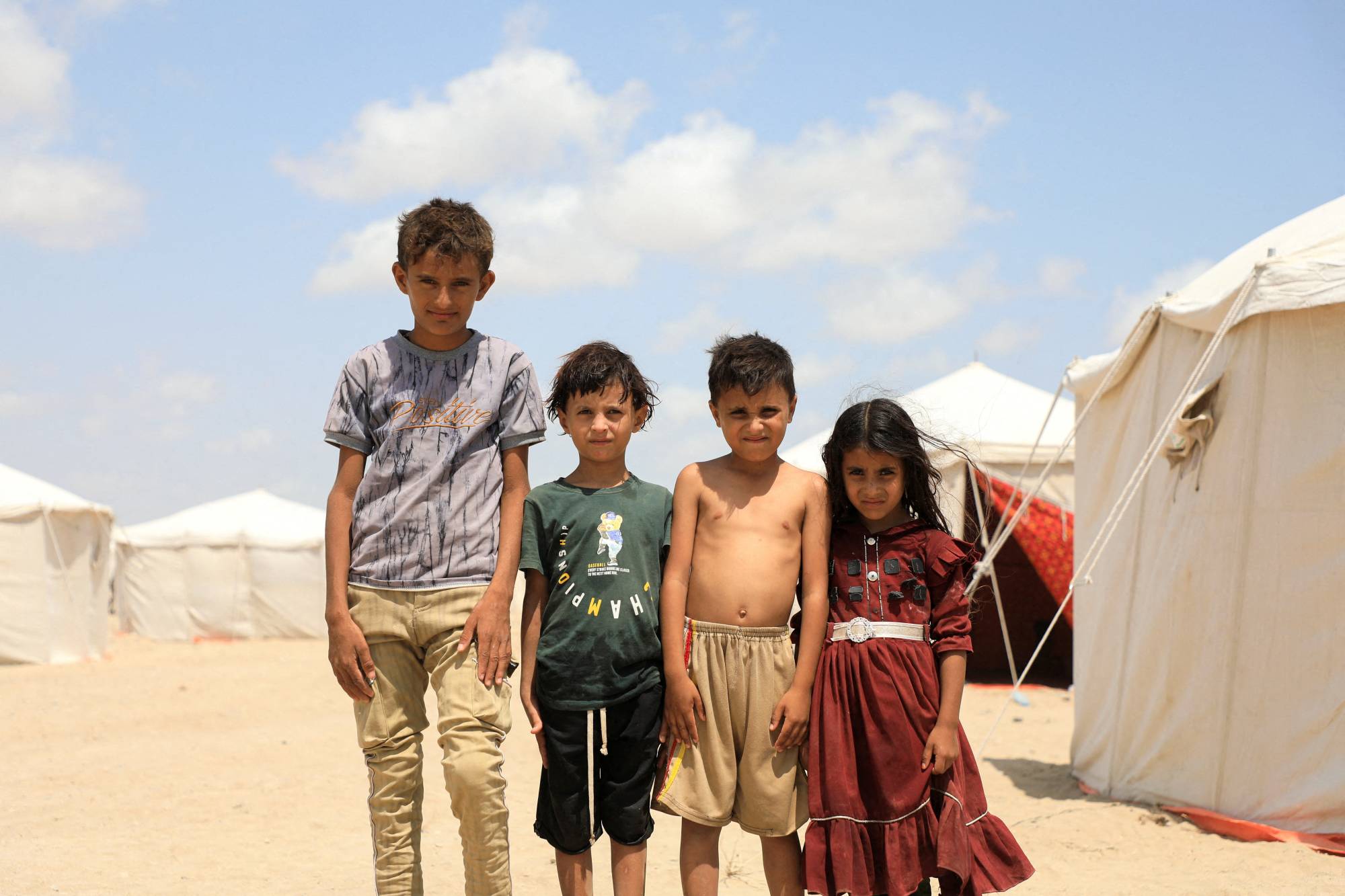
Mourners sit inside a vehicle as they carry the body of Palestinian child Malik Abu Shawish, on the day of the funeral of Palestinians who were killed in an Israeli strike, according to medics, at Al-Aqsa Martyrs Hospital in Deir al-Balah, in the central Gaza Strip, June 29, 2026. REUTERS/Mahmoud Issa
TT

Gaza Health Officials Say 3 Killed in Israeli Drone Strike

Mourners sit inside a vehicle as they carry the body of Palestinian child Malik Abu Shawish, on the day of the funeral of Palestinians who were killed in an Israeli strike, according to medics, at Al-Aqsa Martyrs Hospital in Deir al-Balah, in the central Gaza Strip, June 29, 2026. REUTERS/Mahmoud Issa

Gaza health officials said on Monday that an Israeli drone strike killed three civilians, including a child, the latest violence to hit the Palestinian territory despite a ceasefire.

Israel and Hamas trade near-daily accusations of truce violations and the Gaza Strip remains gripped by bloodshed as progress stalls on permanently ending their war.

"Three people were killed and several injured when an Israeli drone struck a group of civilians," Al-Aqsa hospital said in a statement.

Gaza's civil defense agency, which acts as a rescue force under Hamas, said the strike hit an area in Deir el-Balah, one of the least damaged towns in central Gaza.

The hospital said the fatalities were two men and an 8-year-old while a third man was wounded.

Israel's military identified the target as Zaher Abu Salem, who it said was a member of Islamic Jihad and was involved in the Oct. 7, 2023, attack on Israel that triggered the war.

At least 1,041 Palestinians have been killed in Gaza since the ceasefire took effect on October 10 last year, according to the territory's health ministry.

The Israeli army has reported six deaths in its ranks during the same period.


Al-Zaidi: We Will Continue Anti-Corruption Efforts in Iraq to Recover Public Funds

This handout picture released by the Iraqi Prime Minister's Media Office shows PM Ali al-Zaidi giving an address after assuming office in Baghdad on May 16, 2026. (Photo by IRAQI PRIME MINISTER'S PRESS OFFICE / AFP)
TT

Al-Zaidi: We Will Continue Anti-Corruption Efforts in Iraq to Recover Public Funds

This handout picture released by the Iraqi Prime Minister's Media Office shows PM Ali al-Zaidi giving an address after assuming office in Baghdad on May 16, 2026. (Photo by IRAQI PRIME MINISTER'S PRESS OFFICE / AFP)

Iraqi Prime Minister Ali al-Zaidi has stressed that the government was determined to continue fighting corruption to recover public funds.

In remarks published Monday following a cabinet session held on Sunday night, al-Zaidi said that “the recent offensive against corruption is just a first phase, and the government will continue to combat corruption to recover public funds.”

The government “is tasked with protecting the interests of the Iraqi people, and there will be no leniency,” said al-Zaidi.

He added that “the situation can no longer be tolerated, and our concern for the welfare of Iraqis compels us to assure our people that there are strong guardians of public funds.”

Iraq “has endured eras of wars, chaos, and combating terrorism. Today, the government's path is different by ... not allowing the corrupt to be part of the state's apparatus with the aim of stealing public funds.”

Dozens of Iraqi political officials have been arrested on corruption charges, Iraq’s state-run Iraqi News Agency reported Sunday.

It said the arrests were based on a statement made by former Deputy Minister of Oil Adnan al-Jumaili, who was arrested last month, and “included members of Parliament whose immunity had been lifted.”


In Sudan's Kordofan, a Key City Reels as Paramilitary Offensive Looms

A Sudanese woman walks as she carries a plastic canister in al-Rahmaniyah camp for displaced people, near the city of El-Obeid in the southern Kordofan region, on June 25, 2026. (Photo by AFP)
TT

In Sudan's Kordofan, a Key City Reels as Paramilitary Offensive Looms

A Sudanese woman walks as she carries a plastic canister in al-Rahmaniyah camp for displaced people, near the city of El-Obeid in the southern Kordofan region, on June 25, 2026. (Photo by AFP)

In a displacement camp near El-Obeid in Sudan's southern Kordofan region, Agsam Hamad trudges through searing heat to fetch murky water from a distant well, as paramilitary forces unleash their fiercest assault yet on the strategic city.

"We walk long distances for this water and it is undrinkable," the 35-year-old mother of seven told AFP from the camp on the edge of El-Obeid, a key prize in the three-year war between the army and the paramilitary Rapid Support Forces (RSF).

"Our situation is very difficult. We need food and water."

El-Obeid, a city of half a million people that hosts nearly 100,000 refugees displaced by violence elsewhere, has, in recent weeks, faced its most intense RSF attacks yet.

After breaking a prolonged siege in February last year, the army has struggled to stop the RSF from reimposing a blockade through repeated drone strikes targeting the city, its infrastructure and the main highway out.

Recent attacks have hit the main power station and fuel depots, plunged neighborhoods into darkness and shut down water pumps.

With taps dry, residents now depend on tanker trucks, wells and a handful of distribution points, they told AFP.

The UN has warned of "substantial" RSF troop movements around the city ahead of a possible ground assault, raising fears of a repeat of the atrocities seen in El-Fasher, the Darfur city which fell to the RSF last October in an attack the UN said bore "the hallmarks of genocide".

Nohad Eltayeb of the Armed Conflict Location and Event Data Project (ACLED), a US-based non-profit, said that over the past month troop movements have been observed roughly 60 kilometers north, south and west of El-Obeid.

The eastern route to Kosti, about 300 kilometers from the capital Khartoum, remains under army control but is extremely dangerous, she told AFP.

El-Obeid sits at a key crossroads linking army-held areas in central and eastern Sudan, including Khartoum, with RSF-controlled Darfur to the west.

Analysts say capturing it would consolidate RSF control over western Sudan and potentially open the way for a push towards the capital.

El-Obeid hosts an infantry division, an air base, a key oil pipeline and a major tree gum market.

"Controlling it is about power, land and money," said analyst Kholood Khair.

- 'Surrounded' -

Fighting and tight restrictions have all but cut off access to the city, making independent reporting increasingly difficult.

An AFP journalist captured rare footage at Al-Rahmaniyah camp showing exhausted women shuffling under a punishing sun, jerrycans swaying on their heads after hours spent waiting for water at a distant well.

At the camp, nearly 200 families are crammed into fragile shelters stitched together from straw, torn fabric and sheets of plastic.

Children linger in the narrow shade cast by the huts, some too tired to play, others trailing silently after their mothers.

"We have nothing. No water, food or mattresses," Waseela Mohamed, a 70-year-old grandmother of seven, told AFP.

Aid deliveries that reached the camp weeks ago have dwindled as services across the city are repeatedly hit.

"Humanitarian groups are doing what they can, but the needs are far greater," said a volunteer, who asked not to be named.

Inside El-Obeid, drones buzz almost constantly, said Adam Hussein, using a pseudonym for fear of reprisals.

"We don't know what is really happening.

"Everything is in crisis. Civilians and infrastructure are constantly targeted," he told AFP.

As he spoke, a drone crashed nearby, causing no casualties.

With water prices doubling, food costs rising by up to 300 percent and transport fares also surging, many residents are now effectively "surrounded", said Khair.

"Many haven't left because they can't afford to or don't know where to go," she told AFP.

- Total siege -

Mohamed Refaat of the International Organization for Migration warned the city is nearing a total siege, with civilians "soon unable to leave or return".

UN agencies have suspended access as security deteriorates while needs are outpacing pre-positioned supplies, he told AFP.

Without immediate aid, Refaat said conditions could "within weeks" mirror those seen in El-Fasher, where civilians survived on animal feed during 18 months under siege.

The UN says more than 6,000 people were killed in the first three days of its fall.

Western countries have warned of the risk of similar atrocities if El-Obeid falls.

A government source told AFP the army has tried to slow the RSF advance, destroying equipment en route last week.

A source close to the RSF accused the army of using civilians as "human shields", arguing they should be evacuated.

While the city's demographics differ from El-Fasher, where violence fell on ethnic lines, ACLED's Eltayeb said civilians "could still face looting, sexual violence and attacks on those accused of supporting the army".