
Who's Competing in Iraq's Elections?

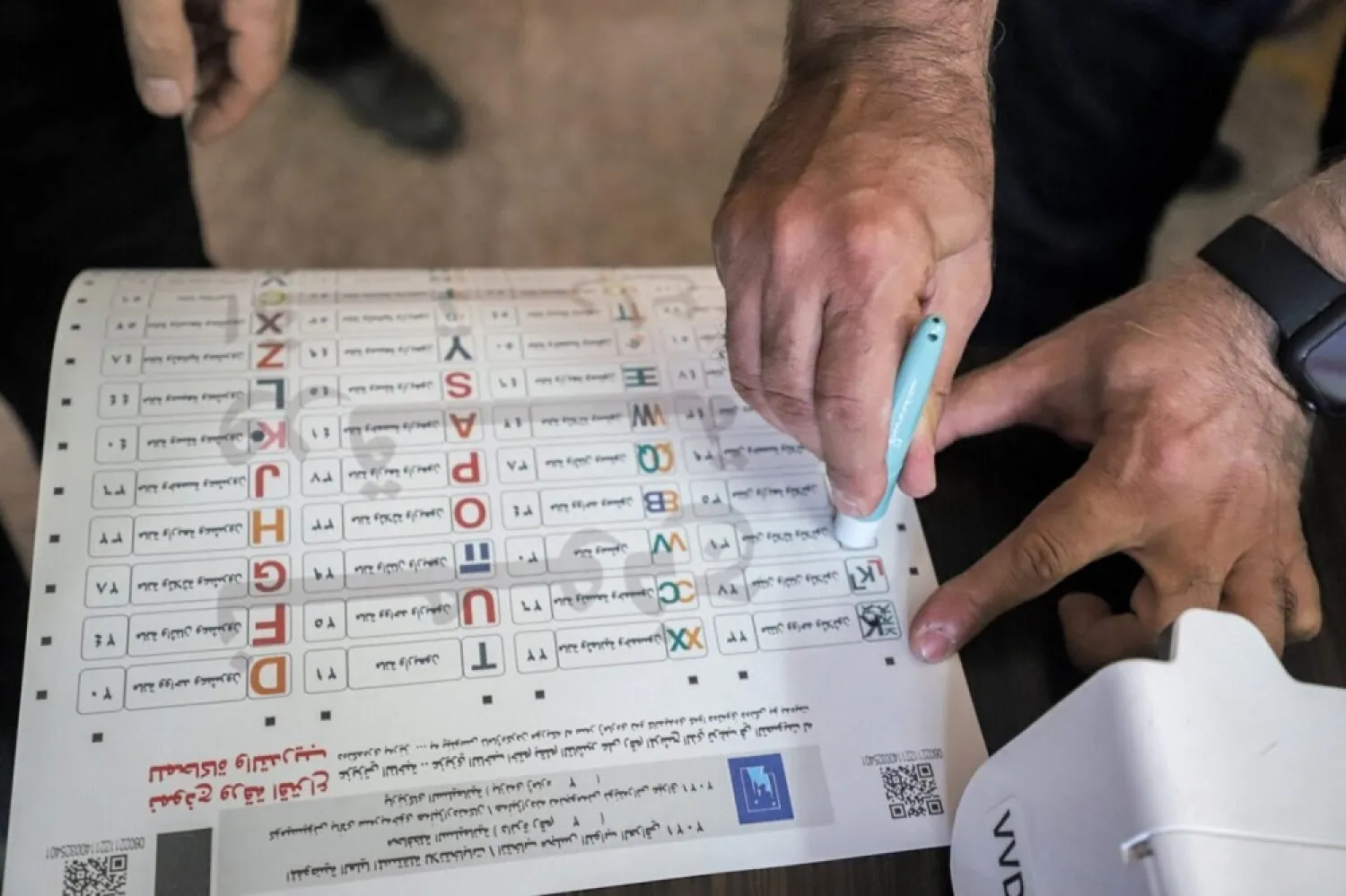
Officials of Iraq's electoral commission undergo a polling day simulation to test run its systems ahead of the upcoming parliamentary elections on September 22, 2021. (Getty Images)
TT

Who's Competing in Iraq's Elections?

Officials of Iraq's electoral commission undergo a polling day simulation to test run its systems ahead of the upcoming parliamentary elections on September 22, 2021. (Getty Images)

Iraq holds a general election on Oct. 10, its fifth parliamentary vote since the US-led invasion that toppled Saddam Hussein in 2003 and ushered in a complex multi-party system contested by groups defined largely by sect or ethnicity.

The vote had been set for next year but was brought forward to satisfy protesters who took to the streets in 2019 over rampant corruption, poor services and the widely held view that the elite had abused power to enrich itself.

Groups drawn from the Shiite majority are expected to remain in the driving seat, as has been the case since Saddam's regime was removed from power.

But the Shiites are sharply divided, including over the influence of Iran next door.

The activists who sought the removal of the entire political class have been divided over whether to contest the vote, and are expected to win a few seats at most. A new election law also guarantees women at least 83 seats in parliament.

Reuters takes a look at the main groups competing for parliament's 329 seats:

The Sadrist Movement
The political organization of Shiite cleric Moqtada al-Sadr, the Sadrist Movement, is widely expected to emerge as parliament's biggest faction.

The Sadr-led Sairoon alliance won 54 seats in 2018, more than any other faction, giving Sadr decisive influence in the government's formation. His movement has used its parliamentary sway to expand its control over large parts of the state.

The Sadrist Movement is running on a nationalist platform, seeking to set itself apart from Iran-backed Shiite factions.

Sadr led Shiite militants against US forces after the invasion and inherited a cult-like following among supporters who revered his father Mohammed Sadiq al-Sadr.

Iran-aligned groups
Led by militia commanders who have close ties to Iran, the biggest grouping of Iran-aligned parties fall under the Fatah Alliance led by paramilitary leader Hadi al-Ameri, whose bloc came second in 2018 with 48 seats.

The Fatah Alliance includes the political wing of Asaib Ahl al-Haq, which the United States has designated a terrorist organization and also represents the Badr Organization, which has long ties with Tehran and fought alongside Iran in the 1980-1988 Iran-Iraq war.

The paramilitaries all played a major role in defeating ISIS when it took over a third of Iraq between 2014 and 2017.

Some Iran-aligned parties are running outside of the Fatah umbrella, including the newly formed Huqouq party of Iran's most powerful Iraqi proxy, Kataib Hezbollah.

Other Shiite alliances
Former prime minister Haider al-Abadi and the Hikma Movement of moderate cleric Ammar al-Hakim have joined forces to create the National State Forces Alliance.

An alliance led by Abadi came third in 2018, winning 42 seats, after he presided over ISIS’ defeat.

Hikma won 19.

Former prime minister Nouri al-Maliki, a senior leader in one of Iraq's oldest political parties, Dawa, heads the State of Law coalition which won 25 seats in 2018. Maliki is widely blamed for fueling corruption and anti-Sunni sectarianism that helped ISIS gain followers.

Sunni parties
The Sunni parliament speaker Mohammed al-Halbousi is leading the Taqaddum, or progress, alliance which comprises several Sunni leaders from the Sunni-majority north and west of Iraq and is expected to get many Sunni votes.

Halbousi's main competitor is Khamis al-Khanjar, a tycoon who joined the Iran-backed Fatah Alliance after the 2018 election. Khanjar's coalition is called Azm.

Kurds
Iraq's northern Kurdistan region has had de-facto autonomy since 1991 and became formally autonomous under Iraq's 2005 constitution. Its parties always participate in elections and are an important power broker.

The two main Kurdish parties are the Kurdistan Democratic Party (KDP), which dominates the Kurdish government in the capital Erbil, and The Patriotic Union of Kurdistan (PUK) party, which dominates areas along the Iranian border and is headquartered in Sulaimaniya.

The KDP won 25 seats in 2018 and the PUK won 18. They will retain the lion's share of Kurdish votes, followed by smaller parties. The total tally from seven Kurdish parties in 2018 was 58.

Activists
While the 2019 protests led the previous government to quit, little else has changed since then. The struggle they faced was highlighted by the use of deadly force against demonstrators.

Some of the activists who protested in 2019 are urging a boycott. But others have formed their own parties or joined moderate coalitions such as that of Abadi and Hakim.

The Imtidad Movement is one of the few activist-led parties fielding candidates, headed by pharmacologist Alaa al-Rikabi, a native of Nasiriyah in southern Iraq where some of the deadliest attacks against demonstrators took place in 2019.

Why Pakistan Has Emerged as a Mediator between US and Iran

FILE PHOTO: US President Donald Trump looks at Pakistan's Prime Minister Shehbaz Sharif speaking following the official signing of the first phase of the Gaza ceasefire agreement between Israel and Hamas, during a world leaders' summit on ending the Gaza war, in Sharm El-Sheikh, Egypt, October 13, 2025. REUTERS/Evelyn Hockstein/File Photo
TT

Why Pakistan Has Emerged as a Mediator between US and Iran

FILE PHOTO: US President Donald Trump looks at Pakistan's Prime Minister Shehbaz Sharif speaking following the official signing of the first phase of the Gaza ceasefire agreement between Israel and Hamas, during a world leaders' summit on ending the Gaza war, in Sharm El-Sheikh, Egypt, October 13, 2025. REUTERS/Evelyn Hockstein/File Photo

As fears of a wider regional conflict escalate following US and Israeli strikes on Iran that began in late February, Pakistan has emerged as an unexpected mediator, offering to help bring Washington and Tehran to the negotiating table.

Islamabad isn't often called on to act as an intermediary in high-stakes diplomacy, but it's stepped into the role this time for a number of reasons, both because it has relatively good ties with both Washington and Tehran and because it has a lot at stake in seeing the war resolved.

Pakistani government officials have said that their public peace effort follows weeks of quiet diplomacy, though they have provided few details. They have also said that Islamabad stands ready to host talks between representatives from the US and Iran.

Here's what to know about Pakistan's mediation effort:

Pakistan helped US deliver 15-point plan to Iran

Pakistan’s role in Iran-US negotiations surfaced only days ago following media reports. Officials in Islamabad later acknowledged that a US proposal had been conveyed to Iran.

It remains unclear who has served as Iran’s point of contact in the indirect talks. Iran has maintained it has not held such talks and dismissed the US proposal, but Tehran has acknowledged responding with its own proposals.

According to Pakistani officials, US messages are being passed to Iran and Iranian responses relayed to Washington, though they did not specify how the process is being handled or who is directly communicating with whom. Pakistan's Foreign Minister Ishaq Dar said this week that Türkiye and Egypt are also working behind the scenes to bring the sides to the negotiating table.

Abdullah Khan, managing director of the Pakistan Institute for Conflict and Security Studies, said that Pakistani’s mediation efforts may be contributing to relative restraint in the conflict. He noted that US President Donald Trump has delayed his threats of large-scale attacks on Iran’s energy infrastructure citing diplomatic progress, and Iranian responses toward US interests in the Gulf have been measured in what may be an effort to preserve space for diplomacy.

Ties with both US and Iran set Pakistan up for new role

Previous US-Iran negotiations have been facilitated mainly by countries in the Middle East, including Oman and Qatar, but as they come under Iranian fire during the war Pakistan has stepped into the role.

Analysts say Pakistan’s geographic proximity to Iran — it’s one of its neighbors — coupled with its longstanding ties with the US, gives it a unique position at a time when direct communication between the two sides remains constrained.

Islamabad has good working relations with most of the key parties in the war, including both the US and Iran. It has close strategic ties with Gulf states including Saudi Arabia, with which it signed a defense cooperation agreement last year. However, Pakistan has no diplomatic relations with Israel because of the lingering issue of Palestinian statehood.

Relations between the United States and Pakistan have improved since last year, with increased diplomatic engagement and expanding economic ties. Pakistan also joined Trump's Board of Peace, which aims to ensure peace in Gaza.

Pakistan has a lot at stake in ceasefire talks

The conflict poses some of “the biggest economic and energy security challenges” in Pakistan’s history, said Islamabad-based security analyst Syed Mohammad Ali.

The country gets most of its oil and gas from the Middle East — and, he said, the five million Pakistanis working in the Arab world send home remittances each year roughly equal to the country’s total export earnings.

Rising tensions have already contributed to higher global oil prices, forcing Pakistan to increase fuel prices by about 20% and putting pressure on the government of Prime Minister Shehbaz Sharif’s government.

The war is also adding to domestic turmoil, even as Pakistan has been grappling for months with its own conflict with neighboring Afghanistan. Islamabad has accused the country's Taliban government of tolerating militant groups that are behind attacks in Pakistan.

Earlier this month, protests erupted across the country following US strikes on Iran, with demonstrators clashing with security forces in several cities.

A day after the United States and Israel attacked Iran, killing Supreme Leader Ali Khamenei, clashes erupted in Pakistan’s southern port city of Karachi and in parts of the north, leaving at least 22 people dead and more than 120 injured nationwide.

At least 12 people were killed in and around the US Consulate in Karachi after a mob breached the compound and attempted to set it on fire.

Khamenei was a central religious and political figure for Shiites worldwide, including in Pakistan.

Pakistan has a record as a mediator

While Pakistan rarely serves as a mediator, its record does include playing a role in some very high-profile talks.

Pakistan’s then-President Gen. Yahya Khan facilitated backchannel contacts that led to US President Richard Nixon’s historic 1972 visit to China. That paved the way for the establishment of diplomatic ties between Washington and Beijing in 1979.


With Top Figures Dead, Who Is Now Running Iran?

A woman holds a poster depicting Iran’s new Supreme Leader Mojtaba Khamenei during an anti-US and anti-Israeli rally, amid the US-Israeli conflict with Iran, in Tehran, Iran, March 26, 2026. Majid Asgaripour/WANA (West Asia News Agency) via Reuters
TT

With Top Figures Dead, Who Is Now Running Iran?

A woman holds a poster depicting Iran’s new Supreme Leader Mojtaba Khamenei during an anti-US and anti-Israeli rally, amid the US-Israeli conflict with Iran, in Tehran, Iran, March 26, 2026. Majid Asgaripour/WANA (West Asia News Agency) via Reuters

Iran's veteran ‌supreme leader and a host of other top figures and Revolutionary Guards commanders have been killed in US-Israeli strikes, but the ruling system has maintained its ability to strategize and operate in the war that began on February 28.

Born from a 1979 revolution, the Iranian regime built a complex power structure with layered institutions buttressed by a shared commitment to the survival of the theocratic system rather than relying on a small number of individuals.

Here is a guide to who now wields power and influence in a depleted but resilient hierarchy:

IS THE SUPREME LEADER REALLY IN CHARGE?

Iran's veteran Supreme Leader Ali Khamenei was killed in one of the first strikes of the war. In office since 1989 he enjoyed unquestioning obedience throughout the system and the last say on all major issues.

Under Iran's official ideology of velayat-e faqih, or “rule of the Islamic jurist”, the supreme leader is a learned cleric wielding temporal power on behalf of Shiite Islam's 12th imam, who disappeared in the ninth century.

The leader's office, known as the bayt, has a large staff that shadows other parts of Iran's government, allowing the leader to intervene directly across the bureaucracy.

The new leader, Khamenei's son Mojtaba, has inherited the role and its extensive formal powers, but he lacks the automatic authority enjoyed by his father.

The choice of the Revolutionary Guards, he may also be beholden to the hardline military corps.

He was wounded in ‌the strikes, and has ‌been referred to on state TV as a "janbaz", or "wounded veteran" of the current conflict.

More than three weeks after ‌his appointment ⁠he has not been ⁠seen in any photograph or video clip by Iranians and has only issued two written statements, raising questions over his condition.

HOW CENTRAL IS THE REVOLUTIONARY GUARDS CORPS?

The Guards have been growing in influence for decades, but in the midst of a war and after the killing of Ali Khamenei and installation of Mojtaba Khamenei, they have assumed an even more central role in strategic decision-making.

Long prepared to withstand decapitation of their leadership, the Guards have a "mosaic" organizational structure with a line of replacements already named for each commander, and every unit able to operate independently according to set plans.

Many top-ranking Guards commanders were killed early on - following a long list of senior commanders killed in strikes last year - but they have been replaced with other experienced men who have so far proven able to manage a complex war effort.

That resilience reflects the command depth of a corps that took the ⁠lead in the devastating 1980-88 war with Iraq and has spearheaded Iran's close involvement with groups fighting in a host ‌of other conflicts around the Middle East for decades.

WHAT ROLE DOES THE POLITICAL LEADERSHIP PLAY?

Iran's political system ‌merges clerical rule with an elected president and parliament, and they all have a significant role in running the country along with the Guards.

The killing of the late Khamenei's ‌main adviser Ali Larijani was a real blow to the ruling authorities given his extensive experience, his ability to operate between Iran's different power centers and his skills ‌negotiating with the outside world.

Other capable, experienced political figures remain but the more prominent ones likely to step into the shoes of Larijani and other assassinated individuals may be more hardline than those who have been killed.

The death of Revolutionary Guards naval head Alireza Tangsiri, an experienced commander in place since 2018, was another significant blow. Tangsiri had reportedly played a significant part in Iran's closure of the Strait of Hormuz.

WHO ARE SOME OF THE BIG NAMES LEFT?

Revolutionary Guards head Ahmad Vahidi: The corps' latest commander was appointed after his two immediate predecessors were ‌killed. Influential in the Guards for years, he fought in the Iran-Iraq war, ran the Qods Force, served as defense minister and helped crush internal dissent.

Revolutionary Guards' Quds Force chief Esmail Qaani: A secretive figure, he has ⁠managed Iran's ties with proxies and allies across ⁠the region since taking over the unit in 2020 when its veteran leader Qassem Soleimani was killed by a US drone strike ordered by US President Donald Trump.

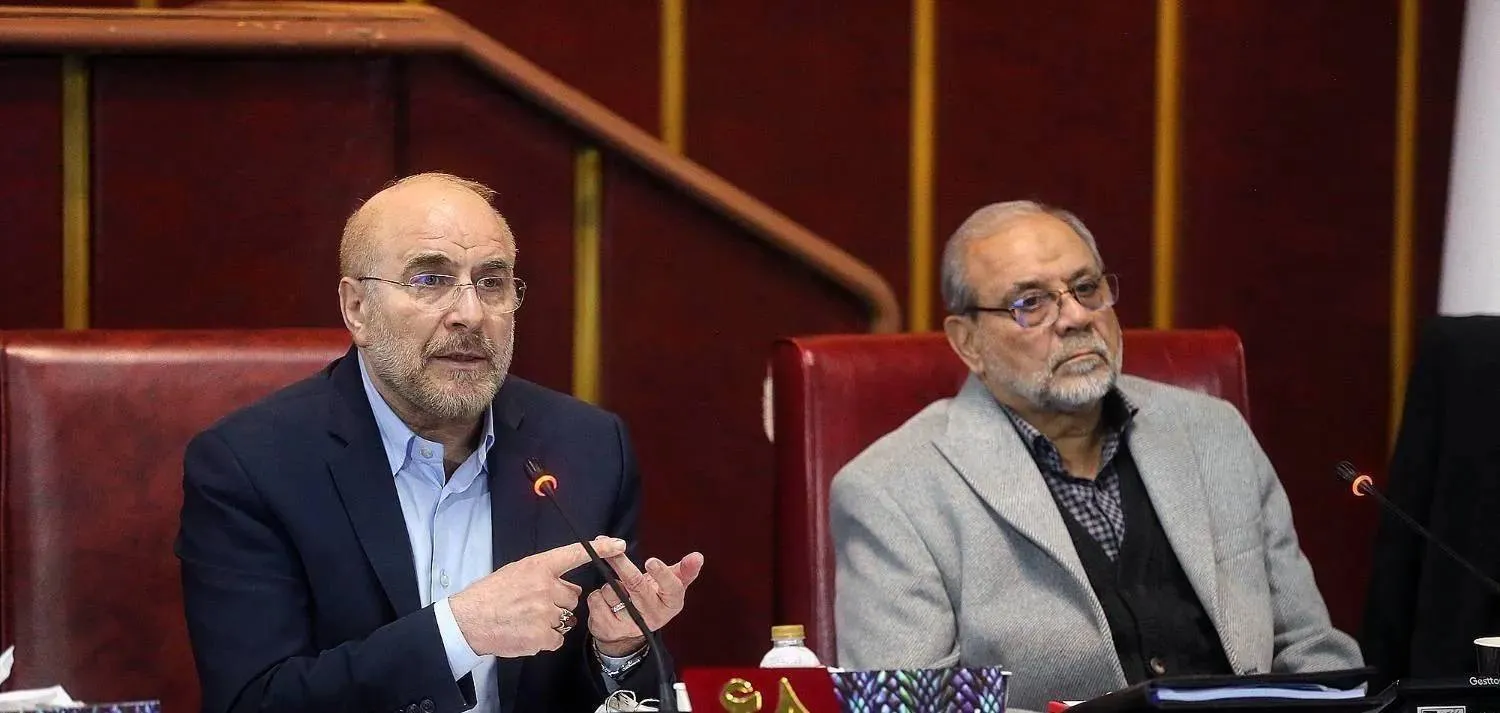
Parliament Speaker Mohammad Baqer Qalibaf: A former Revolutionary Guards commander, Tehran mayor and failed presidential candidate, Qalibaf may be the biggest political heavyweight still alive. He has been increasingly vocal over recent weeks, setting out Iran's stance as the war has developed and was said by an Israeli official and a source familiar with the matter to have been negotiating with the US over recent days.

Judiciary Head Gholamhossein Mohseni-Ejei: A former intelligence head sanctioned for his role in the deadly repression of mass protests in 2009, Mohseni-Ejei is widely seen as a hardliner.

President Masoud Pezeshkian: While Iran's presidency is far less important than it once was, Pezeshkian is the most senior directly elected figure in Iran, giving him an important voice. The limits of his influence were starkly illustrated earlier this month when he incurred the Guards' ire by apologizing to Gulf states for Iranian attacks on their territory and he had to partially retract his comments.

Former Supreme National Security chief Saeed Jalili: An injured veteran of the Iran-Iraq war and one of the most hardline figures in Iranian politics, he was the losing 2024 presidential candidate and uncompromising former nuclear negotiator.

Guardian Council member Alireza Arafi: The senior cleric is a leading member of the Guardian Council, the body that chooses which candidates to exclude from elections, and was so well trusted that he was chosen to join the three-man interim council running Iran after Khamenei's death.

Foreign Minister Abbas Araqchi: The veteran diplomat has conducted high-stakes negotiations with Iran's Western foes for years, as well as with global powers Russia and China, which have a better relationship with Tehran, and with Iran's Arab neighbors and rivals.


Report: Iran Hardliners Ramp up Calls for a Nuclear Bomb

A satellite imagery taken on February 1, 2026, shows a new roof over a previously destroyed building at Isfahan nuclear site, Iran. (2026 PLANET LABS PBC/Handout via Reuters)
TT

Report: Iran Hardliners Ramp up Calls for a Nuclear Bomb

A satellite imagery taken on February 1, 2026, shows a new roof over a previously destroyed building at Isfahan nuclear site, Iran. (2026 PLANET LABS PBC/Handout via Reuters)

The debate among Iranian hardliners over whether Tehran should seek a nuclear bomb in defiance of an escalating US-Israeli attack is getting louder, more public and more insistent, sources in the country say.

With the Revolutionary Guards now dominant following the killing of veteran Supreme Leader Ali Khamenei at the start of the war on February 28, hardline views on Iran's nuclear approach are in the ascendant, two senior Iranian sources said according to Reuters.

While Western countries have long believed that Iran wants the bomb - or at least the ability to make one very quickly - it has always denied that, saying Khamenei had banned nuclear arms as forbidden in Islam and citing its membership of the Nuclear Non-Proliferation Treaty.

There was no plan to change Iran's nuclear doctrine yet and Iran had not decided to seek a bomb, one of the sources said, but serious voices in the establishment were questioning the existing policy and demanding a change.

The US-Israeli attacks on Iran, which came midway through talks on Tehran's nuclear program, may have changed the equation, convincing Iranian ‌strategists that they ‌have little to gain by forswearing a bomb or staying in the NPT.

HARDLINER STANCE

The idea ‌of ⁠quitting the NPT - ⁠something hardliners have previously threatened - has been increasingly aired on state media along with the idea - once taboo in public - that Iran should go outright for the bomb.

The Tasnim News Agency, which is affiliated with the Guards, on Thursday published an article saying Iran should withdraw from the NPT as soon as possible while sticking with a civilian nuclear program.

Hardline politician Mohammad Javad Larijani, brother of senior official Ali Larijani who was killed in a strike this month, was quoted by state media this week urging Iran to suspend its membership of the NPT.

"The NPT should be suspended. We should form a committee to assess whether the NPT is of any use to us at all. If it ⁠proves useful, we will return to it. If not, they can keep it," he said.

Earlier in ‌the month, state television aired a segment with conservative commentator Nasser Torabi in ‌which he said the Iranian public demanded: "We need to act in order to build a nuclear weapon. Either we build it or we acquire ‌it."

Nuclear policy has also been a subject of private discussion in ruling circles, said the two sources, adding that there ‌was divergence between harder line elements including the Guards and those in the political hierarchy over the wisdom of such a move.

To be sure, Iranian officials have threatened in the past to reconsider membership of the NPT as a negotiating tactic during more than two decades of talks with the West over Iran's nuclear program without ever having done so.

The more public debate may represent just such a tactic. It is also far from clear ‌how quickly Iran might be able to push for a bomb after suffering weeks of air strikes on its nuclear, ballistic and other scientific facilities and after a shorter air campaign ⁠by Israel and the United ⁠States last year.

Israel had repeatedly warned over many years that Iran was only months away from being able to make a nuclear bomb, citing intelligence reports, Tehran's enrichment of uranium needed for a warhead almost to weapons grade, and its ballistics program.

NO CHANGE TO NUCLEAR POLICY YET

Analysts have said the country's goal has been to attain the status of a "threshold state" - able to produce a bomb quickly if needed but without incurring the pariah status that could come with the weapon itself.

Guards commanders and other senior figures had in the past warned that Iran would have to go straight for a bomb if the regime survival was threatened - a condition that the present war may meet.

Khamenei's fatwa, or religious opinion, that nuclear weapons were not permissible in Islam, was made in the early 2000s, though never issued in written form. Khamenei reiterated it in 2019.

One of the two senior Iranian sources said that with Khamenei's death and that of Ali Larijani, who the source said had also pushed back against hardliners, it was becoming more difficult to counter the more hawkish arguments.

It was also not clear whether the obligation to obey Khamenei's unwritten fatwa survived his death, though it would likely remain valid unless revoked by the new supreme leader - his son Mojtaba Khamenei, who has not been seen in public since the death of his father.