'Utopia of Cultured City 2'…New Book by Khalida Said

'Utopia of Cultured City 2'…New Book by Khalida Said
TT

'Utopia of Cultured City 2'…New Book by Khalida Said

'Utopia of Cultured City 2'…New Book by Khalida Said

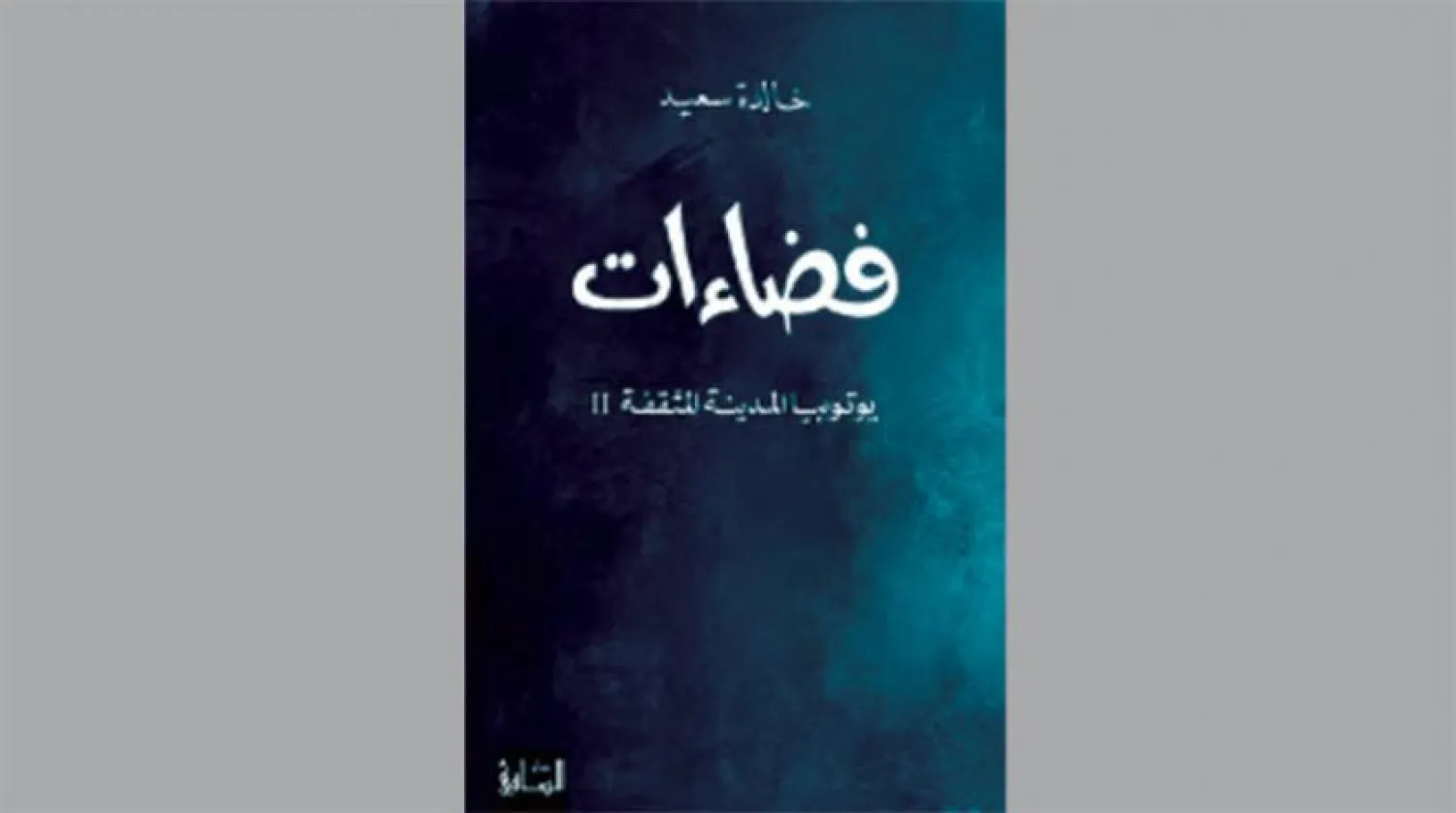
"Utopia of the Cultured City 2" is a new book by author Khalida Said released recently by Dar Al Saqi.

"This book continues what its predecessor 'Utopia of the Cultured City' (2012) started. It doesn't claim inclusivity, but it shed lights on 37 Lebanese prominent intellectual figures including Abdullah al-Alayli, Said Takieddine, Fairuz, Vénus Khoury, Maroun Abboud, Suhayl Idris, Michel Hayek, Yumna al-Eid, Ghassan Tueni, Adib Mazhar, Helen Khal, Fatima al-Hajj, Chafik Maalouf, George Chhade, and many others," reads the introduction.

Khalida Said is a Lebanese author and critic of Syrian origin. She published her first articles in the "Poetry" magazine in 1957. She studied at the Lebanese University and the University of Sorbonne, and worked as a professor in several Lebanese high schools and the Lebanese University (between 1958 and 1996).

Her works are many including: "Search for Origins," "Creativity Movement," "Theatrical Movement in Lebanon," and "The Big Metaphor."

She also wrote six books about the renaissance era with Poet Adonis, and has several translations.


Jeddah’s Red Sea Museum Announces January Cultural Program

The program's themes span traditional architecture, historical photography, music, travel literature, and the history of navigation and public health in the Red Sea. (SPA)
TT

Jeddah’s Red Sea Museum Announces January Cultural Program

The program's themes span traditional architecture, historical photography, music, travel literature, and the history of navigation and public health in the Red Sea. (SPA)

Jeddah's Red Sea Museum announced the launch of its public program for January 2026, featuring a series of artistic workshops, cultural talks, live performances, and family activities. The program aims to connect the Red Sea's cultural heritage with contemporary creative practices, catering to various segments of society.

The program's themes span traditional architecture, historical photography, music, travel literature, and the history of navigation and public health in the Red Sea. These activities are presented through a cultural and educational agenda held across the museum's facilities and venues in Historic Jeddah.

The program begins on Tuesday, with a workshop titled "Junior Cartographers" in the Discovery Room, where children aged 6 to 12 will explore the art of mapmaking and the fundamentals of navigation through an engaging, interactive approach. On January 15, the "Alchemy of Light: Albumen Prints" workshop will be held at the auditorium, highlighting the historical albumen printing technique using egg whites and silver salts, and exploring 19th-century photography aesthetics through a contemporary perspective.

On January 17, a talk about Historic Jeddah will discuss traditional architecture and its relationship to heritage and modernity. This will be followed on January 18, by the "Navigation from Past to Present" workshop at the auditorium, offering an interactive experience that explores the evolution of navigation methods through hands-on artistic and practical activities.

On January 22, the program includes the screening of the animated film "The Menace from Above" at the auditorium. Later that evening, Bab Al-Bunt Courtyard will host the Al Nour Wal Amal Orchestra, the world's only musical ensemble composed entirely of blind female musicians who perform using Braille musical notation, in a performance celebrating art, resilience, and diversity.

On January 23, an artist talk titled "The Gate of Gates" will be held in Historic Jeddah, documenting the transformations of the Bab Al-Bunt building and the human stories connected to this historic space. On January 28, the auditorium will host a talk titled "Encounters: Travel Literature," exploring journeys to Andalusia and Sicily and how Islamic heritage continues to live on through people and places.

The program concludes on January 31, with a lecture examining the development of quarantine systems and public health monitoring in the Red Sea, highlighting the historical role of Bab Al-Bunt as a quarantine center for pilgrims.

The Red Sea Museum's activities serve as a cultural and knowledge platform dedicated to documenting the Red Sea's tangible, intangible, and natural heritage, and presenting it through educational and interactive programs that foster dialogue between the past and the present, linking heritage with contemporary creative contexts from its headquarters in Historic Jeddah.


Jazan Culture House Highlights the Role of Translation in Promoting Saudi Literature Globally

The meeting reviewed the state of Saudi literary translation, past and present, highlighting the challenges facing translators and publishers - SPA
TT

Jazan Culture House Highlights the Role of Translation in Promoting Saudi Literature Globally

The meeting reviewed the state of Saudi literary translation, past and present, highlighting the challenges facing translators and publishers - SPA

The Cultural House in Jazan held a cultural meeting yesterday evening titled “The Importance of Translating Saudi Literature.” Participants discussed the role of translation in introducing Saudi literature to local and international audiences, and its impact on strengthening its presence and highlighting the richness and diversity of Saudi creative expression, SPA reported.

The meeting reviewed the state of Saudi literary translation, past and present, highlighting the challenges facing translators and publishers.

Speakers emphasized the importance of adhering to professional and ethical standards when translating literary works into other languages.

The discussion also underscored the role of translation in enabling local literature to reach a global readership, thereby fostering cultural exchange and showcasing the Kingdom’s literary identity on the international stage.

This meeting is part of a series of cultural programs designed to enrich the literary scene, raise awareness of translation-related issues, and create platforms for dialogue among intellectuals and those interested in cultural affairs.


Royal Commission for AlUla Discovers Rare Fossils Dating Back 465 Million Years

The fossils date to the Middle Ordovician period - SPA
TT

Royal Commission for AlUla Discovers Rare Fossils Dating Back 465 Million Years

The fossils date to the Middle Ordovician period - SPA

The Royal Commission for AlUla (RCU) has announced the documentation and international publication of a scientific discovery of rare horseshoe crab fossils dating back approximately 465 million years, as part of a peer-reviewed study published in Gondwana Research, a leading international journal specialising in geological sciences.

This unique fossil discovery has been published globally for the first time, reinforcing AlUla’s position as a world-class center for geological and scientific research related to Earth’s history and biodiversity. The fossils were discovered in AlGharameel Nature Reserve in AlUla, adding a significant scientific dimension to the understanding of the region’s natural history, SPA reported.

The fossils date to the Middle Ordovician period, approximately 485–444 million years ago, making them among the oldest known horseshoe crab fossils worldwide. They are distinguished by their exceptionally large size compared to other specimens from the same period. All fossils were found preserved upside down, a mode of preservation not previously recorded, alongside trace fossils indicating attempts by the organisms to return to their natural position. This provides rare evidence of ancient behavioural patterns and enables their interpretation in light of contemporary biological knowledge, supporting advanced scientific research.

According to SPA, geological stratigraphic analysis indicated the recurrence of intense seasonal storms during that period, suggesting that these organisms congregated in shallow coastal environments affected by such events, which contributed to their preservation within sedimentary deposits.

These findings offer a clear picture of AlUla’s ancient coastal environment and add a new scientific perspective to understanding its geological and environmental history. They also highlight the commission’s capacity to provide accurate data that supports scientific research and innovation in the study of AlUla’s natural heritage.

The discovery also represents a previously unclassified species, investigated through two research phases in collaboration with a team led by Dr Russell Bicknell, an academic at Flinders University in Adelaide. The second phase, scheduled for the first half of 2026, will include the collection of additional samples and further study of the new species in preparation for its formal scientific classification. The fossil specimens have been preserved within RCU’s museum collections to support future research and public engagement.

The findings reflect the Royal Commission for AlUla’s commitment to advancing scientific transformation, strengthening AlUla’s position as a global destination for scientific discovery and geological research, enabling international partnerships, and developing research and educational programmes related to natural heritage.