


Algeria's Poor Fret over Plan to Slash Subsidies on Basic Goods

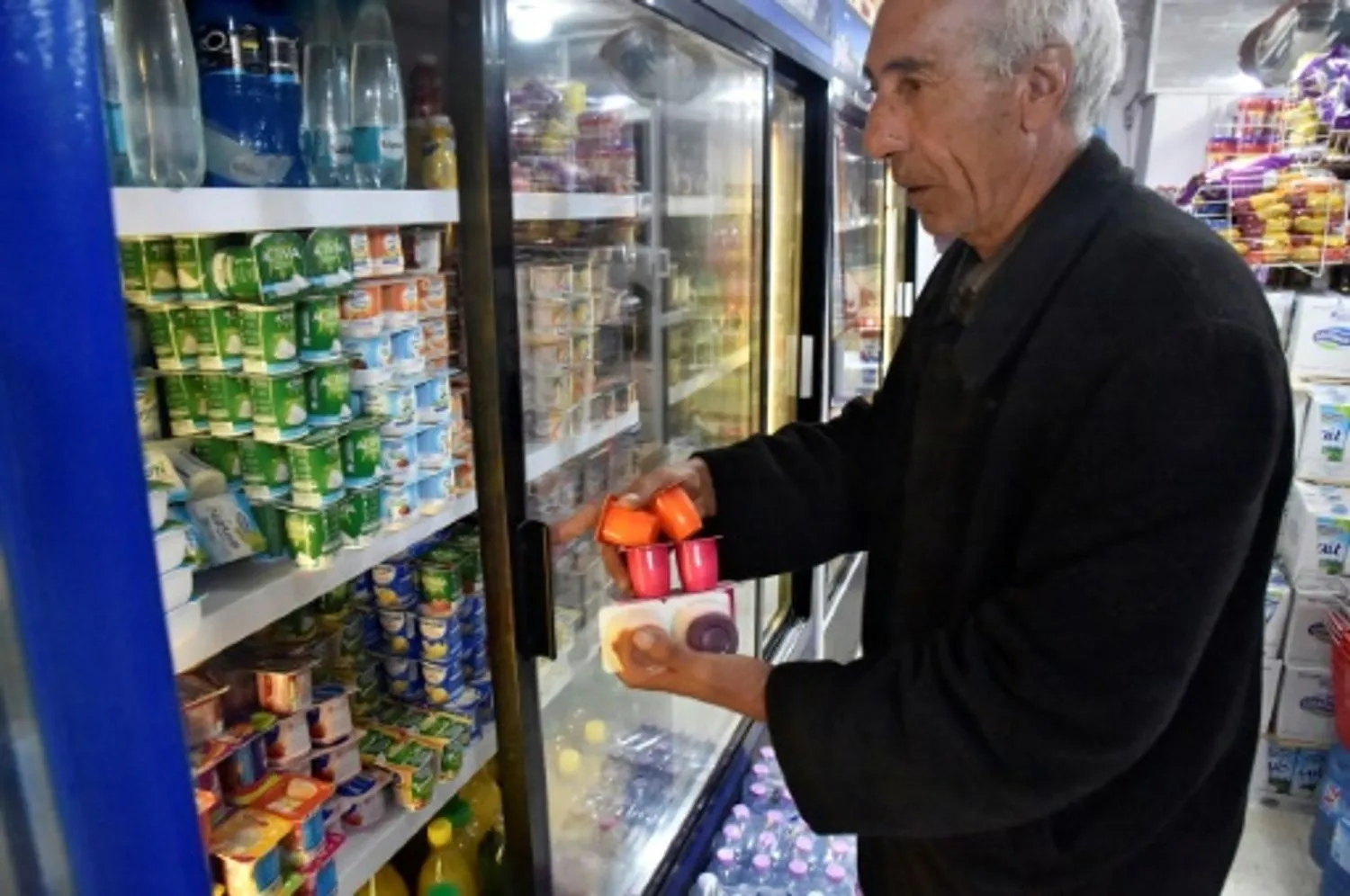
Algeria's lower house of parliament passed a bill on November 17 that paves the way to scrapping subsidies on basic goods, replacing it with targeted aid Ryad KRAMDI AFP
TT

Algeria's Poor Fret over Plan to Slash Subsidies on Basic Goods

Algeria's lower house of parliament passed a bill on November 17 that paves the way to scrapping subsidies on basic goods, replacing it with targeted aid Ryad KRAMDI AFP

Algeria plans to scrap its generous state subsidies on basic goods that have long helped maintain social peace but strained state budgets as energy revenues have fallen.

Many economists support the plan as a necessary evil, as long as the neediest are protected, but some poor families are fearful about the impact.

The North African country, heavily dependent on oil and gas exports, has for decades subsidized everything from bread and milk to fuel and electricity, at the cost of billions of dollars a year.

But income from energy exports has fallen for years, especially during the downturn driven by the Covid-19 pandemic, heightening the strain on public finances in the country of 43 million.

The International Monetary Fund (IMF), which advocates subsidy reform, last month urged Algiers to "recalibrate" its policies.

Lawmakers voted last week to wind back the subsidy system that has helped share the energy wealth with all households regardless of income, leaving some people worried about how they will get by.

"It's a disaster," Hafidha, a mother-of-two with a monthly pension of 50,000 dinars ($360) said at an Algiers market.

"Already with the current prices we have a hard time making ends meet. The price of sugar, oil, water and fuel will definitely go up."

Public fears were stoked when fruit and vegetable prices recently skyrocketed.

The price of potatoes more than tripled to 140 dinars ($1) a kilogram, although authorities blamed this on market speculators they said they had since disbanded.

- 'Recalibration' -
During Algeria's transition to a market economy in the 1990s, subsidies replaced the fixed prices of a planned economy that had been in place since independence from France in 1962.

Algeria's subsidy system has been financed by energy exports that account for about 95 percent of foreign revenues and 60 percent of its budget.

But with a recent decline in energy prices, "the state no longer has the means for such a generous social policy" economist Omar Berkouk told AFP.

"All the World Bank and International Monetary Fund experts, as well as economists, have pointed to the need to reduce (subsidies) by better targeting the recipients," he added.

Critics of state subsidies say they are costly, create harmful market distortions and are inefficient because they help rich households more than poor ones.

In early October, the IMF said the pandemic and a fall in oil prices and output had "seriously impacted the economy last year" when Algeria's real GDP contracted by 4.9 percent.

Although a recovery is underway, it recommended "a broad-based fiscal adjustment" with measures to protect the most vulnerable should start in 2022.

Algeria's state budget for next year sets aside the equivalent of $17 billion for social transfers, including compensation measures, as well as assistance for education, health, housing and support for large families.

This is far below the $30-40 billion a year in the state budgets between 2012 and 2017.

- Identifying the needy -
Previous governments considered introducing more targeted subsidies in 2015, and again in 2017 when the current President Abdelmadjid Tebboune was prime minister.

"It was ex-president Abdelaziz Bouteflika who prevented any such action, with an eye to running for a fifth term," Berkouk said about the late veteran leader who was ousted amid mass protests in 2019.

Zoheir Rouis of the Jil Jadid (New Generation) party said the lifting of subsidies should not be "an end in itself but another way to optimise public spending".

Social and labour issues expert Nouredine Bouderba however slammed the move as "dangerous for national cohesion" in comments to the Reporters news outlet, arguing it comes as the purchasing power of many Algerians is already "under violent assault".

Prime Minister Aimene Benabderrahmane, who is also finance minister, assured parliament that "the government has no intention of cutting state aid", promising instead "a new philosophy that targets families in need with direct aid".

But Berkouk voiced concern that "it's difficult to identify the people in most need" given the large informal economy and absence of income and asset declarations.

"The poor are visible in the streets, but there is no statistical tool to identify them."


Head of Arab World Institute in Paris Resigns over Epstein-linked tax Fraud Probe

(FILES) France's former culture minister and president of Paris's famed Arab World Institute (AWI), Jack Lang, poses on January 28, 2013 in Paris. (Photo by Martin BUREAU / AFP)
TT

Head of Arab World Institute in Paris Resigns over Epstein-linked tax Fraud Probe

(FILES) France's former culture minister and president of Paris's famed Arab World Institute (AWI), Jack Lang, poses on January 28, 2013 in Paris. (Photo by Martin BUREAU / AFP)

France’s former Culture Minister Jack Lang has resigned as head of a Paris cultural center over alleged past financial links to convicted sex offender Jeffrey Epstein that prompted a tax investigation.

Lang was summoned to appear at the French Foreign Ministry, which oversees the Arab World Institute, on Sunday, but he submitted his resignation.

He is the highest-profile figure in France impacted by the release of Epstein files on Jan. 30 by the US Department of Justice, known for his role as a culture minister under Socialist President François Mitterrand in the 1980s and 1990s.

The Foreign Ministry confirmed his resignation Saturday evening.

The financial prosecutors' office said it had opened an investigation into Lang and his daughter, Caroline, over alleged “aggravated tax fraud laundering.”

French investigative news website Mediapart reported last week on alleged financial and business ties between the Lang family and Jeffrey Epstein through an offshore company based in the US Virgin Islands in the Caribbean Sea.

Jack Lang's name was mentioned more than 600 times in the Epstein files, showing intermittent correspondence between 2012 and 2019. His daughter was also in the released files.

Foreign Minister Jean-Noël Barrot has “taken note” of Lang's resignation and began the process to look for his successor, the foreign ministry said.
Lang headed the Arab World Institute since 2013.


Lebanon PM Pledges Reconstruction on Visit to Ruined Border Towns

This handout picture released by the Lebanese Government Press Office shows Lebanon's Prime Minister Nawaf Salam being showered with confetti as he is received by locals during a tour in the heavily-damaged southern village of Dhayra near the border with Israel on February 7, 2026. (Lebanese Government Press Office / AFP)
TT

Lebanon PM Pledges Reconstruction on Visit to Ruined Border Towns

This handout picture released by the Lebanese Government Press Office shows Lebanon's Prime Minister Nawaf Salam being showered with confetti as he is received by locals during a tour in the heavily-damaged southern village of Dhayra near the border with Israel on February 7, 2026. (Lebanese Government Press Office / AFP)

Lebanese Prime Minister Nawaf Salam visited heavily damaged towns near the Israeli border on Saturday, pledging reconstruction.

It was his first trip to the southern border area since the army said it finished disarming Hezbollah there, in January.

Swathes of south Lebanon's border areas remain in ruins and largely deserted more than a year after a US-brokered November 2024 ceasefire sought to end hostilities between Israel and the Iran-backed group.

Lebanon's government has committed to disarming Hezbollah, and the army last month said it had completed the first phase of its plan to do so, covering the area between the Litani River and the Israeli border about 30 kilometers (20 miles) further south.

Visiting Tayr Harfa, around three kilometers from the border, and nearby Yarine, Salam said frontier towns and villages had suffered "a true catastrophe".

He vowed authorities would begin key projects including restoring roads, communications networks and water in the two towns.

Locals gathered on the rubble of buildings to greet Salam and the delegation of accompanying officials in nearby Dhayra, some waving Lebanese flags.

In a meeting in Bint Jbeil, further east, with officials including lawmakers from Hezbollah and its ally the Amal movement, Salam said authorities would "rehabilitate 32 kilometers of roads, reconnect the severed communications network, repair water infrastructure" and power lines in the district.

Last year, the World Bank announced it had approved $250 million to support Lebanon's post-war reconstruction, after estimating that it would cost around $11 billion in total.

Salam said funds including from the World Bank would be used for the reconstruction and rehabilitation projects.

The second phase of the government's disarmament plan for Hezbollah concerns the area between the Litani and the Awali rivers, around 40 kilometers south of Beirut.

Israel, which accuses Hezbollah of rearming, has criticized the army's progress as insufficient, while Hezbollah has rejected calls to surrender its weapons.

Despite the truce, Israel has kept up regular strikes on what it usually says are Hezbollah targets and maintains troops in five south Lebanon areas.

Lebanese officials have accused Israel of seeking to prevent reconstruction in the heavily damaged south with repeated strikes on bulldozers, excavators and prefabricated houses.

Visiting French Foreign Minister Jean-Noel Barrot on Friday said the reform of Lebanon's banking system needed to precede international funding for reconstruction efforts.

The French diplomat met Lebanon's army chief Rodolphe Haykal on Saturday, the military said.


Over 2,200 ISIS Detainees Transferred to Iraq from Syria, Says Iraqi Official

 One of the American buses transporting ISIS fighters, according to a security source from the Syrian Democratic Forces, heads from Syria towards Iraq, in Qamishli, Syria, February 7, 2026. (Reuters)
One of the American buses transporting ISIS fighters, according to a security source from the Syrian Democratic Forces, heads from Syria towards Iraq, in Qamishli, Syria, February 7, 2026. (Reuters)
TT

Over 2,200 ISIS Detainees Transferred to Iraq from Syria, Says Iraqi Official

 One of the American buses transporting ISIS fighters, according to a security source from the Syrian Democratic Forces, heads from Syria towards Iraq, in Qamishli, Syria, February 7, 2026. (Reuters)
One of the American buses transporting ISIS fighters, according to a security source from the Syrian Democratic Forces, heads from Syria towards Iraq, in Qamishli, Syria, February 7, 2026. (Reuters)

Iraq has so far received 2,225 ISIS group detainees, whom the US military began transferring from Syria last month, an Iraqi official told AFP on Saturday.

They are among up to 7,000 ISIS detainees whose transfer from Syria to Iraq the US Central Command (CENTCOM) announced last month, in a move it said was aimed at "ensuring that the terrorists remain in secure detention facilities".

Previously, they had been held in prisons and camps administered by the Kurdish-led Syrian Democratic Forces (SDF) in northeast Syria.

The announcement of the transfer plan last month came after US envoy to Syria Tom Barrack declared that the SDF's role in confronting ISIS had come to an end.

Saad Maan, head of the security information cell attached to the Iraqi prime minister's office, told AFP on Saturday that "Iraq has received 2,225 terrorists from the Syrian side by land and air, in coordination with the international coalition", which Washington has led since 2014 to fight IS.

He said they are being held in "strict, regular detention centers".

A Kurdish military source confirmed to AFP the "continued transfer of ISIS detainees from Syria to Iraq under the protection of the international coalition".

On Saturday, an AFP photographer near the Kurdish-majority city of Qamishli in northeastern Syria saw a US military convoy and 11 buses with tinted windows.

- Iraq calls for repatriation -

ISIS seized swathes of northern and western Iraq starting in 2014, until Iraqi forces, backed by the international coalition, managed to defeat it in 2017.

Iraq is still recovering from the severe abuses committed by the extremists.

In recent years, Iraqi courts have issued death and life sentences against those convicted of terrorism offences.

Thousands of Iraqis and foreign nationals convicted of membership in the group are incarcerated in Iraqi prisons.

On Monday, the Iraqi judiciary announced it had begun investigative procedures involving 1,387 detainees it received as part of the US military's operation.

In a statement to the Iraqi News Agency on Saturday, Maan said "the established principle is to try all those involved in crimes against Iraqis and those belonging to the terrorist ISIS organization before the competent Iraqi courts".

Among the detainees being transferred to Iraq are Syrians, Iraqis, Europeans and holders of other nationalities, according to Iraqi security sources.

Iraq is calling on the concerned countries to repatriate their citizens and ensure their prosecution.

Maan noted that "the process of handing over the terrorists to their countries will begin once the legal requirements are completed".
