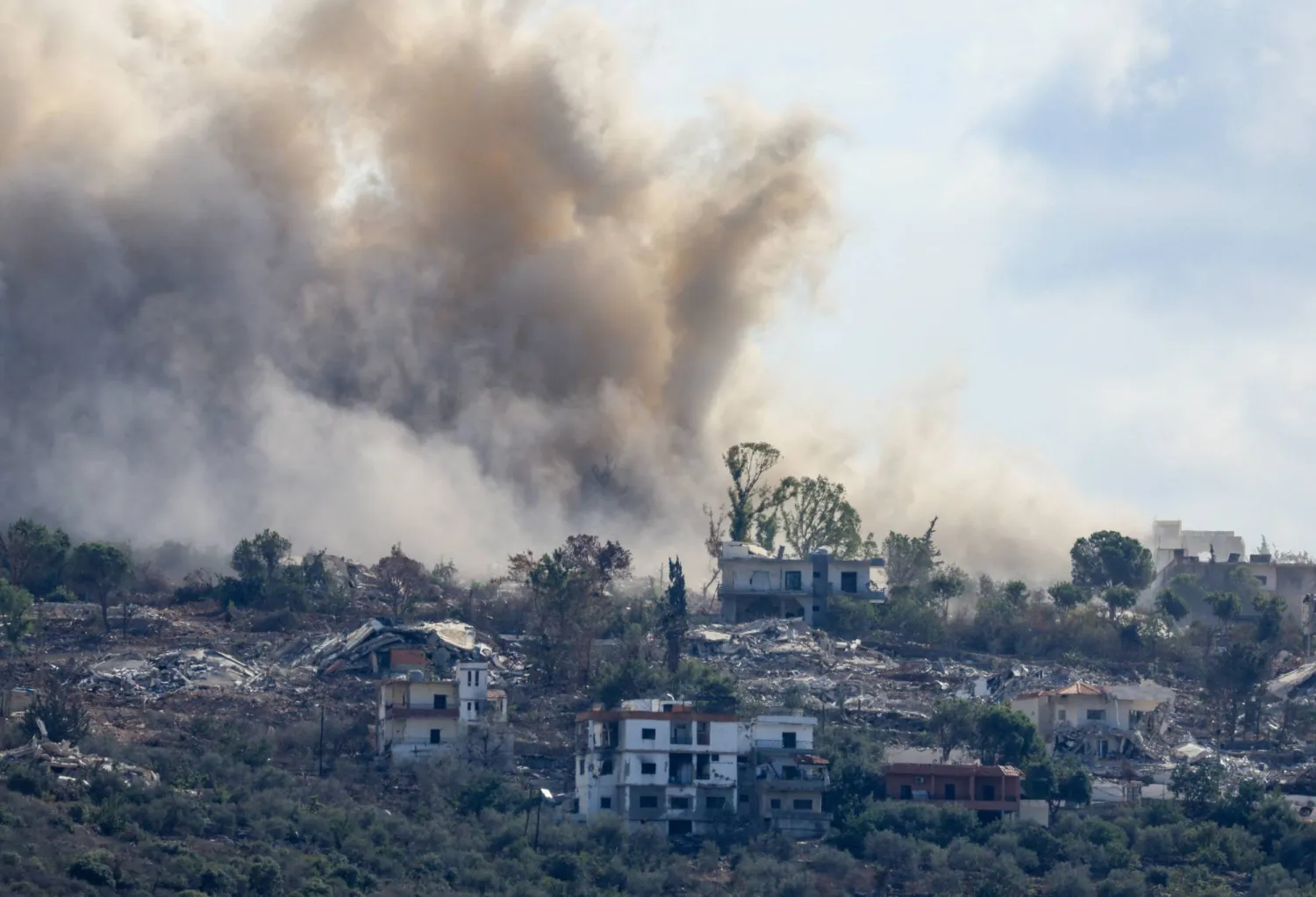
Clashes between Yemen's government forces and the Iran-backed Houthi group have intensified on the fronts in Taiz and Lahj, alongside an increase in airstrikes, ground operations, and missile attacks. Meanwhile, the general mobilization measures and military readiness announced by Yemen's leadership are pointing toward a new phase that could signal the launch of a full-scale confrontation with the group.
The fronts west of Taiz and in areas bordering Lahj are witnessing ongoing battles, amid Houthi attacks, infiltration attempts, and flanking maneuvers, met by intensive Yemeni military operations involving formations from the Giants Brigades and Nation's Shield Forces, as well as tribal fighters.
The confrontation has also moved to a broader government level following the adoption of executive measures related to general mobilization and a discussion by Yemen's National Defense Council of the readiness of the armed forces, security forces, and military formations across the various fronts. The Yemeni leadership has reiterated that the objective is to restore state institutions and extend their sovereignty over the country's entire territory.
The al-Aghbari front, on the outskirts of al-Mudharaba District and Ras al-Ara in Lahj Governorate, witnessed fierce nighttime battles in the areas of Dhi Ahdah, al-Khazm, and al-Mansoura following a Houthi attack on positions held by government forces and backed by tribal fighters.
Yemeni military sources said government forces and tribal fighters repelled the attack, with clashes continuing through Wednesday and leaving casualties on both sides.
The fighting coincided with airstrikes targeting Houthi positions in the areas of al-Bazalah and al-Dhuhourah, located between al-Wazi'iyah and al-Mudharaba. The Taiz Military Axis Media Center also reported airstrikes on Houthi positions in al-Wazi'iyah District, west of the governorate.
Taiz Under Fire
In Taiz, the Houthi group has stepped up its missile and artillery attacks on residential areas and villages in the south and west of the governorate.
Local sources said the group targeted areas in al-Shamayatayn District with four ballistic missiles, while villages in Jurdad Bani Omar were also shelled with rockets and artillery, injuring two civilians and causing fear among residents.
In al-Turbah, south of the governorate, local sources said the group shelled residential neighborhoods with four ballistic missiles, causing material damage to a number of homes and properties.
Other field reports said three ballistic missiles were fired, one of which struck the building of the Mother and Child Hospital, which is still under construction in the city, causing material damage.
The Houthi shelling also reached the villages of Bani Bakari in Jabal Habashi District, while government forces continued their operations along several axes of the governorate.
At the military level, Yemeni Armed Forces spokesman Colonel Staff Officer Majed Abdullah al-Nazili said the forces had carried out 414 precise targeting operations over a 24-hour period against Houthi reinforcements and military capabilities on various fronts.
Al-Nazili said the operations employed a range of modern capabilities and resulted in the neutralization of Houthi militants and military equipment.
This came a day after government forces announced that they had carried out 356 targeting operations over a 24-hour period, saying that, according to their field estimates, the operations had killed or wounded 476 Houthi militants. This brought the total casualties announced by the government forces over four days to nearly 3,000 dead and wounded.
According to the government forces, the targets included command-and-control centers, weapons and artillery depots, and dozens of military vehicles, as the group continued sending reinforcements to the front lines.
General Mobilization Takes Effect
Alongside the developments on the battlefield, the most significant political and military development has been the move by Yemen's state institutions toward organizing a general mobilization.
The National Defense Council held a meeting chaired by Rashad al-Alimi, Chairman of the Presidential Leadership Council, and attended by political, military, and government leaders. The meeting discussed the latest national developments and the readiness of the armed forces, security forces, and military formations on the various fronts, as well as executive measures related to general mobilization.
The council affirmed that the armed forces would continue carrying out their responsibilities to protect civilians and deter sources of threat, with the ultimate goal of restoring state institutions and extending state sovereignty over the entire national territory.
It also stressed the importance of integrating military, security, economic, humanitarian, media, and diplomatic efforts under state leadership, and mobilizing the country's capabilities, resources, and potential in support of this objective.
This follows the Yemeni House of Representatives' approval of a request by the Chairman of the Presidential Leadership Council to declare a general mobilization, a step encompassing human and material resources as well as the capabilities of state institutions.
The National Defense Council approved directives and executive measures related to the general mobilization, stressing the need to move it from a broad framework to a disciplined institutional mechanism in accordance with the constitution and applicable laws.
At the same meeting, the council praised what it described as the cohesion of the armed forces, military formations, and popular resistance, as well as what it said was their ability to regain the initiative on various fronts. It also praised popular and tribal support for the forces and displaced people.
This course of action takes on particular significance as fighting continues in Taiz and Lahj. The institutional measures are coinciding with an increase in the intensity of military operations on the ground, reflecting the state's readiness to deploy its resources and capabilities more broadly in the confrontation.
The National Defense Council has not announced the start of a full-scale offensive. However, its combination of military readiness, general mobilization measures, calls for the integration of national resources, and continued operations on several fronts points to preparations for a broader confrontation.
A Threat Beyond the Front Lines
The National Defense Council linked the military developments to threats it said the Houthi group poses beyond the battlefronts. It warned of the use of mobile Iranian air-defense systems, cruise missiles, and advanced military technologies.
It said these capabilities were expanding the scope of the threat to air-navigation routes in Yemen and the region, putting civilian aircraft and humanitarian and relief flights at risk. The council called for international action to prevent the flow of weapons, technology, and military expertise to the group.
The council also welcomed regional and international positions supporting the government and state institutions, and referred to UN Security Council resolutions concerning Yemen, foremost among them Resolution 2216.
On the humanitarian front, the council affirmed the state's commitment to protecting civilians and civilian facilities and responding to the needs of displaced people and families forced from their homes by the group. It called on international organizations and donors to support the growing humanitarian response.
Alongside the military effort, Yemen's leadership has maintained a parallel political track targeting members of the group. The National Defense Council renewed its assurance that the door to "safe return" remains open to those who abandon the Houthis and stop fighting or working on their behalf.