Russia Launches 560 Strikes Against ISIS Positions in Central Syria during November

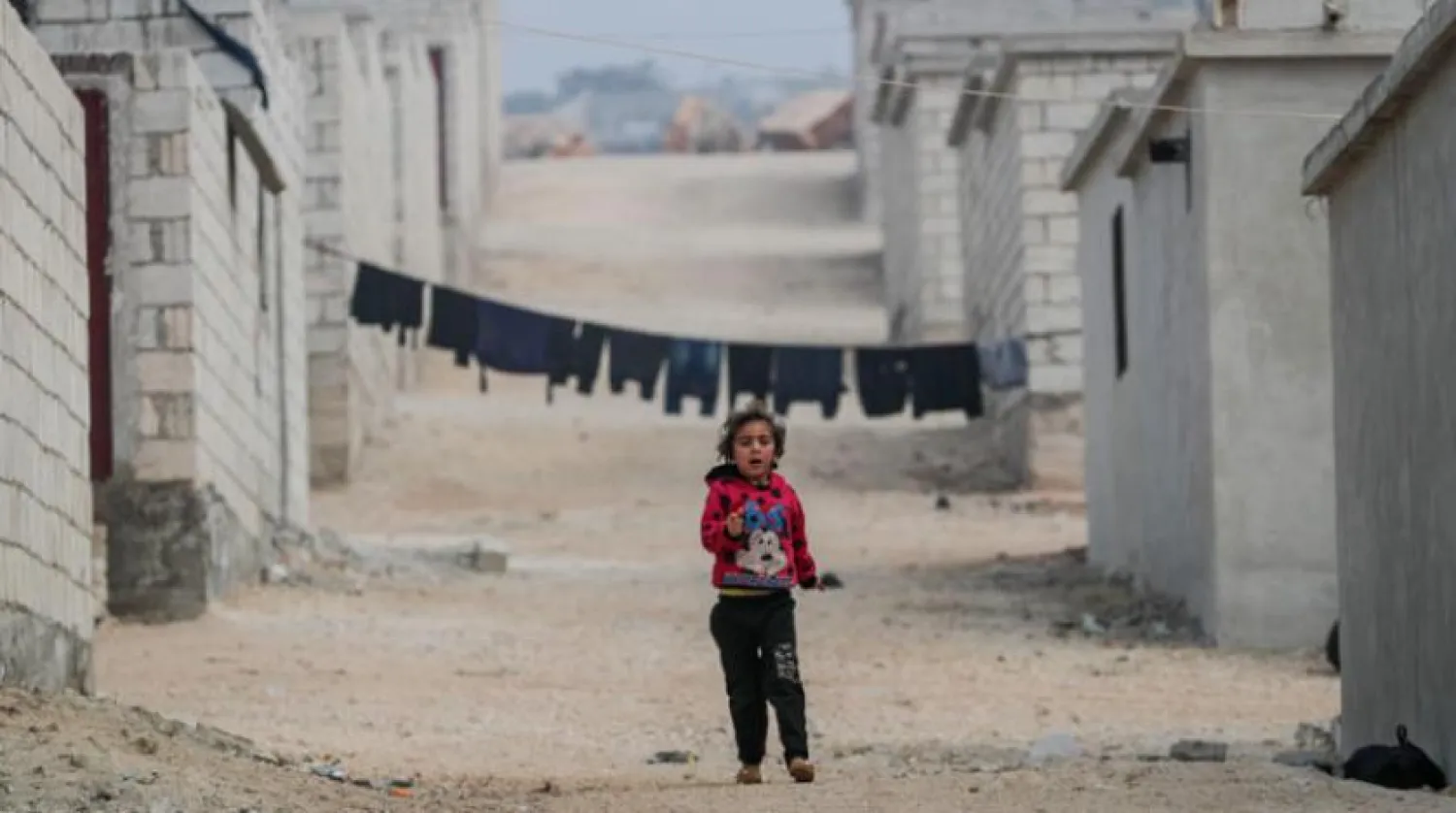
 A displaced girl in the countryside of Idlib, northwest Syria, on Saturday, November 27, 2021. (AFP)
A displaced girl in the countryside of Idlib, northwest Syria, on Saturday, November 27, 2021. (AFP)
TT

Russia Launches 560 Strikes Against ISIS Positions in Central Syria during November

 A displaced girl in the countryside of Idlib, northwest Syria, on Saturday, November 27, 2021. (AFP)
A displaced girl in the countryside of Idlib, northwest Syria, on Saturday, November 27, 2021. (AFP)

Russian fighter jets conducted more than 560 strikes on different ISIS positions in Central Syria during November, the Syrian Observatory for Human Rights (SOHR) reported.

Since March 24, 2019, SOHR documented the killing of at least 1,597 regime soldiers and pro-regime forces, including at least three Russians, and 153 Iranian-backed militiamen.

All were killed in ISIS attacks, bombings and ambushes west of the Euphrates in the deserts of Deir Ezzor, al-Raqqah, Homs, al-Suwaidaa, Hama and Aleppo.

Also, Syria regime forces carried out 490 violations in the de-escalation zone in northwestern Syria during November, said Ahmed al-Omar, the official in charge of documenting the violations in Idlib.

The violations included bombardments (artillery and missile) and airstrikes by Russian fighter jets, which killed 16 civilians, including five children, and injured more than 40 others.

According to opposition-led monitor group and a follow-up unit, the regime forces launched intense artillery and missile shelling targeting several areas in the southern countryside of Idlib.

Three civilians who were seriously injured in the attacks were transferred to hospitals in northern Idlib.

Meanwhile, ISIS carried out an unexpected attack on three Syrian regime and Iranian military sites in the vicinity of Khanasir area, south of Aleppo, activists reported.

The terrorist group used machine guns and mortars, killing six soldiers and wounding several others.

The attack was followed by intense airstrikes carried out by Russian fighter jets, which extended from the Hama desert to the Al-Raqqa and Deir Ezzor deserts in eastern Syria, targeting ISIS-affiliated sites. At least 20 militants were killed and injured during the attacks, according to activists.


Gaza Negotiations ‘Return to Square One’

A Palestinian boy makes his way across rubble near a displacement camp in Nuseirat, in the central Gaza Strip, on June 28, 2026. (Photo by Eyad Baba / AFP)
TT

Gaza Negotiations ‘Return to Square One’

A Palestinian boy makes his way across rubble near a displacement camp in Nuseirat, in the central Gaza Strip, on June 28, 2026. (Photo by Eyad Baba / AFP)

Palestinian officials are becoming less optimistic about reaching an understanding that would advance the ceasefire agreement signed in October, which Israel has since violated, killing over 1,000 Palestinians in the Gaza Strip.

Sources from Hamas and Palestinian factions attributed the "return to square one" to the amendments made by Nickolay Mladenov, the Board of Peace's lead envoy for Gaza.

A leading Hamas source outside Gaza stated that Mladenov's amendments, as presented to the movement and factions, are rejected.

Another Hamas official described them as "dangerous and ensuring only the implementation of Israel's conditions, linking everything to weapons, in exchange for only humanitarian services without any national rights."

Disagreement overshadowed the indirect talks between Israel on one side, and Hamas and the factions on the other, regarding moving to new phases of the ceasefire agreement.

While the Palestinian side insists on implementing the requirements of the first phase, which include the withdrawal of the Israeli army from occupied territories and the entry of aid and goods into the Gaza Strip, Tel Aviv is pushing for the disarmament of the factions as the main clause of the second phase.

According to the two sources, and a third from the Palestinian factions participating in the negotiations held in Cairo, the mediators did not approve of the amendments presented by Mladenov either, saying they were "biased towards Israel and causing a new crisis, especially after an important formulation regarding weapons had been agreed upon."

The two leading Hamas sources abroad confirmed that the movement's delegation, which will head to Cairo in the coming days, will carry "clear amendments to Mladenov's paper," while demanding and insisting that it "meet the aspirations of Palestinians and be consistent with US President Donald Trump's plan, which was agreed upon in September of last year."

Despite the fragile ceasefire reached in October that paused the heaviest fighting between Israel and Hamas, Israel continues to carry out near-daily strikes and shelling across the coastal Gaza.

Since the ceasefire went into effect, Israel has killed more than 1,030 people in Gaza, according to Gaza’s Health Ministry.


Israel Strikes South Lebanon despite Framework Agreement to End Hostilities

Billboards reading 'Lebanon First' are displayed alongside the airport highway in Beirut, Lebanon, 27 June 2026, amid a ceasefire between Israel and Lebanon.  EPA/WAEL HAMZEH
Billboards reading 'Lebanon First' are displayed alongside the airport highway in Beirut, Lebanon, 27 June 2026, amid a ceasefire between Israel and Lebanon. EPA/WAEL HAMZEH
TT

Israel Strikes South Lebanon despite Framework Agreement to End Hostilities

Billboards reading 'Lebanon First' are displayed alongside the airport highway in Beirut, Lebanon, 27 June 2026, amid a ceasefire between Israel and Lebanon.  EPA/WAEL HAMZEH
Billboards reading 'Lebanon First' are displayed alongside the airport highway in Beirut, Lebanon, 27 June 2026, amid a ceasefire between Israel and Lebanon. EPA/WAEL HAMZEH

Israel renewed its strikes on Lebanon on Sunday, Lebanese state media reported, two days after an agreement was signed by the two countries, which a Hezbollah lawmaker warned would lead to "internal conflict".

The strikes come a day after one person was killed in an Israeli strike on the south, according to Lebanon's health ministry, with the Israeli military saying it targeted Hezbollah members near its self-proclaimed "security zone", which reaches 10 kilometres (6 miles) into Lebanon.

Lebanon's state-run National News Agency (NNA) reported several strikes on Sunday.

The Israeli army said a soldier "fell in combat" in southern Lebanon.

In a later statement, Israeli military chief Eyal Zamir approved plans for "continued operations in the security zone, in accordance with the ceasefire agreement".

Lebanese President Joseph Aoun told his US counterpart Donald Trump on Saturday that his country "would assume its responsibilities" in implementing the framework agreement, which was signed in Washington on Friday after five rounds of talks.

The deal aims to pave the way for peace between Israel and Lebanon, who have officially been at war for decades, though Israel's many conflicts across its northern border have largely been with non-state actors.

The agreement makes any Israeli withdrawal from occupied Lebanese land conditional on Beirut disarming Hezbollah, which is backed by Iran.

Israeli Prime Minister Benjamin Netanyahu called the deal "historic" for his country.

- 'Internal conflict' -

Hezbollah strongly opposed the talks with Israel from the start and rejects the agreement, with leader Naim Qassem saying on Saturday that the group would treat the deal as "null and void" and describing it as "a surrender of sovereignty".

His supporters took to the streets on Friday evening to protest the framework.

An AFP correspondent saw signs on Sunday morning that read "Lebanon first" being burned along Beirut's airport road, which borders the city's southern suburbs, a Hezbollah stronghold, after previous billboards saying "thank you Iran" were removed.

Hezbollah lawmaker Hassan Fadlallah said on Sunday that "the agreement of humiliation and disgrace signed by the authorities will never see the light of day".

He added that what "the authorities have done amounts to sedition aimed at pushing the country into chaos and shifting the conflict from one with the enemy to an internal conflict".

Hezbollah repeatedly asked Lebanese authorities to link themselves to Iran's negotiations to end its war with the US, while Tehran has insisted any ceasefire for the Middle East war should include Lebanon.

In a phone conversation with his Lebanese counterpart Nabih Berri, Iranian parliament speaker and head of Tehran's negotiating delegation Mohammad Bagher Ghalibaf said that "our goal is to end the war in Lebanon, return the refugees to their homes and remove the occupation and the withdrawal of the Zionist regime from the Lebanese territory, and we are seriously pursuing this issue".

According to the text of the deal shared by the US State Department, Lebanon and Israel expressed their intent to "conclusively end the conflict, address its underlying causes and... formally conclude any state of war between them".

Under the agreement, Lebanon's military will "restore effective sovereign authority over all Lebanese territory, pending the verified disarmament of non-state armed groups".

Israel's Defense Minister Israel Katz, however, has insisted troops will stay in Lebanon so long as Hezbollah remains armed.


Iraq Arrests Dozens of Politicians and Government Officials in Green Zone Raids

A circulating image shows Iraqi Humvees at an entrance to the Green Zone at dawn Sunday
TT

Iraq Arrests Dozens of Politicians and Government Officials in Green Zone Raids

A circulating image shows Iraqi Humvees at an entrance to the Green Zone at dawn Sunday

Iraqi security forces arrested dozens of politicians, lawmakers and senior government officials early on Sunday after Elite Counter Terrorism Service (CTS) units raided their homes inside Baghdad's heavily fortified Green Zone, security sources told Asharq Al-Awsat.

The state news agency later reported that 47 people had been arrested in the corruption probe, but it was not clear if all of them were detained Sunday or if some of them had been arrested earlier.

The security sources said that the heaquarters of Midland Oil Company south of Baghdad were raided too.

A senior source quoted by ⁠state news ⁠agency INA said that some of the latest arrests were based on testimony provided by Adnan al-Jumaili, deputy oil minister for refining affairs, after his detention on corruption charges.

The source told INA that al-Jumaili's statements implicated a wider network of officials in alleged corruption schemes.


Iraqi security personnel are seen near a house in the Green Zone at dawn Sunday (X)

Sunday's operation was launched on direct orders from Prime Minister Ali al-Zaidi, a government official told Asharq Al-Awsat.

Iraq's anti-graft body, the Commission of Integrity, said that authorities are implementing judicial arrest warrants against suspects "accused of misappropriating public funds."

In a move to demonstrate commitment to fighting corruption, authorities seized more than $85 million earlier this month in the graft case against Jumaili.