Women shop at a local market in Istanbul, Turkey January 12, 2021. REUTERS/Murad Sezer
S&P Global Ratings on Friday changed its outlook for Turkey's credit rating to negative from stable, as the country struggles with high inflation and a depreciating currency.
Turkey's annual inflation has surged above 20 percent to its highest level in three years after President Recep Tayyip Erdogan installed loyalists at the central bank who share his unorthodox vision that high borrowing costs cause inflation rather than slow it down.
The move was part of Erdogan's strategy to revive his sagging approval numbers ahead of an election due by 2023.
In justifying its outlook downgrade, S&P pointed to both price increases and the lira currency's loss in value as risks.
"The negative outlook reflects what we view to be rising risks to Turkey's externally leveraged economy over the next 12 months from extreme currency volatility and rising inflation, amid mixed policy signals," the ratings agency said.
S&P made no change in its ratings of Turkey's debt.
But it warned that could change if the government's policies "further undermined the exchange rate of the lira and worsened the inflation outlook, heightening the risk of banking system distress."
Also Friday, ratings agency Moody's said Turkey could see consumer price inflation surpass 25% in coming months with another potential interest rate cut in December adding to upside risks for its forecasts.
Alphabet's Investment in SpaceX Multiplies 100-Fold to $94 Billionhttps://english.aawsat.com/business/5306988-alphabets-investment-spacex-multiplies-100-fold-94-billion
Alphabet's Investment in SpaceX Multiplies 100-Fold to $94 Billion
The letters of the word "Alphabet" on a computer screen featuring a Google search page in an illustration (Reuters)
Alphabet's early bet on SpaceX has multiplied more than 100-fold, with the Google parent disclosing a stake worth about $94 billion at the end of June compared with the $900 million investment it said it made in Elon Musk's rocket company in 2015.
Alphabet has emerged as by far the largest single institutional holder of SpaceX following its $86 billion IPO in June, according to a Reuters analysis of quarterly filings made public so far.
The filings shed new light on the scale of positions acquired by SpaceX's backers as the company transitioned from a closely held startup to a publicly traded giant. Together with separate public disclosures on early investments, including Alphabet's, they also highlight how dramatically the value of some early investments in SpaceX has grown.
Because the 13F filing data is compiled once per quarter and disclosed within six weeks of quarter-end, the information is dated and will not capture any buying or selling done by these large investors since June 30.
There are other limitations as well, given the vast universe of SpaceX investments and the evolving schedule of when they stand to become eligible to be sold in public markets.
"It's very, very difficult to tease out which of these institutions were holding pre-IPO shares," said Steve Sosnick, market strategist at Interactive Brokers.
Alphabet is an exception because the company publicly disclosed that it invested $900 million in SpaceX in 2015, providing a rare benchmark against which to compare the value of its current holding.
Alphabet did not immediately respond to a request for comment. Sosnick added that the 13F filings did not reveal investors' lockup status or intentions with respect to realizing profits on pre-IPO positions.
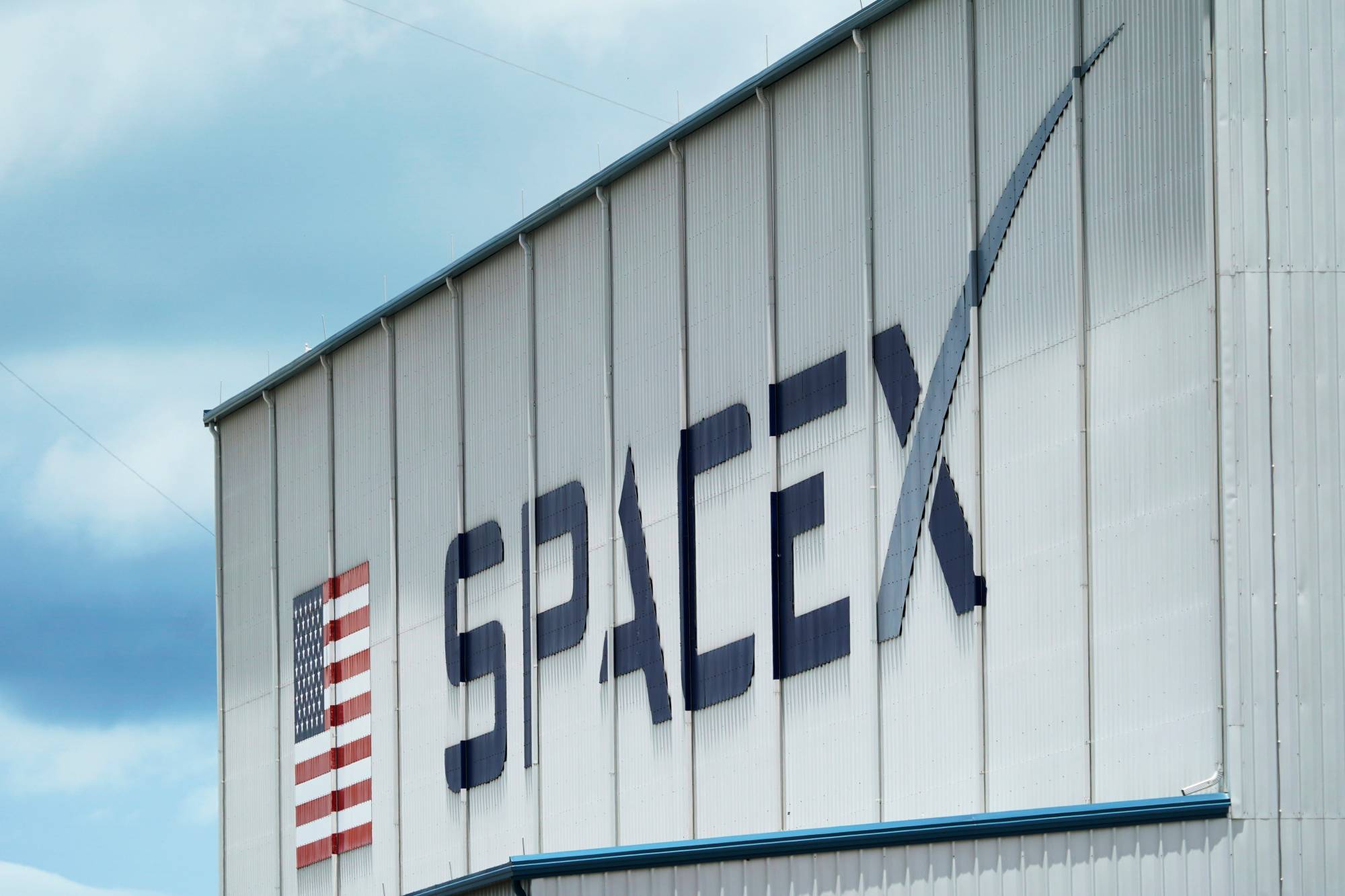
FILE - The SpaceX logo is displayed on a building, May 26, 2020, at the Kennedy Space Center in Cape Canaveral, Fla. (AP Photo/David J. Phillip, File)
Alphabet held 551.2 million SpaceX shares at the end of the second quarter, according to the firm's filing, worth about $94.2 billion at SpaceX's June 30 share price of $170.86.
At Thursday's price, Alphabet's disclosed position would be worth about $77.9 billion, still about 86.5 times the size of Google's original investment. Fidelity Investments was the second-largest reported institutional holder, with 302.6 million SpaceX shares, followed by Gigafund Management with 171.8 million, Baillie Gifford with 51.4 million and BlackRock with 51.0 million.
Alphabet, Fidelity, Gigafund Management, Baillie Gifford and BlackRock, the five largest reported holders in the data, accounted for nearly three quarters of reported SpaceX shares, highlighting the concentration of reported institutional ownership among a handful of investors.
Separately, SpaceX said in a regulatory filing that Musk owned a 48.4% stake in the company. SpaceX went public on June 12 at $135 a share. Its shares have since retreated from their end-June level. SpaceX closed at $141.29 on Thursday, 4.7% above its IPO price but 17.3% below the June 30 close.
Sosnick told Reuters that SpaceX remains one of the most actively traded stocks among customers at Interactive Brokers, receiving a "fresh jolt of buying last week when market fears about what would happen when the first lockup expiry arrived proved to be unfounded."
Retail owners of SpaceX shares, who do not have to submit their holdings to the SEC, turned into net sellers of the stock on Friday for the first time since the IPO, according to data from Vanda Research.
The research firm, which tracks the activity of self-directed individual investors, calculated that this group sold a net $4.5 million on that day. SpaceX shares were down 3% on Thursday but have risen 30% since August 5.
Iraqi Daily Oil Exports in August Highest since Start of Warhttps://english.aawsat.com/business/5306916-iraqi-daily-oil-exports-august-highest-start-war
Iraqi Daily Oil Exports in August Highest since Start of War
A view across Shatt al-Arab of the 'Bin Omar' oil field north of Basra, Iraq (Reuters)
Iraq's average daily oil exports since the beginning of August are the highest since the outbreak of the Middle East war between Iran and the United States, which has choked off the Strait of Hormuz, the oil ministry said Friday.
Iraqi Oil Minister Bassem Mohammed Khudair told a press conference that "exports since the beginning of the month have reached a rate of two million barrels" per day, for a total of around 26 million barrels, saying the daily rate was achieved "for the first time since the crisis began".
Fitch Keeps US at 'AA+', Cites Economic Resilience amid Fiscal Riskshttps://english.aawsat.com/business/5306818-fitch-keeps-us-aa-cites-economic-resilience-amid-fiscal-risks
Fitch Keeps US at 'AA+', Cites Economic Resilience amid Fiscal Risks
The American flag flies in the National Mall near the Capitol building in Washington (Reuters)
Fitch on Thursday affirmed the sovereign credit rating for the United States at "AA+" with a stable outlook, citing its large economy, high per-capita income and the US dollar's status as the world's leading reserve currency.
The US economy remained resilient despite higher tariffs, government spending cuts, tighter border controls and heightened policy uncertainty, reflecting its ability to absorb shocks and economic flexibility, Reuters quoted the credit ratings agency as saying.
Fitch, however, estimated economic growth of 1.9% in 2026-2027, lower than the 2.8% in 2025, and noted weakening labor demand and a significant slowdown in job creation this year.
Inflation remains a concern, with the agency expecting it to average 3.4% in 2026, above the Federal Reserve's 2% target. Tariffs have added to core goods inflation, though their impact has been less severe than expected.
Fitch expects the general government deficit to widen to 7.4% of GDP in 2026 and remain at that level in 2027, the highest among "AA"-rated sovereigns.
Higher military and interest costs, along with rising Medicare and Social Security spending, would limit efforts to reduce the deficit.
Peer S&P Global also maintained its "AA+" rating on the US in June, citing the economy's resilience and strong institutions.
Fitch had downgraded the US sovereign rating by one notch from the top-tier triple-A rating in 2023, pointing to expected fiscal deterioration and repeated down-to-the-wire debt ceiling negotiations.
Moody's downgraded the US by one notch last year, citing rising debt levels and stripping the country of its last remaining triple-A rating.
لم تشترك بعد
انشئ حساباً خاصاً بك لتحصل على أخبار مخصصة لك ولتتمتع بخاصية حفظ المقالات وتتلقى نشراتنا البريدية المتنوعة