


Lebanon Needs $12-15 Bn to Kickstart Recovery, Says Central Bank Chief

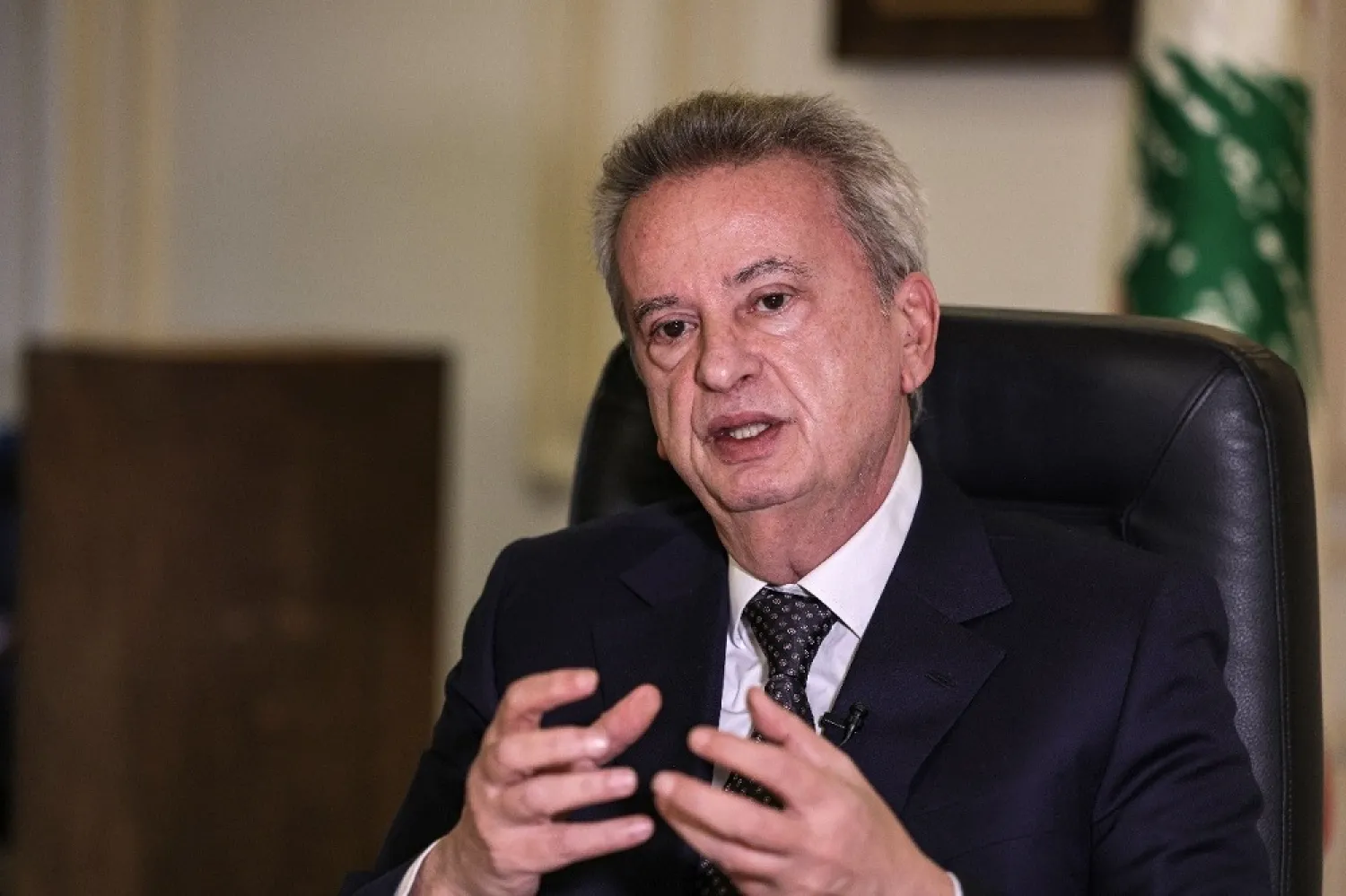
Lebanon's Central Bank Governor Riad Salameh speaks with AFP in an interview at his Beirut office. (AFP)
TT

Lebanon Needs $12-15 Bn to Kickstart Recovery, Says Central Bank Chief

Lebanon's Central Bank Governor Riad Salameh speaks with AFP in an interview at his Beirut office. (AFP)

Lebanon needs to receive $12-15 billion from its partners to kickstart its economic recovery and shore up fast-diminishing foreign currency reserves, Central Bank Governor Riad Salameh said Tuesday.

Lebanon is grappling with an unprecedented economic crisis branded by the World Bank as one of the planet's worst since the mid-19th century.

More than 80 percent of the population lives in poverty and the currency has lost more than 90 percent of its black market value amid political squabbling that has delayed an agreement with the International Monetary Fund.

"Our quota in the International Monetary Fund is four billion," Salameh said in an AFP interview.

"If countries add to it, we could reach 12 to 15 billion, an amount that could help start Lebanon's recovery and restore confidence," he said.

Lebanon defaulted on its debt for the first time last year but political leaders have continued to resist key reforms demanded by donors to unlock necessary funds.

The central bank's mandatory dollar reserves have been slashed by more than half, according to Salameh, who is widely viewed as a key culprit behind an economic crash many blame on central bank policies.

"The mandatory reserves are around $12.5 billion," that the central bank can't spend, Salameh said, explaining that an additional $1.5 billion in reserves had been freed up for central bank spending.

The mandatory reserves stood at $32 billion before the start of the economic crisis in 2019.

Lack of transparency'

Salameh dismissed criticism blaming him for the crisis, saying that "had it not been for the central bank and its reserves, Lebanon would not have been able to carry on".

"The central bank deals with the outcome of the crisis. It is not the side causing it."

The fast-diminishing reserves are threatening a subsidy program that had initially covered fuel, medicine, flour and other vital imports before it petered out.

The central bank can afford to finance partial subsidies on a few remaining key imports for "around six to nine months," if no additional measures are taken to combat the depreciation of the Lebanese pound, Salameh said.

The only new usable foreign currency injections that the central bank has access to come in the form of IMF Special Drawing Rights (SDR) allocations received this summer, a former central bank official and a former adviser to the finance ministry both told AFP.

"We do not know how they are being used as there is a total lack of transparency and disclosure," the ex-central bank official told AFP on the condition of anonymity.

IMF talks

Officially pegged at 1,507 to the greenback since 1997, the Lebanese pound sold for nearly 30,000 to the dollar on the black market earlier this month, a record low.

The official fixed rate is "no longer realistic", Salameh said, while explaining that a unified exchange rate would be unlikely in the absence of an IMF agreement and political stability.

Lebanon last year started IMF talks that were derailed due to differences between officials over the size of financial sector losses.

But IMF talks have resumed in recent weeks during which Lebanese officials have agreed that financial sector losses amount to around $69 billion.

"Lebanon is still in the stage of crunching numbers," said Salameh who is part of Lebanon's IMF negotiating team.

"The Lebanese side hasn't yet presented a plan to the IMF for discussion."

Salameh, one of the world's longest-serving central bank governors, is facing judicial investigations in France, Switzerland and other European countries on suspicion of money laundering and illicit enrichment, among other allegations.

Salameh dismissed the cases against him as unfounded and lacking in evidence, claiming they were opened based on complaints filed by Lebanese citizens "for reasons that could be political... or tied to certain interests."

He said that a top-tier financial audit firm had scrutinized his accounts at his request and presented him with a report that he then submitted to officials and judges.

"I am ready to cooperate with all investigations," he said, claiming they were based on "fabricated evidence" that made it seem as though he "took all of Lebanon's money and pocketed it."



Yemen Armed Forces Advance in Taiz, Coalition Carries out Operation to Protect Marine Navigation

This image taken from undated video released Monday, Oct. 5, 2026, by the Yemeni government-allied Southern Giants Brigades media office shows its fighters firing a weapon mounted on a pickup truck during clashes with the Iran-backed Houthi group in Dhubab district, Taiz, Yemen. (Southern Giants Brigades Media Office via AP)
TT

Yemen Armed Forces Advance in Taiz, Coalition Carries out Operation to Protect Marine Navigation

This image taken from undated video released Monday, Oct. 5, 2026, by the Yemeni government-allied Southern Giants Brigades media office shows its fighters firing a weapon mounted on a pickup truck during clashes with the Iran-backed Houthi group in Dhubab district, Taiz, Yemen. (Southern Giants Brigades Media Office via AP)

The Yemeni army announced on Tuesday that it has seized control of new positions in the Haifan district, south of the Taiz province, as battles continued to rage across several of the province's frontlines.

Meanwhile, the Coalition to Support Legitimacy in Yemen announced that its naval forces carried out a military operation in the Hodeidah province as part of its objectives to protect the security of maritime navigation in the Bab al-Mandeb Strait.

Coalition spokesperson Major General Turki al-Malki said that a plot for imminent attacks targeting waterways in the southern Red Sea had been thwarted, confirming the destruction of weapons depots, warehouses for booby-trapped boats, and naval mines.

Later, the Coalition announced the destruction of a ballistic missile launched in Sanaa, as well as a warehouse in a mountain storing 20 missiles in Saada.

Saudi Defense Minister Prince Khalid bin Salman had said that the meeting of the Strategic-Political and Defense Committee of the Makkah Alliance for Defense reaffirmed the solidarity of its member states and their unified stance in confronting attacks against Saudi Arabia and holy sites.

The meeting underscored the activation of collective deterrence against these attacks and anyone behind them within the framework of the alliance, he added.

The committee decided to move immediately to the practical implementation of the collective defense commitments and to take the necessary measures to provide the agreed military forces and capabilities and ensure their rapid deployment in the Kingdom, in line with the approved arrangements and the national legislation of the parties, thereby boosting readiness, military integration, and the collective capacity to confront and counter threats.


Israel Puts Military on Alert for Oct 7 Anniversary, Warns Gazans

Residents gather on a hill on October 1, 2026, in Sderot, one of the areas in southern Israel attacked by Hamas three years prior. Oded Balilty, AP
TT

Israel Puts Military on Alert for Oct 7 Anniversary, Warns Gazans

Residents gather on a hill on October 1, 2026, in Sderot, one of the areas in southern Israel attacked by Hamas three years prior. Oded Balilty, AP

Israel's defense minister on Tuesday said he had put the military on high alert before the anniversary of Hamas's October 7, 2023 attack, warning Gazans would pay a "heavy price" if forces were harmed.

The office of Defense Minister Israel Katz said the instruction came "in light of intelligence regarding Hamas's intentions to attempt to carry out attacks and terror operations against our forces in Gaza on that day".

"If, heaven forbid, our forces are harmed, the ones who will pay the heavy price will be Hamas and the population of Gaza -- beyond all proportion," the statement added.

Hamas's October 7, 2023 attack was the deadliest day in Israel's history, resulting in the deaths of 1,221 people, according to an AFP tally based on official Israeli figures.

Militants also dragged 251 hostages into Gaza, 44 of them already dead.

In response, Israel launched a military offensive that has left most of Gaza in ruins and killed more than 74,200 people, according to Gaza's health ministry, which is under Hamas authority and whose figures are considered reliable by the United Nations.

Since a ceasefire was declared last October, Israeli forces have killed more than 1,440 people in Gaza, according to the ministry.

On Monday, during a state ceremony to mark three years since the attack, Israeli Prime Minister Benjamin Netanyahu said there would be "no Hamas rule in Gaza" and vowed to continue targeting anyone who was involved in the attack or who held hostages.


Berri Reins In Hezbollah Campaign against Lebanese Prime Minister

Lebanese Prime Minister Nawaf Salam inspects the Nabatieh Gendarmerie unit last Friday (National News Agency) 
TT

Berri Reins In Hezbollah Campaign against Lebanese Prime Minister

Lebanese Prime Minister Nawaf Salam inspects the Nabatieh Gendarmerie unit last Friday (National News Agency) 

Lebanese Parliament Speaker Nabih Berri has moved to rein in political attacks by his ally Hezbollah against Prime Minister Nawaf Salam, with sources close to Berri telling Asharq Al-Awsat that he pushed for a de-escalation between Salam and a large segment of residents in southern Lebanon.

The shift was reflected in Salam’s visit to Nabatieh on Friday and reinforced in a Sunday interview on NBN, a channel affiliated with Berri’s Amal Movement. Salam reiterated the government’s position on Israel’s withdrawal from southern Lebanon and its commitment to restoring the state’s role and activating its institutions there.

Salam’s meetings Monday offered further signs of a drive to strengthen the state’s presence in the south. He met Berri to discuss political and field developments, pressing social and economic conditions, the outcome of his US visits and his Nabatieh tour and projects launched there, the speaker’s office said.

At the Grand Serail, Salam met Head of Council for the South Hashem Haidar, who briefed him on the council’s work and projects announced during the Nabatieh visit and steps taken to begin them.

Positive signs

Friday’s trip was Salam’s third visit to the south in three months. It was notably coordinated, with Amal MP Hani Qobeissi welcoming him alongside Finance Minister Yassin Jaber, himself from Nabatieh, and Interior Minister Ahmad al-Hajjar. Municipal leaders from Nabatieh-area villages aligned with Hezbollah also joined the reception.

Although Hezbollah’s political representatives were absent, the group issued no statement criticizing the visit or Salam, unlike on previous occasions — a sign of the de-escalation promoted by Berri.

Sources following the visit noted that the tour and meetings “repaired a large part of the relationship between Salam and the people of the region.” They said Hezbollah MP Mohammad Raad, the party’s representative in Nabatieh, was absent because he does not attend social occasions for security reasons. Hezbollah-aligned municipalities took part, while opposition to the visit appeared marginal.

In another sign of de-escalation, Hezbollah MP Hassan Fadlallah said Monday the group supported strengthening the state’s role in the south and having it assume full responsibility, “but that begins with expelling the occupation, stopping the aggression and ending this bulldozing operations and destruction in our villages.”

He urged the state to match words with actions, backed development initiatives in the south and called for the disbursement of a $250 million World Bank loan, part of which is allocated to the region, as well as increased government spending there in the 2027 budget.

Berri consistent with his demands

Unlike Hezbollah, which has attacked Salam in recent months, communication between the prime minister and Berri has continued. Berri has pressed for activating state institutions in the south, securing stability and the ceasefire, enabling residents to return to their villages and providing services to bolster their steadfastness, despite opposing direct negotiations with Israel and having earlier declared the “framework agreement” defunct.

Amal sources told Asharq Al-Awsat that Berri was consistent with his demand for state institutions to be present in the south. Salam’s visit, they said, confirmed the executive authority’s intention to strengthen that presence, making it natural for Amal and its Development and Liberation bloc to “meet it halfway.”

The sources underlined that the visit “soothed the wounds of southerners” and opened the door to a stronger state presence. They also pointed to Salam’s acknowledgment that resources were limited and reconstruction required international support because Lebanon could not undertake it alone.

‘No punishment of any community’

In Sunday’s NBN interview, Salam said: “The state cannot remain in a state of waiting. We must go to the south and to all regions and assume our responsibilities.”

He reiterated the need to stop Israeli attacks, consolidate the ceasefire, secure Israel’s withdrawal from occupied Lebanese territory and work for the release of prisoners.

“When I return for a fourth time to Nabatieh and Tyre, I want to see with my own eyes that water and electricity have been restored, that the contracts we launched are actually being implemented, that schools are being repaired, and that our people are returning and feel safe,” Salam added.

“If I wanted to punish a particular community, I would not personally be following these operations and the response to demands every day.”

Salam stressed that dialogue with all sides remained open, adding that agreed measures now had to be implemented and each side must honor its commitments.

Addressing residents of the south, he said: “You are not alone. The state is with you, beside you and at your service,” citing the presence of security agencies, institutions and services in Nabatieh.