Libya Roadmap Committee Kicks off Efforts to Resolve Crisis

Libyans shop at a mall in Tripoli. (AFP)
TT

Libya Roadmap Committee Kicks off Efforts to Resolve Crisis

Libyans shop at a mall in Tripoli. (AFP)

Libya's parliament and High Council of State denied that their leaders had arranged to hold a meeting outside the country.

Meanwhile, a parliamentary committee has kicked off its work in drafting a new roadmap to end the country's crisis.

The committee met for a second time in the capital, Tripoli. It will be in contact with all Libyan political, military, security sides and others as it attempts to resolve the crisis.

It said it will first meet with the High Council of State and national authority tasked with drafting the constitution. It will also meet with the Presidential Council and political parties.

An aide to the parliament speaker denied reports that Aguila Saleh was scheduled to meet with head of the High Council of State Khalid al-Mishri in Morocco on Sunday.

He stressed that Saleh has not yet regained his position as speaker in order to hold talks with any official figure.

A spokesman for the High Council of State also denied that Mishri had traveled to Morocco to meet with Saleh.

Separately, head of the Government of National Unity (GNU), Abdulhamid al-Dbeibah met with Qatar's Ambassador to Libya, Khaled al-Dosari, in Tripoli.

The envoy stressed his country's keenness on developing ties with Libya and activating bilateral agreements.


US State Department 'Expels' Lebanon’s Consul in Detroit

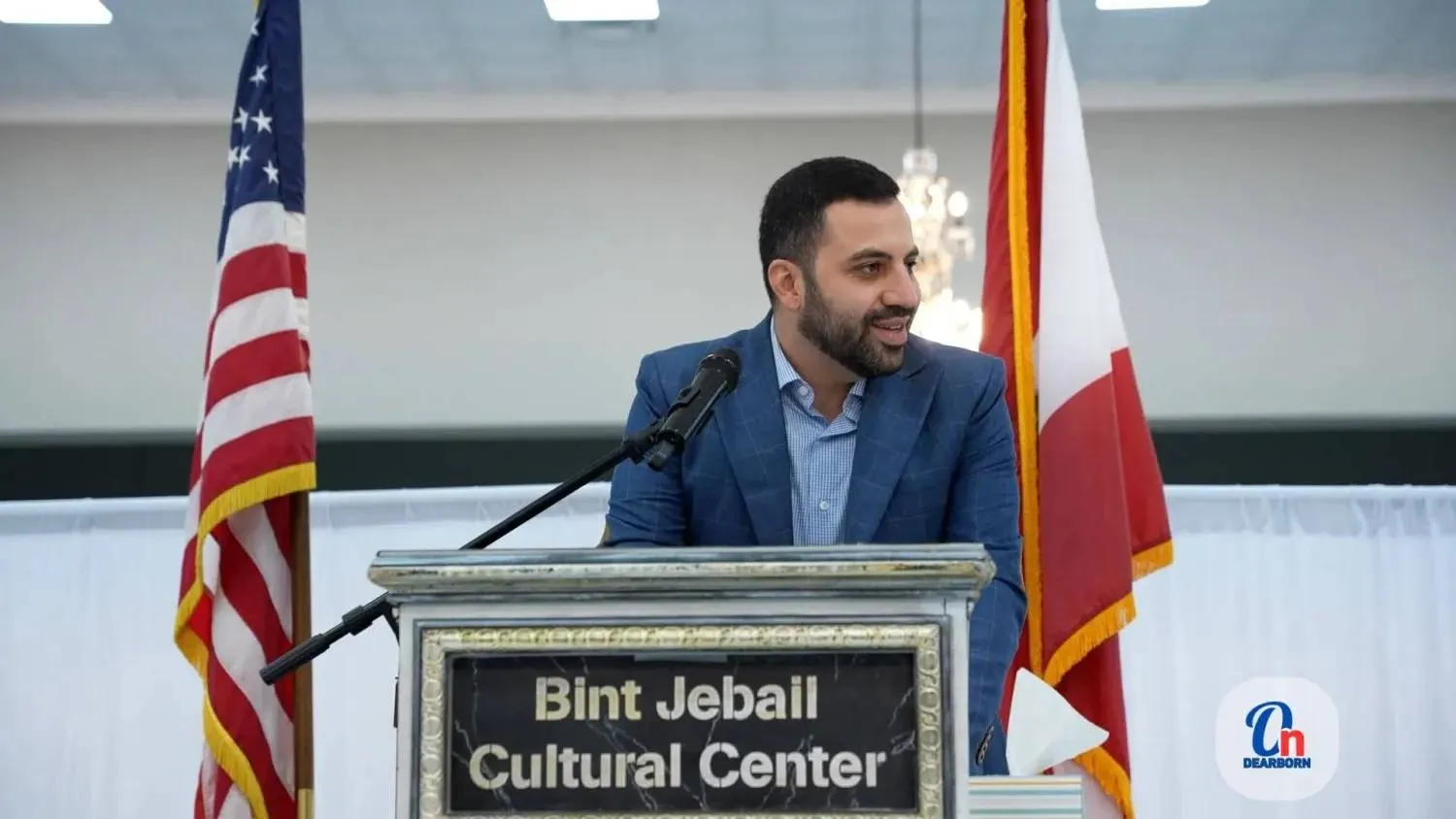
Lebanon’s consul in Detroit Ibrahim Charara. (Facebook)
TT

US State Department 'Expels' Lebanon’s Consul in Detroit

Lebanon’s consul in Detroit Ibrahim Charara. (Facebook)

Lebanese Foreign Ministry sources told Asharq Al-Awsat that the Lebanese Embassy in Washington had been formally notified by the US State Department that Lebanon’s consul in Detroit, Ibrahim Charara, had been declared persona non grata and must leave the United States within 48 hours.

The decision reportedly followed controversy sparked by US media reports that resurfaced old social media posts attributed to Charara about the 1983 bombing of the US Marine barracks in Beirut, which he had described as “heroic resistance.”

Political Views

In a report published on November 2, the US news website The Washington Free Beacon said Charara had written in a 2021 social media post marking the anniversary of the Marine barracks bombing that “heroic resistance” had ended the “American military occupation of Beirut with a single strike.”

The website also cited another post attributed to Charara that read: “From the Marine barracks in Beirut to the Al-Tanf base ... we will reject the occupier and defeat him,” an apparent reference to the US military presence in Syria.

The report also highlighted other positions attributed to Charara, including his praise for the escape of six Palestinian prisoners from Israel’s Gilboa Prison in 2021. It also pointed to his X account’s cover image, which shows an Israeli flag burning, and a quotation by Palestinian writer and political figure Ghassan Kanafani in his profile bio.

The controversy resurfaced on the eve of the midterm elections, with the Free Beacon highlighting Charara’s attendance at an Arab American political action committee event in Dearborn, attended by Senate candidate Abdulrahman Alsayed (who later won the seat) and other Democratic hopefuls.

The report was published a day before the November 3 vote, fueling speculation about an attempt to influence Michigan voters, though no link between the event and the US decision has been established.

Article 23 of the Vienna Convention on Consular Relations allows a host country to declare a consular officer persona non grata, requiring the sending state to recall the officer or end their duties. If the sending state does not comply within a reasonable time, the host country may stop recognizing the officer’s consular status. This measure does not itself constitute a criminal conviction.

The decision is expected to require Beirut to make arrangements for the consulate’s management and ensure the continued delivery of services to the Lebanese community, while containing the diplomatic fallout. The move against the consul does not in itself mean a rupture in relations or the closure of the mission, but the scope of the fallout will depend on Washington’s explanations and Beirut’s response.


Egypt Reopens Embassy in Libya’s Tripoli After 12-Year Closure

Egypt's Foreign Minister Badr Abdelatty speaks during the reopening ceremony of Egyptian embassy in Libyan capital Tripoli on November 7, 2026. (AFP)
TT

Egypt Reopens Embassy in Libya’s Tripoli After 12-Year Closure

Egypt's Foreign Minister Badr Abdelatty speaks during the reopening ceremony of Egyptian embassy in Libyan capital Tripoli on November 7, 2026. (AFP)

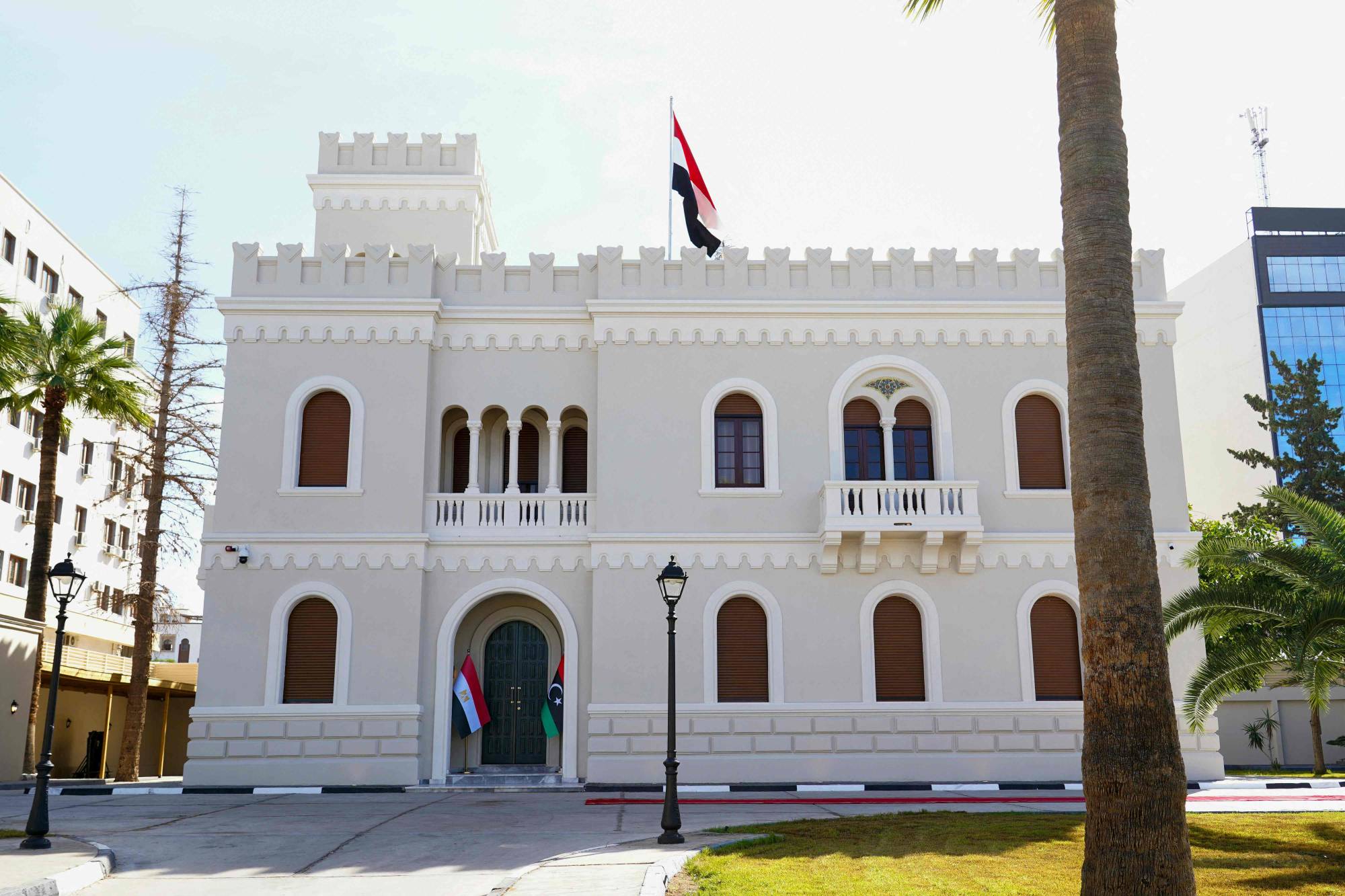
Egypt ‌reopened its embassy in Libya's capital Tripoli on Saturday after a 12-year absence, marking a rapprochement with the country's western-based administration, the foreign affairs ministry in Cairo said in a statement.

Egypt closed its ⁠Tripoli embassy in 2014, when many foreign missions there closed amid an escalating conflict that saw rival governments set themselves up in the capital and in the east of the ⁠North African country.

Egypt's ‌foreign affairs minister ‌Badr Abdelatty was quoted in the statement ‌as saying at the reopening ceremony ‌that the historical significance of the embassy building "aligns with the deep-rooted human and cultural ties that characterize Egyptian-Libyan relations".

This picture shows the Egyptian embassy building in Tripoli on November 7, 2026. (AFP)

Oil producer Libya ‌has been plunged into chaos since the fall of Moammar al-Gaddafi ⁠in ⁠a NATO-backed uprising in 2011.

In Benghazi in eastern Libya there is the Libyan National Army under military commander Khalifa Haftar and the House of Representatives, and a government led by Osama Hammad. In the west there is the Government of National Unity headed by Abdulhamid Dbeibah and the High Council of State in Tripoli.

The embassy's reopening comes weeks after Libya's eastern-based parliament ratified a long-disputed maritime agreement with Türkiye, angering Cairo which said it infringed upon its maritime zone.


Fighting in Yemen’s Al-Jawf and Marib Intensifies

Government forces fire artillery at Houthi positions in Taiz. (AFP)
TT

Fighting in Yemen’s Al-Jawf and Marib Intensifies

Government forces fire artillery at Houthi positions in Taiz. (AFP)

Fighting in Yemen intensified over the past few hours amid widespread clashes between government armed forces and the Houthi movement across the governorates of Taiz, Marib, Al-Jawf, and Lahj.

The Yemeni army launched more than 1,200 strikes targeting Houthi positions, gatherings, and reinforcements, while coalition airstrikes hit Sanaa and Saada, and interceptors downed missiles and drones fired toward Saudi Arabia.

These developments coincide with a worsening humanitarian and health crisis in the city of Taiz, where hospitals are on the verge of shutting down due to acute fuel shortages, amid the ongoing siege imposed by the Houthis.

On the ground, military sources said that the Southern Giants Forces and the Popular Resistance made new field advancements on Saturday in the Al-Madaribah front in Lahj. Following fierce clashes with the Houthis, the forces seized control of several strategic hills and positions, and succeeded in capturing a number of Houthi fighters.

Clashes in Al-Jawf extended to fronts southeast of Al-Hazm city. The Yemeni armed forces engaged in battles supported by fighter jets and drones, while successfully repelling multiple combat lines in the south and southeast of the governorate, according to army statements.

The clashes involved the use of artillery and rocket launchers along the front lines, with the Yemeni army stating that its forces engaged Houthis and inflicted casualties among them.

The army added that fighter jets conducted five airstrikes targeting Houthi military mobilizations and vehicles, which resulted in the destruction and disabling of several pieces of equipment and vehicles, as well as deaths and injuries among the group's ranks.

Field military sources in Marib said that government forces are closing in on securing the strategic Mas camp, following the recapture of several vital positions in the nearby and amid a retreat by the movement's fighters.

In Taiz, the armed forces confirmed that, with the support of the Popular Resistance, they managed to thwart a Houthi attack that lasted for hours on the Al-Aqroud front, affirming that they inflicted casualties and losses on the attackers.

On the Tur Al-Baha front in Lahj, the army announced that the Nation's Shield and Giants forces managed to seize control of new positions and repel Houthi attacks and infiltration attempts.

Meanwhile, the official spokesperson for the Yemeni Armed Forces, Colonel Majed Al-Nuzaili, announced the execution of 1,211 operations against Houthi positions, gatherings, reinforcements, vehicles, and firing sources as part of the Dawn of Yemen Operation.

The operations spanned the fronts of Taiz and Marib, alongside the Tur Al-Baha front. The armed forces continue to carry out their combat missions and take necessary precautions to protect civilians and civilian objects, he stressed.

On the humanitarian front, hospitals in the city of Taiz face the risk of shutting down as fuel reserves needed to run electrical generators near depletion, in a crisis that threatens the continuity of medical services, particularly in dialysis units, intensive care, and neonatal incubators.

Health officials in the governorate warned that the remaining diesel reserves at the Al-Thawra General Hospital are only sufficient for 48 hours, threatening to halt vital departments, including emergency, dialysis, intensive care, and the burn center.