

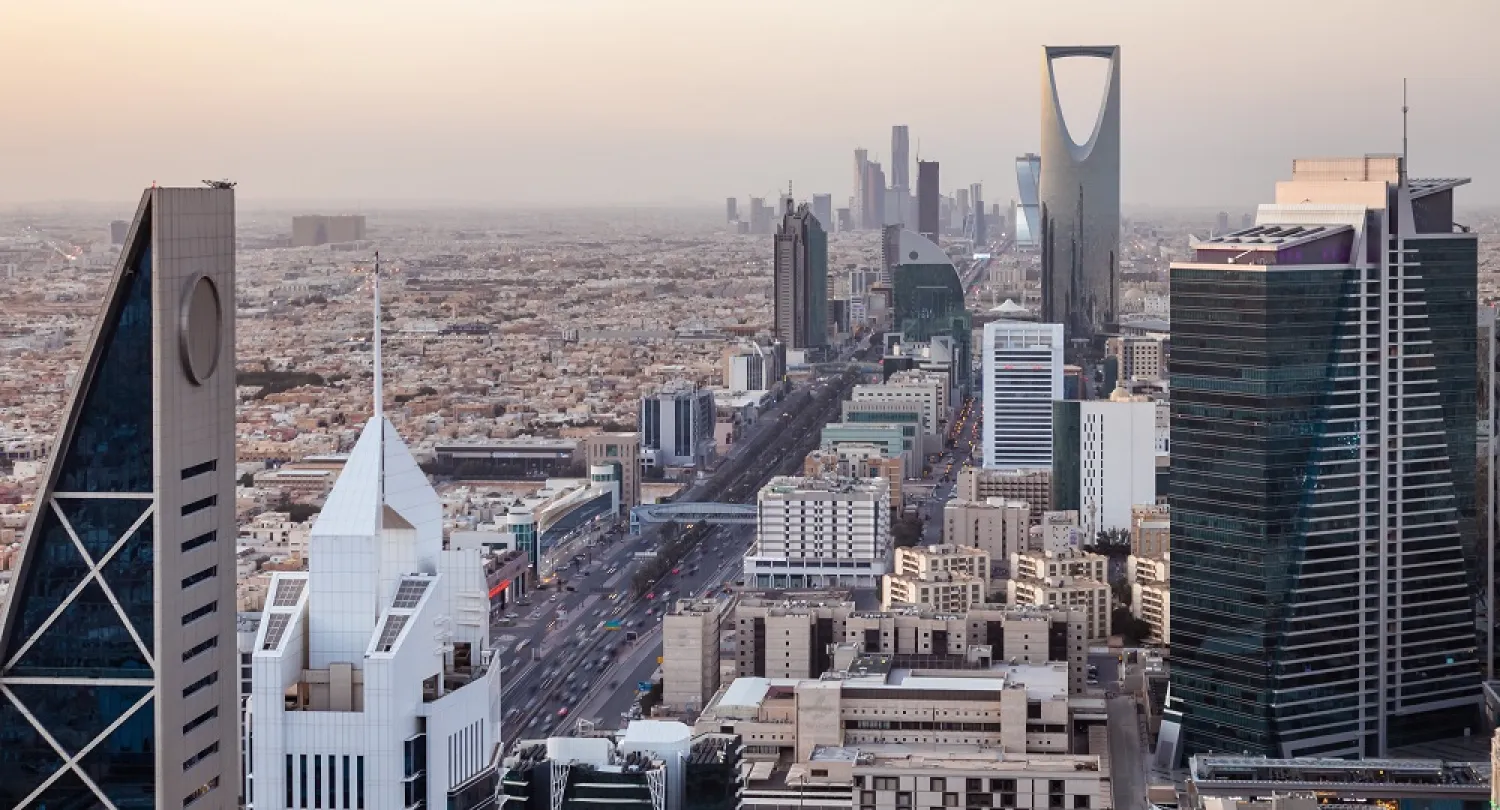

Saudi Arabia Hosts Ministerial Meeting to Discuss Arab Mining Capabilities

The Saudi Ministry of Industry and Mineral Resources will hold the 8th Consultative Meeting of Arab Ministers for Mineral Resources. (Asharq Al-Awsat)
TT

Saudi Arabia Hosts Ministerial Meeting to Discuss Arab Mining Capabilities

The Saudi Ministry of Industry and Mineral Resources will hold the 8th Consultative Meeting of Arab Ministers for Mineral Resources. (Asharq Al-Awsat)

The Saudi Ministry of Industry and Mineral Resources, in collaboration with the Arab Industrial Development, Standardization and Mining Organization (AIDSMO), will hold Tuesday the 8th Consultative Meeting of Arab Ministers for Mineral Resources.

The meeting is a vital part of the first-ever Future Minerals Summit in Riyadh from January 11 to 13.

Saudi Minister of Industry and Mineral Resources Bandar Alkhorayef will inaugurate the meeting in the presence of all Arab ministers of industry, energy, oil, and mining.

The schedule

The meeting will discuss the activities of AIDSMO in the mineral resources sector during the period between the seventh and eighth consultative meetings of ministers.

It will also review the Organization's main achievements in implementing the recommendations of the ministers, most notably relating to the database of mining raw materials in Arab countries and establishing Arab capabilities in the mining sector.

According to the agenda, the ministers are expected to discuss the draft of preparing mining guidelines for Arab countries, the Arab Initiative for metals used in clean energy technologies, the Arab industrial and mining products orders, and setting the date and place of the ninth consultative meeting.

International conference

Through the Future Minerals Summit, Saudi Arabia provides an excellent opportunity for the region rich in untapped minerals, covering the area from Congo to Kyrgyzstan.

The Summit, the largest of its kind in the Middle East, is an opportunity for to establish an international and regional hub qualified to plan and cooperate in the field of mineral wealth exploitation, develop investment opportunities throughout the Middle East, Central Asia, North, and East Africa, ensure a resilient mineral supply chain, and grow a sustainable mining industry.

It is considered the most prominent attraction that qualifies the Kingdom to take the lead, as the most significant regional economic power and the only Middle Eastern Arab member state of OPEC and G20. The government is implementing megaprojects to support and develop the mining industry, and empower it in organizational and construction aspects.

Arabian Shield

The Arabian Shield, in western Saudi Arabia, boasts $1.3 trillion worth of rare untapped mineral deposits, including a group of minerals and metals many of which are necessary for technologies that will be in high demand in the future.

Future demand for copper and rare earth metals is predicted to increase by 40 percent in the coming years.

Saudi Geological Survey reports indicate that the Precambrian rocks are found in the western part of Saudi Arabia, which constitutes a geologically interesting and significant terrain in the Arabian Shield.

The Arabian Shield is part of a larger geological group, the Arabian Nubian Shield, which covers mainly Egypt, Eritrea, Ethiopia, Saudi Arabia, Somalia, Sudan, and Yemen.

Of the 54 countries on the continent, 20 are considered by the International Monetary Fund (IMF) as rich in natural resources.

The countries whose natural resources account for more than 25 percent of total exports are sub-Saharan African countries: seven states export mainly oil and gas, and the remaining 13 export mainly minerals: mostly gold, diamonds, and precious stones.

Saudi mining

As an essential part of Vision 2030, the Kingdom is pushing its mining sector to become the third pillar of the national economy, based on its long history and aspiration to attract investment and develop its multiple mineral resources.

The Kingdom's mining strategy seeks to increase its contribution to the gross domestic product to $64 billion, state revenues to $3.7 billion, and generate about 220,000 new jobs by 2030.

Level of expectations

The level of expectations increased concerning the vital role of mining companies in protecting the environment, contributing to the development of societies, and acting with transparency, integrity, and responsibility.

Using technologies that guarantee the protection of the environment and the development of societies are significant themes during the conference sessions and discussions with the participation of ministers, investors, and the most prominent regional and international leaders in the sector.

Possible changes

The growing expectations of local communities and governments towards mining companies have brought significant change. International investors are increasingly basing their investments on companies that comply with the environmental, social, and governance (ESG) ratings.

Mining companies with higher ESG ratings outperformed the broader market during the peak of the Covid-19 crisis, delivering 34 percent average total shareholder return over the past three years, ten percentage points higher than the general market, according to PwC.

Companies with higher ESG ratings are demonstrating more robust long-term performance in shareholder and market value, benefiting from capital access at lower interest rates, and attracting premiums on low-carbon inputs.

Sustainability is a principle

Saudi Arabia has placed great emphasis on sustainability in every step of its plan to develop the mining sector.

Sustainability has been placed at the heart of labor laws and requirements in this sector by the new mining investment system, which was established according to the best international practices.

It provides clear commitments on managing mines and maintaining people's health working and living around mining projects. Investors are required to submit annual sustainability reports.

The Kingdom stressed that all countries should cooperate to create a balanced, transparent, and sustainable legal system that achieves the interests of all parties involved in mining projects.

Mining

In 2021, the Kingdom launched the Saudi Green Initiative, taking the lead in scaling climate action and environmental protection and adopting a plan that contributes to making the world greener.

The Initiative reduces carbon emissions through renewable energy projects, carbon sequestration initiatives, and full support for energy efficiency in the industry.

The mining industry is estimated to be responsible for four to seven percent of global greenhouse gas emissions.

A report issued by McKinsey Group predicted the role of mining companies in decarbonization, noting that significant growth would occur in low-carbon technologies if industries commit to reducing emissions in line with the goals of the Paris Agreement.

If this goal is achieved, it will manifest in decarbonization across industries, creating significant shifts in commodity demand for the mining industry and likely resulting in declining global mining revenue pools.

Technologies that support decarbonization include wind turbines, solar photovoltaics, electric vehicles, energy storage, metal recycling, hydrogen fuel cells, and carbon capture and storage.

"The mining industry will be part of the decarbonization solution by providing the raw materials needed for these technologies," said the report.

McKinsey expects bauxite, copper, and iron ore to see growth from new decarbonization technologies offset by increased recycling rates due to the growing circular economy and focus on metal production from recycling versus virgin ore.

"The mining industry will be part of the decarbonization solution by providing the raw materials needed for these technologies. Simultaneously, their growth will alter demand patterns for upstream mining commodities," it added.

Biodiversity

Water scarcity is the most significant emerging risk in the metals and mining sector. In 2018, drought conditions forced a German company to shut two mining locations in the RDM gold mine in Brazil.

The International Council on Mining and Metals (ICMM) warned that water scarcity affects every continent, hindering environmental stewardship and sustainable social progress.

Mckinsey explained that climate science indicates that these hot spots will worsen in the coming decades. In Chile, 80 percent of copper production is already located in extremely high water-stressed and arid areas; by 2040, it will be 100 percent.

Community development

The World Economic Forum also explained that the mining industry plays a critical role in supporting mining communities.

Furthermore, mining companies acknowledge that they face a lack of trust from local communities, among other significant risks.



Japan Proposes Record Budget Spending While Curbing Fresh Debt

Year-end shoppers walk along at the Ameyoko shopping street ahead of the New Year in Tokyo, Japan, 26 December 2025. (EPA)
TT

Japan Proposes Record Budget Spending While Curbing Fresh Debt

Year-end shoppers walk along at the Ameyoko shopping street ahead of the New Year in Tokyo, Japan, 26 December 2025. (EPA)

Japan's government on Friday proposed record spending for next fiscal year while curbing debt issuance, underscoring Prime Minister Sanae Takaichi's challenge in boosting the ​economy while inflation remains above the central bank's target.

Her cabinet approved a draft budget of $783 billion that addresses market jitters by capping bond issuance and reducing the proportion of the budget financed by fresh debt to the lowest in almost three decades.

Also complicating Takaichi's policy challenge, core inflation in Tokyo stayed above the Bank of Japan's 2% target this month while the yen remains weak, bolstering the central bank's case to keep raising interest rates.

The record 122.3-trillion-yen budget for the year starting in April, a core part of Takaichi's "proactive" fiscal policy, will likely underpin consumption but could also accelerate inflation and further strain Japan's tattered finances.

DELICATE BALANCE OF BUDGET SUPPORT, DEBT RESTRAINT

Investor unease about fiscal expansion in an economy with the heaviest debt burden in the industrialized world has driven super-long government bond yields to record highs and weighed on the ‌yen.

"We believe we have ‌been able to draft a budget that not only increases allocations for key policy ‌measures ⁠but also takes ​fiscal discipline ‌into account, achieving both a strong economy and fiscal sustainability," said Finance Minister Satsuki Katayama.

She told a press conference the draft budget keeps new bond issuance below 30 trillion yen ($190 billion) for a second consecutive year, with the debt dependence ratio falling to 24.2%, the lowest since 1998.

The Takaichi government's efforts to reassure Japanese government bond investors were showing some success.

The 30-year JGB yield fell on Thursday from a record high 3.45% after Reuters reported the government will likely reduce new issuance of super-long JGBs next fiscal year to the lowest in 17 years. Yields slipped further on Friday on the administration's efforts at fiscal restraint.

The budget was not as large as initially feared, said Saisuke Sakai, senior economist at Mizuho Research & Technologies. "But political fragmentation raises ⁠the risk that Takaichi may resort to a large supplementary budget next year to secure opposition support, keeping alive market concerns that fiscal expansion could push the yen down and accelerate inflation," he ‌said.

"It's too optimistic to assume that the current environment will persist."

The proposed spending is ‍inflated by a jump in debt-servicing costs for interest payments and ‍debt redemption.

It also reflects a 3.8% rise in military spending to 9 trillion yen ($60 billion) as part of the assertive defense ‍policy of Takaichi, a conservative nationalist, and in line with a U.S. push for its allies to pay more for their own defense.

TOKYO INFLATION SLOWS BUT STILL POINTS TO RATE HIKES

The Tokyo core consumer price index, which excludes volatile costs of fresh food, rose 2.3% in December from a year earlier, less than market forecasts for a 2.5% gain and slowing from a 2.8% increase in November.

The data backs up the central bank's view that core inflation will ​slide below its 2% target in coming months on easing cost pressure, before resuming a more demand-led increase that justifies additional rate increases.

But some analysts warn of the risk renewed yen declines may prod firms to keep raising ⁠prices, leading to sticky, cost-led inflation that could quicken the pace of BOJ rate hikes.

"Today's data suggests food inflation may be peaking. But the weak yen may give firms an excuse to resume price hikes for food, which may keep inflation elevated," said Yoshiki Shinke, senior executive economist at Dai-ichi Life Research Institute.

An inflation index for the capital that strips away both fresh food and fuel costs - closely watched by the BOJ as a measure of demand-driven prices - rose 2.6% in December after a 2.8% increase in November.

Data on Friday also showed Japan's factory output fell 2.6% in November from the previous month, deeper than market forecasts for a 2.0% drop, due to cuts in automobile and lithium-ion battery production.

The BOJ raised its policy rate last week to a 30-year high of 0.75%, taking another landmark step in ending decades of huge monetary support, in a sign of its conviction Japan is progressing toward durably hitting its 2% inflation target.

With core inflation exceeding the BOJ's target for nearly four years, Governor Kazuo Ueda has signaled the BOJ's readiness to keep raising rates if the economy continues to improve, backed by solid wage gains.

Yen bears, however, have dumped ‌the Japanese currency in the belief that Ueda's rate hikes are too gradual, prompting Katayama last week to threaten yen-buying intervention, saying the government was "alarmed as we are clearly seeing one-sided, sharp moves" in the yen.


China to Rein in Copper, Alumina Capacity Expansion Under Next Five-Year Plan

People walk next to shopping centers in Beijing on December 19, 2025. (AFP)
TT

China to Rein in Copper, Alumina Capacity Expansion Under Next Five-Year Plan

People walk next to shopping centers in Beijing on December 19, 2025. (AFP)

China will tighten oversight of new copper and alumina projects to curb irrational investment and disorderly expansion from 2026 ​to 2030, the country’s top economic planner said on Friday.

In an article on its website, the National Development and Reform Commission (NDRC) said local governments must strengthen feasibility studies for major projects and align their approvals with national industrial policy.

The guidance targets copper and alumina, industries the commission said are key to economic ‌and military development ‌but whose development must take ‌into ⁠account "differences ​in regional industrial ‌bases, resource endowments and environmental capacity."

China will also encourage mergers and restructuring led by large firms to increase industry concentration and competitiveness, the NDRC said. In addition, Beijing will continue to support overseas mining investment in its next five-year plan.

China is the world’s largest producer and consumer ⁠of copper and alumina and has repeatedly warned of the risks of overcapacity ‌and unchecked investments in the ‍industry.

China suspended plans for ‍around 2 million metric tons of planned copper smelting ‍capacity, the China Nonferrous Metals Industry Association said last month.

From January to November of 2025, China produced 13.3 million metric tons of refined copper, up 9.8% from a year earlier, ​on track for record refined copper output in 2025.

Alumina output in China reached 84.7 million ⁠tons in the same period and was also likely to set a record in 2025.

The most traded copper contract on the Shanghai Futures Exchange closed daytime trading up after hitting a record high of 99,730 yuan earlier in the session.

Shanghai aluminium closed the session higher after hitting a near-four-year high of 22,640 yuan.

Major copper firm Jiangxi Copper rose 10%. Yunnan Copper rose as much as 8.68% and Tongling Nonferrous Metals Group gained as ‌much as 8.33%.


Riyadh Air Launches ‘Employment First’ Overseas Aviation Training Scholarship Program

Riyadh Air Launches ‘Employment First’ Overseas Aviation Training Scholarship Program
TT

Riyadh Air Launches ‘Employment First’ Overseas Aviation Training Scholarship Program

Riyadh Air Launches ‘Employment First’ Overseas Aviation Training Scholarship Program

Riyadh Air has announced its ‘Employment-First’ Overseas Scholarship Program, which aims to launch several scholarship tracks, starting with two specialized paths for engineers in Australia, followed by a pilot training program in the United States.

The initiative falls under ‘Promising Path’, one of the tracks within the Custodian of the Two Holy Mosques Scholarship Program, in collaboration with the Ministry of Education, the Ministry of Transport and Logistic Services, and the General Authority of Civil Aviation (GACA).

This strategic step aims to build national competencies and train a new generation of specialists in the aviation sector, SPA reported.

According to a recent press release from Riyadh Air, the program will introduce several global training pathways, with the initial phase focusing on sending scholarship students to Australia to study towards Bachelor’s degrees in Aircraft Maintenance Engineering, covering both Mechanical Engineering and Avionics (Electronics). Next month, Riyadh Air will launch a Commercial Aviation training program in the United States.

In line with Riyadh Air’s commitment to supporting students' career progression, participants will be employed before commencing their scholarships. This ensures that their years of experience are registered with the General Organization for Social Insurance, enhancing their professional readiness from day one.

The program's launch is part of Riyadh Air’s continuous efforts to empower national talent and provide the Kingdom’s young and vibrant workforce with essential skills and knowledge, representing an even greater long-term investment in the future of the Kingdom's aviation industry.

Vice President of Talent Acquisition and Business Partners at Riyadh Air Nahar Aljahani stated: "The 'Employment-First' Scholarship Program is a part of our commitment to developing national human capital and enabling Saudi youth - both men and women - to access world-class education.

Its impact will reflect positively on the development of the aviation sector in the Kingdom, contributing to the company's goal of creating over 200,000 direct and indirect jobs."

With these programs, Riyadh Air continues to play a part in building a promising future for Saudi citizens and enhancing the competitiveness of our graduates in the global aviation industry.