Yemen Calls for Ending Houthi Looting of Humanitarian Aid

 Houthi fighters ride on the back of a patrol truck as they secure the site of a pro-Houthi tribal gathering in a rural area near Sanaa, Yemen July 21, 2016. REUTERS/Khaled Abdullah
Houthi fighters ride on the back of a patrol truck as they secure the site of a pro-Houthi tribal gathering in a rural area near Sanaa, Yemen July 21, 2016. REUTERS/Khaled Abdullah
TT

Yemen Calls for Ending Houthi Looting of Humanitarian Aid

 Houthi fighters ride on the back of a patrol truck as they secure the site of a pro-Houthi tribal gathering in a rural area near Sanaa, Yemen July 21, 2016. REUTERS/Khaled Abdullah
Houthi fighters ride on the back of a patrol truck as they secure the site of a pro-Houthi tribal gathering in a rural area near Sanaa, Yemen July 21, 2016. REUTERS/Khaled Abdullah

Yemeni Minister of Social Affairs and Labor Dr. Mohammed Saeed Al-Zaouri has renewed the government’s appeal to the international community to pressure Houthi militias to stop their violations related to the looting of humanitarian aid.

“Houthi militias continue to put obstacles in the way of the work of international and local organizations. The group also actively and loots relief aid,” said Al-Zaouri.

He accused the militias of making the humanitarian situation in Yemen worse.

The Yemeni minister explained that government agencies documented during the past year the Houthi militia’s many violations in the relief field.

Houthis stormed global food warehouses in the Aslam district of Hajjah governorate, looting about 120 tons of flour, and transferring aid allocated to the Bani Hassan camp to their fighters.

Houthis also robbed one third of the 16,000 monthly food baskets belonging to affected families in the Khairan Muharraq area.

Al-Zaouri indicated that a number of Houthi violations have been documented, ranging from looting aid, manipulating the names of beneficiaries, diverting aid to the benefit of fighters, placing obstacles in front of international humanitarian organizations, and imposing illicit fees on relief organizations and agencies when implementing humanitarian programs.

He explained that the militias detained two United Nations employees last November. They remain in detention until this moment.

The minister said that the Houthi group had taken control of the port of Hodeidah as a platform to practice obstacles and obstructions for ships carrying relief aid and to impose illegal fees.

Al-Zaouri warned against the Houthis’ continued control of parts of the maritime navigation, given that this threatens regional and international security. Houthis are hijacking some ships and striking others.

He urged the international community to pressure Houthi militias to stop all violations, reiterating the government’s keenness and continuity to support the efforts of donors and international relief agencies in implementing humanitarian programs in Yemen.

Arab League Secretary-General: Palestinian Cause True Test of International Order’s Credibility

Secretary-General of the Arab League Ahmed Aboul Gheit. (Asharq Al-Awsat)
TT

Arab League Secretary-General: Palestinian Cause True Test of International Order’s Credibility

Secretary-General of the Arab League Ahmed Aboul Gheit. (Asharq Al-Awsat)

Arab League Secretary-General Nabil Fahmy affirmed that the Palestinian cause is a true test of the credibility of the international order, in light of persistent double standards and Israeli violations of international law, stressing the need to end the occupation and establish an independent Palestinian state.

He also underscored the importance of preserving the unity, sovereignty, and territorial integrity of Arab states and supporting their national institutions as a fundamental pillar of security and stability, SPA reported.

Fahmy made the remarks during an open dialogue at the third edition of the Cairo Forum, where he reviewed the main challenges facing the Arab region, explored ways to strengthen security and stability, and discussed the role of joint Arab action in responding to regional and global shifts.

He explained that Arab security extends beyond military considerations to include political, economic, social, and developmental dimensions. He highlighted the crises and instability affecting Syria, Sudan, Lebanon, Yemen, and the Arab Gulf region, noting that addressing them requires looking beyond their immediate manifestations to tackle their root causes, foremost among them weak institutions and the accumulation of political, economic, and social challenges.

Fahmy stressed the need to move from merely managing the repercussions of crises to adopting proactive approaches that prevent their recurrence. He also emphasized strengthening cooperation and integration among Arab states, establishing balanced relations with neighboring countries based on respect for sovereignty and non-interference in internal affairs, and engaging with the wider world on the basis of parity and shared interests.


Jordan's King Says 'No Security or Stability' in Region Without Palestinian Homeland

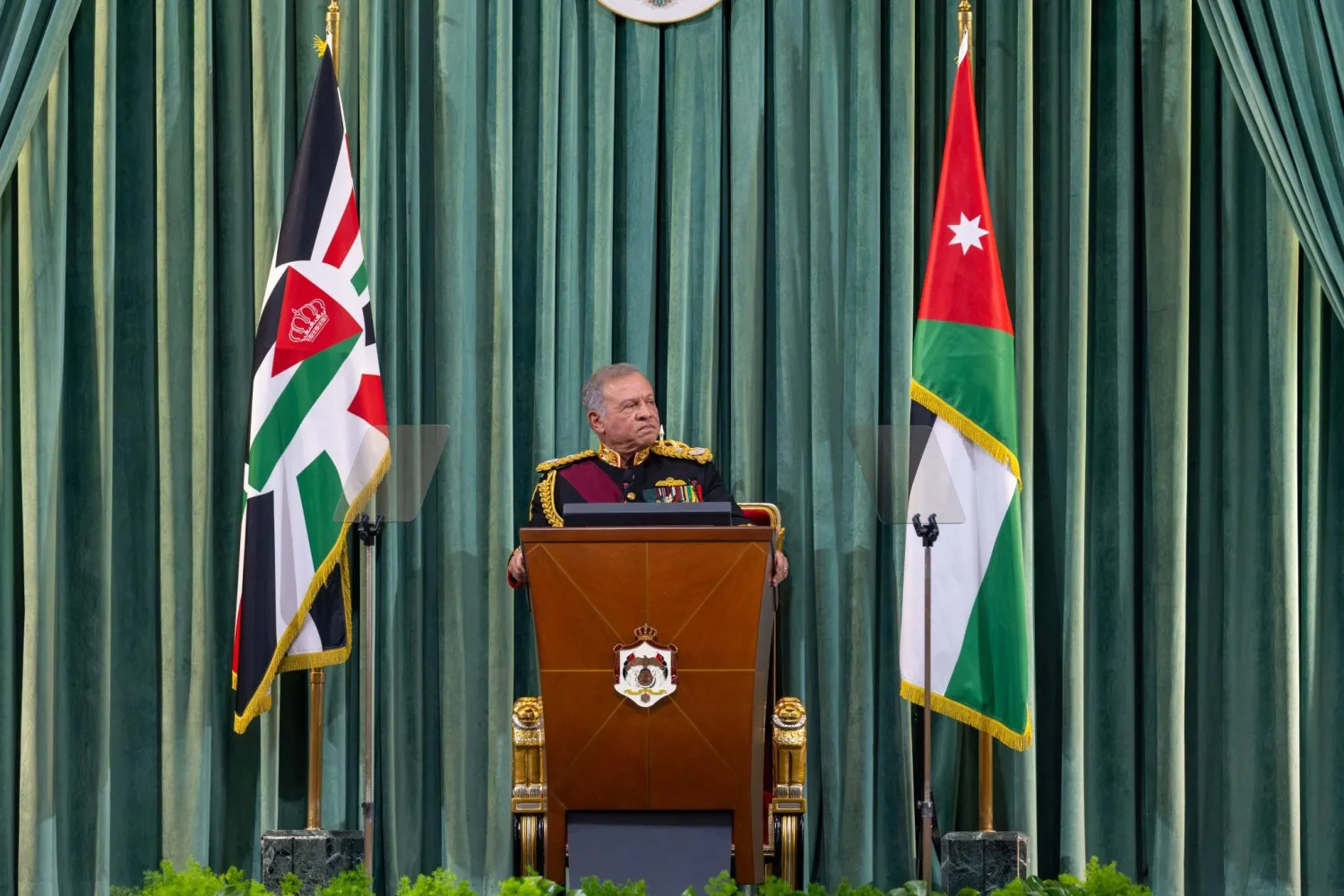
Jordanian Monarch King Abdullah II bin Al-Hussein during today's speech (Petra)
TT

Jordan's King Says 'No Security or Stability' in Region Without Palestinian Homeland

Jordanian Monarch King Abdullah II bin Al-Hussein during today's speech (Petra)

Jordan's King Abdullah II on Monday said there would be no security in the Middle East region until the Palestinians' right to a homeland is fulfilled. 

"We reiterate, time and again, that there can be no security or stability in our region without upholding the Palestinian people's right to their homeland," he said at the opening of Jordan's parliament. 

Jordan neighbors Israel and the occupied West Bank. It has long advocated for a two-state solution, and signed a peace treaty with Israel in 1994. 

"Despite international calls for an end to Israel's violations, the humanitarian catastrophe in Gaza continues, as do the relentless attacks in the West Bank and Jerusalem, whilst Israel's expansionist ambitions remain the greatest threat to the region's future and hopes," the king said. 

The speech came days after Israel held a legislative election which saw Prime Minister Benjamin Netanyahu's party win the most votes, but still fall short of a majority. 

It also follows threats of a renewed conflict in the wider region, with Iran vowing to hit back should the United States and Israel renew strikes against the Iranian republic. 


Israel Army Withdraws After Hebron Operation, Says Military Official

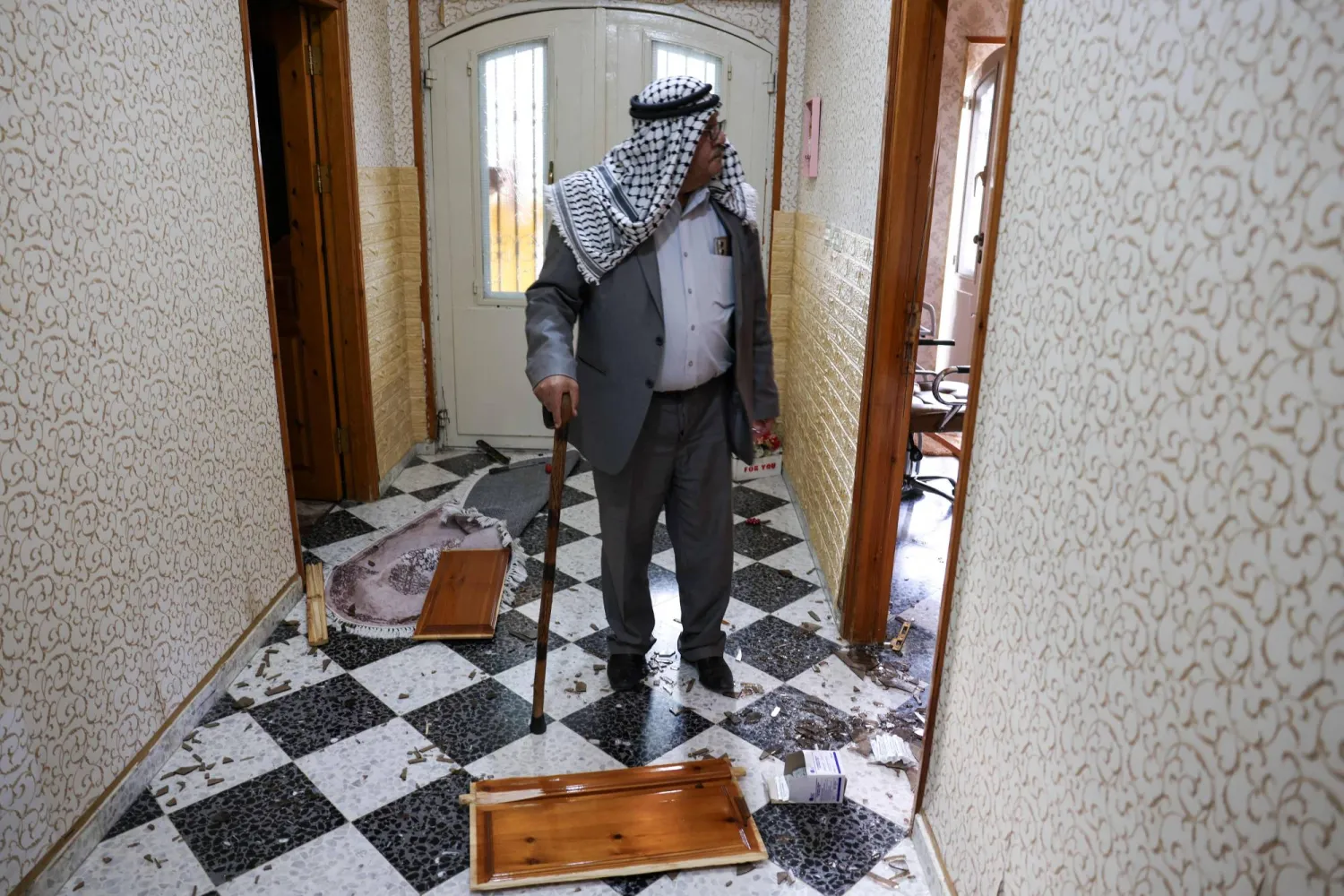
A Palestinian man inspects the damage to his home in the Deir Baha area of Hebron in the occupied West Bank, on November 2, 2026, after returning following his displacement in an Israeli military operation last week. (AFP)
TT

Israel Army Withdraws After Hebron Operation, Says Military Official

A Palestinian man inspects the damage to his home in the Deir Baha area of Hebron in the occupied West Bank, on November 2, 2026, after returning following his displacement in an Israeli military operation last week. (AFP)

The Israeli army has pulled back following an operation in the occupied West Bank city of Hebron, launched in the wake of an attack that killed two soldiers in late October, a military official said Monday.

The operation had emptied a neighborhood in the West Bank's largest city where the two gunmen had lived. AFP journalists witnessed residents returning to their homes on Monday after the military left.

"This morning, following the completion of all operational activities, the soldiers withdrew from the area of operation in Hebron. Counterterrorism activities throughout Judea and Samaria continue," the official said, using the biblical name for the Palestinian territory.

On October 23, days ahead of close-fought Israeli elections, two Palestinian gunmen attacked an army checkpoint near Hebron, killing two soldiers and prompting promises of a major retaliatory operation from senior officials, including Prime Minister Benjamin Netanyahu.

By the following morning, the military had cleared out the residents of the assailants' neighborhood, displacing more than 3,000 people, according to the municipality.

The military official said that "soldiers conducted thorough searches of multiple locations, detained and questioned suspects, and located and confiscated four weapons, several vests, and additional military equipment".

They also demolished the two attackers' homes and "sealed an underground space located next to" one of them.

Muhannad al-Tamimi, whose house was occupied by soldiers since the operation began, told AFP his family came back to a trashed apartment with furniture and clothing strewn on the floors, mattresses overturned and a child's bicycle broken.