First Abu Dhabi Bank Plans to Expand Operations in Saudi Arabia, Egypt https://english.aawsat.com/home/article/3441761/first-abu-dhabi-bank-plans-expand-operations-saudi-arabia-egypt
First Abu Dhabi Bank Plans to Expand Operations in Saudi Arabia, Egypt
It was a landmark year for FAB on the international front. (Asharq Al-Awsat Arabic)
The UAE’s largest bank, First Abu Dhabi Bank, revealed plans to expand in the domestic market as well as in Saudi Arabia and Egypt in the coming period.
The acquisition of “Bank Audi Egypt” will be completed during the third quarter of 2022, said FAB.
The First Abu Dhabi Bank announced Thursday it scooped a record annual net profit of $3.4 billion in 2021 (12.5 billion dirhams), up from 10.6 billion dirhams, which is a 19 percent increase over the previous year.
FAB’s board of directors recommended dividends per share of 70 fils equivalent, split into 49 fils in cash and 21 fils as scrip dividend in lieu of cash to enable future growth of the bank, it said.
"2021 has been a year of a strong economic rebound, with unprecedented opportunities for innovation and growth, despite continued uncertainties due to Covid-19," said Sheikh Tahnoon bin Zayed, chairman of First Abu Dhabi Bank.
"Against this backdrop, the UAE has once again demonstrated great vision and leadership, leading the way towards recovery, regionally and globally, on the back of its world-class vaccination program, monetary and fiscal stimulus measures including the UAE Central Bank Tess program, structural reforms and plans to drive long-term economic growth and prosperity,” said Sheikh Tahnoon.
Total assets exceeded a historic high of one trillion dirhams ($272 billion), FAB said.
"This performance reflects positive underlying trends across core businesses in a year of economic rebound and expansion," said Hana Al Rostamani, group chief executive of FAB.
"It was also a landmark year for FAB on the international front, as we continued to expand in our targeted markets, helped by the acquisition of Bank Audi Egypt."
Revenue from the bank's international operations grew 26 percent year on year, with the Middle East and North Africa contributing 52 percent last year compared with 39 percent in 2020, Rostamani added.
James Burdett, FAB Group Chief Financial Officer, said: "While we remain cautiously optimistic and cognisant of the uncertainties arising from the pandemic and potential market volatility, the rising interest rate outlook and the expected acceleration in economic activity across the region present significant opportunities for the bank," Burdett concluded.
IMF Expects Middle East Economies to Rebound to 6.6% Growth in 2027https://english.aawsat.com/business/5329826-imf-expects-middle-east-economies-rebound-66-growth-2027
Jihad Azour, Director of the Middle East and Central Asia Department at the International Monetary Fund (IMF) attends a press conference at the IMF/World Bank 2026 Spring Meetings in Washington, D.C., US, April 16, 2026. REUTERS/Elizabeth Frantz
IMF Expects Middle East Economies to Rebound to 6.6% Growth in 2027
Jihad Azour, Director of the Middle East and Central Asia Department at the International Monetary Fund (IMF) attends a press conference at the IMF/World Bank 2026 Spring Meetings in Washington, D.C., US, April 16, 2026. REUTERS/Elizabeth Frantz
The International Monetary Fund expects the economies of the Middle East, North Africa and Pakistan to rebound to growth of 6.6 percent in 2027, following a projected contraction of 1.3 percent this year, amid the economic fallout from the regional war and disruptions to energy production and trade, which have affected countries across the region to varying degrees.
Jihad Azour, the IMF's director for the Middle East and Central Asia, said economies directly affected by the conflict are facing severe pressures, while other economies in the region, along with most countries in the Caucasus and Central Asia, have shown greater resilience.
He explained that the path of the recovery will depend largely on how quickly energy production and trade return to normal and on countries’ ability to maintain macroeconomic stability.
The forecasts come after the economies of the Middle East, North Africa and Pakistan grew by 3.3 percent in 2025, illustrating the scale of the shock expected this year before a strong rebound next year.
Azour stressed, however, that the overall projections mask significant disparities among the region’s economies and that the recovery will not be uniform across countries.
Oil Exporters and Importers
Azour said oil-exporting countries directly affected by disruptions to energy production and trade will experience a marked contraction in 2026, although higher oil prices will provide some support to their fiscal and external positions.
A gradual recovery in production and trade is expected to drive a strong rebound in GDP growth in 2027, although output levels will remain below the trajectory projected before the outbreak of the conflict.
By contrast, economic activity in the region’s oil-importing countries has remained relatively resilient during 2026 and is expected to continue doing so. Workers’ remittances, tourism revenues, favorable financial conditions and government support have helped cushion the immediate impact of the shock, although the policy space available to governments is narrowing.
The IMF expects inflation in these economies to rise moderately in 2026 before gradually easing thereafter.
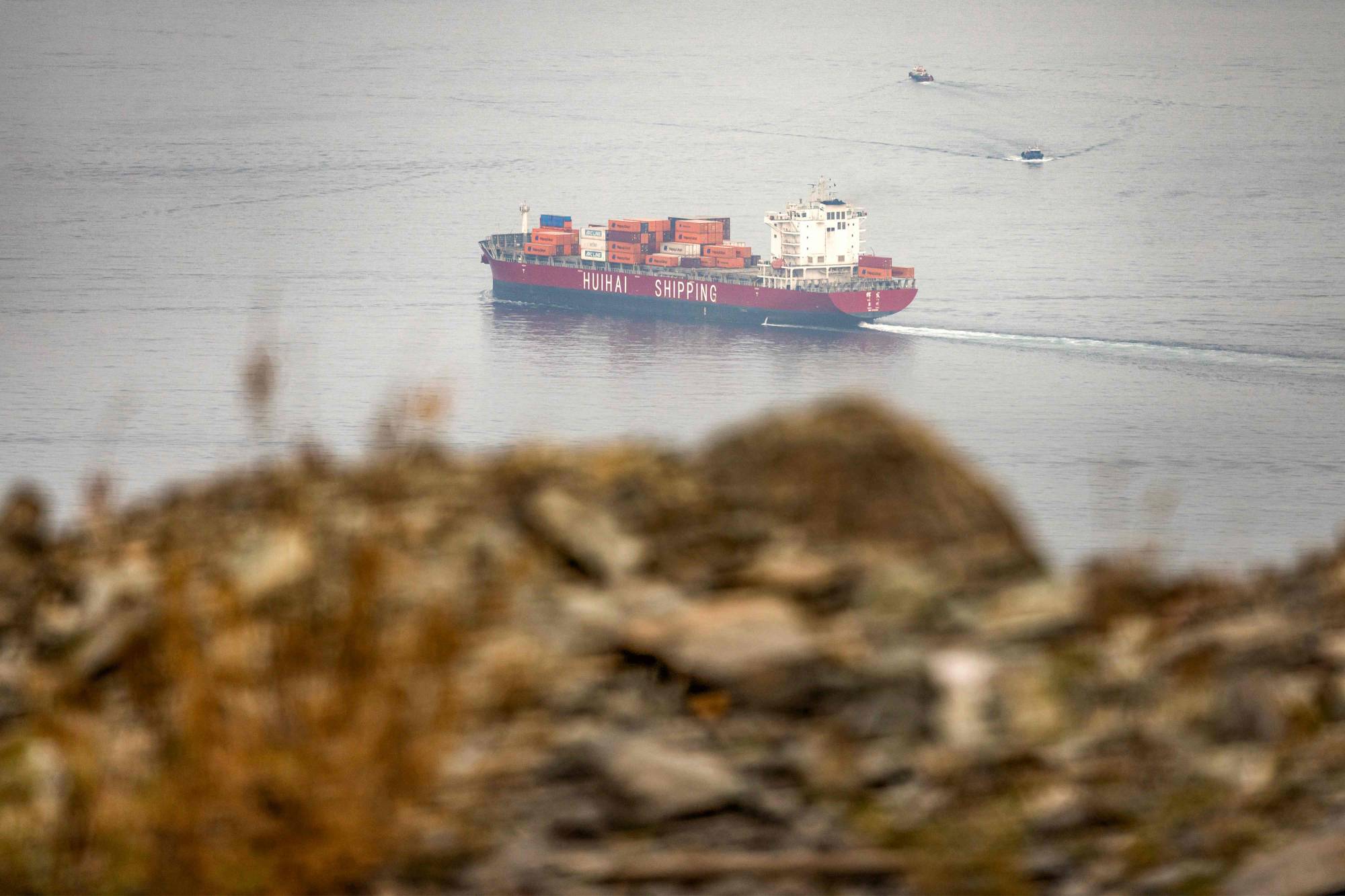
The Chinese-flagged container shipping vessel Hui Fa transits the Gulf of Oman on October 13, 2026. (Photo by AFP)
Lower Inventories, Greater Risks
Azour noted that the impact of the energy shock has been less severe than initial estimates suggested, thanks to surpluses accumulated before the war, production by non-Gulf countries, alternative transportation routes, adjustments in demand and drawdowns from inventories.
He cautioned, however, that these factors have provided time for adjustment but are not sustainable resources. Available inventories have declined and spare production capacity has narrowed, leaving markets more vulnerable to larger price increases should disruptions recur.
Azour identified a prolonged war as the most significant risk to the outlook, warning that further disruptions to energy production, shipping routes or critical infrastructure would weaken economic activity among Gulf oil exporters, increase inflationary pressures and exacerbate fiscal and external strains across the region.
He also warned that tighter global financial conditions could weaken demand, raise borrowing costs and increase pressure on currencies, particularly in economies with substantial sovereign debt-financing needs or a heavy reliance on external financing.
Low-income and fragile economies remain the most vulnerable to these risks because of their dependence on food imports and limited fiscal space, at a time when official development assistance is also declining.
Call for Targeted Support and Rebuilding Fiscal Buffers
Azour urged policymakers to prioritize price stability and fiscal sustainability, using monetary policy as the first line of defense when inflationary pressures emerge, complemented by prudent fiscal policy, particularly in countries with limited financial resources.
He stressed the importance of rebuilding fiscal buffers to withstand future shocks by strengthening domestic revenues, improving spending efficiency and developing stronger fiscal frameworks. He cautioned against broad-based subsidies, favoring instead temporary and targeted cash assistance for the groups most affected, helping keep the cost of intervention within budgetary limits.
Over the longer term, Azour emphasized the importance of strong institutions, credible monetary frameworks and central bank independence, alongside greater trade diversification, deeper regional integration and a stronger capacity to adopt new technologies, including artificial intelligence, to boost productivity and support growth.
Azour noted that the IMF has approved approximately $48 billion in financing for countries in the region since 2020. During fiscal year 2026, it also carried out around 437 technical assistance and capacity-building projects in 31 countries.
The IMF is scheduled to release its full regional report in Dubai on October 22, providing a more detailed assessment of economic developments and policy priorities.
Gold Rebounds from One-week Low as Dollar Slipshttps://english.aawsat.com/business/5329812-gold-rebounds-one-week-low-dollar-slips
Gold bracelets and necklaces on display for sale at a gold shop in Istanbul's Grand Bazaar (AFP)
Gold prices climbed 1% on Thursday, rebounding from a one-week low hit in the previous session as the US dollar eased, while investors assessed the likelihood of a Federal Reserve interest rate increase this month after a hot inflation report.
Spot gold rose 1% to $4,146.74 per ounce by 0501 GMT, after hitting its lowest since October 7 on Wednesday. US gold futures for December delivery gained 1.5% to $4,167.30.
The dollar slipped after scaling an 18-month peak overnight. A softer dollar makes greenback-priced bullion more affordable for buyers overseas.
"What we're seeing here is just the symptoms of a market uncertain about US interest rate policy, and that is resulting in a bit of volatility," said Kyle Rodda, senior financial market analyst at Capital.com.
"We're coming up to a really critical level for gold, which is just below the $4,000 level. If we see, again, some really strong data, then there's a view that the Fed will have to hike relatively urgently, then that will be the level of focus."
US consumer prices accelerated in September as the cost of gasoline surged. Traders are pricing in about a 29% chance of a rate hike later this month, compared with 22% before the data, according to CME's FedWatch Tool.
San Francisco Fed President Mary Daly said the US central bank will probably need to increase short-term interest rates further, though she signaled no need for a hike at the October 27-28 meeting. Vice Chair for Supervision Michelle Bowman said there's time to wait and see before any more action.
Although gold is viewed as an inflation hedge, higher interest rates reduce its appeal because it does not pay interest.
Market focus now turns to the Producer Price Index (PPI) and retail sales data due at 1230 GMT.
Among other metals, spot silver gained 0.7% to $56.01, platinum rose 1% to $1,608.20 and palladium climbed 1.3% to $1,108.14.
IMF Plans Mission to Lebanon in Novemberhttps://english.aawsat.com/business/5329805-imf-plans-mission-lebanon-november
A view of the International Monetary Fund (IMF) logo at its headquarters in Washington, DC, US, November 24, 2024. (Reuters)
IMF officials held good discussions with Lebanese authorities this week that will continue in coming weeks, with IMF staff to visit the country in November, a senior IMF official said on Thursday.
Athanasios Arvanitis, deputy director of the IMF's Middle East and Central Asia Department, said the focus of the discussions had been on the banking sector and ensuring that the Lebanese people had confidence in the system, Reuters reported.
Restoring debt sustainability was another key issue, Arvanitis said.
لم تشترك بعد
انشئ حساباً خاصاً بك لتحصل على أخبار مخصصة لك ولتتمتع بخاصية حفظ المقالات وتتلقى نشراتنا البريدية المتنوعة