


Sudanese Protester Killed as Thousands March against Coup

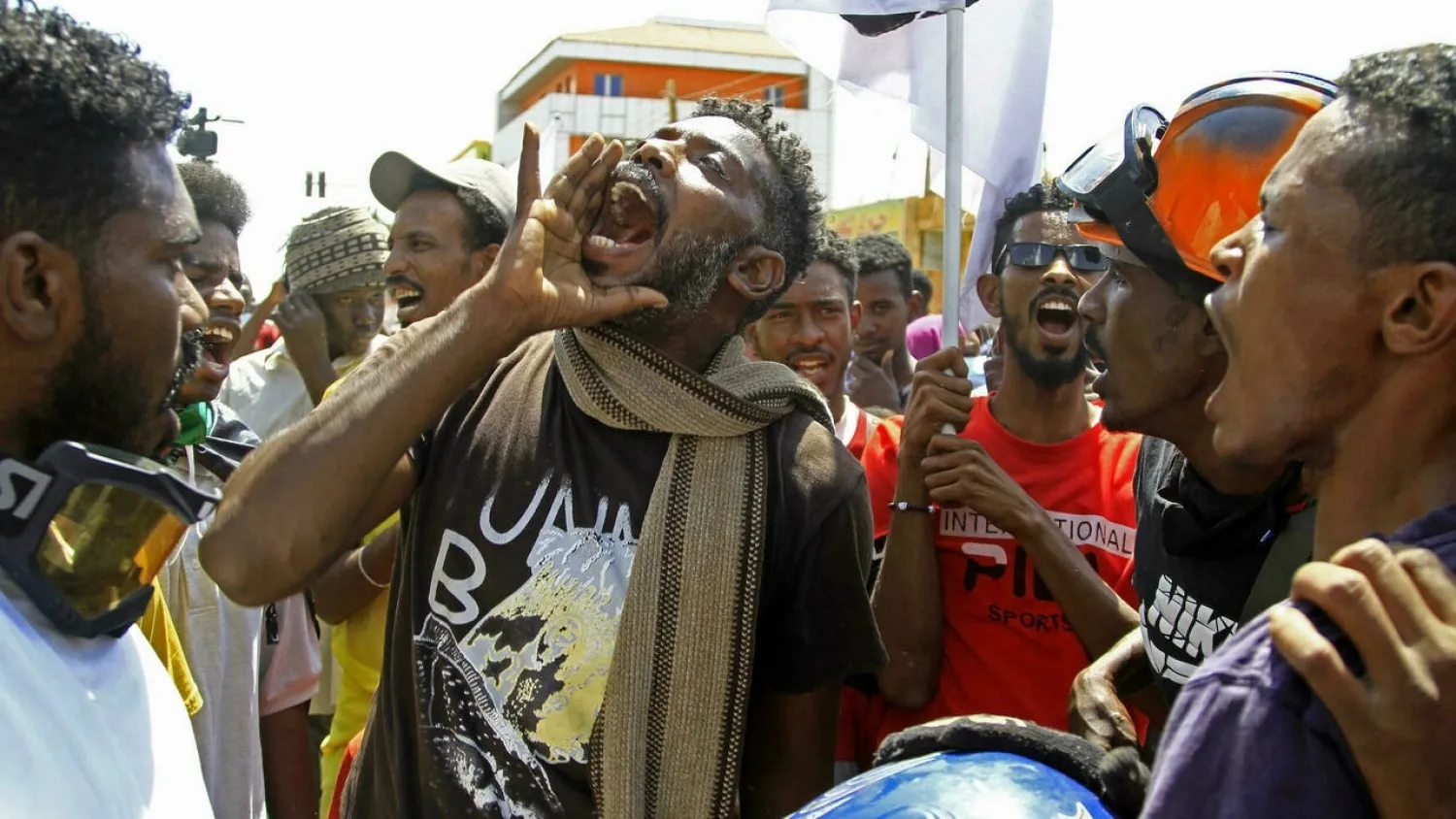
Sudanese anti-coup protesters chant slogans against the military in the Sudanese capital Khartoum on February 28, 2022. (AFP)
TT

Sudanese Protester Killed as Thousands March against Coup

Sudanese anti-coup protesters chant slogans against the military in the Sudanese capital Khartoum on February 28, 2022. (AFP)

A Sudanese protester was shot dead Monday, medics said, during the latest march by thousands who continue to oppose a military coup which took place four months ago.

The latest death -- despite international appeals for an end to the violence -- takes the total number of people killed to at least 84 in a crackdown since General Abdel Fattah al-Burhan led an October 25 military takeover, according to independent medics.

"Tear gas canisters will not stop us!" said Taqwa Mohammed, a demonstrator near Khartoum's presidential palace, where the ruling Sovereign Council is based along the Nile River.

Around him, the bangs of stun grenades rang out, as volleys of tear gas canisters fell into the crowds, hissing out acrid clouds of red, green or yellow smoke.

"Down with Burhan!" the crowd chanted.

Some protesters hurled rocks at the soldiers, while others kicked back or picked up the hissing tear gas canisters.

Thousands also demonstrated in other cities.

"We are ready to die for our cause," said Anouar Bashir, another protester in Khartoum.

"The world must see the violence of the putschists."

The protester killed Monday was shot in the head in Khartoum's twin city of Omdurman, according to the Sudanese Doctors' Committee. The shooting happened as thousands of demonstrators tried to cross the bridge across the Nile linking the city to Khartoum.

'Power to the people'
More than 2,000 protesters have been injured since October, medics say, while the UN has said at least 13 protesters were raped.

Last week, United Nations rights expert Adama Dieng, during a mission to Sudan, expressed concern "about the violations (committed by) the authorities and the use of live ammunition against protesters."

Both the UN and the United States have made similar appeals before, with Washington threatening further "consequences" if violence continues. The coup, Sudan's latest, has already led to suspension of international aid.

Sudanese authorities have said they arrested several police and soldiers who fired at demonstrators with Kalashnikov rifles, disobeying orders.

Earlier this month, Human Rights Watch quoted witnesses detailing how the security forces have used both "live ammunition" and fired tear gas canisters "directly" at crowds, a tactic that can be deadly at close quarters.

The coup derailed a fragile power-sharing arrangement between the army and civilians negotiated after the 2019 ouster of longtime president Omar al-Bashir.

In Wad Madani, about 200 kilometers (125 miles) south of Khartoum, around 4,000 demonstrators took to the streets on Monday.

"Power to the people," they chanted, witnesses said. "Soldiers, go back to the barracks!"

In the eastern city of Gedaref, around 2,000 people rallied against the military, after calls to protest were made by the "resistance committees", neighborhood groups of activists organizing opposition to coup.

While people took to the streets, the UN mission in Khartoum released a report following five weeks of meetings with military chiefs, political leaders and civil society representatives, an initiative it hopes will "address the current political impasse and develop a path towards democracy and peace".

The UN mission said it "remains committed to supporting a civilian-led democratic government as the ultimate objective of the transitional period in Sudan," a statement said.

Anti-coup protesters who regularly take to the streets -- sometimes in the tens of thousands -- reject partnership with the military.

US Ambassador Condemns Israeli Settler Attack on American Journalist

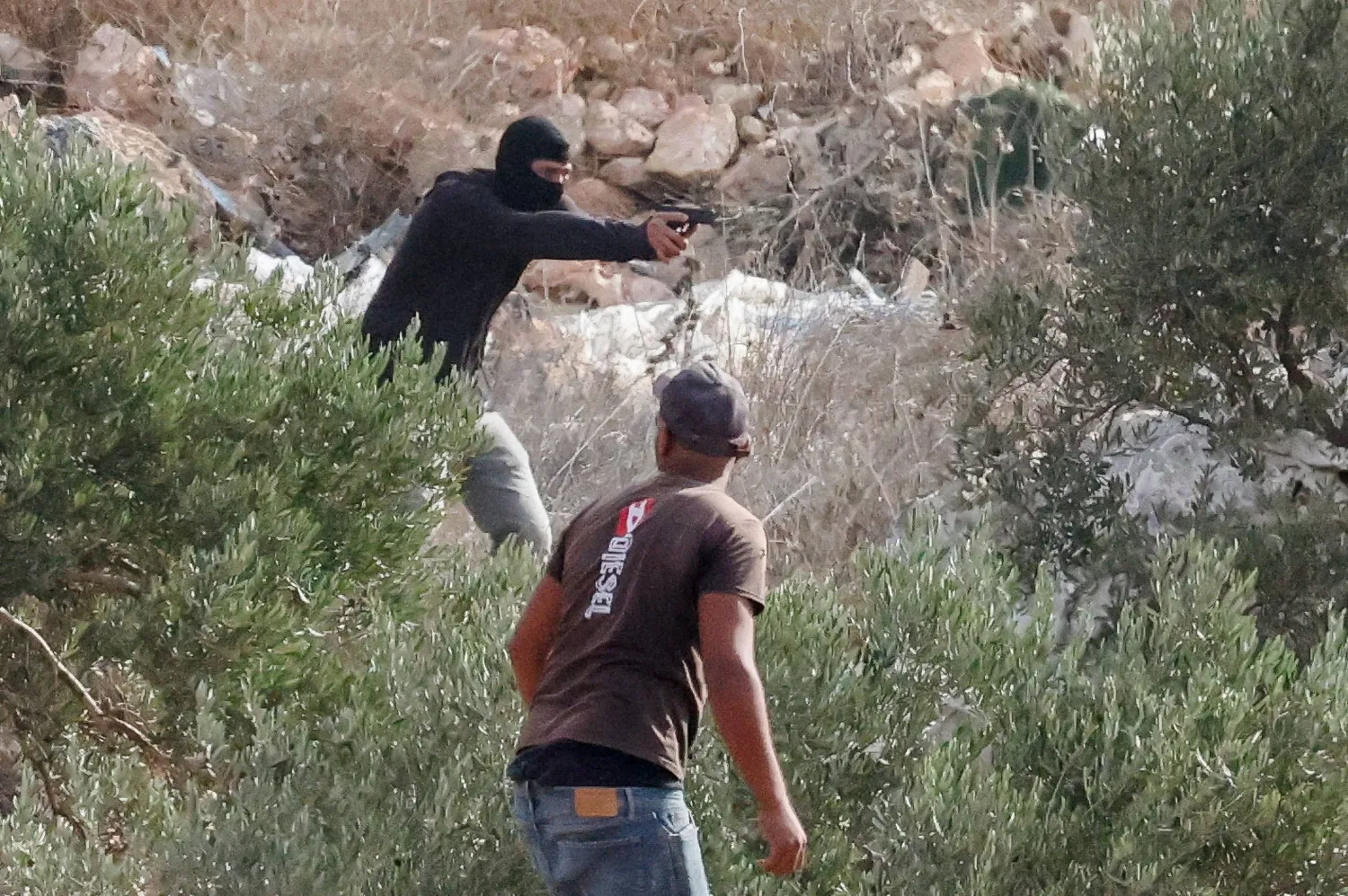
An Israeli settler points a gun amid clashes with Palestinians harvesting olives in Abu Falah near Ramallah in the Israeli-occupied West Bank, October 16, 2026. (Reuters)
TT

US Ambassador Condemns Israeli Settler Attack on American Journalist

An Israeli settler points a gun amid clashes with Palestinians harvesting olives in Abu Falah near Ramallah in the Israeli-occupied West Bank, October 16, 2026. (Reuters)

US Ambassador to Israel Mike Huckabee sharply condemned on Sunday settler violence during an olive harvest in the West Bank that injured several Palestinians and Washington Post photographer Heidi Levine as “a despicable act of terror carried out by masked cowards.”

In a post late Saturday on X, he called for “a full investigation, arrest, and prosecution to the fullest extent of the law to whoever participated in this.”

Levine was seriously injured in the attack Friday in the West Bank village of Abu Falah. Israeli police are also investigating an attack by Israeli settlers on European diplomats Saturday in another West Bank village.

Settler violence against Palestinians has soared this year and spiked further in recent weeks as Israel plans to hold elections Oct. 27.

Israeli Prime Minister Benjamin Netanyahu was ambiguous in addressing Levine’s assault, condemning “violence against anyone” but referring to the attack as “alleged” and saying its circumstances remain unclear.

Huckabee said Levine’s assault was “vicious” and “dishonorable,” and noted that she was clearly identified as a journalist when she was attacked.

Levine, an award-winning photojournalist who has covered conflict zones around the world for more than four decades, remains hospitalized in Tel Aviv as she recovers from hand surgery, broken ribs and other injuries she sustained in the attack.

She said she was forced to the ground and beaten for more than 10 minutes by the settlers, who also stole her camera, passport and phone.

The Washington Post reiterated its call for a full and transparent investigation, though Israel rarely investigates settler violence fully. Yesh Din, an Israeli rights group, says around 94% of investigations into settler violence since 2005 have ended without an indictment, with just 3% leading to full or partial convictions.


US Wants Israel to ‘Crack Down’ on Settler Violence in West Bank, Rubio Says

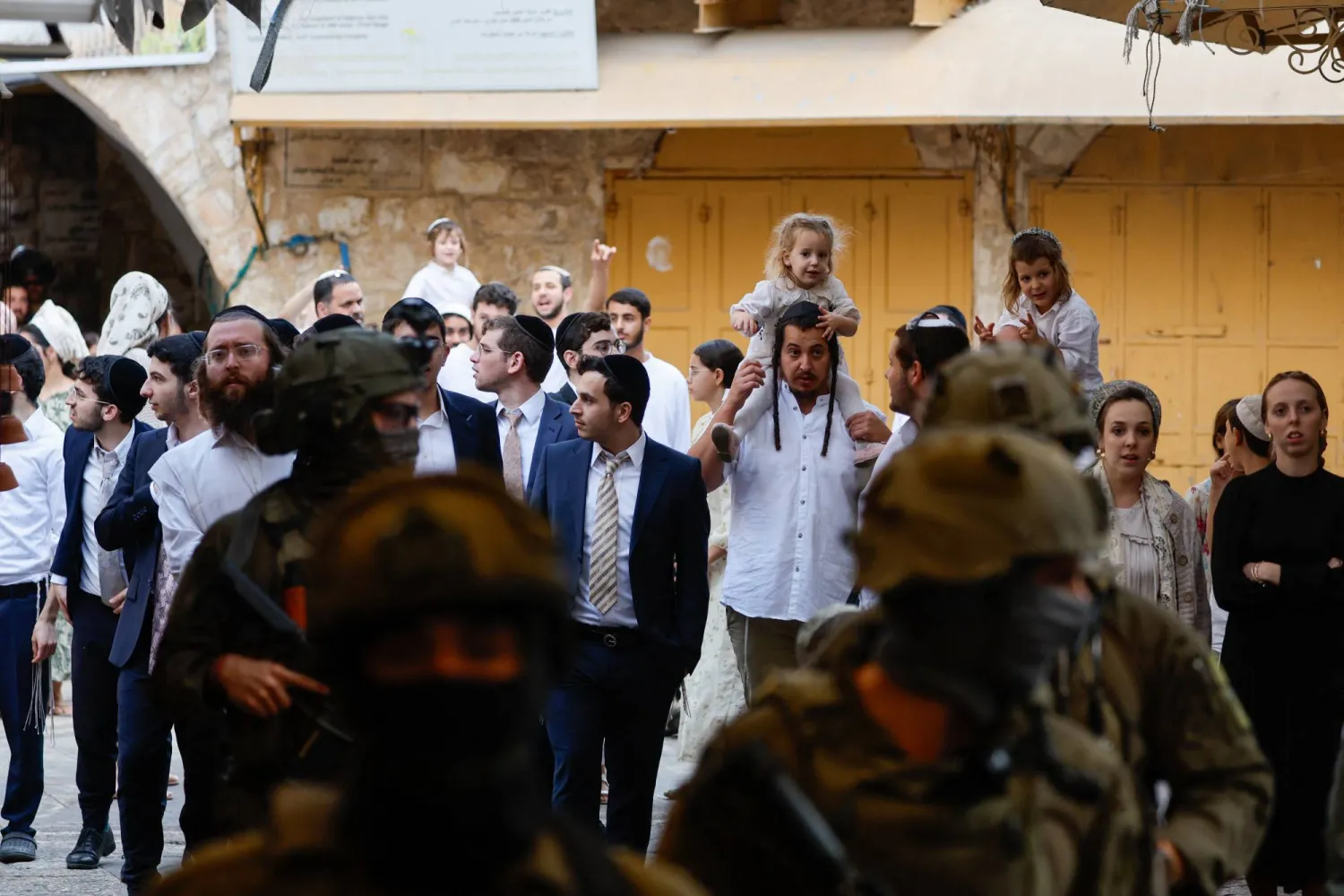
 Israeli forces keep watch during Israeli settlers' weekly tour in Hebron, in the Israeli-occupied West Bank, October 17, 2026. (Reuters)
Israeli forces keep watch during Israeli settlers' weekly tour in Hebron, in the Israeli-occupied West Bank, October 17, 2026. (Reuters)
TT

US Wants Israel to ‘Crack Down’ on Settler Violence in West Bank, Rubio Says

 Israeli forces keep watch during Israeli settlers' weekly tour in Hebron, in the Israeli-occupied West Bank, October 17, 2026. (Reuters)
Israeli forces keep watch during Israeli settlers' weekly tour in Hebron, in the Israeli-occupied West Bank, October 17, 2026. (Reuters)

The United States wants Israel to do more to deter attacks committed by settlers in the West Bank, US Secretary of State Marco Rubio said on Saturday.

"We're very disturbed by those images and what we're seeing," Rubio said. "We've asked the Israelis and continue to ask them ‌to crack ‌down on that stuff."

His ‌comments ⁠to reporters came ⁠after the widespread dissemination of video showing multiple individuals attacking Heidi Levine, an American photojournalist with the Washington Post. Levine was one of at least two people injured in the Friday ⁠incident, which took place ‌as Israeli settlers ‌attacked Palestinian civilians.

European diplomats and a French ‌mayor also were attacked in the occupied ‌West Bank, Belgium's foreign minister said.

The US State Department, Rubio said, has inquired about the event that included Levine's ‌attack. Rubio, who spoke to reporters before boarding a flight to ⁠Uzbekistan, ⁠said he expects to hear back from the US Embassy in Jerusalem by Sunday.

Israeli settlers in the West Bank have been involved in at least 170 attacks on Palestinians since September 27, around the start of the annual olive harvest, according to Yesh Din, an Israeli settlements monitoring group.


Egypt's Sisi Says His Rule Will End in 2030, Dismisses Reports He Is Grooming Relative for Presidency

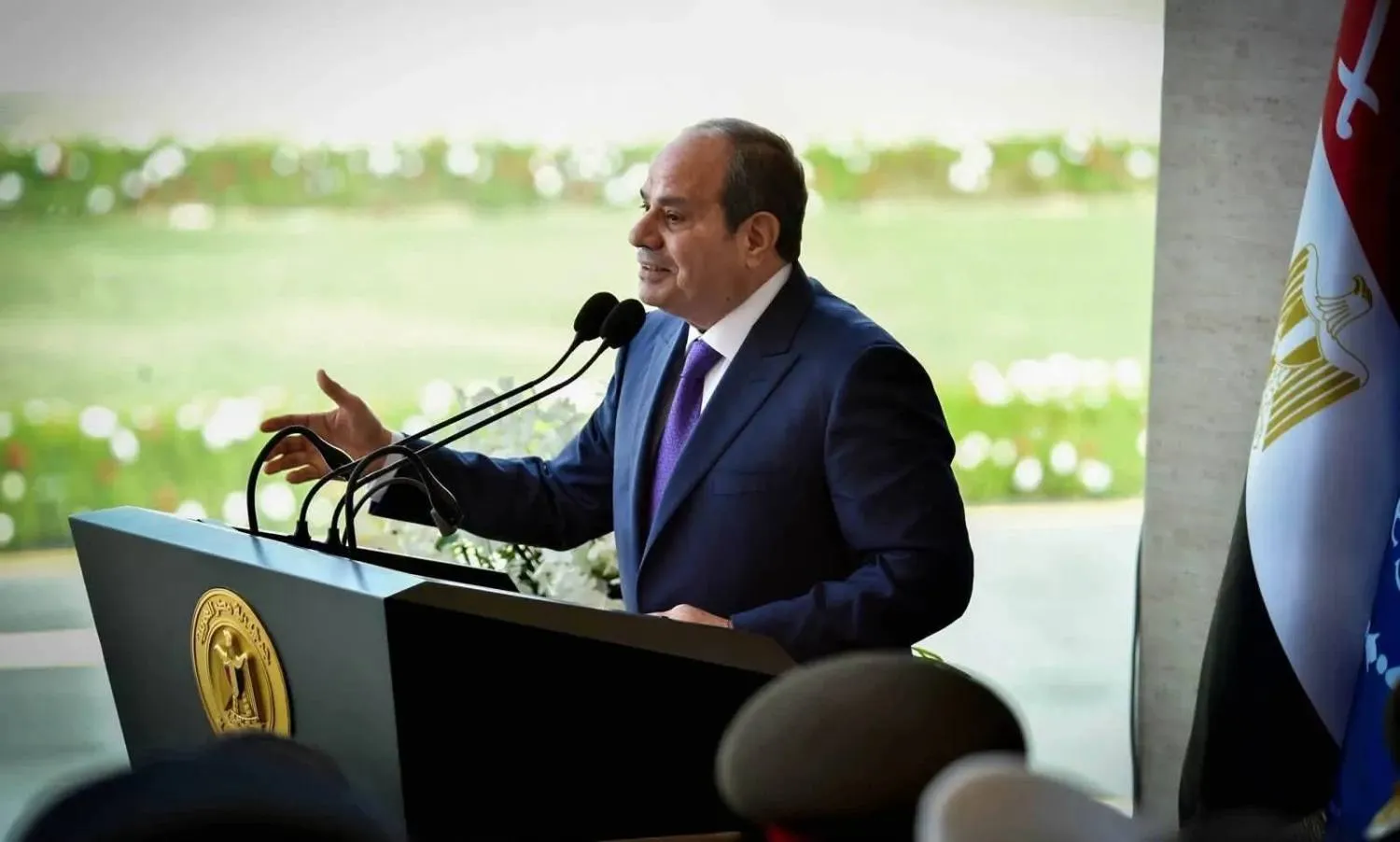
Egyptian President Abdel Fattah al-Sisi. (Egyptian Presidency)
TT

Egypt's Sisi Says His Rule Will End in 2030, Dismisses Reports He Is Grooming Relative for Presidency

Egyptian President Abdel Fattah al-Sisi. (Egyptian Presidency)

Egyptian President Abdel Fattah al-Sisi stressed that his presidency will end in 2030, calling the date a "settled matter," ruling out constitutional amendments and dismissing speculation that he is grooming a relative to succeed him.

Political and strategic affairs experts told Asharq Al-Awsat that Sisi's remarks marked a major shift and a historic precedent, potentially putting to rest speculation over constitutional changes that could distract from Egypt's development priorities.

Sisi came to power in 2014 after winning the presidential election and secured re-election in 2018 and 2023. Constitutional amendments passed in 2019 extended presidential terms from four to six years and allowed him to seek a third term, which expires in 2030.

No constitutional changes

Speaking at a graduation ceremony for Egyptian Military Academy cadets on Saturday, Sisi insisted that the constitution would remain untouched.

He said his presidency would definitively end in 2030 and that the matter was not open to debate, stressing that Egypt had an abundance of qualified citizens capable of leading the country.

Sisi also rejected speculation that he was preparing a family member or relative to succeed him, saying the Egyptian Military Academy had a role in training future leaders.

He stressed the need to safeguard the state against individuals unable to shoulder the responsibilities of leadership.

With 43 months remaining until 2030, he suggested dedicating 30 months to preparing prospective leaders.

He called for the speaker of parliament, prominent intellectuals and politicians, and the ministers of higher education and justice to develop a comprehensive framework that would pave the way for legislation governing the election of qualified candidates.

The program, he suggested, could train groups of 200, 300 or 500 participants in the workings of the state and the requirements for safeguarding it, broadening the choices available to Egyptian voters.

Sisi urged action on the proposal, emphasizing the responsibility to protect Egypt and its future and keep its flag flying high.

His remarks follow speculation on social media that the constitution could be amended in 2027 to allow him to seek another presidential term.

A historic precedent

Major General Mohamed el-Ghabari, a strategic affairs expert and former director of Egypt's National Defense College, said Sisi's declaration signaled a commitment to the constitutional transfer of power.

Speaking to Asharq Al-Awsat, he said Sisi wanted history to remember him for helping establish that principle, becoming the first Egyptian president in decades to clearly set an end date for his rule.

The remarks conveyed Sisi's belief that he had assumed office with a sense of duty and intended to hand over power with the same responsibility, while pressing ahead with development plans despite economic challenges and regional turmoil threatening stability and growth, he added.

Ghabari said Sisi was also making clear that the choice of Egypt's next leader rests with its people, warning that speculation about constitutional amendments or extending his presidency served no national interest and risked diverting attention from development and strategic planning.

He stressed that building credible political alternatives would require effective parties and institutions capable of nurturing leaders with clear platforms and the ability to present their visions to voters.

Mohamed Ezz al-Arab, head of the Arab and Regional Studies Unit at the Al-Ahram Center for Political and Strategic Studies, said Sisi appeared determined to make 2030 the endpoint of his rule.

Speaking to Asharq Al-Awsat, he said: "What's striking is not just his announcement that his presidential term will end in 2030, but his call for the speaker of parliament to work with the justice minister and political, party and academic figures on selecting and preparing centers of excellence and future leaders."

"That would represent a major shift if things proceed as intended," he added.

Ezz al-Arab said Sisi's remarks reinforced the principle that Egypt is a state of institutions, where power cannot be inherited by his sons or any other family member.