

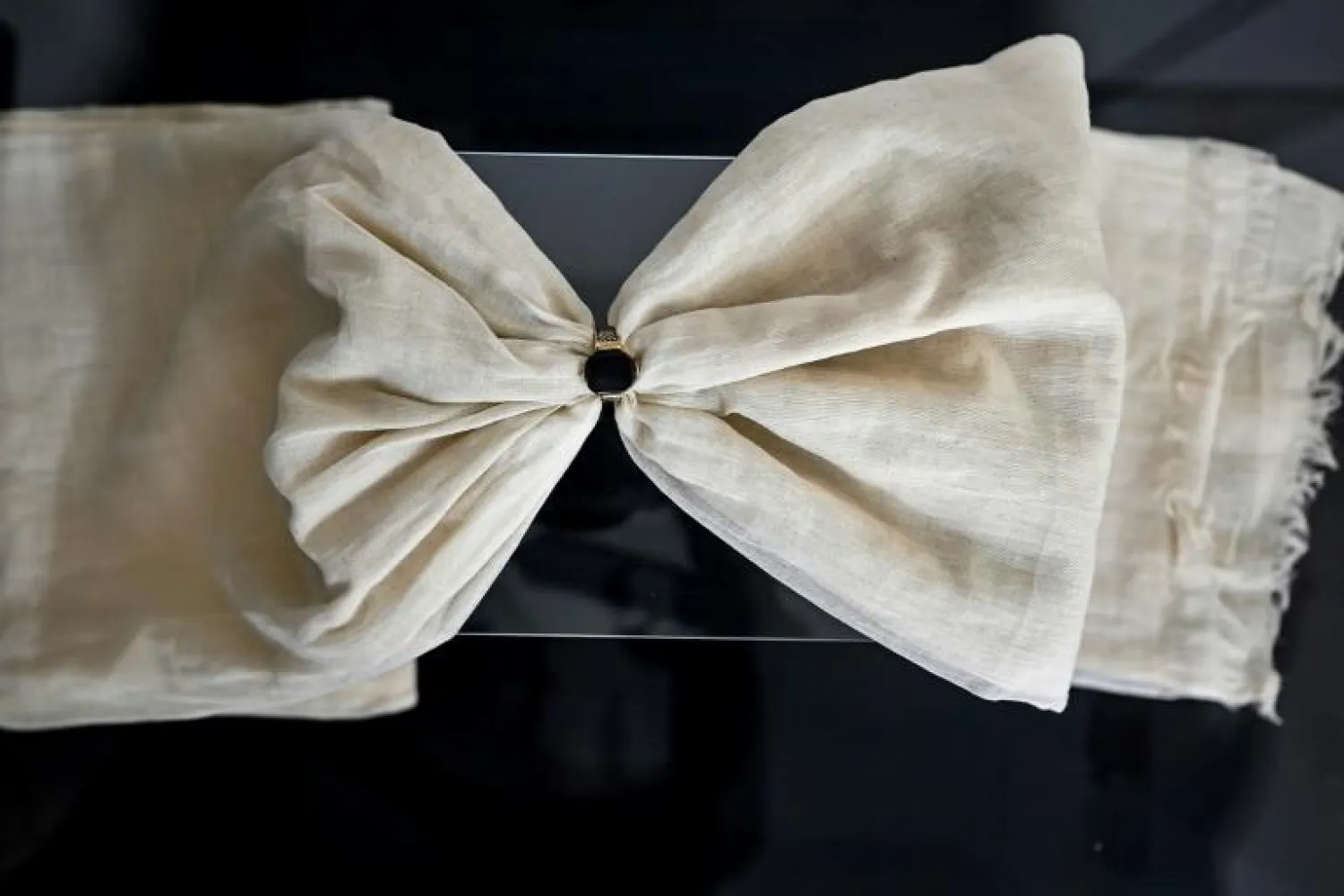

'Woven Air': Bangladesh Revives Elite Forgotten Fabric

With wooden spinning wheels and hand-drawn looms, Bangladesh is painstakingly resurrecting a fabric once worn by Marie Antoinette and Jane Austen but long thought forever lost to history. Munir UZ ZAMAN AFP
TT

'Woven Air': Bangladesh Revives Elite Forgotten Fabric

With wooden spinning wheels and hand-drawn looms, Bangladesh is painstakingly resurrecting a fabric once worn by Marie Antoinette and Jane Austen but long thought forever lost to history. Munir UZ ZAMAN AFP

With wooden spinning wheels and hand-drawn looms, Bangladesh is painstakingly resurrecting a fabric once worn by Marie Antoinette and Jane Austen but long thought forever lost to history.

Dhaka muslin was stitched from threads so fine that popular folklore in European parlors held that a change in the light or a sudden rain shower would render its wearer apparently naked.

The textile once brought magnificent riches to the lands where it was spun.

But to revive it, botanists had to hunt halfway across the world and back for a plant believed gone from the face of the earth.

"Nobody knew how it was made," said Ayub Ali, a senior government official helping shepherd the revival project.

"We lost the famous cotton plant, which provided the special fine yarn for Dhaka muslin," he told AFP.

The muslin trade at one time helped turn the Ganges delta and what is now Bangladesh into one of the most prosperous parts of the world, historians say.

Flowing dress garments weaved from the cloth were worn by generations of the Mughal dynasty then ruling India before the fabric enchanted European aristocrats and other notables at the end of the 18th century.

A muslin shawl belonging to Austen -- supposedly hand-embroidered by the "Pride and Prejudice" author herself -- is on display at her former home in Hampshire, while a 1783 portrait of Marie Antoinette depicts the French queen in a muslin dress.

But the industry collapsed in the years after the 18th century conquest of the Bengal delta by the East India Company, paving the way for British colonial rule.

The mills and factories that sprung up in England after the industrial revolution produced much cheaper textiles, while European tariffs killed the foreign market for the delicate fabric.

'Rare and possibly extinct'
The quest to bring back Bangladeshi muslin began with a painstaking five-year search for the specific flower used to weave the fabric, which only grows near the capital Dhaka.

"Muslin can't be woven without Phuti Carpus cotton. So to revive Dhaka Muslin, we needed to find this rare and possibly extinct cotton plant," said Monzur Hossain, the botanist who led the effort.

His team consulted a seminal book on plants by the 18th century Swedish naturalist Carl Linnaeus along with a later historical tome on Dhaka muslin to narrow down a candidate among 39 different wild species collected from around Bangladesh.

With local museums lacking any specimen of Dhaka muslin clothing, Hossain and his colleagues went to India, Egypt and Britain for samples.

At the Victoria and Albert Museum in London, curators showed them hundreds of pieces imported from Mughal-era Dhaka by East India Company merchants.

Genetic samples revealed that the missing plant was already in their hands, found by the botanists in the riverside town of Kapasia north of the capital.

"It was a 100 percent match, and some history books say Kapasia was one of the places where Phuti Carpus was grown," Hossain told AFP.

The plant is now being grown in experimental farms in an effort to raise yields and scale up production.

'Like doing prayers'
But the revival project immediately ran into another roadblock -- finding weavers nimble enough to weave the plant's ultra-fine threads.

In the two centuries since the muslin trade collapsed, Bangladesh has again become a world textile hub, albeit with an industry no longer catering to royalty or other international elites.

Instead Dhaka is now home to countless bustling factories of the global fast fashion trade, supplying huge brands such as H&M and Walmart, with its $35 billion in yearly apparel exports second only to China.

The country has no shortage of garment workers, but the muslin project needed to source artisans from the small cottage industry of spinners and weavers working with fragile threads.

They found candidates from villages around Dhaka where small workshops make intricate saris from jamdari, a fine cotton produced in a similar way to muslin.

"I don't how I did it. But it needs supreme concentration," said Mohsina Akhter, one of the spinners brought into the project.

"To do it you have to be in perfect mind. If you are angry or worried, you can't hand spin such a fine yarn."

It took months for the team to master the craft, working with threads four or more times finer than jamdari, with two people taking eight hours of non-stop labor to weave an inch or less of cloth.

"It is like doing prayers. You need to have full concentration. Any lapse will tear up the yarn and set your work backwards," said Abu Taher, a weaver.

"The more I work, the more I wonder how our ancestors wove such a fine clothing. It is almost impossible," he told AFP.

The intense labor needed means that any garments stitched from Dhaka muslin will always remain a boutique product, but the government has found some tentative interest from established industry players.

"We want to make it a top global fashion item. It has a great history," said Parvez Ibrahim, whose family owns a factory supplying global fashion retailers.

"But to bring down cost, we have to speed up the production process. Otherwise, reviving Dhaka muslin won't mean anything," he told AFP.



Shein to Buy Apparel Retailer Everlane

People walk past the Everlane Soho store on May 22, 2026 in New York City. (Getty Images/AFP)
TT

Shein to Buy Apparel Retailer Everlane

People walk past the Everlane Soho store on May 22, 2026 in New York City. (Getty Images/AFP)

US apparel brand ‌Everlane said on Friday it had reached an agreement to be acquired by online retailer Shein, giving the fast-fashion company ownership of a brand known for sustainability and supply-chain transparency.

Everlane will remain independent, its CEO Alfred Chang said in a statement, adding that the brand will hold its sustainability commitments while expanding to a global reach through ‌the deal.

Shein has ‌long admired Everlane and ‌plans ⁠to use the ⁠brand to enhance its own image of just affordable fast-fashion and drive cross-selling opportunities, a source familiar with the matter told Reuters, adding that there were multiple bidders for Everlane.

Puck News first reported the deal and ⁠said it values the brand at ‌about $100 million on ‌Sunday, adding that shareholders with common stock in Everlane ‌would not receive a payout.

L Catterton, ‌the majority owner of Everlane, and Shein have yet to respond to Reuters requests for comment.

Companies such as Shein and Temu have disrupted ‌retail markets through aggressive pricing, heavy marketing and tax loopholes that initially ⁠gave ⁠them an edge over local players.

Shein plans to invest in growing Everlane and is expected to keep its physical stores open for now, according to the source, even though brick-and-mortar retail is not central to its business model.

At the same time, the company's faster production cycles and ability to quickly bring new products to market could support Everlane's operations.


Deal That Could Have Put Clinique, Charlotte Tilbury and Jean Paul Gaultier Under One Roof Is Off

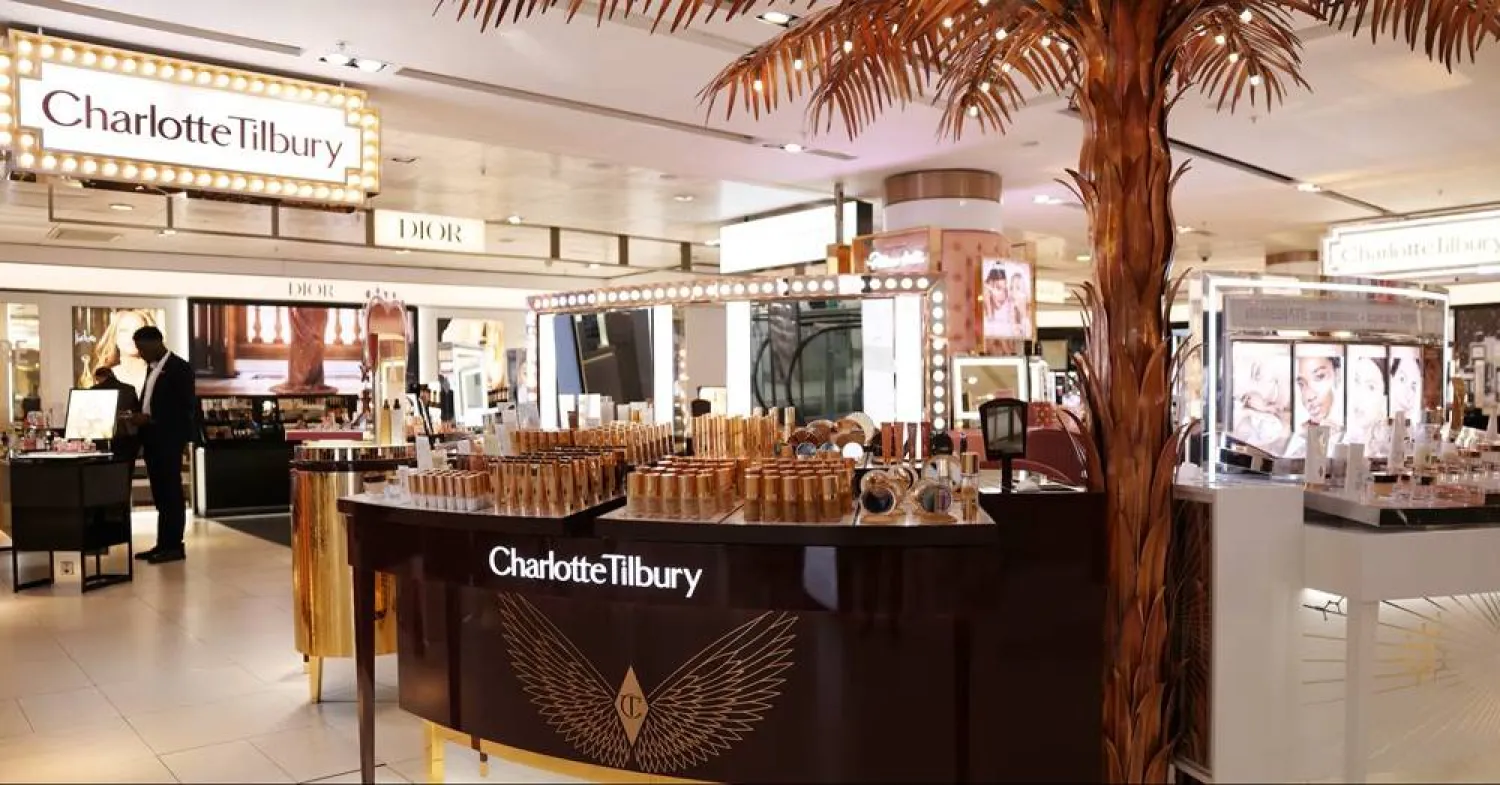
A Charlotte Tilbury beauty counter is seen at the John Lewis retail store on Oxford Street in London, Britain, October 24, 2024. (Reuters)
TT

Deal That Could Have Put Clinique, Charlotte Tilbury and Jean Paul Gaultier Under One Roof Is Off

A Charlotte Tilbury beauty counter is seen at the John Lewis retail store on Oxford Street in London, Britain, October 24, 2024. (Reuters)

Estee Lauder and perfume maker Puig have ended merger talks that would have potentially put brands like MAC, Clinique, Charlotte Tilbury and Jean Paul Gaultier under one roof.

Estee Lauder Cos. confirmed the discussions in March but said at the time that no agreement had been reached with the century-old Spanish company.

“We are grateful for the conversations we have had with Puig,” Estee Lauder CEO Stéphane de La Faverie said in a prepared statement late Thursday. “Today, we are reiterating our confidence in the power of our incredible brands, our talented teams, and our strength as a standalone company."

The New York-based company said in February 2025 that it could possibly cut as many as 7,000 jobs by fiscal 2026, more than 11% of its workforce. De La Faverie said at the time that Estee Lauder was transforming its operating model to be “leaner, faster, and more agile.”

Puig oversees makeup, skin care and fragrance brands like Nina Ricci, Jean Paul Gaultier and Dr. Barbara Sturm. The company went public on the Madrid Stock Exchange in early 2024.

Shares of Estee Lauder jumped more than 12% in early trading Friday.


Ruffles, Biker Leather and Celebs at Louis Vuitton's New York Show

Models present creations by designer Nicolas Ghesquiere during the Louis Vuitton Cruise 2027 collection show in New York City, US, May 20, 2026. REUTERS/Jeenah Moon
TT

Ruffles, Biker Leather and Celebs at Louis Vuitton's New York Show

Models present creations by designer Nicolas Ghesquiere during the Louis Vuitton Cruise 2027 collection show in New York City, US, May 20, 2026. REUTERS/Jeenah Moon

French fashion house Louis Vuitton combined ruffles, biker leather and the graphic art of Keith Haring for its celebrity-packed cruise 2027 show at a New York museum on Wednesday night.

Under the gaze of Zendaya, Anne Hathaway and Cate Blanchett, Louis Vuitton's artistic director for women's wear Nicolas Ghesquiere presented a collection built on contrasts and bright pops of color, said AFP.

Structured leather jackets were paired with fluffy Medici collars.

Ensembles were punctuated by the Pop Art movement's orange, pink and green, while also giving way to deep purple, dusty pink and teal.

Whether the models donned heels or sneakers, the shoes were metallic, and legs were on display with boxer shorts, biker shorts and tailored Bermuda suits.

Hats -- bucket or brimless -- topped models' heads when hair wasn't left loose and marked with the horizontal streaks popularized by figure skater Alysa Liu, the brand's new ambassador.

The show was held at The Frick Collection, marking the first time a fashion show has been hosted by the museum since its renovation last year.

Formerly the mansion of a steel magnate, the museum teems with an impressive collection of European paintings and art dating back to the Renaissance. Models stalked down the runway, passing under archways and past famed artworks.

"Within the timeless rooms of The Frick Collection, beauty and art transcend time in a quiet dialogue, while beyond its walls, New York City pulses with constant reinvention -- a convergence of contrasts," the fashion house posted on Instagram, with the brand and the museum announcing a three-year patronage partnership.

Notably, Louis Vuitton will fund three temporary major exhibitions and host free visitor after-hours evenings at the museum on the first Fridays of every month for a year.

Europe's major fashion houses have shown exceptional interest in the American market and culture recently.

Louis Vuitton's men's collection by hip hop star Pharrell Williams drew inspiration from the Big Apple, and Gucci and Dior have recently unveiled their cruise collections in New York and Los Angeles, respectively.

In December, Chanel held its show in the New York subway.