'Everything Dostoevsky Did': A New Poetry Collection by Tarek Hashem

'Everything Dostoevsky Did': A New Poetry Collection by Tarek Hashem
TT

'Everything Dostoevsky Did': A New Poetry Collection by Tarek Hashem

'Everything Dostoevsky Did': A New Poetry Collection by Tarek Hashem

Egyptian poet Tarek Hashem has released his new poetry collection, "Everything Dostoevsky Did", inspired by the world of the legendary Russian novelist Fyodor Dostoevsky and the cruelty, oppression, and abuse his characters lived.

Following his "Inventing Homer" collection in 2020, this is the poet’s second collection in classical Arabic, following five collections in the Egyptian accent, and two books in which he discusses the issues of the modern Egyptian song.

The new 93-page collection is published by Al Ahlia Library, Jordan, and features 27 poems that revolve around major literary characters in human history. It also discusses the cinematic scene, drama in theater, and music.

In his book, the poet turns the "Crime and Punishment" writer into a mirror that reflects flashes from the past and the present, and a tool of examination, knowledge, and wondering that he uses to make a personal and intimate reading of himself, his fears and dreams. A tool that he also uses to expose the reality, and unveil the marginalized, fake, and unspoken on the political and social levels.

The poems reflect a sense of loss and deprivation that reminds the reader of existential problems in a world of chaos and poverty, recalling many of Dostoevsky’s characters.

The collection supports the values of justice and freedom, and backs women in all their roles as friends, sisters, and mothers. This support can be noticed in poems like "My Dad in the Coffee Shop,” and “In the Narrow Pathway” in which the poet uses a concentrated language to form a poetic image opened on the past and present at the same time, and an ascending action affected by a virtual time that links what happened and what’s currently happening.

Some poems describe love as an embracing and creative emotional value filled with hope and freedom, and charged with a vivacity of senses, memories, and dreams.

The poet used Dostoevsky as an inspiration in his collection to humanize his poems, or at least create an outlet that helps the reader exchange fears, concerns, and overcome the problems of life.

An extract from the collection:

In a former life

I was a bookseller

Every morning

I shook hands with Dostoevsky

Pressing on it like sea presses the souls of ships

I counted the books

Like a child

Counts the days that precede holidays.

****

No homeland

A people sleep

After they lost their tears for an apple

That wasn’t more than a dream

Arabs sold for a rifle

That would target their flank.


Greece’s Oldest Modern-Era Museum Reopens on the Acropolis After a Major Restoration

Visitors tour the Acropolis, with the old Acropolis Museum on the left and the Parthenon on the right, as Greece's Culture Ministry presents the museum's reopening following renovation and conversion to new uses, in Athens, Greece, Monday, Nov. 23, 2026. (AP)
TT

Greece’s Oldest Modern-Era Museum Reopens on the Acropolis After a Major Restoration

Visitors tour the Acropolis, with the old Acropolis Museum on the left and the Parthenon on the right, as Greece's Culture Ministry presents the museum's reopening following renovation and conversion to new uses, in Athens, Greece, Monday, Nov. 23, 2026. (AP)

A museum that has stood on the Acropolis since 1874, making it the oldest in modern Greece, reopened Monday after a high-tech makeover.

The squat stone building often goes unnoticed by visitors. It had been closed to the public since 2007, three years before the country was plunged into a massive financial crisis.

The seven-year restoration cost 6.2 million euros ($6.8 million), raised through public funds and private donations, Culture Minister Lina Mendoni said.

The site will host ancient artifacts never before exhibited, digital displays tracing the monuments’ 2,500-year history and a viewing gallery where Culture Ministry technicians will carry out restoration work on ancient objects.

The museum opened in 1874, making it the first museum purpose-built since modern Greece gained independence several decades earlier.

It closed in 2007, becoming an administrative building after cranes carefully lowered its renowned sculptures and other masterpieces to the new Acropolis Museum at the foot of the hill.

“For us, it was inconceivable, almost an affront, that this historic building, with its uniquely privileged location, should be converted into offices and storerooms,” Mendoni said.

“We therefore decided that the museum should reopen in accordance with its original purpose,” she said.

The Parthenon and other temples on the Acropolis remain Greece’s most visited ancient site, with more than 4.6 million admissions recorded last year.

Restoration work continues even during the peak summer months. The Parthenon recently shed its heavy scaffolding for the first time in years.

Prime Minister Kyriakos Mitsotakis attended Monday’s inauguration and described the reopening as another milestone for Greece’s cultural heritage.

He used the occasion to restate Greece’s long-running demand for the return of the Parthenon Sculptures held by the British Museum in London.

“The rightful home of these priceless masterpieces is here, beneath the Attic light and in direct proximity to the temple to which they belong,” he said, adding that Greece would not accept the return of the sculptures as a loan.

“No solution and no agreement can be based on the recognition of foreign ownership over our national treasures,” Mitsotakis said.

“I reaffirm my commitment that we will continue this effort with responsibility, seriousness and determination,” he added. “And in the end, we will succeed.”


Saudi Arabia's History, National Heritage Showcased at 'Bridge of Civilizations' Art Exhibition in Cairo

The exhibition features more than 60 visual artists from Saudi Arabia, Egypt, and Russia. (SPA)
TT

Saudi Arabia's History, National Heritage Showcased at 'Bridge of Civilizations' Art Exhibition in Cairo

The exhibition features more than 60 visual artists from Saudi Arabia, Egypt, and Russia. (SPA)

The "Bridge of Civilizations" art exhibition opened in Cairo, highlighting the power of art to foster closer ties between civilizations and peoples, reported the Saudi Press Agency on Monday.

The exhibition features more than 60 visual artists from Saudi Arabia, Egypt, and Russia, with prominent artists and art enthusiasts in attendance.

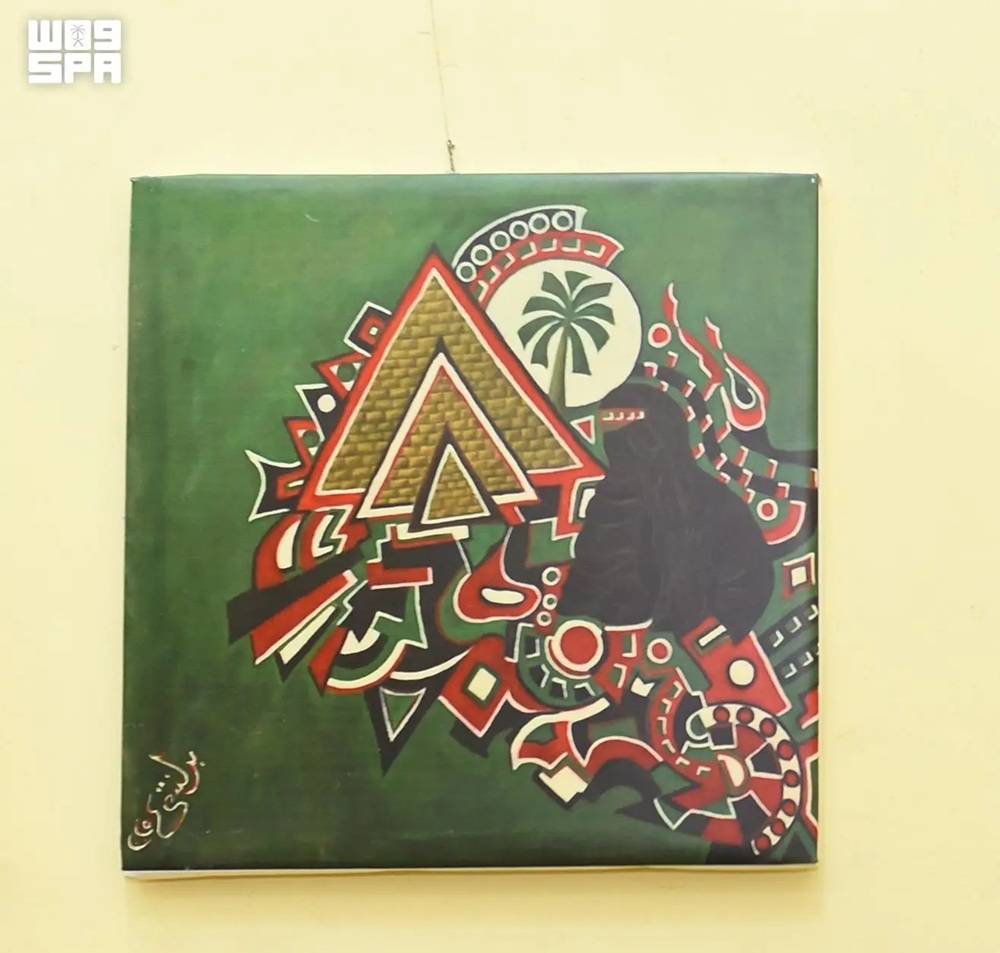
At the three-day exhibition, around 30 Saudi visual artists will present a diverse collection of works highlighting the Kingdom's history, national symbols, and heritage passed down through generations.

An artwork featured at the exhibition in Cairo. (SPA)

The Saudi artists' paintings document Islamic heritage, the Prophet Muhammad's biography, and historical sites associated with the Two Holy Mosques. They also highlight the Kingdom's development achievements, including the Haramain High Speed Railway, as well as its cultural and architectural heritage, such as Najdi Sadu weaving and Al-Masmak Palace.

Participating Saudi artists told SPA that they aim to introduce audiences to the Kingdom's history, identity, and heritage through contemporary artistic approaches while highlighting the development of visual arts in Saudi Arabia.


Red Sea Museum Showcases Jeddah's Black Coral Prayer-Bead Making Heritage

The gallery also features a wall displaying shells, molluscs and pieces of coral from the Red Sea - SPA
TT

Red Sea Museum Showcases Jeddah's Black Coral Prayer-Bead Making Heritage

The gallery also features a wall displaying shells, molluscs and pieces of coral from the Red Sea - SPA

The Red Sea Museum represents a valuable addition to Jeddah's cultural and tourism landscape, offering an educational experience that brings the history of the Red Sea to life and highlights Saudi Arabia’s rich civilization and cultural heritage associated with navigation, trade and Hajj.

As one of Saudi Arabia’s prominent cultural and educational destinations, the museum presents art exhibitions and cultural and educational programs that explore the history and civilization heritage of the Red Sea and document its connection with navigation, trade and human life through experiences that bring together visual arts, architecture, cinema and storytelling, SPA reported.

The Red Sea Museum showcases the craft of prayer-bead making. An identification label accompanying a set of prayer beads made from black coral on display at the museum bears the name of craftsman Ahmed Al-Halabi, who made the beads in Jeddah. The beads tell part of his family's history, as it is one of the oldest families known for this craft in the city.

The gallery also features a wall displaying shells, molluscs and pieces of coral from the Red Sea.

Visitors can observe coral in its natural form before seeing how the craftsman shaped black coral into beads, threaded them together to make a string of prayer beads, and designed them to pass smoothly between the fingers.