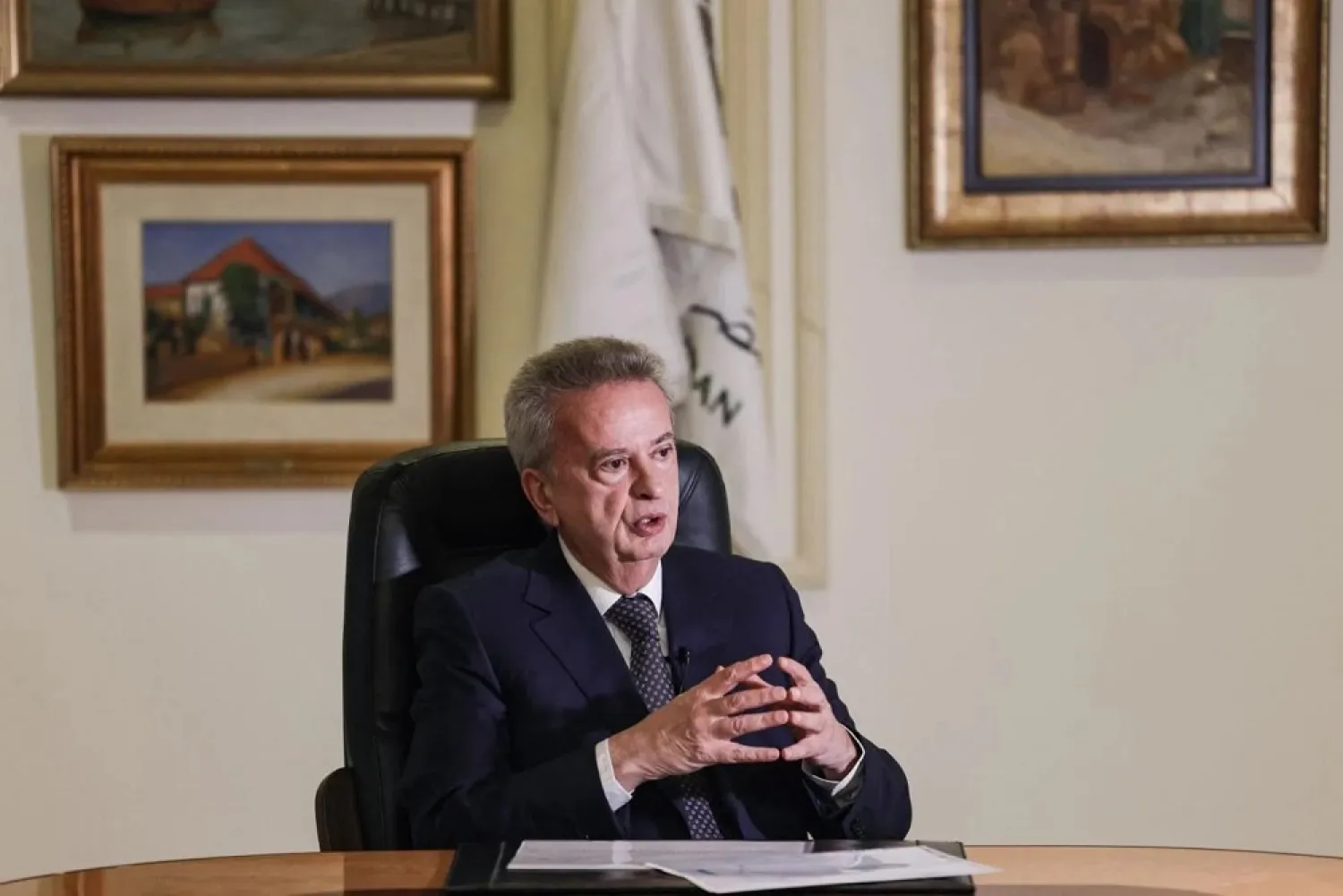
Lebanon Prosecutor Seeks Freeze of Central Bank Chief’s Oversees Assets

Salameh is facing investigations in Lebanon and at least five European countries into the alleged embezzlement of some $330 million in public funds with the help of his brother, Raja (AFP)
TT

Lebanon Prosecutor Seeks Freeze of Central Bank Chief’s Oversees Assets

Salameh is facing investigations in Lebanon and at least five European countries into the alleged embezzlement of some $330 million in public funds with the help of his brother, Raja (AFP)

Lebanon's top prosecutor has sought to freeze European bank accounts belonging to central bank chief Riad Salameh, a senior judicial source said, days after five European states seized assets related to embezzlement probes.

Salameh is facing investigations in Lebanon and at least five European countries into the alleged embezzlement of some $330 million in public funds with the help of his brother, Raja, charges they have both denied.

Europe's criminal justice coordination body on Monday announced that 120 million euros of Lebanese assets had been frozen in France, Germany, Luxembourg, Monaco and Belgium linked to an embezzlement investigation. German prosecutors said the move was tied to probes into Salameh.

The senior judicial source confirmed to Reuters that Public Prosecutor Ghassan Oueidat on Wednesday sent a letter to Lebanon's Justice Ministry informing them he had requested the freezing of assets belonging to Salameh and his associates in Swiss, French, Belgian, German and Luxembourg banks.

The source said the letter came as part Salameh's prosecution for embezzlement of public funds, tax evasion and money laundering, but did not specify whether it was in relation to the Lebanese or foreign probes into the governor.

Since Lebanon's financial collapse began in 2019, Riad Salameh has faced increasing scrutiny of his nearly three decades as the head of the Banque du Liban (BDL).

He says his personal wealth was acquired during his time as a banker before he became governor and has said the probes against him are politically motivated.

He was charged last week with illicit enrichment days after his brother was arrested and charged with helping the governor launder the proceeds of ill-gotten gains in a case relating to the purchase and rental of Paris apartments, including to BDL.

Both deny the charges.

Helena Iskandar, the head of the Justice Ministry's Cases Authority to which Oueidat's letter was sent, told Reuters she had immediately asked Lebanon's finance minister to assist her with appointing lawyers abroad in order to seek the freezing of funds belonging to the governor and his associates and assert the Lebanese state's claim to them.

She said this was a necessary step without which the process could not proceed.

Current Finance Minister Youssef Khalil spent nearly four decades at the central bank - three of them under Salameh - before taking his post last year.

Ouediat did not respond to a request for comment on whether his move to freeze the assets was based on Lebanese evidence in the probe into Salameh, or an attempt to preempt the assets being seized by European authorities.


Houthis Expand Taiz Offensive Southward into Lahj

A fighter loyal to Yemen's legitimate government fires a turret from the back of a pickup truck at a position along the frontlines against the Houthis around Mount al-Midan in Yemen's western Taiz province on October 26, 2026. (AFP)
TT

Houthis Expand Taiz Offensive Southward into Lahj

A fighter loyal to Yemen's legitimate government fires a turret from the back of a pickup truck at a position along the frontlines against the Houthis around Mount al-Midan in Yemen's western Taiz province on October 26, 2026. (AFP)

Yemen's Iran-backed Houthis launched a three-pronged offensive in northern Lahj province on Friday, seeking to push toward the Tur Al-Bahah district and gain fire control over strategic routes linking Lahj and Taiz.

The escalation came as Yemen's armed forces held their ground on the southern and western fronts around Taiz city and stepped up air and ground strikes against Houthi positions there, along the western coast and in the eastern provinces of Al-Jawf and Marib.

Government forces also raised concerns over reports that the Houthis had fired shells suspected of containing toxic substances, causing choking and fainting among civilians and fighters.

The armed forces said they had carried out 1,087 successful strikes under Operation Dawn of Yemen, deploying fighter jets, drones, artillery and rocket launchers. The military said the strikes had neutralized about 336 Houthi commanders and fighters and destroyed or disabled 112 military vehicles, pieces of equipment, supply assets and heavy weapons.

Local sources reported fierce fighting in Lahj's Al-Maqatirah district after the Houthis attacked from three directions in a bid to seize the district and open a route toward Tur Al-Bahah.

Al-Maqatirah's strategic importance lies in its commanding position over key roads and areas stretching across southern Taiz and northern Lahj.

The assault coincided with sporadic clashes along the Taiz-Lahj administrative boundary, particularly on the Al-Mudaribah front, amid reports of fresh Houthi reinforcements. Field sources said the group had also deployed additional forces to Al-Shamayatayn district in southern Taiz.

In Taiz, government troops clashed with Houthi fighters in Al-Shaqab, southeast of the city, as government drones struck Houthi positions and troop concentrations. Sporadic clashes also erupted on the city's western fronts before dawn.

Further west, government artillery struck a Houthi gathering at the Khalid bin Al-Walid area in Al-Dhabab. Field reports indicated casualties among fighters stationed there.

On the western coast, airstrikes hit Al-Amoud Al-Sughra in Mokha district before dawn, targeting Houthi positions and military movements along the coastline.

The air campaign also reached Al-Jawf and Marib, with two strikes targeting Huwayshan in Al-Jawf and another hitting Mahliyah district in Marib.

Toxic shells raise alarm

Yemen's armed forces said they were treating with utmost seriousness reports that Houthi fighters had used shells suspected of containing toxic substances on the Taiz fronts, amid accounts of civilians and Popular Resistance fighters suffering choking and fainting.

Colonel Majed Al-Nuzaili, the armed forces' official spokesperson, called for an urgent investigation to identify the suspected substances, document their effects and trace their origins and suppliers.

In a statement, Al-Nuzaili said the incidents formed part of a continuing Houthi escalation against Taiz residents, including sniper attacks, indiscriminate shelling of residential areas, a siege, road closures and restrictions on access to water, food, medicine and life-saving supplies.

The armed forces warned the Houthis against further attacks on civilians or the use of prohibited means of warfare.

They said protecting civilians and breaking the siege of Taiz remained core responsibilities of the state and its armed forces, pledging to take necessary measures in line with constitutional obligations and international humanitarian law.

The statement urged the United Nations and relevant international bodies to help deter violations, support an urgent investigation into the suspected toxic shells and press for roads to reopen to allow humanitarian aid and essential supplies to reach civilians unhindered.

The military also vowed that those behind attacks on civilians, including the commanders responsible, would face accountability and punishment.


Lebanese Military Court Judge Charges 13 People Over Hezbollah Explosives Truck

The charges marked the latest sign of a dramatic shift in relations between Hezbollah and Lebanon after two wars between the Iran-backed group and Israel in the past three years. (AFP/Getty Images)
TT

Lebanese Military Court Judge Charges 13 People Over Hezbollah Explosives Truck

The charges marked the latest sign of a dramatic shift in relations between Hezbollah and Lebanon after two wars between the Iran-backed group and Israel in the past three years. (AFP/Getty Images)

A Lebanese military court has charged 13 people in connection with a seized truck carrying explosives belonging to Hezbollah, state media reported on Friday.

The charges marked the latest sign of a dramatic shift in relations between Hezbollah and Lebanon after two wars between the Iran-backed group and Israel in the past three years.

For decades, Hezbollah moved weapons freely in parts of Lebanon. That changed in March, when the government declared the group’s military activities illegal following the outbreak of the latest war.

Two defendants were arrested when authorities seized the shipment earlier this month and remain in custody. The other 11 remain at large and were charged in absentia. Five were identified only by nicknames because their real names remain unknown.

The cases were referred to the military court’s investigative judge, Claude Ghanem.

The charges include crimes against internal state security, possession of weapons and explosives, and forming illegal associations aimed at undermining state authority, the state-run National News Agency said.

Hezbollah did not immediately comment.

The truck was stopped at a checkpoint on the main highway linking Beirut to the eastern Bekaa Valley earlier this month. It carried 780 kilograms (1,720 pounds) of explosives, including 250 kilograms (550 pounds) of TNT and 250 kilograms (550 pounds) of C-4 plastic explosives, according to judicial officials.

The seizure sparked heated public debate, with many accusing Hezbollah of planning to assassinate domestic opponents as it faces mounting pressure to disarm.

Hezbollah later acknowledged owning the explosives, saying they were intended for use against Israeli forces in southern Lebanon. It said it had asked Lebanese authorities to return the shipment and release the two detainees.

The government outlawed Hezbollah’s military activities hours after the group fired rockets into northern Israel, triggering a war that has killed nearly 4,000 people in Lebanon and left Israeli forces occupying a large swath of the country’s south. Hezbollah fired the rockets two days after Israel and the United States launched a war on Iran, its main backer.

Hezbollah has refused to recognize the government’s decision.


Egypt Keeps Communication Channels Open Over Mediterranean Maritime Disputes

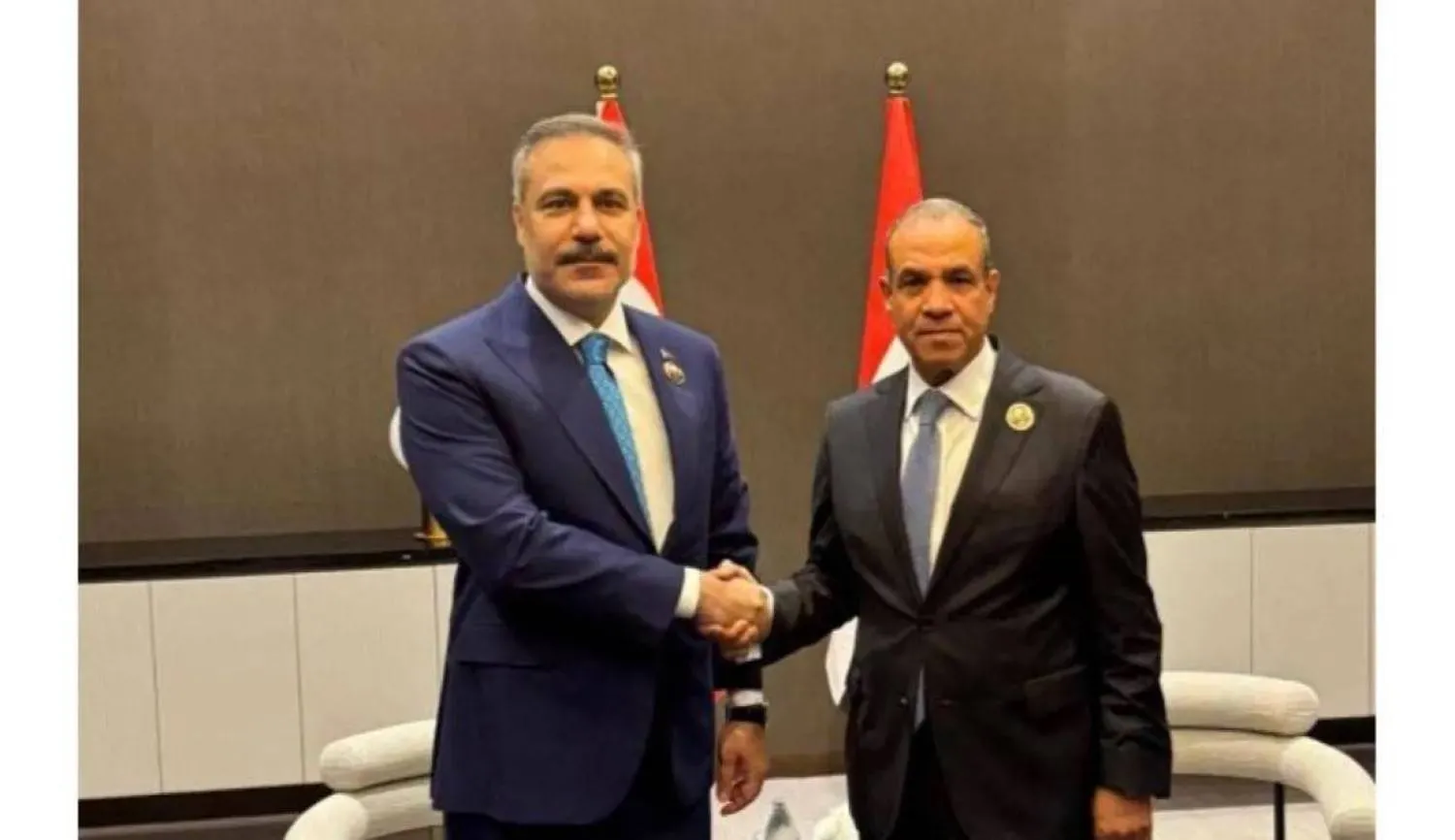
Egyptian Foreign Minister Badr Abdelatty and his Turkish counterpart Hakan Fidan during a previous meeting (Egyptian Foreign Ministry). 
TT

Egypt Keeps Communication Channels Open Over Mediterranean Maritime Disputes

Egyptian Foreign Minister Badr Abdelatty and his Turkish counterpart Hakan Fidan during a previous meeting (Egyptian Foreign Ministry). 

Egypt said it remains in contact with Türkiye, Libya, Cyprus and Greece to resolve maritime boundary disputes through dialogue and international law, despite its rejection of a disputed Turkish-Libyan maritime agreement.

Cairo’s remarks came after Ankara renewed its offer to negotiate a maritime boundary agreement with Egypt that would serve both countries’ interests. The proposal followed Egypt’s rejection of the Libyan parliament’s ratification last week of a maritime memorandum signed with Türkiye in late 2019.

Egyptian Foreign Ministry spokesman Ambassador Nader Zaki told Asharq Al-Awsat that Cairo believes maritime differences must be resolved through “serious dialogue, adherence to international law and mutual respect for sovereign rights.”

“Channels of communication remain open with all parties, including Cyprus, Greece, Türkiye and Libya,” he said, citing Egypt’s commitment to its longstanding ties with countries on both shores of the Mediterranean.

Zaki stressed that those relations must be built on respect for international law and sovereign rights that “cannot be compromised,” while avoiding disputes that could undermine stability and relations among Mediterranean states.

Cairo Reaffirms Rejection of Turkish-Libyan Agreement

Libya’s House of Representatives voted last week to approve two agreements with Türkiye covering maritime boundaries and security cooperation, prompting Cairo to reiterate its rejection of the maritime deal as “absolutely null and void.”

Zaki said Egypt’s latest objection was consistent with its position since 2019, arguing that the memorandum infringes on its sovereign rights in the exclusive economic zone and continental shelf.

“Egypt’s position on this invalid memorandum is based on national interests and the rejection of any infringement upon them,” he said.

The spokesman also challenged the agreement’s legal basis, saying it violates several binding principles of international law, including the principle that treaties do not create obligations for third parties.

“An agreement signed by two states is not binding on other states,” he explained.

Zaki also cited the prohibition against infringing on the rights of third countries and the principle of equitable maritime delimitation, arguing that the memorandum disregards these established legal rules.

“Egypt’s legal position is extremely strong and is shared by many countries,” he said.

Erdogan Calls for Regional Dialogue

The Turkish-Libyan memorandum has also drawn objections from Greece, Cyprus and the European Union.

Responding to criticism on Monday, Turkish President Recep Tayyip Erdogan said Ankara was not seeking political gains at the expense of any party in the Eastern Mediterranean.

He called for dialogue with all countries in the region and pledged to maintain Türkiye’s relations with all parties involved in Libya.