


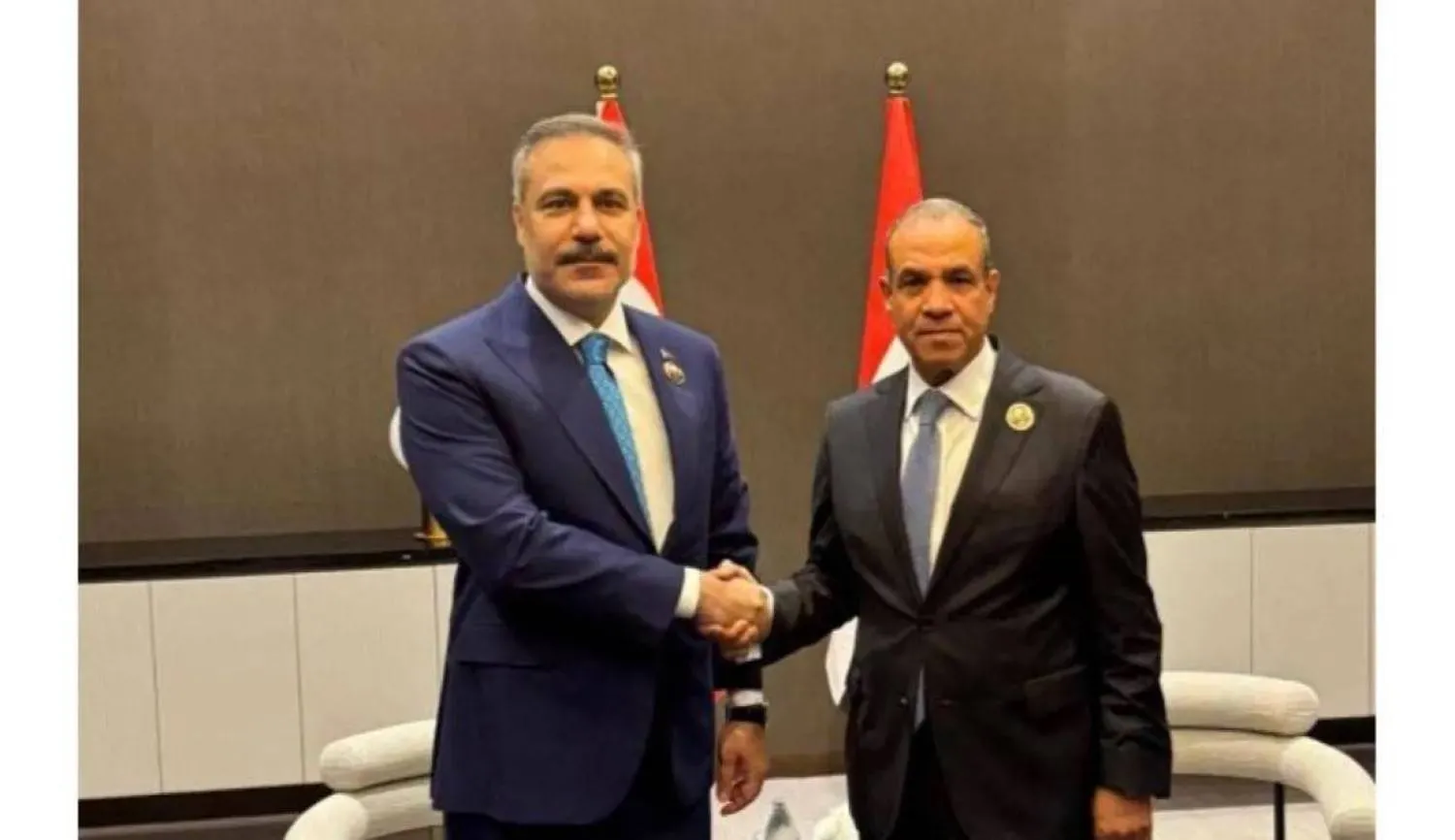

Egypt said it remains in contact with Türkiye, Libya, Cyprus and Greece to resolve maritime boundary disputes through dialogue and international law, despite its rejection of a disputed Turkish-Libyan maritime agreement.
Cairo’s remarks came after Ankara renewed its offer to negotiate a maritime boundary agreement with Egypt that would serve both countries’ interests. The proposal followed Egypt’s rejection of the Libyan parliament’s ratification last week of a maritime memorandum signed with Türkiye in late 2019.
Egyptian Foreign Ministry spokesman Ambassador Nader Zaki told Asharq Al-Awsat that Cairo believes maritime differences must be resolved through “serious dialogue, adherence to international law and mutual respect for sovereign rights.”
“Channels of communication remain open with all parties, including Cyprus, Greece, Türkiye and Libya,” he said, citing Egypt’s commitment to its longstanding ties with countries on both shores of the Mediterranean.
Zaki stressed that those relations must be built on respect for international law and sovereign rights that “cannot be compromised,” while avoiding disputes that could undermine stability and relations among Mediterranean states.
Cairo Reaffirms Rejection of Turkish-Libyan Agreement
Libya’s House of Representatives voted last week to approve two agreements with Türkiye covering maritime boundaries and security cooperation, prompting Cairo to reiterate its rejection of the maritime deal as “absolutely null and void.”
Zaki said Egypt’s latest objection was consistent with its position since 2019, arguing that the memorandum infringes on its sovereign rights in the exclusive economic zone and continental shelf.
“Egypt’s position on this invalid memorandum is based on national interests and the rejection of any infringement upon them,” he said.
The spokesman also challenged the agreement’s legal basis, saying it violates several binding principles of international law, including the principle that treaties do not create obligations for third parties.
“An agreement signed by two states is not binding on other states,” he explained.
Zaki also cited the prohibition against infringing on the rights of third countries and the principle of equitable maritime delimitation, arguing that the memorandum disregards these established legal rules.
“Egypt’s legal position is extremely strong and is shared by many countries,” he said.
Erdogan Calls for Regional Dialogue
The Turkish-Libyan memorandum has also drawn objections from Greece, Cyprus and the European Union.
Responding to criticism on Monday, Turkish President Recep Tayyip Erdogan said Ankara was not seeking political gains at the expense of any party in the Eastern Mediterranean.
He called for dialogue with all countries in the region and pledged to maintain Türkiye’s relations with all parties involved in Libya.


