


Global Plastic Watch: Satellite Eyes Pinpoint Waste From Space to Reduce Ocean Pollution

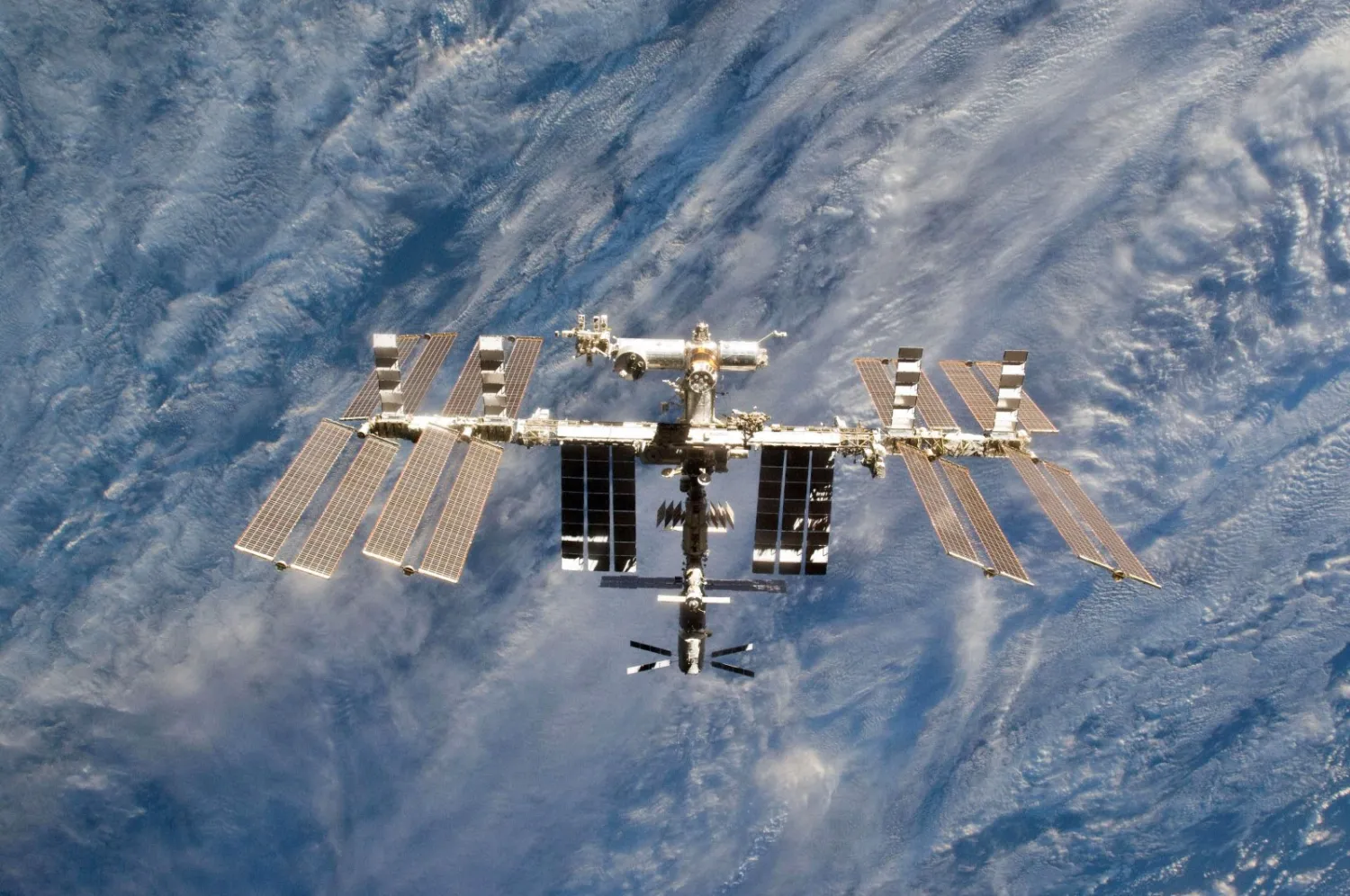
A close-up view of the International Space Station in this image captured by an STS-133 crew member on space shuttle Discovery, March 7, 2011. (NASA via AFP)
TT

Global Plastic Watch: Satellite Eyes Pinpoint Waste From Space to Reduce Ocean Pollution

A close-up view of the International Space Station in this image captured by an STS-133 crew member on space shuttle Discovery, March 7, 2011. (NASA via AFP)

A cutting-edge new tool developed by Minderoo Foundation has identified thousands of waste sites across 25 countries for the first time using advanced satellite data technology and machine learning to measure piles of plastic waste from space.

Global Plastic Watch ( globalplasticwatch.org ) is a tool which combines earth observation with artificial intelligence to create the first-ever near-real-time high-resolution map of plastic pollution. This is the largest open-source dataset of plastic waste across dozens of countries. The aim of the tool is to help authorities to better manage plastic leakage into the marine environment, The Associated Press said.

Global Plastic Watch uses remote sensing satellite imagery from the European Space Agency and a first-of-its-kind machine learned model created in collaboration with award winning Digital Product Agency for the Environment, Earthrise Media. The tool is able to determine the size and scale of land-based plastic waste sites, a major factor in fueling the growing problem of plastic pollution of the world’s rivers and oceans.

The data gathered provides a historical first and authoritative insight into one of the world’s most intractable environmental challenges – a deluge of plastic pollution which is threatening the oceans, harming communities, marine life, animal and human health. By using it, governments, industry and communities can evaluate and monitor the risk of land-based plastic waste sites, as well as prioritize investments in solutions.

The countries mapped so far include all of South-East Asia, Australia, and the countries identified by research published in Science Advances as accounting for high rates of plastic emissions into the ocean.

Dr Andrew Forrest AO, Chairman and Co-Founder of the Minderoo Foundation described data and transparency as important tools to fight plastic waste, and until now, it has been difficult to effectively identify and measure plastic waste build-up in a systematic, standardized way.

“Generally, the world has no idea how dangerous plastic waste is to the organic environment, particularly humans. The destination for every piece of plastic is nano-plastic, which has both poisonous and cutting attributes able to mutilate cells and even penetrate the human blood brain barrier,” Dr Forrest said.

“Preventing illegal and legal plastic waste stockpiles entering the oceanic environment is critical to limit this harm. Once in the ocean, through both mixing, absorption and ingestion by animals, this plastic will officially enter the human environment.

Using artificial Intelligence and satellite data, Minderoo Foundation has produced the first-ever map of plastic waste build up. Most of our data about plastic waste comes from models and estimates. Now our understanding is informed by real data that can be used to guide solutions.

Global Plastic Watch arms governments and researchers around the world with data that can better guide effective waste management interventions, ensuring land-based waste doesn’t end up in our oceans,” Dr Forrest said. “We want to work with governments to ensure this tool can also help to support policy change where needed.”

Dr Fabien Laurier, Lead for Technology and Innovation, and Ocean Conservation at Minderoo Foundation said some of the Global Plastic Watch findings were surprising.
“We know that land-based leakage contributes up to 91 per cent of the plastic waste that enters the ocean,” Dr Laurier said. “Global Plastic Watch has revealed that many large-scale waste sites across the first 25 countries we have mapped were previously undocumented and the number of sites is much higher than expected.”

The government of Indonesia is working with Minderoo Foundation to increase its recycling capacity to double recycling rates by developing capacity for an additional one million tonnes per year by 2025.

Dr Nani Hendiarti, Deputy for Environment and Forestry Management Coordination, Coordinating Ministry for Maritime Affairs and Investment, Indonesia, congratulated Minderoo Foundation on the public launch of the Global Plastic Watch.

“Global Plastic Watch is very helpful for identifying undocumented or illegal waste dump sites in Indonesia,” Dr Hendiarti said. “That has enabled us to prioritize areas in need of better waste management policies and actions. Therefore, it plays an integral role in accelerating the government’s waste management achievements across all regions in the country.”

Indonesian National Plastic Action Partnership (NPAP) Chair, Sri Indrastuti Hadiputranto, said tackling the challenge of plastic pollution in Indonesia, like in many other places in the world is going to require a collaborative effort from the public, private and civil society sectors, and its measurement is without exception.

“Global Plastic Watch is a data aggregator and monitoring platform on plastic waste,” Ms. Hadiputranto said. “It’s a timely innovation for policymakers, practitioners and advocates that believe in the importance of evidence-based policy making to advance our goal in reducing 70 per cent of ocean leakage by 2025. I believe more data-oriented innovations like Global Plastic Watch will lead us to a more sustainable policy outcome and improving collaborations in data collections in Indonesia.”

Global Plastic Watch is a tool aimed at supporting country-level efforts to understand the magnitudes and effects of land-based plastic waste sites, to enable them to better address undocumented sites and monitor those that pose environmental and health concerns. The data is also expected to guide direct investments in waste infrastructure in the areas that need it the most.

The development of the Global Plastic Watch tool follows the Plastic Waste Makers Index released in 2021, that revealed the true scale and sources of the global plastic waste crisis.

Globally, a 30 per cent increase in the production of single-use plastic is projected over the next five years. The Minderoo Foundation No Plastic Waste initiative believes this growth in production will lead to an extra three trillion items of throwaway plastic waste by 2025.

Global Plastic Watch will continue to work with partners to refine the Artificial Intelligence model and technology to further increase its accuracy as it expands its coverage to new sites and countries throughout 2022.




Forbes Travel Guide Grants Red Sea Destination the World’s First Comprehensive Destination Accreditation

This accreditation follows a year of rigorous efforts and meticulous evaluations aimed at elevating hospitality standards across The Red Sea. - SPA
TT

Forbes Travel Guide Grants Red Sea Destination the World’s First Comprehensive Destination Accreditation

This accreditation follows a year of rigorous efforts and meticulous evaluations aimed at elevating hospitality standards across The Red Sea. - SPA

Red Sea Global announced in a press release today a historic milestone in the global tourism sector as The Red Sea became the first destination ever to receive a comprehensive accreditation from Forbes Travel Guide.

This accreditation follows a year of rigorous efforts and meticulous evaluations aimed at elevating hospitality standards across The Red Sea. The process included a strategic collaboration with Forbes Travel Guide to develop and implement exceptional service standards across five key stages of the guest journey: reservations, land transport, marine transport, air transport, and guest experiences, SPA reported.

Red Sea Global CEO John Pagano stated: "At Red Sea Global, we have always believed that true luxury is defined not only by the beauty of a place, but by how guests feel throughout their entire journey. Receiving Forbes Travel Guide’s accreditation at a destination level is a powerful testament to the culture of exceptional service we have embedded across our teams and operators at every guest touchpoint. This is not merely a hotel standard, but a fully integrated destination-wide system."

Forbes Travel Guide CEO Hermann Elger also praised the milestone, saying: "We congratulate Red Sea Global and The Red Sea team on earning the world’s first accreditation of its kind as a Verified Destination. This achievement marks a significant moment for the hospitality industry. Delivering and sustaining service excellence at a destination scale requires deep commitment across every stage of the guest experience—from booking to farewell. The Red Sea has successfully established a new international benchmark for tourism destinations."

To ensure the consistency of this excellence, Red Sea Global established 182 precise service standards, organized into eight core categories: personalized service, courtesy, efficiency, cleanliness, luxury, comfort, technical skills, and professional appearance. These standards were embedded through a comprehensive institutional framework integrating training, communication, and continuous review, ensuring guests experience this level of excellence throughout the entire destination—not only within resort boundaries.

In parallel with this accomplishment, the first resorts opened at The Red Sea were included in Forbes Travel Guide’s prestigious Star Awards list for this year. The list featured three iconic properties: Six Senses Southern Dunes, The Red Sea; The St. Regis Red Sea Resort; and Nujuma, a Ritz-Carlton Reserve.

Forbes Travel Guide ratings are known for their objectivity and independence, with anonymous inspectors posing as guests to evaluate hundreds of exacting standards focused on service excellence and facility quality. Assessments also extend to intangible elements that shape memorable stays, such as a property’s ability to enhance well-being and the unique sense of place created by design and location.


SpaceX Launches 12th Long-duration Crew to ISS

NASA’s Crew-12 members, Russian cosmonaut Andrey Fedyaev, NASA astronauts Jack Hathaway, Jessica Meir, and ESA astronaut Sophie Adenot walk out of the Operations & Checkout Building at the Kennedy Space Center before transport to Launch Complex 40, ahead of their launch to the International Space Station, in Cape Canaveral, Florida, US, February 13, 2026. REUTERS/Steve Nesius
TT

SpaceX Launches 12th Long-duration Crew to ISS

NASA’s Crew-12 members, Russian cosmonaut Andrey Fedyaev, NASA astronauts Jack Hathaway, Jessica Meir, and ESA astronaut Sophie Adenot walk out of the Operations & Checkout Building at the Kennedy Space Center before transport to Launch Complex 40, ahead of their launch to the International Space Station, in Cape Canaveral, Florida, US, February 13, 2026. REUTERS/Steve Nesius

A SpaceX rocket lifted off from Florida early on Friday with a crew of two US NASA astronauts, a French astronaut and a Russian cosmonaut headed to the International Space Station for an eight-month science mission in Earth orbit.

The two-stage Falcon 9 rocket, topped with an autonomously operated Crew Dragon capsule dubbed Freedom, was launched from the Cape Canaveral Space Force Station, along Florida's Atlantic Coast, at about 5:15 a.m. EST (1015 GMT).

A live NASA-SpaceX webcast showed the 25-story-tall vehicle rising from the launch tower as its nine Merlin engines roared to life, gulping 700,000 gallons of fuel per second, emitting clouds of vapor and a reddish fireball that lit up the predawn sky, Reuters reported.

The four crew were set to ‌reach the space ‌station on Saturday afternoon after a 34-hour flight, docking with ‌the orbiting ⁠laboratory platform some ⁠250 miles (420 km) above Earth.

The mission, designated Crew-12, marks the 12th long-duration ISS team that NASA has flown aboard a SpaceX launch vehicle since the private rocket venture founded in 2002 by billionaire Elon Musk began sending US astronauts to orbit in May 2020.

Crew-12 was led by Jessica Meir, 48, a veteran astronaut and marine biologist on her second trip to the space station, nearly seven years after making history with NASA colleague Christina Koch by ⁠completing history's first all-female spacewalk.

Joining her was Jack Hathaway, 43, ‌a former US Navy fighter pilot and rookie ‌astronaut; European Space Agency astronaut Sophie Adenot, 43, a master helicopter pilot from France; and Russian cosmonaut ‌Andrey Fedyaev, a former military pilot on his second mission to the ISS.

Upon ‌arrival, the team will get busy with a host of scientific, medical and technical research tasks in microgravity, according to NASA.

Those include studies of pneumonia-causing bacteria to improve treatments on Earth, and experiments with plant and nitrogen-fixing microbe interactions to boost food production in space.

Crew-12 will be welcomed aboard ‌the space station by three current ISS occupants - NASA astronaut Chris Williams and Roscosmos cosmonauts Sergey Kud-Sverchkov and Sergei Mikaev.

Four Crew-11 ⁠members who were ⁠supposed to have stayed aboard until the arrival of Crew-12 departed a few weeks early, when an undisclosed serious health condition affecting one forced an unprecedented medical evacuation flight home in mid-January.

The ISS, which spans the length of a football field and ranks as the largest human-made object in space, has been continuously operated by a US-Russian-led consortium that includes Canada, Japan and 11 European countries.

The first hardware for the outpost was launched more than a quarter century ago. It was conceived as part of a multinational venture to improve ties between Washington and Moscow following the Soviet Union's collapse and the end of Cold War rivalries that spurred the original US-Soviet space race in the 1950s and 1960s.

NASA has said it is committed to keeping the space station operating until the end of 2030.


Saudi Arabia: King Abdulaziz Royal Reserve Plants 10,000 Native Trees to Combat Desertification

The project engaged 300 volunteers from government agencies and educational institutions to rehabilitate local ecosystems. SPA
TT

Saudi Arabia: King Abdulaziz Royal Reserve Plants 10,000 Native Trees to Combat Desertification

The project engaged 300 volunteers from government agencies and educational institutions to rehabilitate local ecosystems. SPA

The King Abdulaziz Royal Reserve Development Authority, in partnership with the Green Dahna Association, has launched an initiative to plant 10,000 Arta trees in the Al-Dahna sands.

The project engaged 300 volunteers from government agencies and educational institutions to rehabilitate local ecosystems and promote a culture of environmental stewardship.

Chosen for its high adaptability to harsh desert climates and its effectiveness in soil stabilization, the Arta tree serves as a strategic investment in biodiversity and desertification control.

Authority CEO Maher AlGothmi‏ highlighted that this collaboration exemplifies the institutional integration required to meet Saudi Green Initiative and Vision 2030 goals, ensuring the sustainability of natural resources for future generations through research and community engagement.