
Will New Faces at Lebanese Parliament Form Opposition Bloc?

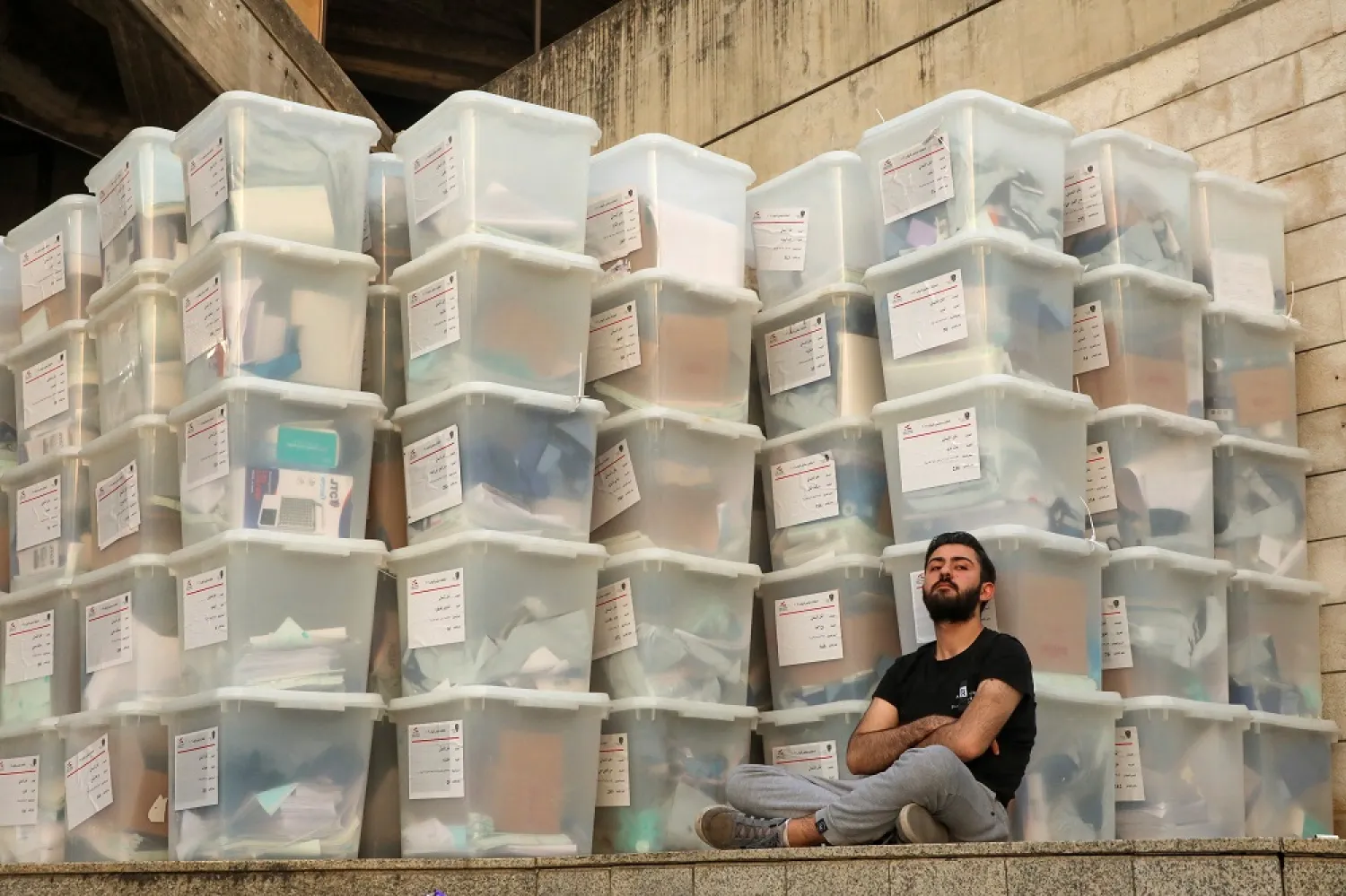
An electoral worker sits next to boxes as Lebanese await the official election results for the rest of the districts in Lebanon's parliamentary election, at the Justice Palace in Jdeideh, Lebanon May 16, 2022. (Reuters)
TT

Will New Faces at Lebanese Parliament Form Opposition Bloc?

An electoral worker sits next to boxes as Lebanese await the official election results for the rest of the districts in Lebanon's parliamentary election, at the Justice Palace in Jdeideh, Lebanon May 16, 2022. (Reuters)

The results of the parliamentary elections in Lebanon have sprung several surprises, most notably among "revolution" groups that have reaped at least 10 seats, defying predictions and the odds given that they had waged the electoral battle on numerous lists instead of a united one.

These groups emerged in wake of the October 2019 popular uprising against the country's ruling elite that has been in power for decades and is largely blamed by the people for Lebanon's current devastating economic crisis.

Sunday's elections also led to surprises among the ranks of traditional opposition figures and parties, who may share some visions of the revolution, but are unlikely ally themselves with them.

Some members of the revolution groups refuse to align with traditional parties and politicians because they perceive them as part of the problem in Lebanon and because they differ with them over their view of Hezbollah and demands for the party to lay down its arms.

As official results were announced, the opposition revolution groups managed to achieve breakthroughs in the districts of Beirut, the Chouf, South, North and Bekaa.

Winners among the traditional opposition groups and politicians included the Kataeb party, Michel Mouawwad, former minister Ashraf Rifi, MP Oussama Saad, who was allied with Dr. Abdulrahman al-Bizri in the Sidon-Jezzine district, and others.

The challenge lying ahead for these oppositions figures is working together inside parliament to reach change they waged the electoral battle in the first place for.

Ibrahim Mneimneh, one of the winners of the revolution groups in the Beirut II district, and Bizri, a winner in Sidon-Jezzine, told Asharq Al-Awsat that the results of the elections were expected.

Mneimneh said he predicted that the revolution would win around ten seats in parliament.

"Our first mission after the announcement of the final results should be the formation of a united parliamentary bloc that represents all forces of change," he urged.

He added that some of these forces agree with the traditional opposition parties over some issues, but they are unlikely to come together in a united bloc.

This stage in Lebanon will be marked with consolidating the change in the country that has indeed started as revealed by the elections, he continued.

For his part, Bizri, who is the son of former MP and minister Nazih Bizri, said it did not come as a surprise for the revolution groups to win seats in parliament.

Rather, the surprise would have been if traditional political class, which has piled catastrophes on Lebanon, had won, he stated.

"We have chosen the confrontation, and in spite of the negatives of the proportional electoral law, the people expressed their views and proved that the elites have lost their clout," he added.

"Parliament will have a different role to play. The opposition against the political class will be clear and it will play a different role and shoulder many responsibilities after they were entrusted by the people," he went on to say.

"The people are banking on us to create change," stressed Bizri.

On whether the opposition will form a united bloc, he replied that the desire for cooperation is there and so are the common factors between the various groups.

The first step should be creating a united voice against the political system.

"We must then distinguish ourselves from it by reaching a cooperation mechanism that aligns with the views of the Lebanese people and their desire for reform."


Why Is a ‘Very Close’ Iran-US Deal Taking So Long?

A man walks past Iran's national flag at the Vanak Square in Tehran on June 10, 2026. (AFP)
TT

Why Is a ‘Very Close’ Iran-US Deal Taking So Long?

A man walks past Iran's national flag at the Vanak Square in Tehran on June 10, 2026. (AFP)

President Donald Trump has repeatedly declared Iran and the US are on the verge of agreeing a deal to end the Middle East war, but a litany of sticking points have delayed finalizing an accord and will complicate its implementation, analysts say.

Trump has been widely mocked in US and Iran for frequently insisting an end to the conflict was imminent even as negotiations dragged on for weeks, with US network CNN saying he had used phrases like "very close to a deal" or in the "final throes" of talks on 39 occasions.

In what has become a familiar pattern, Trump on Thursday withdrew a threat of renewed strikes on Iran and said a deal could be signed in the coming days, only for Iran's foreign ministry to respond by saying it "has not reached a final conclusion on the agreement".

Arash Azizi, lecturer at Yale University, told AFP that one reason the deal has taken so long is that the Iranian side believed "they could hold out to get better terms" after not capitulating during the conflict.

Trump, meanwhile, "could hardly stomach" releasing Iran's frozen assets -- a key demand of Tehran -- and also risked facing accusations the accord would be more favorable to Iran than the 2015 nuclear deal he pulled out of during his first term, he added.

Trump "had to accept that his initial gambit of causing an Iranian capitulation by sheer military force didn't work and he had to settle for something much less", said Azizi.

Both Iran and the United States would appear to have vested interests in ending a conflict that saw five weeks of all-out war, paused by an uneasy ceasefire on April 8.

The US-Israeli war has become increasingly unpopular in the US, even among the president's core supporters, with Trump mindful of the looming US midterm elections.

A deal could also see Tehran win the security guarantees and recognition it has long craved from the US and ensure the personal safety of its own leadership, after former supreme leader Ali Khamenei and several top officials were killed in the first phase of the war.

But any negotiation -- in this case mediated by Pakistan as well as Qatar -- between two foes who have been sworn enemies since shortly after the 1979 revolution was never going to be easy.

- 'Frozen war' with 'flare-ups' -

Iran's new leadership structure after the killing of Ali Khamenei has likely proved problematic, with the extent of the power wielded by his successor and son Mojtaba Khamenei still unclear. He is said by Iranian officials to have been wounded and has yet to appear in public.

Trump's own pronouncements have also changed with startling rapidity, most notably on Thursday when he threatened to hit Iran "very hard" before predicting that a "great settlement" was near.

Trump, in a Truth Social post Friday, appeared to again be losing patience, describing the Iranian side as "very dishonorable people to deal with".

"Trump has neither a clear strategic objective nor a credible exit strategy for extricating the United States from the war with Iran," said Ali Alfoneh, a senior fellow at the Arab Gulf States Institute (AGSI).

He said a key obstacle was Israeli Prime Minister Benjamin Netanyahu, who has opposed any Iran-US deal and on Friday again vowed "Iran will not have nuclear weapons".

The Iranian authorities, meanwhile, have "sensed Trump's reluctance to enter the midterm election season burdened by an unpopular war", and seek above all an enduring peace without US aggression, said Alfoneh.

"The conflict has already taken on the characteristics of a frozen war, punctuated by periodic flare-ups," he added.

- 'Tremendous leverage' -

Iran has always insisted that any deal include Lebanon, where Israel has been attacking the Tehran-backed group Hezbollah, which has been further weakened but not eradicated.

A White House official said on Friday that Iran had agreed to dismantle its nuclear program, which the West fears is aimed at making a nuclear weapon -- a commitment that has yet to be confirmed by Tehran.

Critical will be the reopening of the Strait of Hormuz shipping bottleneck, which Iran blockaded at the start of the war in a move that caused global energy prices to surge.

Iran "will not forget the tremendous leverage it gained by closing it," Thomas Juneau, professor at the University of Ottawa, wrote in a study for London-based think tank Chatham House.

"It will not hesitate to consider closing the Strait again if it perceives it to be necessary."


What to Know About the Growing Opposition to Trump Family-Linked Resort in Albania

A drone view shows people during a protest against a luxury resort, a plan by a company linked to Donald Trump's son-in-law, Jared Kushner, on an environmentally sensitive part of the Adriatic coast, in Zvernec near Vlora, Albania June 6, 2026. (Reuters)
TT

What to Know About the Growing Opposition to Trump Family-Linked Resort in Albania

A drone view shows people during a protest against a luxury resort, a plan by a company linked to Donald Trump's son-in-law, Jared Kushner, on an environmentally sensitive part of the Adriatic coast, in Zvernec near Vlora, Albania June 6, 2026. (Reuters)

A massive coastal development project linked to Jared Kushner, the son-in-law of US President Donald Trump, is facing growing resistance from protesters in Albania.

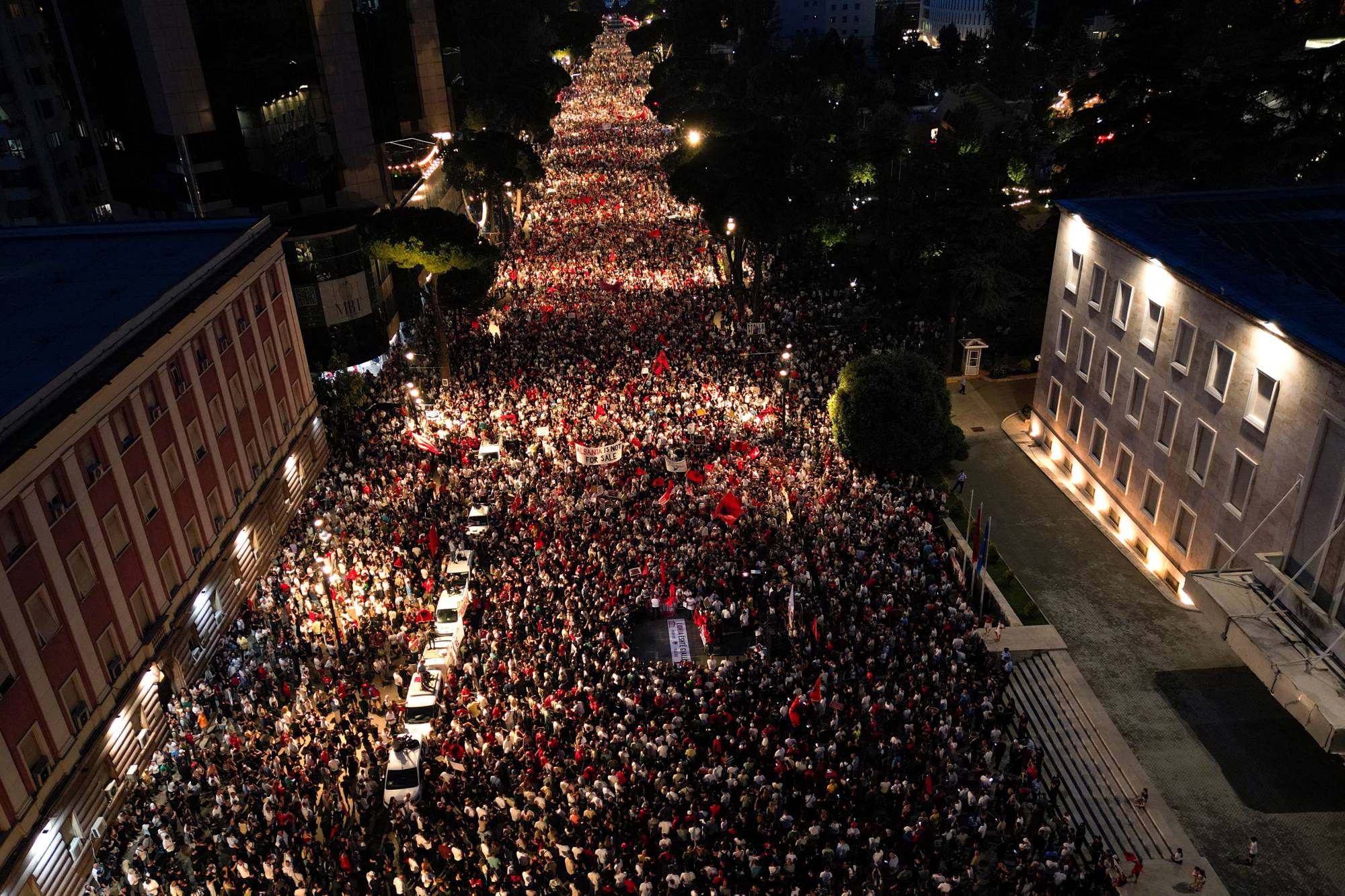
Thousands of protesters are taking to the streets in nightly protests, blowing whistles and holding up cardboard cut-outs of flamingos — one of the protected migratory bird species that could see their habitats threatened by the proposed luxury resort.

The government says the development on the Adriatic coast would be transformational for the former communist nation as it seeks to enter the high-end tourism market and pushes for European Union membership.

But the venture, spanning an abandoned island and a nearby stretch of seafront on Albania’s southern coast, has drawn opposition from environmental campaigners and critics of longtime Socialist Prime Minister Edi Rama.

Outside forces blamed for anger

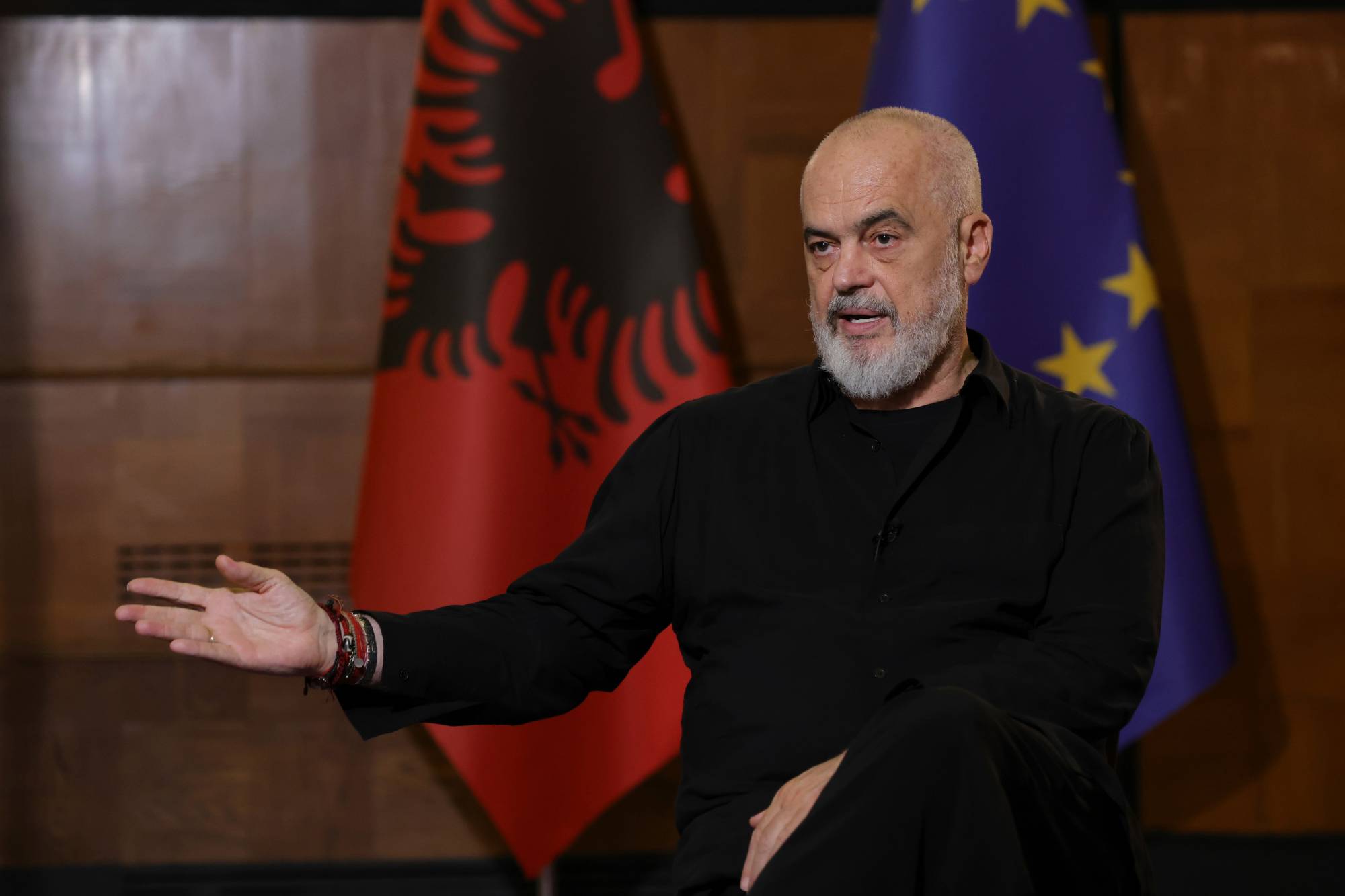
In an interview with The Associated Press, Rama vowed not to “step back” from the development and defended his administration's environmental record. He insisted the protests were being encouraged by malicious cyber activists overseas.

“There is a lot of manipulation. There are a lot of half-truths that become bigger and bigger lies by the hour,” Rama said, accusing Iran of targeting his government.

The allegations, which Rama has made for several years, followed a dispute with Albania after it sheltered members of an Iranian opposition group in 2022. Iran has denied the claims.

Despite Rama's defense of the development, the protests have gathered pace, with supporters in Albanian communities in neighboring Greece and other European countries also holding rallies.

A drone view of protesters waving Albanian National flags during a protest against a luxury resort, a plan by a company linked to US President Donald Trump's son-in-law, Jared Kushner, on an environmentally sensitive part of the Adriatic coast, in Tirana, Albania, June 10, 2026. (Reuters)

Kushner and Ivanka Trump found the site on a barefoot hike

The luxury project has two components: a coastal development in the Narta Lagoon area, which is a wildlife reserve, and a smaller resort on the nearby uninhabited island of Sazan, a communist-era military base.

The planned development of hotels, apartments, villas and a marina is linked to Kushner and Trump’s daughter, Ivanka Trump. An investment firm linked to Kushner has been granted special investor status by Albanian authorities.

In an interview this week with US podcaster David Senra, Ivanka Trump said they discovered the site by accident.

“We were on a friend’s boat, and we stopped for a swim. Effectively, that’s how we found it,” she said. “We swam to the island. We went on a hike, barefoot all the way up to the top, and we were just captivated.”

Harsh communist rule and pristine beaches

Albania has 450 kilometers (280 miles) of coast that remained largely underdeveloped during decades of harsh communist rule.

Protest groups fear sections of that pristine coastline could be snapped up by powerful investors. And public anger grew after video showed an activist being dragged by a private security guard while demonstrating at the site.

The development is planned within a nature reserve and one of Albania’s most valuable biodiversity areas, a key stopover for migratory birds along the Adriatic coast.

Since late May, excavators and other heavy machinery have entered the area, opening access routes, digging into the sand, clearing land among pine trees and installing fencing.

Environmental groups from Albania and elsewhere in Europe condemned the work, with one prominent local group charging that long-protected habitats are being “irreversibly destroyed.”

Albanian Prime Minister Edi Rama speaks during an interview with The Associated Press in Tirana, Albania, Tuesday, June 9, 2026. (APi)

A multibillion-dollar bonanza?

Albania’s state anti-corruption agency has confirmed it opened an investigation related to the project but has not disclosed details.

The government says the land earmarked for the project is privately owned. But competing claims have emerged questioning the privatization.

Rama has committed to the venture, saying it would align with Albania’s ambition to become a major global tourism destination.

“Albania should not be a country that fears an extraordinary project like this one, where exceptional partners have come together to invest 4 billion euros ($4.6 billion),” Rama said.

He added: “There is no chance for this investment to stop as long as I am here.”

However, the demise of a similar project in Serbia offers a cautionary tale. In November, Serbia's Parliament passed a special law to enable the building of a luxury complex in the capital, Belgrade, to be financed by an investment company linked to Kushner.

The following month, Serbia's prosecutor for organized crime charged four people, including a government minister, with abuse of office and falsifying of documents to help pave the way for the development.

Kushner later withdrew from the planned multimillion investment that would have replaced a sprawling bombed-out military complex, a designated heritage zone whose legal protection was lifted by the former officials now on trial.


Kharg... A Pivotal Island for Iran

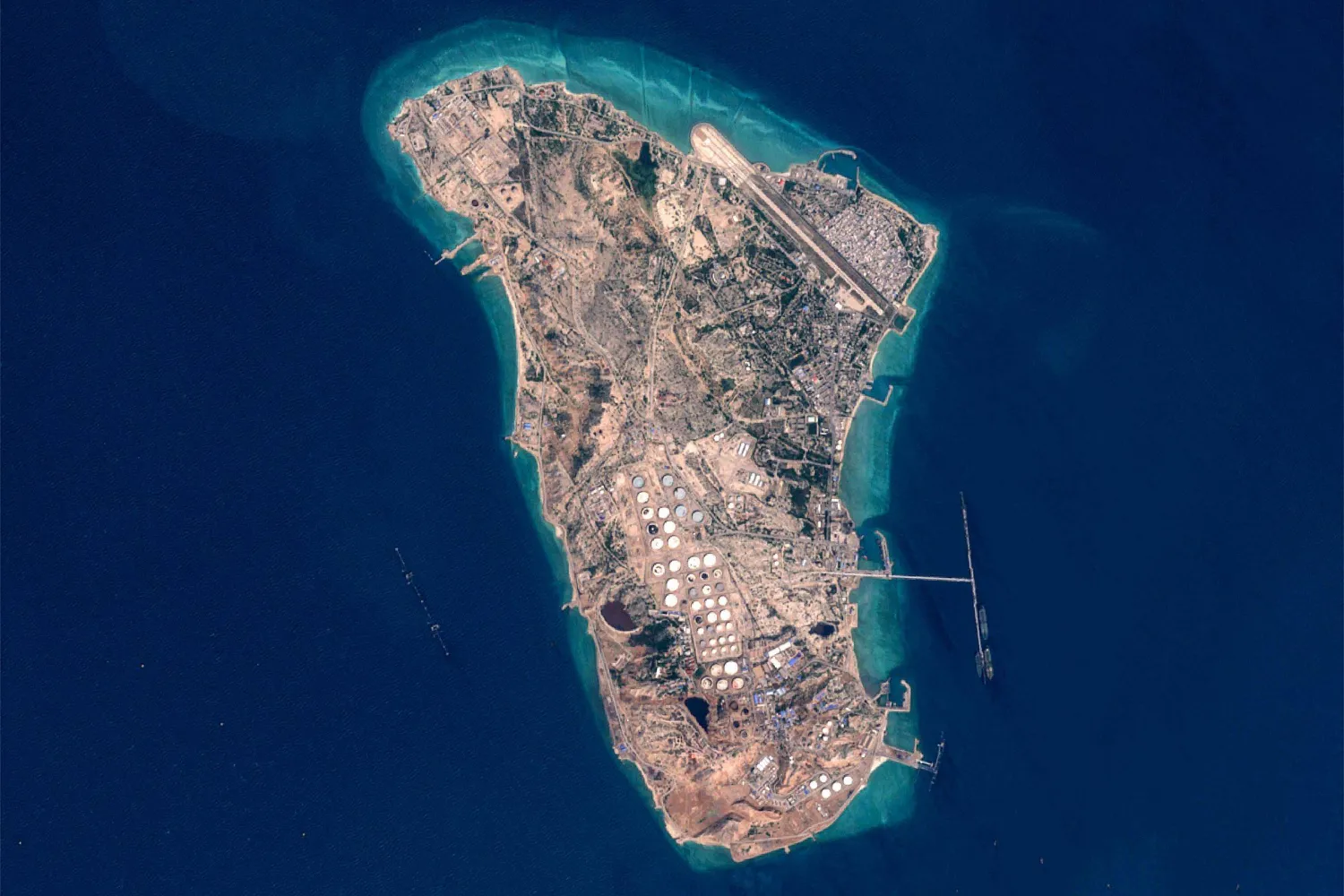
This handout image taken by the European Space Agency (ESA) captured by the Copernicus Sentinel-2 satellite shows a view of Iran's Kharg Island. (Photo by EUROPEAN SPACE AGENCY / AFP)
TT

Kharg... A Pivotal Island for Iran

This handout image taken by the European Space Agency (ESA) captured by the Copernicus Sentinel-2 satellite shows a view of Iran's Kharg Island. (Photo by EUROPEAN SPACE AGENCY / AFP)

Islands under Iran's control, spanning from the northern Arabian Gulf to the entrance of the Strait of Hormuz, have returned to the forefront of the war as part of direct military calculations.

These islands gain additional importance as potential points for engagement in a new phase of the war, shifting the battlefield to energy warfare and transit control.

At the heart of this map stands Kharg Island, which US President Donald Trump had threatened to seize, considering it the lifeline for Iranian oil exports. Meanwhile, other islands serve functions of controlling transit, military fortification, and advanced strategic positioning on one of the world's most sensitive maritime passages.

Kharg Island is an 8-kilometer-long coral island in the Arabian Gulf, located approximately 43 kilometers off the mainland and about 500 kilometers northwest of the Strait of Hormuz. It is the terminus for pipelines coming from Iran's oil fields in the central and western parts of the country. It was established by the giant American oil company Amoco and seized by Iran during the 1979 revolution.

Kharg Island occupies an exceptional position in Iran's strategic structure, serving as the lifeline for the majority of Iranian crude exports. It is located in the northern Gulf off the Iranian coast, making it close enough to the Iranian mainland to remain under the umbrella of its fires, missile, and drone capabilities.

Its importance stems primarily from its direct economic function. The island houses the terminal through which almost all of Iran's oil exports pass, securing the largest share of the state's crude revenues. During the ongoing war, it quickly became a prominent target in military discussions, as striking it would impact one of the state's most vital funding sources.

The Most Important Gateway

The island developed during Iran's oil boom in the 1960s and 1970s because large parts of the Iranian coast were too shallow to allow supertankers to dock. Hence, with its deep harbors and terminals, the island became the most important gateway for Iranian oil exports, especially to Asian markets, particularly China.

Theoretically, any American control could choke a vital financial artery for the regime and give Washington leverage to compel Tehran to keep the Strait of Hormuz open. Moreover, due to its location, the island could, in such a scenario, turn into an advanced platform for military pressure on the Iranian mainland. However, this temptation is met with significant obstacles.

Seizure would require stationing American forces on a small island very close to the Iranian coast, meaning within range of Iranian drones, missiles, and mobile artillery, and the potential use of mines and fast boats. Thus, an attacking force could quickly become a fixed target vulnerable to attrition.

Furthermore, retaining the island after forces enter it would require constant air cover, advanced air defense systems, and protected supply lines by sea and air. Tehran has increased its fortifications on Kharg in recent weeks, sending additional personnel and deploying air defense assets, alongside reports of mines around the island.

Significant Strategic Advantages

It also threatened to target American forces if they attempted to enter the island, and to strike the energy infrastructure of companies dealing with the United States if its oil facilities were targeted.

The island includes storage tanks, housing for thousands of workers, and has a clear civilian presence. It also contains an old Portuguese fortress and the ruins of an early Christian monastery in the Gulf.

The Washington Post said on Thursday that for the US, capturing the island would give the United States significant strategic advantages, including potentially choking off Tehran’s ability to pay its military.

Despite intensive strikes launched by the United States and Israel against targets inside Iran, Kharg Island, the most important center for Iranian oil exports, has remained off the list of these strikes so far; experts warn that striking it could cause a catastrophic collapse in global markets.

Threat to Strike the Island

Trump had repeatedly threatened to launch strikes on the island's oil infrastructure if Tehran did not stop its attacks on ships in the Strait of Hormuz, a warning observers said could heighten market tensions already suffering unprecedented supply disruptions.

Trump had stated during the bombing of Iran that the United States had completely destroyed military targets on the island. He added that the American strikes had not targeted the oil infrastructure on Kharg Island, but he wrote that if Iran or anyone else does anything to interfere with the free and safe passage of ships through the Strait of Hormuz, he will immediately reconsider this decision.

Centcom said US forces had struck more than 90 Iranian military targets on the island, “while preserving the oil infrastructure.”

The regional military command unit said it had destroyed naval mine storage facilities, missile storage bunkers and numerous other military sites.