WEF: Youth Unemployment, Inequality and Climate Change Top Challenges Facing MENA

Maroun Kairouz unveiled plans to open 2 new 4th industrial revolution centers in the region

Participants gather at the 51st annual meeting of the World Economic Forum (WEF) in Davos, Switzerland, 22 May 2022. EPA/GIAN EHRENZELLER
TT

WEF: Youth Unemployment, Inequality and Climate Change Top Challenges Facing MENA

Participants gather at the 51st annual meeting of the World Economic Forum (WEF) in Davos, Switzerland, 22 May 2022. EPA/GIAN EHRENZELLER

Running the team that manages the WEF’s relations and initiatives with the Middle East and North Africa, Maroun Kairouz has a busy portfolio on his hands.

After a two year hiatus, the WEF is holding its first in-person meeting in Davos since the start of the pandemic. “The meeting couldn't be more timely”, Kairouz says in an exclusive interview with Asharq Al-Awsat.

The theme the WEF has chosen for this year's meeting is “History at a turning Point”. “The world is facing a confluence of multiple crises that all require different remedies”, Kairouz explains, before he goes on identifying three overarching challenges the world is collectively facing today.

The war on Ukraine, being the first challenge, is a “one-off shock” to the global economy and to the international system. The second challenge according to kairouz, is the Covid-19 pandemic “which is still ongoing as recent events in China have shown, and which requires a different approach”. The third and more “slow-burning challenge, but not less pressing”, is the climate change agenda. “Various expert reports have warned that the window for action is narrowing, and highlighted the need to accelerate progress, if we were to limit warming to 1.5 degrees Celsius”.

Goals of the May meeting

The WEF praises itself on fostering dialogue by bringing together leaders “from different backgrounds, sectors and industries”, and helping make progress on some of the world’s most pressing issues through the sense of community.

In order to illustrate how the WEF brings together public and private sectors to come up with innovative solutions to global problems, Kairouz cites an initiative the Forum undertook alongside US Special Envoy for Climate John Kerry. “Working with Special Envoy Kerry during the COP meeting (in November), we brought together a coalition of 30 companies from “hard to abate industries”, such as aviation and shipping, that committed to store a certain percentage of their purchasing from sustainable sources. That creates a demand signal to innovators indicating that demand is going to be there in the short and medium terms”. He continues: “This way, if you are a nascent company or an innovator working for on sustainable fuels for airplanes, for instance, then it gives you the confidence that some of these big companies are going to want to work with you in the future”.

“We are looking to expand that coalition to more regions and more sectors, including the launch of a community of leaders for sustainability in the Middle East. That is just one example of how we bring the private and public sector together, and help them advance impact on some of those issues”, Kairouz adds.

Deep-rooted ties

Like every year, the 2022 annual meeting will host dozens of leading business and political leaders from the Middle East and North Africa. These will include the Emir of Qatar Sheikh Tamim bin Hamad Al-Thani, the President of Israel Isaac Herzog, the Tunisian Prime Minister Najla Bouden, the Palestinian Prime Minister Mohammad Shtayyeh, as well as big delegations from Saudi Arabia led by Minister of State and Member of the Cabinet of Ministers Ibrahim Al Assaf, the UAE led by Minister of Cabinet Affairs Mohammad Al Gergawi, Kuwait led by the Minister of Foreign Affairs Ahmed Nasser Al-Sabah, Egypt led by Minister of Foreign Affairs Sameh Shoukry, and Morocco led by Minister delegate in charge of investment Mohcine Jazouli.

There will also be a sizeable representation from the business world, including around 60 CEOs from some of the biggest companies based in the region, like Saudi aramco, Mubadala, Agility, DP World, Majid Al Futaim and others.

The WEF has traditionally enjoyed deep-rooted relations with the MENA region, which have resulted in a number of initiatives and collaborative efforts over the past few years.

Central to these initiatives are the Centers for the Fourth Industrial Revolution in the region, "which help governments and the private sector govern and regulate new technology", says Kairouz. He adds: “We have three centers open. One in Riyadh, the other in Dubai and the third in Tel Aviv. And we're hoping to expand to more centers”, unveiling that “in the course of the annual meeting, the WEF is hoping to announce additional centers in the region, potentially in Manama and in Doha”.

Another effort Kairouz chose to emphasize is the “regional action group” which was formed in April 2020 at the outset of the Covid-19 pandemic. “This group includes ministers, CEOs and academics from across the region. Its purpose was to create a space for peer exchange and debate, as well as peer learning and updating in the wake of the Covid-19 crisis”.

“Our first meeting was chaired by Mohamed Al-Jadaan, Minister of Finance in Saudi Arabia, who had the opportunity to share the plans and measures Saudi was planning to take before (the spread of) Covid with the business community. That allowed business leaders in Saudi Arabia to prepare themselves accordingly”.

The action group used to meet once every four to six weeks, throughout the pandemic, to make sure these information channels are open, according to the WEF official.

Challenges and opportunities

When asked about the collective challenges facing the Middle East and North Africa, Kairouz chose to identify four different issues he believes are crucial to the growth and stability of the region.

“On the long term, I think the key challenge the region will face is climate change. It's not immediate, but if we look at the numbers, experts predict the Middle East will warm at twice the rate of the rest of the world”.

“In Kuwait for example, temperatures are expected to grow by 4 to 4.5 degrees Celsius, by 2050. That means parts of the Gulf will become practically unlivable”.

Despite this rather bleak outlook, the WEF official sees reasons for hope. “I think that having the next two COP summits hosted by Arab countries, Egypt and the UAE, as well as the Green Initiative that Saudi Arabia is leading, are strong signals that the region is now taking this issue seriously”.

Another challenge that is more short-term, is youth unemployment, which Kairouz connects to skills, education systems, and the digital divide.

“There is the potential, according to some studies at least, that accelerating the digital transition could boost GDP per capita by 46% by 2030”. That said, there are variations within the region. “For instance, there are countries who are 5g Pioneers, others who are not as advanced”.

But Kairouz sees real potential for the region, “if its turns its young people into an opportunity, and gives them the tools that they need to succeed in the digital economy”.

Connected to that is the role of women. Last year, the WEF published its gender gap report, which found that on current trends, it will take 142 years for the region to fully close the gender gap.

“Efforts are of course being made”, says Kairouz. “Look at Saudi Arabia, the UAE, Jordan, Tunisia, and Morocco. Progress is being made, but it needs to be accelerated and synergized much faster”. He adds: “We can't catch up if half of our population is excluded from economic activity”.

One other challenge is inequality. Some studies show that 10% of the region's richest people have 56% of its income, according to Kairouz. “If you combine that with the food crisis, you start to understand some of the roots of unrest in many of the countries in the region”.

“We are starting to see action on this side, where countries are starting to replace subsidies with direct transfers. The citizens’ account in Saudi Arabia overseen by the Ministry of Finance is an example of a step in the right direction to address this aspect”.

Kairouz believes that the reform momentum today “is mostly concentrated in the GCC. Whereas you see in some other parts of the region, particularly in the Levant, there are still insecurities, conflict, direct impact of climate dynamics, and food insecurity. Reforms need to be accelerated”.

Economic diversification

In regards to the reform agenda that many countries are undertaking in the region, Kairouz says that “in oil-producing or hydrocarbon-exporting economies, especially in the Gulf, I see commitment to reforms. The privatization schedules are going according to plan in most countries. You see initiatives in manufacturing, technology, 5g rollout”.

He notes that despite the temporary measures that had to be taken during Covid and the increase in oil prices, countries like Saudi, the UAE, and Qatar are sticking to their economic diversification policies.

On the other hand, he expressed deep concern about other countries in the region, “which are also in a way oil-addicted, even if they don't produce it, because they depend heavily on remittances. And there has been a remittance shock caused by Covid as well”. He continues: “There, we need to see a quicker transformation of the economic models, if they want to succeed”.

Bin Habrish to Asharq Al-Awsat: Hadhramaut on Threshold of New Era

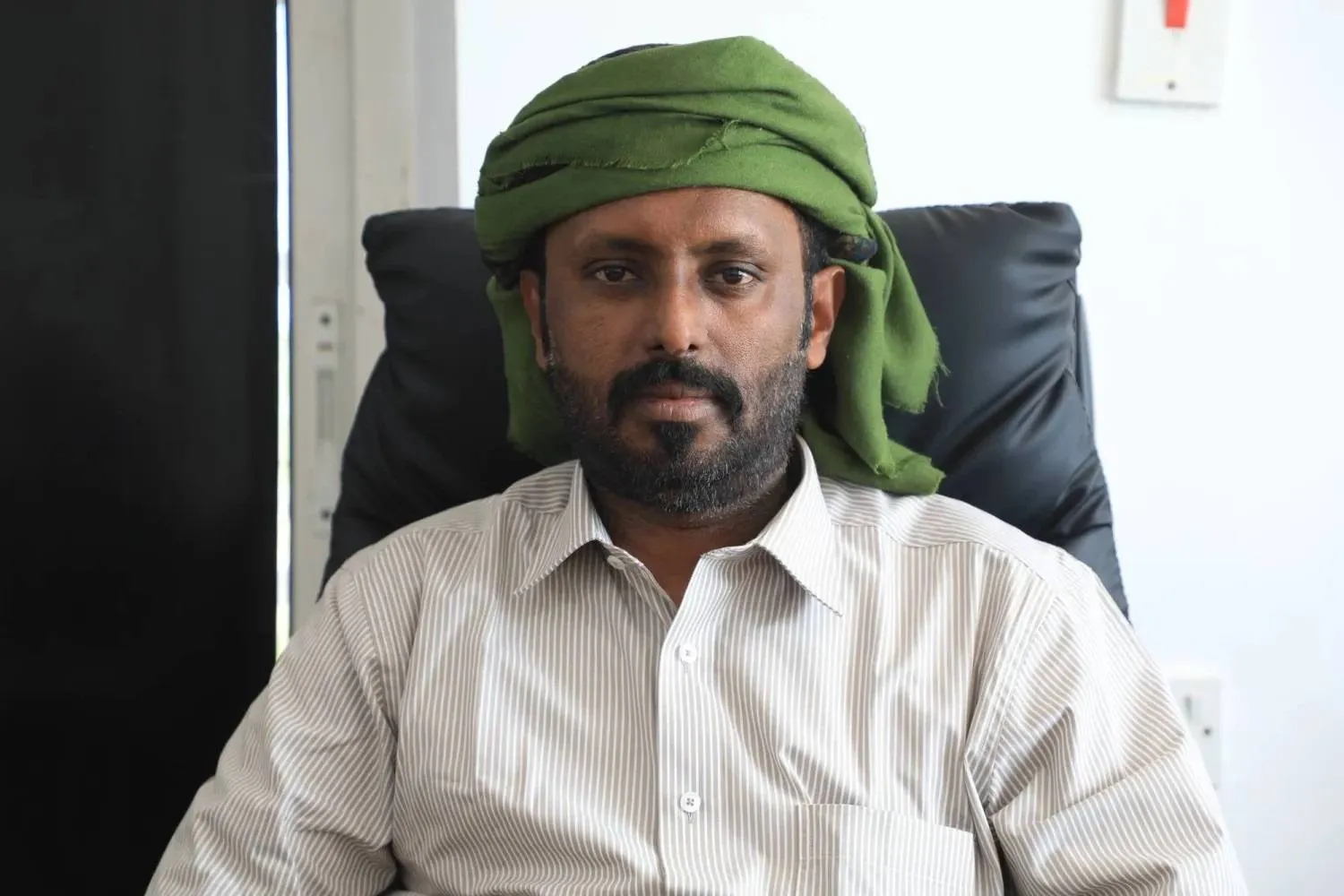
Sheikh Amr bin Habrish, First Deputy Governor of Hadhramaut (Asharq Al-Awsat)
TT

Bin Habrish to Asharq Al-Awsat: Hadhramaut on Threshold of New Era

Sheikh Amr bin Habrish, First Deputy Governor of Hadhramaut (Asharq Al-Awsat)

After nearly 500 days spent in the mountains and highlands, Sheikh Amr bin Habrish, First Deputy Governor of Hadhramaut and commander of the Hadhramaut Protection Forces, has returned to the provincial capital, Mukalla, declaring what he described as the beginning of a “new phase” that will shape a different future for Yemen’s largest eastern governorate.

In an interview with Asharq Al-Awsat from his residence overlooking the Arabian Sea, Bin Habrish said Hadhramaut is currently experiencing “a state of stability and reassurance,” which he attributed to the steadfastness of its people and to Saudi support and intervention that came “at the right time.”

He said the current ambition is to build a state based on institutions under which all citizens are united, while preserving Hadhramaut’s distinct character. Bin Habrish also affirmed his commitment to integrating the Hadhramaut Protection Forces into “fair” state institutions.

Addressing security concerns, he described terrorism as “manufactured” and said it has no social base in Hadhramaut. He accused external powers and local actors of exploiting it for their own agendas, while stressing readiness to confront terrorism in all its forms.

Bin Habrish offered his account of the recent handover of military camps led by the Nation’s Shield Forces, saying the achievements were made possible by the resistance of Hadhramaut’s people on their own land, and by Saudi support and what he called the Kingdom’s “honest and decisive” stance at a critical moment.

He said this outcome would not have been possible without the “genuine bond” between Hadhramaut’s society and Saudi Arabia, adding that this relationship has helped restore security and stability to Mukalla after what he described as unnecessary turmoil.

“We were not satisfied with the arrival of forces and the internal conflict and fighting that followed,” he said, adding that some parties felt emboldened and left no room for dialogue.

He accused the Southern Transitional Council of deploying its forces and “fully occupying the governorate,” stressing that Hadhramaut belongs to its people and that any mistake should have been addressed locally, not imposed by force. “We were compelled to resist,” he said, citing home raids and pursuits as “wrong and unjustified.”

Open Channels with Saudi Arabia

Bin Habrish credited Saudi Arabia’s leadership — King Salman bin Abdulaziz, Crown Prince Mohammed bin Salman, Defense Minister Prince Khalid bin Salman, along with the Special Committee and the Joint Forces Command — for Hadhramaut’s current stability.

He said coordination with the Kingdom takes place “at the highest levels,” with open channels and no barriers, praising Saudi intentions and expressing deep appreciation for its support.

A New Era

Bin Habrish said Hadhramaut is entering a new era rooted in its traditions of peace, wisdom, and culture. He reiterated calls for self-rule based on historical grounds, describing it as the minimum requirement for enabling Hadhramaut to build its institutions and deliver services.

He urged unity, mutual compromise, and prioritizing the governorate’s interests, saying: “We forgive and open a new page. We are not seeking revenge. What matters is that Hadhramaut remains at the center of decision-making. Without it, there can be no development.”


President of Madagascar to Asharq Al-Awsat: Three-Pillar Economic Plan to Revive the Country

President of Madagascar Michael Randrianirina (Presidency)
TT

President of Madagascar to Asharq Al-Awsat: Three-Pillar Economic Plan to Revive the Country

President of Madagascar Michael Randrianirina (Presidency)

President of Madagascar Michael Randrianirina said his country views Saudi Arabia as its “main partner” in the phase of “refoundation” and in building a new development model, revealing to Asharq Al-Awsat a three-pillar economic plan aimed at restoring political and institutional stability, activating structural sectors, and improving the business environment to attract investment, with a focus on cooperation in mining and natural resources, including rare minerals.

In his first interview with an Arab newspaper since assuming office in October, Randrianirina said in remarks delivered via Zoom from his presidential office that Madagascar “possesses real potential in energy, agriculture, mining, tourism, and human capital,” stressing that driving national revival requires consolidating institutional stability and building balanced partnerships with countries such as Saudi Arabia in order to translate potential into tangible outcomes for citizens and youth.

Three-Pillar Economic Plan

The president explained that his plan is based on three main pillars. The first focuses on restoring political and institutional stability through a clear transitional roadmap, the establishment of an executive body to manage and review projects, and the formation of a supporting committee to ensure an orderly and transparent transition.

The second pillar centers on investment in structural sectors, including energy, ports, digital transformation, health, and mining, in partnership with Saudi Arabia and other partners, with the aim of removing the main obstacles to economic revival.

The third pillar, he said, targets creating an attractive environment for investors by improving the business climate, strengthening public-private partnerships, activating special economic zones, and leveraging regional frameworks such as the African Continental Free Trade Area (AfCFTA) and the Southern African Development Community (SADC) to open broader African markets through Madagascar.

Strategic Partnership and “Investment-Ready” Projects

On plans to enhance economic, investment, and trade cooperation between Saudi Arabia and Madagascar, Randrianirina said his objective is to build a long-term strategic partnership within a clear institutional framework and through flagship projects with tangible impact for both countries.

He proposed the creation of a joint Madagascar–Saudi investment body, to be known as “OIMS,” to coordinate and finance projects in energy, ports, health, digital governance, mining, agriculture, and tourism. He noted that Madagascar is simultaneously preparing a package of investment-ready projects aligned with Saudi Vision 2030 and Africa’s regional integration, in order to provide organized and secure opportunities for Saudi capital and expertise.

Saudi Arabia as the “Main Partner”

Randrianirina emphasized that Madagascar considers Saudi Arabia a key partner in priority sectors. In energy and refining, he said the country plans to establish a national oil refinery, supply fuel directly from the Kingdom, and jointly develop heavy oil resources in western Madagascar.

In ports and logistics, he pointed to efforts to modernize and expand the ports of Toliara and Mahajanga to position Madagascar as a logistics and energy hub in the Indian Ocean.

Regarding digital transformation and secure governance, he said Madagascar aims to launch a secure national digital platform for public administration and security, drawing on Saudi experience.

He also highlighted mining and natural resources, including rare minerals, as a cornerstone of cooperation, with the goal of improving valuation and ensuring traceability of Malagasy gold and other mineral resources in a transparent and mutually beneficial manner. He further expressed interest in the health sector, proposing the establishment of a royal health complex in Antananarivo, followed by a gradual expansion of similar facilities in other regions.

Planned Visit to Riyadh

The President said Madagascar is working with Saudi authorities to arrange an official visit in the near future, with the date to be determined in coordination with the Kingdom.

He described the visit as an important opportunity to meet and engage with Crown Prince Mohammed bin Salman, noting that Vision 2030 has brought about a qualitative transformation in the Kingdom’s image and economic trajectory. He said Saudi Arabia has strengthened its role as a major player in economic modernization, energy diversification, digital transformation, and global investment, while maintaining its central role in the Arab and Islamic worlds.

He added that the reforms and major projects achieved under the vision are a source of inspiration for Madagascar’s refoundation efforts, expressing a desire to benefit from the Saudi experience in areas including energy, infrastructure, digital transformation, health, and natural resource development.

The president said he hopes the visit will include meetings with the Custodian of the Two Holy Mosques King Salman bin Abdulaziz and Crown Prince Mohammed bin Salman, as well as sectoral meetings covering energy, ports, digital transformation, health, mining, defense and security, trade, culture, and sports, alongside discussions on establishing the joint investment body.

Historical Links with the Arab World

Randrianirina noted that Madagascar had historical links with the Arab world prior to the arrival of Western powers, explaining that Arab sailors, traders, and scholars reached its coasts and left their mark on certain languages, place names, and customs.

Three Major Challenges

The president acknowledged three main challenges facing his country: poverty and food insecurity, lack of infrastructure, and weak institutions. He said a large segment of the population still lives in poverty and that food security is not guaranteed in several regions, stressing that addressing these challenges requires investment in agriculture and rural infrastructure and the search for partners to support sustainable value chains that improve farmers’ incomes.

On infrastructure, he said the capacity of the energy and port sectors remains insufficient, hindering growth and trade, noting that upcoming discussions with Saudi Arabia focus on projects such as the refinery, heavy oil development, the ports of Toliara and Mahajanga, and digital infrastructure. He added that repeated crises have weakened institutions, and that his government is working to strengthen the rule of law, anti-corruption mechanisms, and public investment governance through independent oversight and transparent reporting to restore trust.

Combating Corruption

The President said financial corruption is a serious problem in Madagascar as it undermines public trust and diverts resources away from development. He explained that the anti-corruption strategy is based on three levels: establishing an executive body with clear procedures, independent audits, and periodic reporting; using digitalization to improve traceability and reduce misuse; and strengthening anti-corruption bodies while supporting judicial independence.

When asked about allegations of financial corruption linked to the previous leadership, he said his focus is on institutions rather than personal accusations, stressing that addressing any allegations falls under the jurisdiction of the competent judicial and oversight bodies, which must be protected from political interference and allowed to operate in accordance with the law and due process.

Duty to the Country and Its Youth

The president concluded by saying that he assumed office out of a sense of duty toward the country and its youth, noting that young people represent a significant demographic weight in Madagascar and are demanding change, dignity, and a better future through jobs, education, stability, and opportunities within their own country.


Microsoft President: Saudi Arabia is Moving from Exporting Oil to Exporting Artificial Intelligence

Naim Yazbeck, President of Microsoft for the Middle East and Africa (Microsoft) 
TT

Microsoft President: Saudi Arabia is Moving from Exporting Oil to Exporting Artificial Intelligence

Naim Yazbeck, President of Microsoft for the Middle East and Africa (Microsoft) 

As Saudi Arabia accelerates its national transformation under Vision 2030, the region’s technology landscape is undergoing a decisive shift. For the first time, “the region is not merely participating in a global transformation, it is clearly leading it,” said Naim Yazbeck, President of Microsoft for the Middle East and Africa, in an interview with Asharq Al-Awsat.

Yazbeck argued that Saudi Arabia now stands at the forefront of what he called “a historic turning point not seen in the past century,” defined by sovereign cloud infrastructure, artificial intelligence, and national innovation capabilities.

He noted that Saudi Arabia’s rapid progress is driven by clear political will, explaining that the state is not simply modernizing infrastructure, but views AI as a strategic pillar comparable to the historical role of oil. While oil underpinned the economy for decades, AI has emerged as the new resource on which the Kingdom is staking its economic future.

According to Yazbeck, the recent visit of Crown Prince and Prime Minister Mohammed bin Salman to the United States underscored this shift, with AI and advanced technologies taking center stage in discussions, reflecting Saudi Arabia’s intent to build a globally influential knowledge economy.

This direction marks the start of a new phase in which the Kingdom is no longer a consumer of imported AI technologies but a developer of local capabilities and a producer of exportable knowledge, strengthening technological sovereignty and laying the foundation for an innovation-driven economy.

A Distinctive Tech Market

Yazbeck stressed that the regional landscape, especially in Saudi Arabia, is witnessing an unprecedented shift. Gulf countries are not only deploying AI but also developing and exporting it. The Kingdom is building advanced infrastructure capable of running large-scale models and providing massive computing power, positioning it for the first time as a participant in global innovation rather than a mere technology importer.

He pointed to a common sentiment he encountered in recent meetings across Riyadh’s ministries, regulatory bodies, national institutions, and global companies: “Everyone wants to be ahead of AI, not behind it.” Ambition has translated into action through revised budgets, higher targets, and faster project timelines.

He added that Saudi institutions now demand the highest standards of data sovereignty, especially in sensitive financial, health, and education sectors. The regulatory environment is evolving rapidly; Saudi Arabia has modernized its cybersecurity, data governance, cloud, and AI frameworks faster than many countries worldwide, turning regulatory agility into a competitive asset.

Yazbeck emphasized that success is not measured by the number of AI projects but by their alignment with national priorities, productivity, healthcare, education, and cybersecurity, rather than superficial, publicity-driven initiatives.

The ‘Return on Investment’ Equation

According to the Microsoft official, building an AI-driven economy requires more than advanced data centers. It begins with long-term planning for energy production and the expansion of connectivity networks. He further said that running large models demands enormous electrical capacity and long-term stability, which the Kingdom is addressing through strategic investments in renewable energy and telecommunications.

Yazbeck said return on investment is a central question. Nationally, ROI is measured through economic growth, job creation, higher productivity, enhanced innovation, and stronger global standing. At the institutional level, tangible results are already emerging: with tools such as Copilot, employees are working faster and with higher quality, shedding routine tasks and redirecting time toward innovation. The next phase, he added, will unlock new business models, improved customer experiences, streamlined operations, and higher efficiency across sectors.

Sovereignty and Security

Digital sovereignty is now indispensable, Yazbeck said. Saudi Arabia requires cloud providers to meet the highest accreditation standards to host sensitive national systems, which are criteria Microsoft is working to fulfill ahead of launch. Once the new cloud regions in Dammam go live, they will become part of the Kingdom’s sovereign infrastructure, requiring maximum protection.

Microsoft invests billions annually in cybersecurity and has repelled unprecedented cyberattacks, an indicator of the threats national infrastructure faces. The company offers a suite of sovereign cloud solutions, data-classification tools, and hybrid options that allow flexible operation and expansion. Yazbeck noted that sovereignty is not a single concept but a spectrum that includes data protection, regulatory control, and local hosting all play critical roles.

Data: The Next Source of Advantage

Yazbeck identified data as the decisive factor in AI success. He warned that any model built on unclean data becomes a source of hallucinations. Thus, national strategy begins with assessing the readiness of Saudi Arabia’s data landscape.

He revealed that the Kingdom, working with SDAIA, the Ministry of Communications, and national companies, is constructing a vast, high-quality data ecosystem, laying the groundwork for competitive Arabic language models.

He also called for a robust framework for responsible AI, saying that speed alone is not enough. He stressed that safe and trustworthy use must be built from the start, noting that Microsoft is collaborating with national bodies to craft policies that prevent misuse, protect data, and ensure fairness and transparency.

Skills: A National Advantage

Human capability is the true engine of national power; Yazbeck underlined, pointing that infrastructure means little without talent to run and advance it. He stated that Saudi youth represent the Kingdom’s greatest competitive advantage.

Microsoft has trained more than one million Saudis over the past two years through programs with SDAIA, the Ministry of Communications, the Ministry of Education, and the MISK Foundation. Its joint AI Academy has graduated thousands of students from over 40 universities, and it has launched broad programs to train teachers on AI tools in education.