Iran Says 2 UN Watchdog Devices at Nuclear Site Turned Off

The Iranian flag waves in front of the International Atomic Energy Agency (IAEA) headquarters, amid the coronavirus disease (COVID-19) pandemic, in Vienna, Austria May 23, 2021. (Reuters)
TT

Iran Says 2 UN Watchdog Devices at Nuclear Site Turned Off

The Iranian flag waves in front of the International Atomic Energy Agency (IAEA) headquarters, amid the coronavirus disease (COVID-19) pandemic, in Vienna, Austria May 23, 2021. (Reuters)

Iran turned off two surveillance devices Wednesday used by UN inspectors to monitor the country's uranium enrichment, further escalating the crisis over its atomic program as Tehran's nuclear deal with world powers remains in tatters.

The move appeared to be a new pressure technique as Western nations seek to censure Iran at a meeting this week in Vienna at the International Atomic Energy Agency. The censure deals with what the watchdog refers to as Iran's failure to provide "credible information" over nuclear material found at undeclared sites across the country.

But Iran's latest move, announced by state television, makes it even more difficult for inspectors to monitor Tehran's nuclear program. Nonproliferation experts have warned Iran now has enough uranium enriched close to weapons-grade levels to pursue an atomic bomb if it chooses to do so.

The state TV report, later repeated by other Iranian media, said authorities deactivated the "beyond-safeguards cameras of the measuring Online Enrichment Monitor ... and flowmeter." That apparently refers to the IAEA’s online monitors that watch the enrichment of uranium gas through piping at enrichment facilities.

In 2016, the IAEA said it installed the device for the first time in Iran's underground Natanz nuclear facility, its main enrichment site, located some 200 kilometers (125 miles) south of the capital, Tehran. The device allowed for "around-the-clock monitoring" of the facility's cascades, a series of centrifuges hooked together to rapidly spin uranium gas to enrich it.

"Traditional methods of sampling and analysis can take three weeks or longer, mostly because of the time it takes to ship the sample from Iran to the IAEA’s laboratories in Austria," the agency said at the time.

Iran is also enriching uranium at its underground Fordo facility, though the IAEA is not known to have installed these devices there.

"Iran has so far had extensive cooperation with the International Atomic Energy Agency," state TV said in its report Wednesday. "Unfortunately, the agency, without considering this cooperation ... not only did not appreciate this cooperation, but also considered it a duty of Iran."

Tehran said its civilian nuclear arm, the Atomic Energy Organization of Iran, monitored the shutdown of the cameras. It said 80% of the existing cameras are IAEA "safeguard" cameras and they will continue to operate as before. Safeguards refer to the IAEA’s inspections and monitoring of a country’s nuclear program.

However, an Iranian official warned IAEA officials that Tehran was now considering taking "other measures" as well.

"We hope that they come to their senses and respond to Iran’s cooperation with cooperation," said Behrouz Kamalvandi, a spokesman for the Atomic Energy Organization of Iran. "It is not acceptable that they show inappropriate behavior while Iran continues to cooperate."

The Vienna-based IAEA declined to immediately comment. However, Iran's move come after IAEA Director-General Rafael Mariano Grossi criticized Iran for failing to provide "credible information" about unexplained, man-made nuclear material discovered at three undeclared Iranian sites - long a point of contention between the agency and Tehran.

US Ambassador Laura S.H. Holgate identified the Iranian sites in comments Wednesday to the IAEA's board as Marivan, Turquzabad and Varamin. Iran has denied carrying out nuclear work at these locations.

Holgate urged Iran to cooperate with UN inspectors and said that moving forward with the censure would "hold Iran accountable."

"Restricting IAEA access and attempts to paint the IAEA as politicized for simply doing its job will serve no purpose," she said.

Iran already has been holding footage from IAEA surveillance cameras since February 2021 as a pressure tactic to restore the atomic accord.

Iran and world powers agreed in 2015 to the nuclear deal, which saw Tehran drastically limit its enrichment of uranium in exchange for the lifting of economic sanctions. In 2018, then-President Donald Trump unilaterally withdrew America from the accord, raising tensions across the wider Middle East and sparking a series of attacks and incidents.

Talks in Vienna over Iran’s tattered nuclear deal have been stalled since April. Since the deal’s collapse, Iran runs advanced centrifuges and has a rapidly growing stockpile of enriched uranium. Nonproliferation experts warn Iran has enriched enough up to 60% purity - a short technical step from weapons-grade levels of 90% - to make one nuclear weapon should it decide to do so.

Iran insists its program is for peaceful purposes, though UN experts and Western intelligence agencies say Iran had an organized military nuclear program through 2003.

Building a nuclear bomb would still take Iran more time if it pursued a weapon, analysts say, though they warn Tehran’s advances make the program more dangerous. Israel has threatened in the past that it would carry out a preemptive strike to stop Iran - and already is suspected in a series of recent killings targeting Iranian officials.

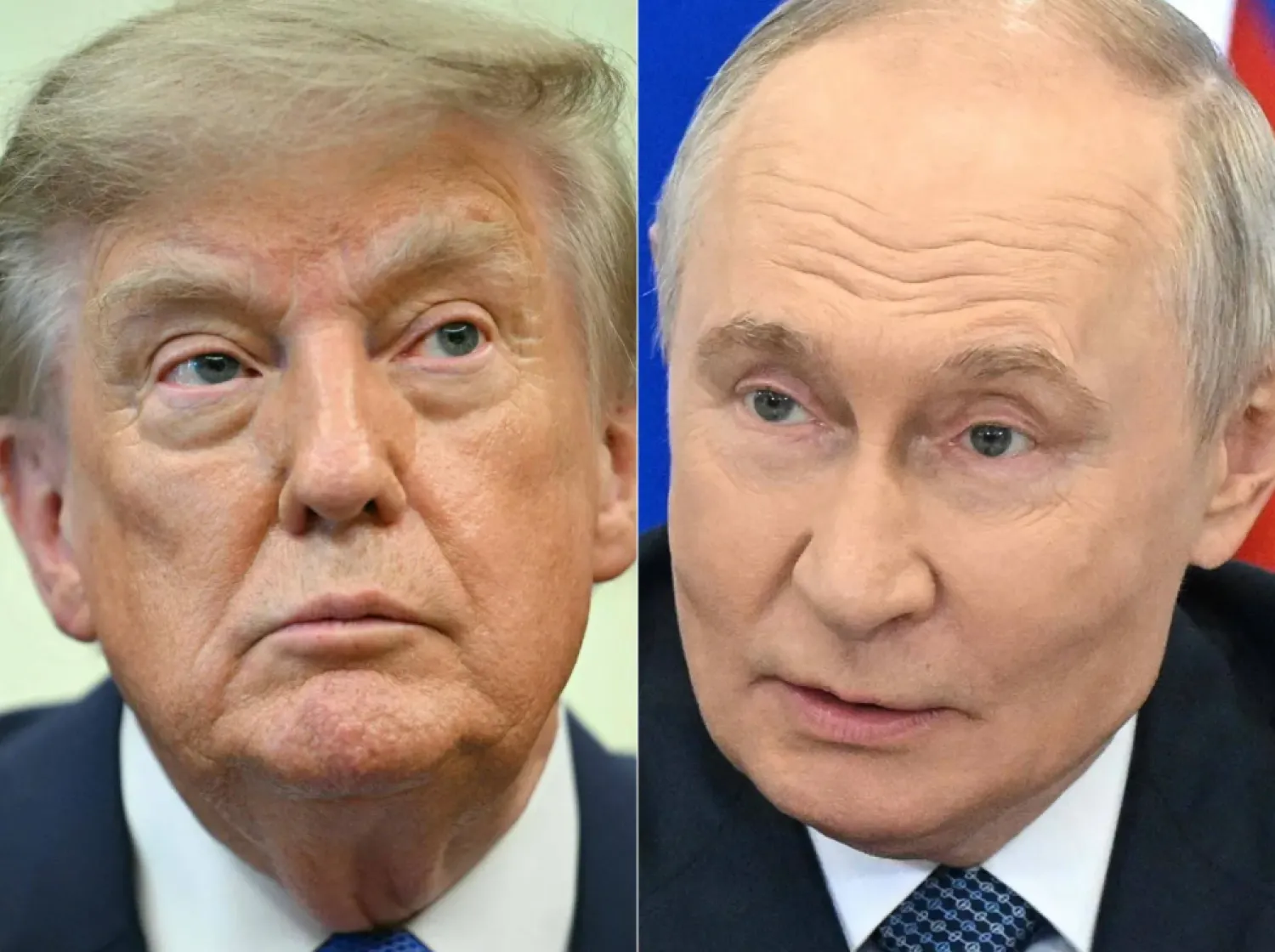
Russian President Vladimir Putin called Iranian President Ebrahim Raisi on Wednesday and discussed the need to revive the nuclear deal, the Kremlin said.

In a statement Tuesday to the IAEA, France, Germany and the United Kingdom warned the moves taken by Tehran are "further reducing the time Iran would take to break out towards a first nuclear weapon and it is fueling distrust as to Iran’s intentions."

"The IAEA has been without crucial access to data on centrifuge and component manufacturing for a year and half now," the statement warned. "This means that neither the agency, nor the international community, know how many centrifuges Iran has in its inventory, how many were built, and where they may be located."

The countries urged Iran "to stop escalating its nuclear program and to urgently conclude (the) deal that is on the table."

But just before the camera announcement, the head of Iran's nuclear organization insisted the country has no secret nuclear activity and accused the West of making a "political move” by trying to censure Iran.

”Iran has had maximum cooperation with the IAEA," said Mohammad Eslami, according to the state-run IRNA news agency.


Iranian Students Protest in Tehran and Isfahan, Says Local Media

Shopkeepers and traders walk over a bridge during a protest against the economic conditions and Iran's embattled currency in Tehran on December 29, 2025. (Handout / Fars News Agency / AFP)
TT

Iranian Students Protest in Tehran and Isfahan, Says Local Media

Shopkeepers and traders walk over a bridge during a protest against the economic conditions and Iran's embattled currency in Tehran on December 29, 2025. (Handout / Fars News Agency / AFP)

Student protests erupted on Tuesday at universities in the capital Tehran and the central city of Isfahan, decrying declining living standards following demonstrations by shopkeepers, local media reported.

"Demonstrations took place in Tehran at the universities of Beheshti, Khajeh Nasir, Sharif, Amir Kabir, Science and Culture, and Science and Technology, as well as the Isfahan University of Technology," reported Ilna, a news agency affiliated with the labor movement.


Iran Designates Royal Canadian Navy a Terrorist Organization

Iranians drive past a huge banner of former Iranian Revolutionary Guard Corps (IRGC) Quds Force commander Qassem Soleimani ahead of the sixth anniversary of his assassination at Valiasr Square in Tehran, Iran, 30 December 2025. (EPA)
TT

Iran Designates Royal Canadian Navy a Terrorist Organization

Iranians drive past a huge banner of former Iranian Revolutionary Guard Corps (IRGC) Quds Force commander Qassem Soleimani ahead of the sixth anniversary of his assassination at Valiasr Square in Tehran, Iran, 30 December 2025. (EPA)

The Iranian foreign ministry designated the Royal Canadian Navy a terrorist organization on Tuesday in what it said was retaliation for Canada's 2024 blacklisting of Iran's Revolutionary Guards.

In a statement, the ministry said that the move was in reaction to Ottawa declaring the Guards, the ideological arm of Iran's military, a terror group "contrary to the fundamental principles of international law".

Iran "within the framework of reciprocity, identifies and declares the Royal Canadian Navy as a terrorist organization," the statement added, without specifying what ramifications if any the force will face.

On June 19, 2024, Canada declared the IRGC a terror group. This bars its members from entering the country and Canadians from having any dealings with individual members or the group.

Additionally, any assets the Guards or its members hold in Canada could also be seized.
Canada accused the Guards of "having consistently displayed disregard for human rights both inside and outside of Iran, as well as a willingness to destabilize the international rules-based order."

One of the reasons behind Ottawa's decision to designate the force as a terror group was the Flight PS752 incident.

The flight was show down shortly after takeoff from Tehran in January 2020, killing all 176 passengers and crew, including 85 Canadian citizens and permanent residents.

The IRGC admitted its forces downed the jet, but claimed their controllers had mistaken it for a hostile target.

Ottawa broke off diplomatic ties with Tehran in 2012, calling Iran "the most significant threat to global peace".

Iran's archenemy, the United States, listed the Guards as a foreign terrorist organization in April 2019 while Australia did the same last month, accusing the force of being behind attacks on Australian soil.


Kyiv: Russia Shows No Proof of Alleged Drone Attack on Putin Home

A satellite image of Vladimir Putin's residential complex in Roshchino, Novgorod region, Russia, on August 31, 2023. 2025 Planet Labs PBC, via Reuters (archive)
TT

Kyiv: Russia Shows No Proof of Alleged Drone Attack on Putin Home

A satellite image of Vladimir Putin's residential complex in Roshchino, Novgorod region, Russia, on August 31, 2023. 2025 Planet Labs PBC, via Reuters (archive)

Russia has given no "plausible evidence" for its claim that Ukraine launched a large-scale drone attack on one of President Vladimir Putin's homes, Ukraine said Tuesday.

"Almost a day passed and Russia still hasn't provided any plausible evidence to its accusations of Ukraine's alleged 'attack on Putin's residence. And they won't. Because there's none. No such attack happened," Ukrainian Foreign Minister Andriy Sybiga said in a post on X.

On Tuesday, Kremlin spokesman Dmitry Peskov told journalists in a call: "I don't think there should be any evidence if such a massive drone attack is being carried out, which, thanks to the well-coordinated work of the air defense system, was shot down”.

Peskov also said Russia would "toughen" its negotiating stance in talks on ending the Ukraine war following the alleged attack, which Kyiv denies.