


Corruption Probe into Lebanon Central Bank Governor Moves to Next Stage

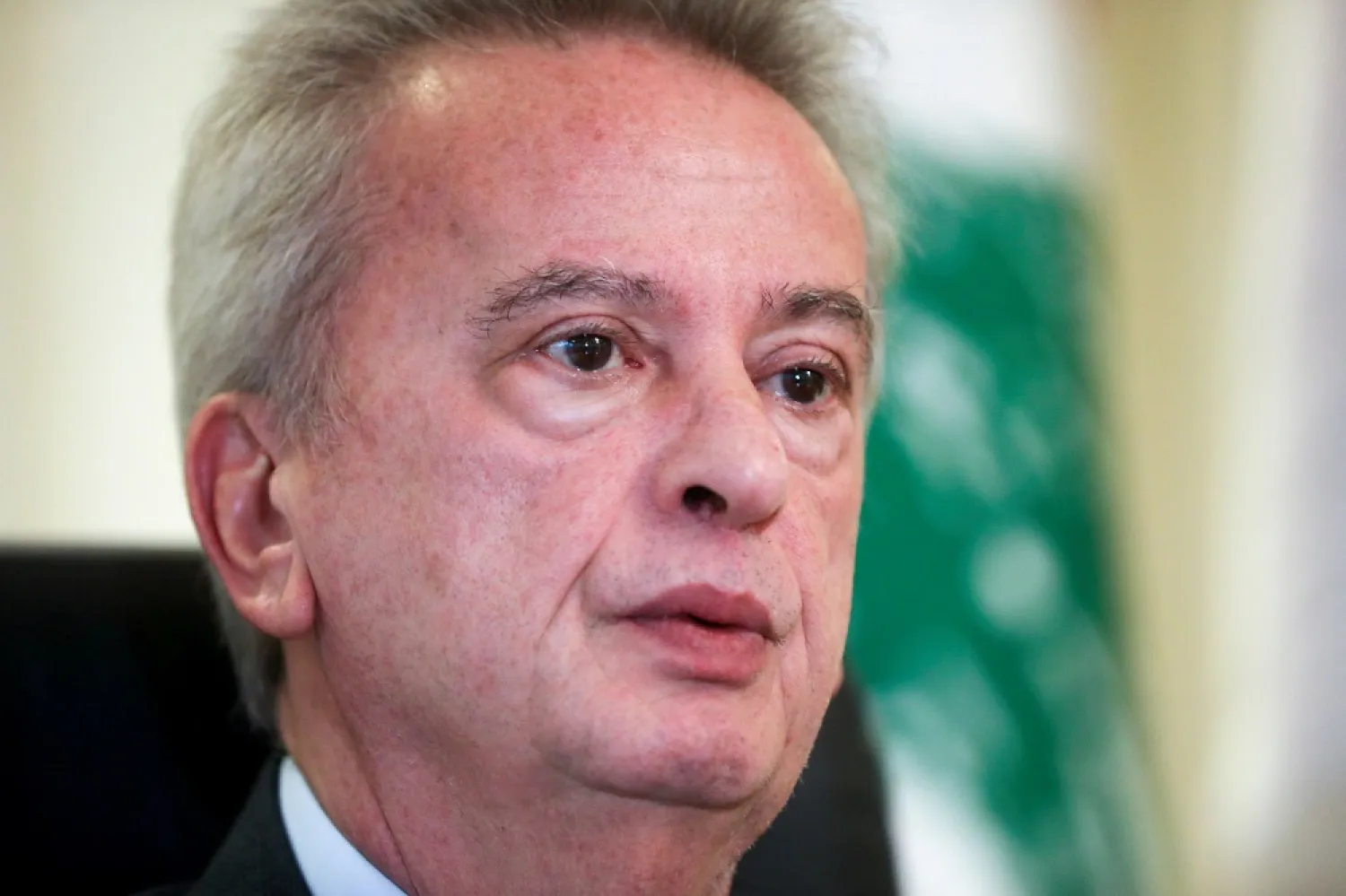
Lebanon's Central Bank Governor Riad Salameh speaks during an interview for Reuters Next conference, in Beirut, Lebanon November 23, 2021. (Reuters)
TT

Corruption Probe into Lebanon Central Bank Governor Moves to Next Stage

Lebanon's Central Bank Governor Riad Salameh speaks during an interview for Reuters Next conference, in Beirut, Lebanon November 23, 2021. (Reuters)

A year-long corruption investigation into Lebanon's central bank governor Riad Salameh took a significant step forward on Thursday, when the country's top public prosecutor referred the case to a Beirut court.

Prosecutor Ghassan Oueidat ordered Salameh and a number of unnamed associates be formally investigated for embezzlement, money laundering, illicit enrichment, forgery and tax evasion, two judicial sources told Reuters.

Salameh faces investigations in Lebanon and at least five European countries, including into the alleged embezzlement of more than $300 million by him and his younger brother, Raja.

Both have denied any wrongdoing.

The latest development follows nearly a year of investigation by financial prosecutor Jean Tannous, whose role allows him to gather evidence for the case but not to press charges. Tannous confirmed the transfer in a tweet on Thursday.

The move could be a step towards a formal prosection or charges against Salameh and his associates, lawyer Nizar Saghieh of watchdog Group Legal Agenda told Reuters.

Salameh has led the central bank for nearly three decades and retains significant support among Lebanon's top politicians despite the country's financial meltdown.

The high-profile investigation into his finances has been beset by allegations of political interference and hampered by a lack of information-sharing from banks citing Lebanon's banking secrecy laws.

The Salameh brothers also filed a lawsuit last week against the state, alleging that Tannous had committed serious errors in his investigation.

Similar legal complaints against the judge probing the devastating 2020 explosion at Beirut's port paralyzed that investigation.

Few if any top Lebanese officials have ever been convicted of crimes, despite decades of rampant corruption, high-profile assassinations, the port blast and the country's 2019 financial collapse, described by the World Bank as "deliberate" and one of the worst in modern times.



EU Condemns Israel's West Bank Control Measures

The Israeli settlement of Har Homa, seen from the West Bank city of Bethlehem, Tuesday, Dec. 17, 2024. (AP)
TT

EU Condemns Israel's West Bank Control Measures

The Israeli settlement of Har Homa, seen from the West Bank city of Bethlehem, Tuesday, Dec. 17, 2024. (AP)

The European Union on Monday condemned new Israeli measures to tighten control of the West Bank and pave the way for more settlements in the occupied Palestinian territory, AFP reported.

"The European Union condemns recent decisions by Israel's security cabinet to expand Israeli control in the West Bank. This move is another step in the wrong direction," EU spokesman Anouar El Anouni told journalists.


Atrocities in Sudan's El-Fasher Were 'Preventable Human Rights Catastrophe'

Sudanese displaced people who left El Fasher after its fall, sit in the shade in Tawila at the Rwanda camp reception point on December 17, 2025. (Photo by AFP)
TT

Atrocities in Sudan's El-Fasher Were 'Preventable Human Rights Catastrophe'

Sudanese displaced people who left El Fasher after its fall, sit in the shade in Tawila at the Rwanda camp reception point on December 17, 2025. (Photo by AFP)

The atrocities unleashed on El-Fasher in Sudan's Darfur region last October were a "preventable human rights catastrophe", the United Nations said Monday, warning they now risked being repeated in the neighbouring Kordofan region.


"My office sounded the alarm about the risk of mass atrocities in the besieged city of El-Fasher for more than a year ... but our warnings were ignored," UN rights chief Volker Turk told the Human Rights Council in Geneva.


He added that he was now "extremely concerned that these violations and abuses may be repeated in the Kordofan region".


Arab League Condemns Israel's Decisions to Alter Legal, Administrative Status of West Bank

A general view shows the opening session of the meeting of Arab foreign ministers at the Arab League Headquarters (Reuters)
TT

Arab League Condemns Israel's Decisions to Alter Legal, Administrative Status of West Bank

A general view shows the opening session of the meeting of Arab foreign ministers at the Arab League Headquarters (Reuters)

The General Secretariat of the Arab League strongly condemned decisions by Israeli occupation authorities to impose fundamental changes on the legal and administrative status of the occupied Palestinian territories, particularly in the West Bank, describing them as a dangerous escalation and a flagrant violation of international law, international legitimacy resolutions, and signed agreements, SPA reported.

In a statement, the Arab League said the measures include facilitating the confiscation of private Palestinian property and transferring planning and licensing authorities in the city of Hebron and the area surrounding the Ibrahimi Mosque to occupation authorities.

It warned of the serious repercussions of these actions on the rights of the Palestinian people and on Islamic and Christian holy sites.

The statement reaffirmed the Arab League’s firm support for the legitimate rights of the Palestinian people, foremost among them the establishment of their independent state on the June 4, 1967 borders, with East Jerusalem as its capital.