
Ukraine War Sparks Debate over Finland's 'Achilles Heel'

The region's unique status is the object of intense debate since the Russian invasion of Ukraine Alessandro RAMPAZZO AFP
TT

Ukraine War Sparks Debate over Finland's 'Achilles Heel'

The region's unique status is the object of intense debate since the Russian invasion of Ukraine Alessandro RAMPAZZO AFP

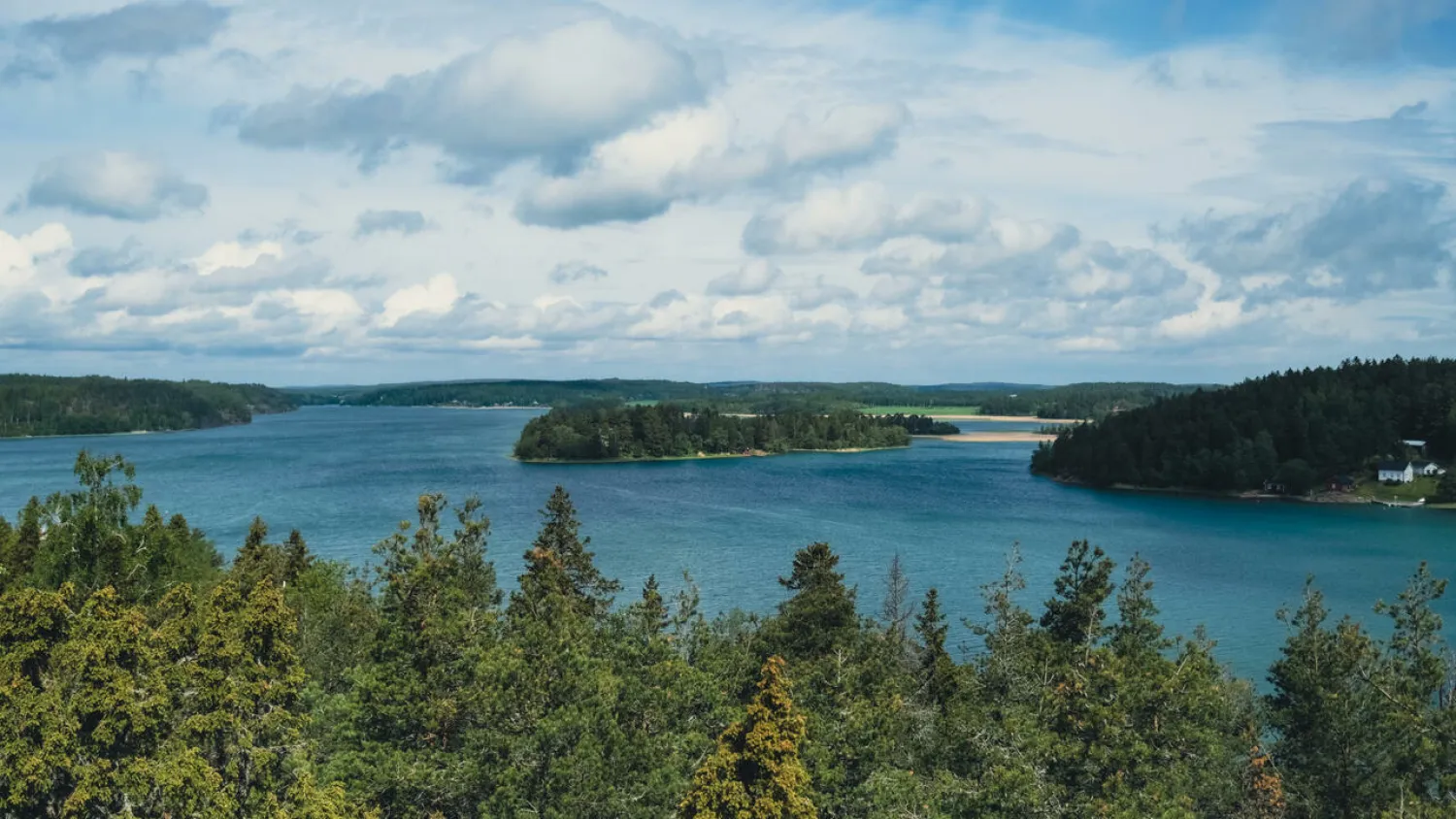
Sprayed between Sweden and Finland, the autonomous Aland Islands are a picturesque archipelago once part of Russia and demilitarized since 1856.

But the region's unique status is the object of intense debate since Russia's invasion of Ukraine rattled neighboring Finland into applying for NATO membership in May.

Under international treaties signed after the Crimean War, no troops or fortifications can be placed on the strategic Baltic Sea islands.

"It is the Achilles' heel of Finland's defense," Alpo Rusi, a professor and former presidential advisor, told AFP.

Home to about 30,000 mostly Swedish-speaking Finns, the area is characterized by rocky islands, lush green forests, old stone churches and wooden architecture -- all under the watchful eye of a Russian consulate.

"We have always thought, 'Who would want to attack us when we have nothing worth taking?'," 81-year-old Ulf Grussner told AFP.

"But that has changed with Putin's war on Ukraine", said the pensioner, one of many here who want Aland to remain demilitarized.

In June, a poll showed 58 percent of Finns would approve of a military presence on Aland, which celebrated the 100th anniversary of its autonomy on Thursday.

"There is concern over whether Finland could react fast enough militarily in the event of a sudden intrusion on Aland," Rusi said.

Armies wrestled for control of the archipelago in both World Wars.

"Why should we trust the idea ... that troops would not rush to control Aland as fast as possible," said Charly Salonius-Pasternak, a researcher at the Finnish Institute of International Affairs.

- Aland rejects troops -
Alanders, on the other hand, are keen to protect their special status and have so far firmly rejected the idea of ending the demilitarization.

"Why should we change it? I think it's a stabilizing factor in the Baltic Sea area that we are demilitarized," Veronica Thornroos, 59, premier of the Aland government, told AFP.

Besides, if the archipelago were attacked, Finland would defend it "very quickly", she said.

The Finnish government has said it has no intention of touching Aland's special status.

Sia Spiliopoulou Akermark, director of the Aland Peace Institute, meanwhile noted that the "Aland regime" of autonomy, cultural guarantees and demilitarization is a "complex knot" that should be considered as a whole.

- Russian presence -
Like the rest of Finland, Aland was part of the Russian empire from 1809 to 1917.

At the time, the archipelago was viewed as an important outpost in the defense of Saint Petersburg and control of the Baltic Sea.

Finland gained independence from Russia in 1917, and was granted sovereignty over Aland in 1921 despite protests from the islands' Swedish-speaking majority.

The Nordic country went on to fight two bloody wars against the Soviet Union during World War II.

As part of their peace deal, the demilitarization of Aland was to be monitored by a Soviet consulate in the archipelago's main town of Mariehamn.

The consulate still exists to this day, although it is now run by Russia.

A group of locals gather every day outside the high metal fence protecting the consulate, to protest Russia's war in Ukraine.

"They have no business being here. Russia is always a threat", one of the protestors, Mosse Wallen, 71, told AFP.

- Putin's property -
Russia also owns a seaside property north of Mariehamn in Saltvik, which was acquired in the 1947 peace deal.

"They gave my mother three days to move out", said Ulf Grussner, whose idyllic childhood home is now fenced in by the consulate.

Grussner's father was a German geologist, and the peace deal stipulated that all German possessions in Finland were to be ceded to the Soviets.

In 2009, ownership of a piece of the property was transferred to the Russian presidency.

Concern has mounted in Finland in recent years over Russian property deals across the country.

Grussner feared that Russia might intend to use his family's property and the demilitarization as a "pretext" to increase its presence in the area.

"It is far-fetched, but on the other hand it's not impossible," he said.


Netanyahu Skeptical of an Iran Breakthrough

Israel's Prime Minister Benjamin Netanyahu leaves after a meeting with US President Donald Trump at the White House February 11, 2026, in Washington, DC. (Photo by Brendan Smialowski / AFP)
TT

Netanyahu Skeptical of an Iran Breakthrough

Israel's Prime Minister Benjamin Netanyahu leaves after a meeting with US President Donald Trump at the White House February 11, 2026, in Washington, DC. (Photo by Brendan Smialowski / AFP)

Israeli Prime Minister Benjamin Netanyahu said he was skeptical that US nuclear talks with Iran will lead to a breakthrough but described his meeting with US President Donald Trump at the White House as “excellent.”

Speaking to reporters Thursday in Washington before boarding a plane to return to Israel, Netanyahu said Trump’s terms and Iran’s “understanding that they made a mistake the last time when they did not reach an agreement, may lead them to agree to conditions that will enable a good agreement to be reached.”

While he said he did “not hide my general skepticism” about any deal, he stressed that any agreement must include concessions about Iran’s ballistic missiles program and support for militant proxies.

He added that the conversation Wednesday with Trump, which lasted more than two hours, included a number of other subjects, including Gaza and regional developments but focused on the negotiations with Iran.


German Court Rejects Palestinian's Claim over Weapons Exports

A view shows the front of the Reichstag building, the seat of the German parliament, the Bundestag, in Berlin, Germany March 5, 2025. REUTERS/Annegret Hilse/File Photo
TT

German Court Rejects Palestinian's Claim over Weapons Exports

A view shows the front of the Reichstag building, the seat of the German parliament, the Bundestag, in Berlin, Germany March 5, 2025. REUTERS/Annegret Hilse/File Photo

Germany's highest court on Thursday threw out a case brought by a Palestinian civilian from Gaza seeking to sue the German government over its weapons exports to Israel.

The complainant, supported by the European Center for Constitutional and Human Rights (ECCHR), had been seeking to challenge export licences for German parts used in Israeli tanks deployed in Gaza.

After his case was rejected by lower courts in 2024 and 2025, he had appealed to the Federal Constitutional Court.

But the court in Karlsruhe dismissed the case, stating that "the complainant has not sufficiently substantiated that the specialized courts misjudged or arbitrarily denied a possible duty to protect him", AFP reported.

While Germany is obliged to protect human rights and respect international humanitarian law, this does not mean the state is necessarily obliged to take specific action on behalf of individuals, the court said.

"It is fundamentally the responsibility of the state authorities themselves to decide how they fulfil their general duty of protection," it added.

The ECCHR called the decision "a setback for civilian access to justice".

"The court acknowledges the duty to protect but only in the abstract and refuses to ensure its practical enforcement," said Alexander Schwarz, co-director of the NGO's International Crimes and Legal Accountability program.

"For people whose lives are endangered by the consequences of German arms exports, access to justice remains effectively closed," he said.

The ECCHR had been hoping for a successful appeal after the Constitutional Court ruled last year that Germany had "a general duty to protect fundamental human rights and the core norms of international humanitarian law, even in cases involving foreign countries".

In that case, two Yemenis had been seeking to sue Berlin over the role of the US Ramstein airbase in a 2012 drone attack.

The complainant was one of five Palestinians who initially brought their case against the German government in 2024.


2 Israelis Charged with Using Classified Military Information to Place Bets

The Israeli Iron Dome air defense system intercepts missiles during an Iranian attack on Tel Aviv, Israel, June 18, 2025. (AP Photo/Leo Correa, File)
TT

2 Israelis Charged with Using Classified Military Information to Place Bets

The Israeli Iron Dome air defense system intercepts missiles during an Iranian attack on Tel Aviv, Israel, June 18, 2025. (AP Photo/Leo Correa, File)

Two Israelis have been charged with using classified military information to place bets on how future events will unfold, Israeli authorities said Thursday, accusing the individuals of “serious security offenses.”

A joint statement by the Israeli Ministry of Defense, domestic security service Shin Bet and police said that a civilian and a reservist are suspected of placing bets on the US-based prediction market Polymarket on future military operations based on information that the reservist had access to, The AP news reported.

Israel’s Attorney General’s Office decided to prosecute the two individuals following a joint investigation by police, military intelligence and other security agencies that resulted in several arrests. The two face charges including bribery and obstruction of justice.

Authorities offered no details on the identity of the two individuals or the reservist's rank or position in the Israeli military but warned that such actions posed a “real security risk” for the military and the Israeli state.

Israel’s public broadcaster Kan had reported earlier that the bets were placed in June ahead of Israel’s war with Iran and that the winnings were roughly $150,000.

Israel's military and security services “view the acts attributed to the defendants very seriously and will act resolutely to thwart and bring to justice any person involved in the activity of using classified information illegally,” the statement said.

The accused will remain in custody until the end of legal proceedings against them, the Prosecutor's Office said.

Prediction markets are comprised of typically yes-or-no questions called event contracts, with the prices connected to what traders are willing to pay, which theoretically indicates the perceived probability of an event occurring.

Their use has skyrocketed in recent years, but despite some eye-catching windfalls, traders still lose money everyday. In the US, the trades are categorized differently than traditional forms of gambling, raising questions about transparency and risk.