

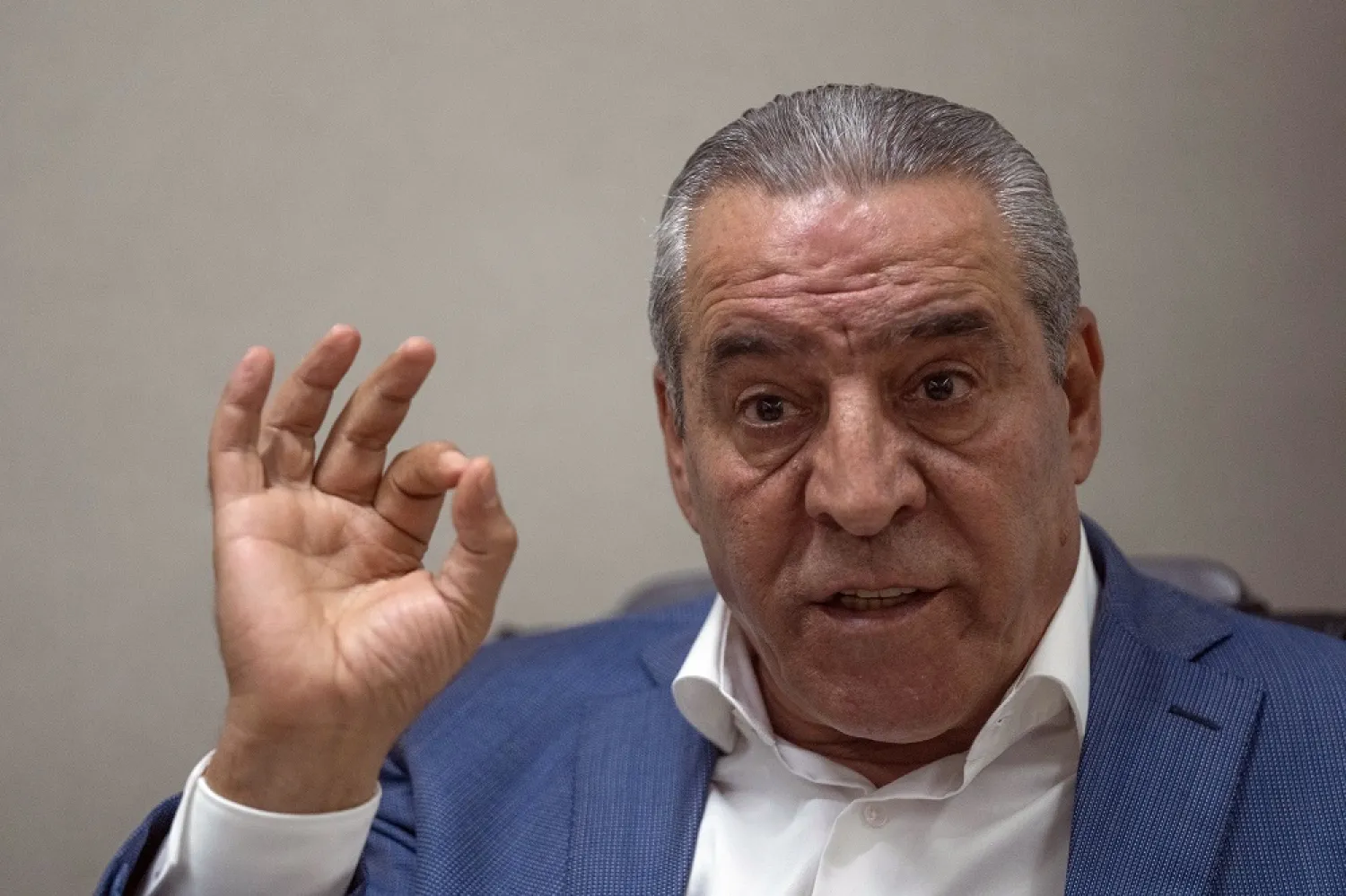

Possible Successor to Abbas Warns Israel, but Works with It

Newly appointed secretary general of the Executive Committee of the Palestine Liberation Organization, PLO, Hussein al-Sheikh gives an interview to The Associate Press, at his office in the West Bank city of Ramallah, Monday, June 13, 2022. (AP)
TT

Possible Successor to Abbas Warns Israel, but Works with It

Newly appointed secretary general of the Executive Committee of the Palestine Liberation Organization, PLO, Hussein al-Sheikh gives an interview to The Associate Press, at his office in the West Bank city of Ramallah, Monday, June 13, 2022. (AP)

Hussein al-Sheikh, a senior Palestinian official increasingly seen as a successor to the 86-year-old President Mahmoud Abbas, says relations with Israel have gotten so bad that Palestinian leaders cannot go on with business as usual.

But even if they are serious this time around, they have few options. And they appear unlikely to do anything that undermines their own limited power in parts of the occupied West Bank, which largely stems from their willingness to cooperate with Israel.

In an exclusive interview with The Associated Press on Monday, al-Sheikh defended the Palestinian leadership in the West Bank, saying it was doing the best it could under the difficult circumstances of Israel’s 55-year-old military occupation. As the point man in charge of dealing with Israel, he said there is no choice but to cooperate to meet the basic needs of Palestinians.

"I am not a representative for Israel in the Palestinian territories," he said. "We undertake the coordination because this is the prelude to a political solution for ending the occupation."

Al-Sheikh saw his profile rise further last month after Abbas named him the secretary-general of the Palestine Liberation Organization. The appointment has generated speculation that al-Sheikh is being groomed for the top job - as well as criticism of Abbas, who has not held a nationwide election since 2006, is once again ignoring the wishes of his people.

Al-Sheikh, 61, declined to say whether he wants to succeed Abbas. He said the next president should be chosen through elections, but that they could only be held if Israel allows voting in all of east Jerusalem, effectively giving it a veto over any alternative leadership.

"The Palestinian president cannot be appointed, or come to power by force, or come because of some regional or international interest, or arrive on an Israeli tank," he said.

Al-Sheikh recited a familiar litany of complaints: Israel’s government is beholden to right-wing nationalists, its prime minister opposed to Palestinian statehood. Settlements are expanding, Palestinians are being forcibly relocated, and the US and Europe seem powerless to stop it.

"The Palestinian leadership is on the verge of making major and difficult decisions," al-Sheikh said, when asked about Abbas’ threat to cut security ties or even withdraw recognition of Israel, a cornerstone of the Oslo peace process in the 1990s. "We have no partner in Israel. They don’t want a two-state solution. They don’t want to negotiate."

But the Israelis meet with al-Sheikh all the time.

As head of the Palestinian body that coordinates Israeli permits - and a close aide to Abbas - he meets with senior Israeli officials more often than any other Palestinian.

Israeli officials view him as "a very, very positive player in the Palestinian arena," said Michael Milshtein, an Israeli expert on Palestinian affairs who used to advise COGAT, the military body in charge of civilian affairs in the West Bank.

"Because of his close relations with Israel, he can achieve a lot of positive things for the Palestinian people," including permits and development projects, he said. But most Palestinians "cannot really accept this kind of image of a Palestinian leader who actually is the one who serves Israel’s interest."

Al-Sheikh’s career follows the trajectory of his generation of Palestinian leaders - aspiring revolutionaries transformed into local power brokers by the failed, decades-long peace process.

His official biography says he was imprisoned by Israel from 1978-1989 and took part in the first intifada, or uprising against Israeli rule, upon his release. After the Palestinians secured limited self-rule in Gaza and parts of the occupied West Bank through the 1993 Oslo agreements, al-Sheikh joined the nascent security forces, rising to the level of colonel. He says he was a wanted man during the second and more violent intifada in the early 2000s.

He is a lifelong member of Fatah, a movement launched by Yasser Arafat in the late 1950s. Today Fatah dominates the PLO, which is supposed to represent all Palestinians, and the Palestinian Authority, which administers parts of the West Bank and cooperates with Israel on security.

Abbas, who was elected in 2005 after Arafat’s death, is opposed to armed struggle and committed to a two-state solution. But during his 17 years in power the peace process has become a distant memory, the Palestinians have been split politically and geographically by the rift with the Hamas movement, and the PA has become increasingly unpopular.

Diana Buttu, a Palestinian lawyer who used to advise the PA, said Abbas believes "that the future of the Palestinian people is tied up to him as an individual," surrounding himself with loyalists who won't challenge him.

Abbas called off the first elections in 15 years in April 2021, a vote in which his Fatah party was widely expected to suffer a humiliating defeat. He said he was delaying the vote until Israel explicitly allowed voting in all of east Jerusalem. But only a small number of voters in the city require Israeli permission, and the PA refused to consider alternative arrangements.

Israel annexed east Jerusalem in a move not recognized internationally and views the entire city as its unified capital. The Palestinians want east Jerusalem - which includes major holy sites sacred to Jews, Christians and Muslims - to be the capital of their future state.

"If the price of elections is that I concede on Jerusalem, it is impossible. You won’t find a single Palestinian who will agree to that," al-Sheikh said.

That may be true, but it could also effectively prevent the Palestinians from replacing the current leadership, leaving it entrenched for years to come.

Dimitri Diliani, a senior member of Fatah who supports an anti-Abbas faction, said none of the president's inner circle are electable, pointing to recent polls showing that nearly 80% of Palestinians want Abbas to resign.

Diliani described al-Sheikh as "an active, smart person," a pragmatist who who seizes opportunities - but who was also short-sighted. "Abu Mazen is a sinking ship, and whoever is on it is going down with him," Diliani said.

Still, al-Sheikh has a unique lever of power that could prove more important than electability - access to Israeli permits.

He has been in charge of the General Authority of Civil Affairs since 2007. That’s where Palestinians must apply if they want to enter Israel for work, family visits or medical care; to import or export anything; or to get national ID cards.

"If you need anything, absolutely anything, in Palestine, he’s your go-to man. He’s actively hated among Palestinians, but he’s also very, very much needed for that reason," said Tahani Mustafa, a Palestinian analyst at the International Crisis Group.

"If succession was to happen through legitimate channels, there’s no way Hussein al-Sheikh would withstand a popular vote," she said. "If you are to impose that kind of leadership on Palestinians, then absolutely you are going to face pushback."

Al-Sheikh says there’s no alternative to the coordination. "The movement of Palestinians, the crossings, the borders, are all under Israeli control," he said. "I’m an authority under occupation."


Where Do Ukraine and Russia Stand After Four Years of War? 

A person walks alongside The Wall of Remembrance of the Fallen for Ukraine in Kyiv on February 23, 2026, as the conflict with Russia reaches its four-year mark. (AFP)
TT

Where Do Ukraine and Russia Stand After Four Years of War? 

A person walks alongside The Wall of Remembrance of the Fallen for Ukraine in Kyiv on February 23, 2026, as the conflict with Russia reaches its four-year mark. (AFP)

Russia launched its full-scale invasion of Ukraine on February 24, 2022, unleashing the deadliest war in Europe since World War II.

As the conflict reaches its four-year mark, AFP looks at the state of the conflict and some of the consequences for both countries:

- Destruction -

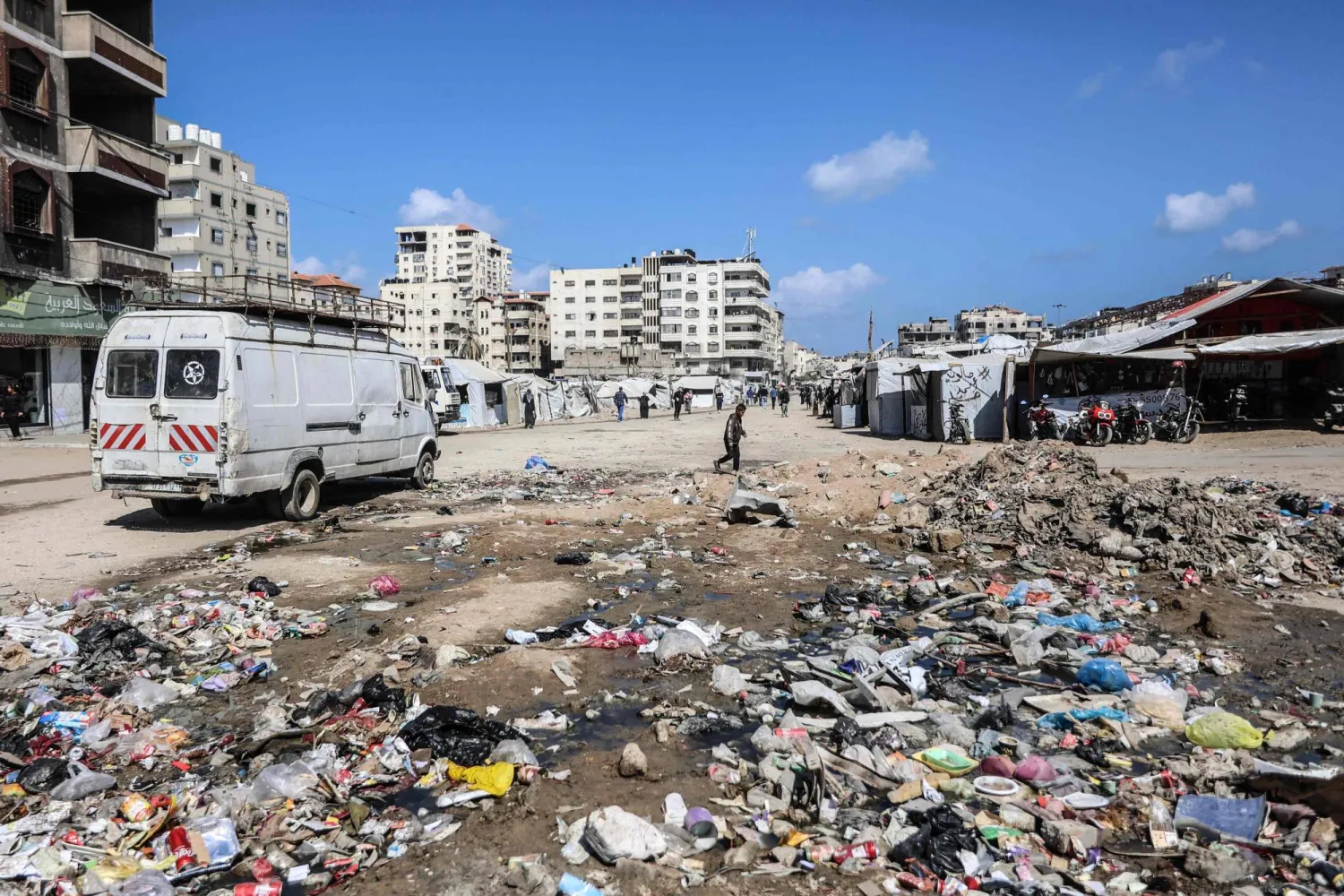
The war has resulted in widespread destruction in Ukraine.

Entire cities in Ukraine's east and south, among them Bakhmut, Toretsk and Vovchansk, have been reduced to rubble by fighting.

The World Health Organization has verified more than 2,800 attacks on healthcare facilities since 2022, while Russian attacks on energy infrastructure have cut heating and power to millions.

Around a fifth of Ukraine is contaminated by mines or unexploded ordnance, according to the UN's Mine Action Service.

The total cost of reconstruction in Ukraine is estimated at around $588 billion over the next decade, the World Bank reported Monday.

- Death -

The United Nations has verified over 15,000 civilian deaths in Ukraine since 2022, although it says the actual number is likely considerably higher as it has no access to areas under Russian occupation, like the port city of Mariupol where thousands are reported to have died in a Russian siege.

Ukrainian retaliatory attacks on Russian border regions have also killed hundreds.

Around 20,000 children have been forcibly displaced or kidnapped from Russian-occupied Ukrainian land, according to estimates by Kyiv.

Forced to flee when Russia invaded, around 5.9 million Ukrainian refugees live outside the country and another 3.7 million are displaced internally, the UN Refugee Agency says.

Neither side releases reliable data on military casualties.

Ukrainian President Volodymyr Zelensky said earlier this month 55,000 of his soldiers had been killed -- a toll widely believed to be an underestimate.

Russia has not given an official update on losses since September 2022.

The BBC and Mediazona, an independent Russian site, have verified the deaths of at least 177,000 Russian soldiers through public obituaries and announcements by family and local officials -- a toll also believed to be below the real number.

The Center for Strategic and International Studies (CSIS) think tank estimates as many as 325,000 Russian soldiers may have been killed since 2022, while putting the number of Ukrainian soldiers killed at 100,000-140,000.

- Frontline and diplomacy -

Moscow occupied around 19.5 percent of Ukraine as of mid-February, according to data from the Institute for the Study of War (ISW).

Around seven percent -- the Crimean peninsula and part of the eastern Donbas region -- was already occupied before the invasion.

Moscow's advances were the biggest since 2022 last year, although they have slowed considerably since the opening months of its campaign, according to ISW data.

The Kremlin is pushing for full control of Ukraine's eastern Donetsk region and a ban on Western military support for Kyiv.

Ukraine says giving in would leave it vulnerable to future attack, is constitutionally impossible, and unacceptable to much of Ukrainian society.

Since Donald Trump returned to the White House, several rounds of talks -- in Istanbul, Abu Dhabi and Geneva -- have failed to secure a deal.

- Economy -

The war has decimated Ukraine's economy and put Russia's under massive strain.

After growing strongly on the back of massive military spending -- up to nine percent of GDP -- Russia's economy has slowed, posting just a one percent expansion last year.

Oil and gas revenues -- which provide roughly a quarter of state budget income -- fell to a five-year low last year, as a wave of Western sanctions and Ukrainian attacks on oil facilities crimped exports.

Ukraine's economy shrank by almost a third in the year after Russia's invasion. It has clawed a little of that back, but its government now depends on the International Monetary Fund and other foreign lenders to cover day-to-day spending.

- Politics and society -

The war has had a deep impact on politics and society in both countries.

Ukraine has suspended elections due to martial law and lately been rocked by a corruption scandal in the war-battered energy sector.

In Russia, authorities have orchestrated a domestic crackdown on dissent unprecedented since the Soviet era.

Russian prosecutors have opened more than 10,000 cases against people accused of criticizing its armed forces, Russian news site Mediazona reported in 2024.

Returning veterans in Russia, many of them former convicts recruited to fight, have been blamed for an increase in violent crime.

- Allies -

Ukraine is heavily dependent on Western weapons, intelligence and finance.

Europe has delivered 201 billion euros in aid since 2022, according to figures from Germany's Kiel Institute.

The United States has supplied $115 billion in total, but Trump has partially suspended arms deliveries and is pushing Europe to pick up the tab.

North Korea sent thousands of soldiers to fight with the Russian army and is widely reported to have sent millions of artillery shells to Moscow.

Iran has supplied drone technology to Moscow, and China has become its vital economic partner, accused in the West of helping the Kremlin avoid sanctions.


What Does Trump Want in Iran? 

An anti-US mural on a building in Tehran, Iran, January 24, 2026. Majid Asgaripour/WANA (West Asia News Agency) via Reuters
TT

What Does Trump Want in Iran? 

An anti-US mural on a building in Tehran, Iran, January 24, 2026. Majid Asgaripour/WANA (West Asia News Agency) via Reuters

President Donald Trump's threats to attack Iran provide little detail on what the long-term US goal would be in the event of a sustained or even brief conflict.

Trump sent warships and dozens of fighter planes to the Middle East and has several options to choose from that could destabilize the region.

Will Trump order surgical strikes targeting Iran's Revolutionary Guard Corps, the backbone of the clerical regime in power, try to take out its missile program -- as Israel wants him to do -- or even try to force regime change in Tehran?

Iran has threatened severe reprisal if it is attacked.

- What are the options? -

Trump said Thursday he would decide in 10 or 15 days whether to order strikes on Iran if no nuclear deal is reached.

The news outlet Axios has reported that Trump was presented with an array of military options that include a direct attack on Iran's supreme leader, Ali Khamenei.

Trump has said many times he prefers a diplomatic route leading to an agreement that addresses not only Iran's nuclear program but also its ballistic missile capability and its support for armed groups such as Hezbollah and Hamas. Iran has said no to making such concessions.

The United States and Iran recently held two rounds of indirect talks, in Oman and Switzerland. They have not brought the two sides' position closer, with talks set to resume Thursday in Switzerland.

Trump is "surprised" that Iran has not "capitulated" given the massive US military buildup, his envoy Steve Witkoff has said.

"The Trump administration most likely aims for a limited conflict that reshapes the balance of power without trapping it in a quagmire," said Alex Vatanka, an analyst at the Middle East Institute in Washington.

Vatanka said Iran is now expecting "a short, high-impact military campaign that would cripple Iran's missile infrastructure, undermine its deterrent, and reset the balance of power after the 12-day war with Israel in June 2025."

- What is the justification? -

Trump has insisted US forces destroyed Iran's nuclear program in attacks targeting uranium enrichment facilities.

Things changed with the January protest movement in Iran that security forces put down with huge loss of life.

Trump threatened several times to intervene to "help" the Iranian people, but did not act.

Trump boasts often of having brought peace to the Middle East, citing the oft-violated ceasefire he engineered in Gaza between Hamas and Israel.

And he has argued that regime change in Iran would strengthen what he calls a dynamic toward peace in the region.

But opposition Democrats are worried that Trump is leading America into a violent mess and demanding that he consult Congress, the only body in the United States with the authority to declare war.

- US firepower in the region? -

The US military now has 13 warships stationed in the Middle East: the aircraft carrier USS Abraham Lincoln, which arrived late last month, nine destroyers and three frigates.

More warships are on the way. The world's largest vessel, the US aircraft carrier USS Gerald Ford, was photographed sailing through the Strait of Gibraltar to enter the Mediterranean on Friday.

Besides the many planes parked on the aircraft carriers, the United States has sent a powerful force of dozens of warplanes to the Middle East, and tens of thousands of US troops are stationed across the Middle East.

These are potential targets for attack by Iran.

- To what end? -

Richard Haas, the former president of the Council on Foreign Relations, said it is not clear what impact a conflict of any duration and scale would have on Iran's government.

"It could just as easily strengthen it as weaken it. And it is impossible to know what would succeed this regime if it were to fall," Haas wrote recently on Substack.

Secretary of State Marco Rubio told a Senate hearing late last month that no one really knows what will happen if Iran's Supreme leader falls "other than the hope that there would be some ability to have somebody within their systems that you could work towards a similar transition."

Mona Yacoubian, of the Center for Strategic and International Studies, recently told AFP that Iran is much more complex than Venezuela, which the United States attacked January 3 as it captured its leader Nicolas Maduro.

She said Iran has more diffuse centers of power and a "decapitation strike" could end up "really unleashing a mess inside of Iran."


Saudi Arabia Revives Centuries of Heritage in Founding Day Celebrations

The Riyadh Municipality decorates the capital's roads and squares with more than 5,000 aesthetic illuminations in celebration of Founding Day (SPA)
TT

Saudi Arabia Revives Centuries of Heritage in Founding Day Celebrations

The Riyadh Municipality decorates the capital's roads and squares with more than 5,000 aesthetic illuminations in celebration of Founding Day (SPA)

As streets across Saudi cities were adorned in green and traditional attire, a series of major cultural and entertainment events were under way on Sunday across the Kingdom to mark Founding Day. Riyadh and cities nationwide were transformed into cultural and tourism destinations, attracting thousands of citizens, residents, and visitors who came to witness the legacy and impact of the epic nation-building journey that shaped the history of the Arabian Peninsula.

This year’s Founding Day coincided with the nights of the holy month of Ramadan, giving the celebrations a distinct national and cultural character, with evening events held in a Ramadan atmosphere. Cities across Saudi Arabia commemorated Founding Day by expressing pride in the state’s deep-rooted origins, its historical depth, and the enduring bond between citizens and their leaders since the establishment of the First Saudi State three centuries ago.

Academic sessions on the history of the Saudi state (Diriyah Development Authority)

Diriyah...The Beating Heart of History

Historic Diriyah took center stage in the celebrations, as the At-Turaif district, listed as a UNESCO World Heritage Site, hosted a range of distinctive events organized by the Diriyah Gate Development Authority.

Founding Day activities in At-Turaif brought visitors closer to history through immersive experiences set in the birthplace of the Saudi state. At the At-Turaif Majlis, children were introduced to the stories of Diriyah through dedicated workshops, while storyteller Nawaf Al-Huwaimil captivated audiences with rich historical narratives delivered in a distinctive style.

In the “Misyan Sessions,” Dr. Faisal Al-Amer led in-depth academic discussions on Diriyah’s legacy and the expansion of the Saudi state. The program also included Arabian horse displays and specialized Founding Day guided tours along a historical route highlighting leadership, community partnership, and collective contribution during the founding era.

Saudi regions decorated in celebration of Founding Day (SPA)

The Capital...Where Modernity Meets Heritage

In the heart of Riyadh, the Qasr Al-Hukm district and Al-Adl Square hosted national events under the patronage of the Royal Commission for Riyadh City. Activities included the “Mikhayal Hal Al-Awja” exhibition, which showcased the stages of state formation using contemporary visual techniques.

Prince of Hail sponsors the region’s education sector celebration of Founding Day (SPA).

The Riyadh Municipality decorated streets and major roads to mark Founding Day, installing more than 5,000 decorative light features across key routes, squares, and public spaces. The initiative enhanced the visibility of the occasion across neighborhoods, creating a cohesive visual identity that reflects pride in the Kingdom’s history and underscores the significance of Founding Day.

Street decorations conveyed a deep sense of belonging and pride, as light blended with national identity across the capital. Roads and squares became living canvases of national pride, marking 299 years of building and achievement and expressing loyalty to the leadership and the nation’s enduring journey.

Saudi regions decorated in celebration of Founding Day (SPA)

The municipality also continued its Founding Day activities in parks and public squares, reinforcing the occasion’s presence in communal spaces, strengthening pride in historical roots, and encouraging community engagement across Riyadh

Celebrations across the Kingdom

Celebrations were not limited to the capital. Festivities took place across 13 regions of Saudi Arabia as the country marked Founding Day for the fifth time since King Salman issued a royal order designating February 22 each year as Founding Day.

In Jeddah, a multi-day program was launched, featuring decorations across main roads, squares, gates, and parks throughout the city. Prince Majed Park hosted on-the-ground events on February 22, including falconry and horse displays, handicrafts, children’s activities, drawing, and henna.

The celebrations reflected the historical depth of Founding Day and reinforced pride in national identity.

In the Tabuk region, Founding Day was marked through 23 national, cultural, and heritage events across cities and governorates, with participation from government and private entities. The activities highlighted the historical significance of the occasion and strengthened values of belonging and pride in Saudi identity.