


Guterres Says Syrians Living on Brink, Calls for Extending Aid Delivery

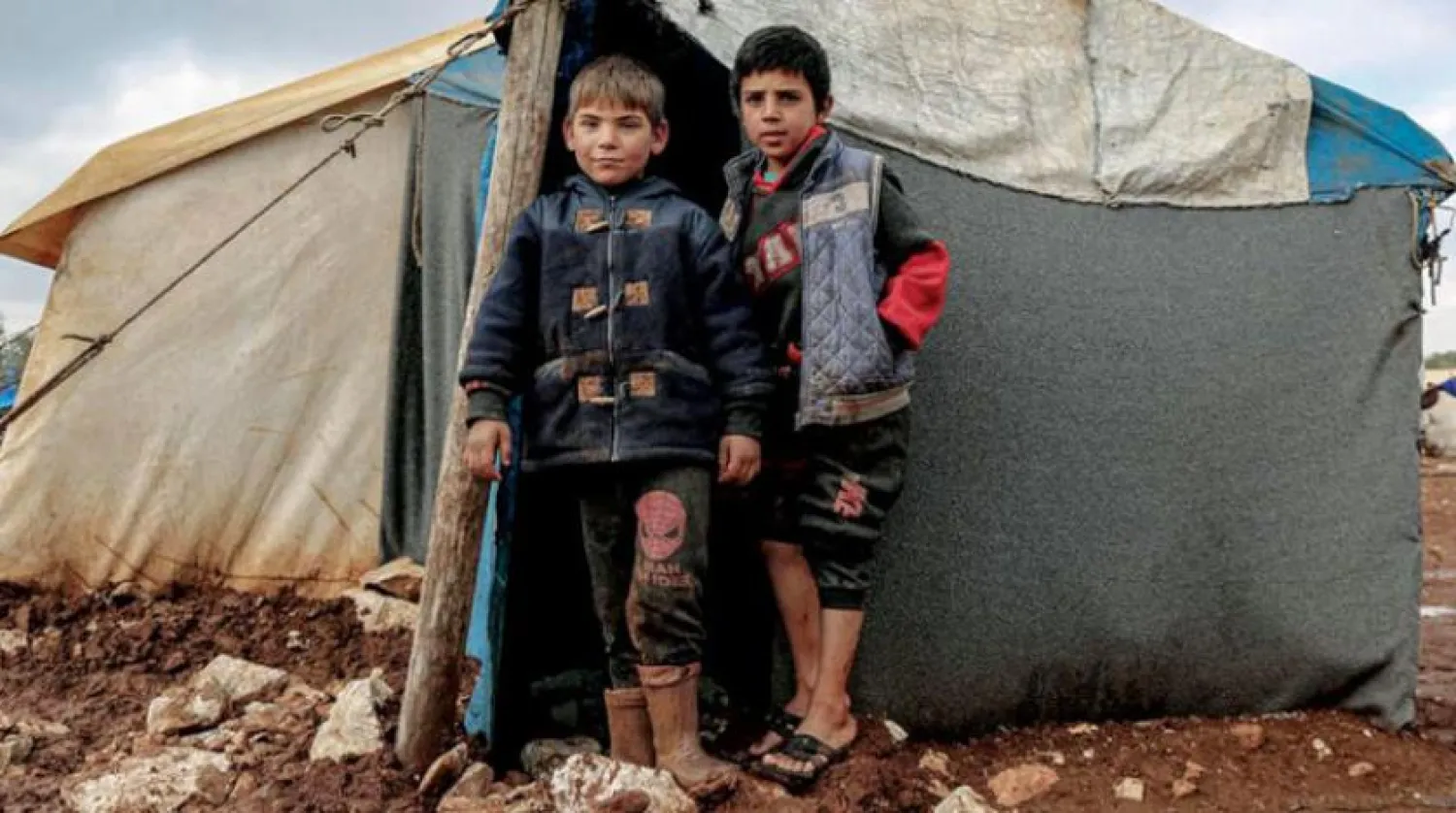
Two children of families displaced by the war in Syria outside their tent north of the country. (United Nations)
TT

Guterres Says Syrians Living on Brink, Calls for Extending Aid Delivery

Two children of families displaced by the war in Syria outside their tent north of the country. (United Nations)

United Nations Secretary-General Antonio Guterres presented on Monday “stark figures” on millions of Syrians who are in dire need for humanitarian aid.

This came in his remarks to the UN Security Council in New York on the humanitarian situation in Syria.

He said 90% of the population live below the poverty line. “People are living on the brink, no longer able to cope,” he stressed.

He urged the international community to help communities to build resilience, and create conditions to facilitate the voluntary, safe and dignified return of refugees and displaced people.

He further underscored the importance of maintaining and expanding access, including through cross-line and cross-border operations.

“When it comes to delivering life-saving aid to people in need across Syria, all channels should be made, and kept, available.”

His comments were in reference to resolution 2585 (2021), which allows aid deliveries across the Syrian-Turkish border at Bab al-Hawa and is set to expire on July 10.

“I strongly appeal to the members of the Council to maintain consensus on allowing cross-border operations, by renewing resolution 2585 for an additional 12 months,” Guterres stressed, in light of fears that Russia may refuse to renew this mandate.

Despite the incredibly challenging operating environment, the UN has delivered aid across the front lines into the north-west.

Five cross-line convoys have now provided life-saving assistance to tens of thousands of people in need, and efforts continue every day, Guterres stated, anticipating more cross-line convoys to follow.

“We have also taken full advantage of the cross-border authorization to save lives. Hundreds of trucks now cross from Turkey every month. Since cross-border aid was authorized in 2014, over 50,000 trucks have crossed into Syria to provide assistance to those in need.”

The UN cross-border operation into Syria is one of the most heavily scrutinized and monitored aid operations in the world.

The humanitarian situation in Syria remains dire for millions of children, women and men across the country, Guterres affirmed, noting that needs are at their highest since the start of the war over 11 years ago.

He warned that the world’s largest refugee crisis continues to impact the region and the world.

Guterres said he issued another report on the humanitarian situation in Syria, which states that 14.6 million people need humanitarian assistance and 12 million people are food insecure and unsure where their next meal is coming from.

He pointed out that the infrastructure is crumbling, destroyed by years of conflict, and the economic activity halved during a decade of conflict, regional financial crises, sanctions and the COVID-19 pandemic.

“Our current humanitarian appeal requires $4.4 billion to assist people inside Syria and another $5.6 billion to support refugees in the region.”

“We have made great strides in scaling up the response, but more is needed,” he said, stressing that the generous pledges made at the Brussels VI donor conference need to be paid. He appealed to donors to follow through and increase their support.

He further warned that needs in the north-west of Syria continue to increase, as 2.8 million people, mostly women and children, are displaced.

Many live in camps or informal settlements, and more than 90% of people in the north-west need aid.

Guterres underlined the importance of showing the courage and determination to do all that is necessary to reach a negotiated political solution in line with Security Council resolution 2254 (2015).

He urged all members of the Council to do everything in their power to encourage the parties to engage in meaningful negotiations for peace.



EU Condemns Israel's West Bank Control Measures

The Israeli settlement of Har Homa, seen from the West Bank city of Bethlehem, Tuesday, Dec. 17, 2024. (AP)
TT

EU Condemns Israel's West Bank Control Measures

The Israeli settlement of Har Homa, seen from the West Bank city of Bethlehem, Tuesday, Dec. 17, 2024. (AP)

The European Union on Monday condemned new Israeli measures to tighten control of the West Bank and pave the way for more settlements in the occupied Palestinian territory, AFP reported.

"The European Union condemns recent decisions by Israel's security cabinet to expand Israeli control in the West Bank. This move is another step in the wrong direction," EU spokesman Anouar El Anouni told journalists.


Atrocities in Sudan's El-Fasher Were 'Preventable Human Rights Catastrophe'

Sudanese displaced people who left El Fasher after its fall, sit in the shade in Tawila at the Rwanda camp reception point on December 17, 2025. (Photo by AFP)
TT

Atrocities in Sudan's El-Fasher Were 'Preventable Human Rights Catastrophe'

Sudanese displaced people who left El Fasher after its fall, sit in the shade in Tawila at the Rwanda camp reception point on December 17, 2025. (Photo by AFP)

The atrocities unleashed on El-Fasher in Sudan's Darfur region last October were a "preventable human rights catastrophe", the United Nations said Monday, warning they now risked being repeated in the neighbouring Kordofan region.


"My office sounded the alarm about the risk of mass atrocities in the besieged city of El-Fasher for more than a year ... but our warnings were ignored," UN rights chief Volker Turk told the Human Rights Council in Geneva.


He added that he was now "extremely concerned that these violations and abuses may be repeated in the Kordofan region".


Arab League Condemns Israel's Decisions to Alter Legal, Administrative Status of West Bank

A general view shows the opening session of the meeting of Arab foreign ministers at the Arab League Headquarters (Reuters)
TT

Arab League Condemns Israel's Decisions to Alter Legal, Administrative Status of West Bank

A general view shows the opening session of the meeting of Arab foreign ministers at the Arab League Headquarters (Reuters)

The General Secretariat of the Arab League strongly condemned decisions by Israeli occupation authorities to impose fundamental changes on the legal and administrative status of the occupied Palestinian territories, particularly in the West Bank, describing them as a dangerous escalation and a flagrant violation of international law, international legitimacy resolutions, and signed agreements, SPA reported.

In a statement, the Arab League said the measures include facilitating the confiscation of private Palestinian property and transferring planning and licensing authorities in the city of Hebron and the area surrounding the Ibrahimi Mosque to occupation authorities.

It warned of the serious repercussions of these actions on the rights of the Palestinian people and on Islamic and Christian holy sites.

The statement reaffirmed the Arab League’s firm support for the legitimate rights of the Palestinian people, foremost among them the establishment of their independent state on the June 4, 1967 borders, with East Jerusalem as its capital.