


Egyptian Govt Confirms Plan to Move to New Capital

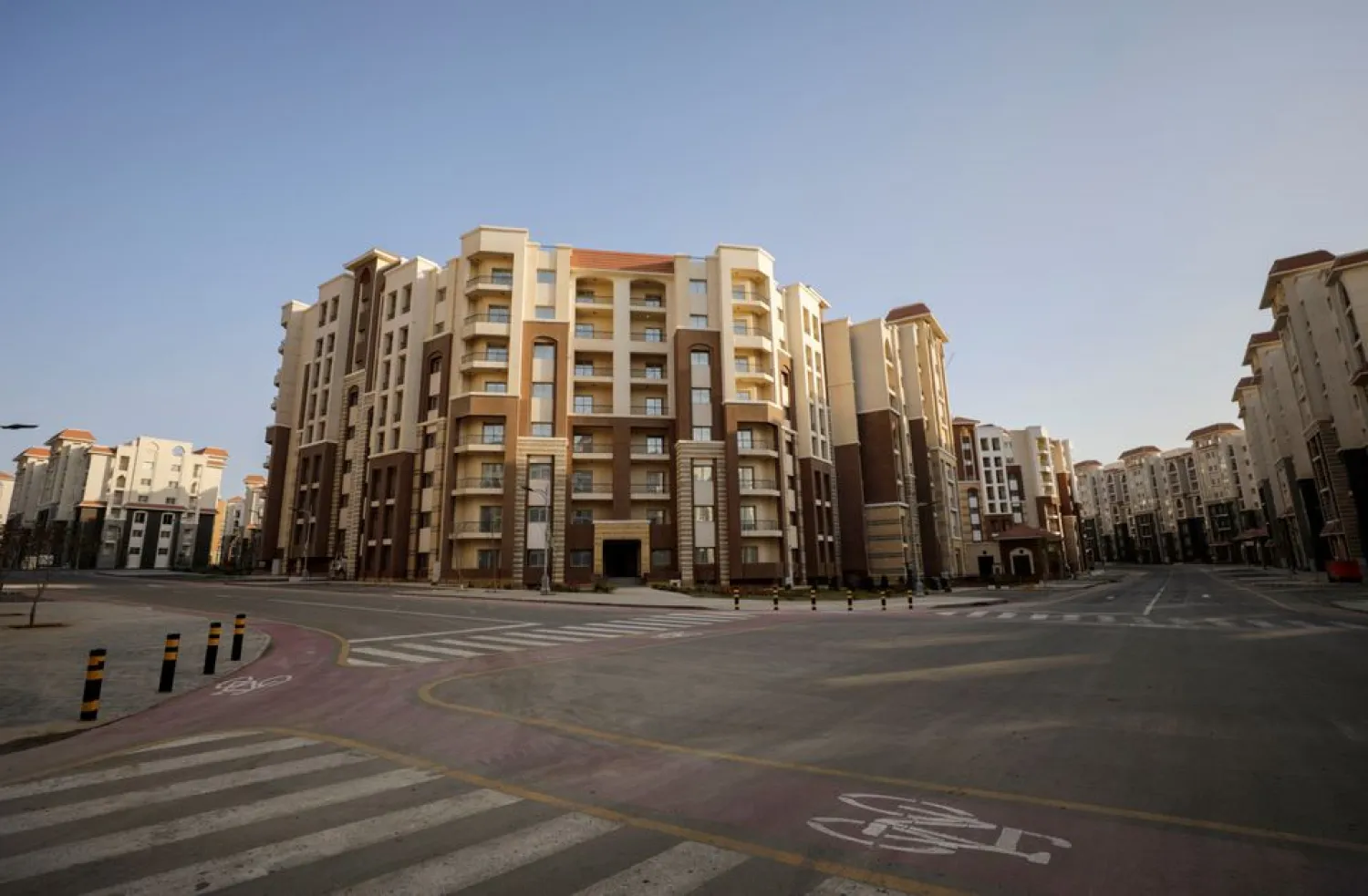
Residential buildings in the New Administrative Capital. (Reuters)
TT

Egyptian Govt Confirms Plan to Move to New Capital

Residential buildings in the New Administrative Capital. (Reuters)

Egyptian government officials confirmed the plans to move to the New Administrative Capital.

Head of the Central Agency for Organization and Administration (CAOA) Saleh El-Sheikh said the government is adopting professional plans to move to the New Capital and has developed a guide to implement its goals for the transfer of various ministries and government agencies.

The New Administrative Capital is located 75 kilometers east of Cairo, with several projects worth around $300 billion.

President Abdel Fattah al-Sisi said the new region was "the birth of a new state and republic."

Speaking on the sidelines of a conference at Cairo University, Sheikh said there are higher and executive committees that are managing the transfer, and they are meeting on a weekly basis to resolve any obstacles.

He explained that the government had been centrally restructured, whether ministries or agencies, and some bodies have been merged to restructure the state's administrative apparatus.

The Egyptian Cabinet held its first preliminary meeting in the New Administrative Capital last December.

Earlier this week, the Cabinet's press office denied reports claiming only 25 percent of the projects have been implemented in the New Capital.

It quoted the New Administrative Capital Company as saying that the project is one of the most critical national projects established according to the latest international technologies.

It indicated that over 70 percent of its first phase had been completed, covering an area of ​​about 40,000 acres. The first phase includes ten residential neighborhoods, which are between 70 and 90 percent completed.

Several giant projects in the New Capital have been completed, including the government district, which is almost 98 percent ready.

Sheikh said the financial and business district and the central business district, which includes 20 towers, including the iconic tower, and the Sports City, are entirely done and completed.



Israel Carries Out Deadly Strikes Near Beirut, Across Southern Lebanon

Lebanese soldiers gather near a car hit by an Israeli drone in the Khaldeh area at the southern entrance to Beirut, Lebanon, 03 June 2026. EPA/WAEL HAMZEH
TT

Israel Carries Out Deadly Strikes Near Beirut, Across Southern Lebanon

Lebanese soldiers gather near a car hit by an Israeli drone in the Khaldeh area at the southern entrance to Beirut, Lebanon, 03 June 2026. EPA/WAEL HAMZEH

Lebanon said an Israeli strike hit a target near Beirut on Wednesday while a medical source told AFP six people were killed as Israel pounded the country's south.

The Israeli army, meanwhile, said it intercepted a "hostile aircraft" that crossed into Israeli territory from Lebanon, the first such infiltration reported by the military in more than 24 hours.

Israeli officials have warned the military will strike Beirut's southern suburbs if Hezbollah launches projectiles targeting Israeli communities in the north, a stance they say has backing from Washington.

Hezbollah did not immediately claim any attack on northern Israel.

Israeli and Lebanese diplomats on Wednesday are set to hold a second day of direct talks in Washington -- the fourth such round since war erupted on March 2.

The state-run National News Agency (NNA) reported "the targeting of a car on the Khaldeh road,” referring to an area at the southern entrance to the capital.

An AFP correspondent at the scene saw an ambulance in attendance as onlookers peered at the strike site, which is on the main highway linking Beirut with the country's south.

A photograph shows the aftermath of Israeli airstrikes in the Burj al-Chamali area near the southern city of Tyre, on June 2, 2026. (Photo by Kawnat HAJU / AFP)

The NNA reported strikes on around 20 locations in the country's south on Wednesday, while Israel's army warned residents of several south Lebanon villages to evacuate ahead of attacks there.

A medical source in south Lebanon's Tyre told AFP that two Israeli strikes on the Al-Hawsh area near the coastal city on Wednesday killed six people -- four Syrian nationals and two Palestinians.

On Tuesday, the Israeli military released a statement alleging Hezbollah members were operating in Tyre's Christian quarter, warning it would order people to leave should the group remain there.

The picturesque seaside district has so far been spared from Israeli army evacuation warnings and strikes targeting the rest of Tyre city and its surrounds.

An AFP correspondent said the situation in Tyre was relatively calm on Wednesday morning, adding that some people who had been sleeping in cars or tents at the edge of the Christian quarter left for other nearby parts of the city after the Israeli military statement.

Wednesday's attacks come after a dramatic escalation in fighting and Israeli bombardment in recent days as Israeli troops staged their deepest ground offensive into Lebanon in two decades.


Iraq Moving Forward with Imposing State Monopoly over Weapons

The Coordination Framework expressed its support for government efforts to impose state monopoly over weapons. (X)
TT

Iraq Moving Forward with Imposing State Monopoly over Weapons

The Coordination Framework expressed its support for government efforts to impose state monopoly over weapons. (X)

Iraq is stepping up its measures to impose state monopoly over weapons with some Shiite armed factions declaring that they were dismantling their military wings that have for years operated outside the control of the armed forces even though they are part of the official Popular Mobilization Forces (PMF).

On Monday, the ruling Shiite Coordination Framework tasked Prime Minister and Commander-in-Chief of the Armed Forces Ali al-Zaidi with taking the necessary measures and decisions to “preserve the country’s supreme interests”.

It backed efforts to “impose state monopoly over arms and disengage the PMF from political, partisan and societal frameworks.”

The Coordination Framework is a coalition of Shiite parties and armed factions with varying ties to Iran.

Zaidi attended Monday’s meeting that also said that the decision of war and peace “is a sovereign one that is exclusively controlled by the people of Iraq through their constitutional institutions represented by the government and elected parliament.”

The statement was an implicit rejection of some factions’ involvement in the US-Israeli war on Iran, on Tehran’s side, after they carried out attacks without first referring to the government. It slammed such attacks as “illegal and unconstitutional.”

Moreover, the statement said the PMF is an “official security institution that is bound to the constitution and laws and orders of the commander-in-chief of the armed forces.”

US Embassy Chargé d'Affaires Joshua Harris welcomed the Framework’s statement, saying it was a step forward in consolidating independence and sovereignty for a promising future for Iraq.

Iraq’s National Security Advisor Qassim al-Araji met with Harris on Tuesday, saying: “We underscored the importance of supporting the government’s efforts to ensure that arms remain exclusively under state authority.”

“We also welcomed the Coordination Framework’s position on this issue and its contribution to strengthening stability, reinforcing state authority, and upholding the rule of law,” he added in a post on X.

“We reaffirmed Iraq’s steadfast commitment to peaceful approaches in addressing crises and conflicts, in accordance with international law and diplomatic norms, in a manner that promotes regional and international peace and stability,” he stressed.

An official source in the Framework told Asharq Al-Awsat that disengaging the PMF from political and social frameworks aims to the steer it away from the “control of political leaderships and therefore, prevent it from being dismantled or restructured.”

It explained that American demands for the disarmament of factions also target the PMF seeing as most of the armed groups operate within it. So, the Framework’s statement on Tuesday may have been a preemptive step against demands for the PMF’s restructuring.

Mourners attend the funeral of members of the Iraqi armed group Kataib Hezbollah who were killed in an airstrike that targeted a PMF headquarters near the western al‑Qaim district on the Syrian border, amid the US-Israel conflict with Iran, in Baghdad, Iraq, March 2, 2026. (Reuters)

Two factions to disarm

In a related development, the Asaib Ahl al-Haq, one of Iraq’s most powerful Iran-backed armed groups, announced on Tuesday that it would begin putting its weapons under government control.

Asaib Ahl al-Haq said it had formed a committee to oversee the move, including an inventory of its fighters, weapons and equipment, and to coordinate with the commander-in-chief of the armed forces. The group cast the decision as a response to calls by Iraq’s top Shiite religious authority and the Framework.

The Kataib Imam Ali faction also said on Tuesday that it was disengaging from the PMF and taking steps to limit weapons to the state.

In a statement, it said the move complies with the demand of the Framework and stems from its “national responsibility” and aims to “bolster national unity.”

In contrast, the Ashab al-Kahf group, which is part of the so-called “Islamic Resistance”, rejected on Tuesday calls for the disarmament of factions.

“Claims that the higher religious authority backs these efforts are baseless,” it charged.

The Kataib Hezbollah and Nujaba movement continue to reject calls to lay down their weapons.

Meanwhile, leader of the Hikma Movement Ammar al-Hakim said the factions are waiting until September to take a “decisive” step on disarmament.

September is the deadline for anti-ISIS international forces to withdraw from Iraq in line with an agreement reached with former PM Mohammed Shia al-Sudani last year.

Observers have said that the disarmament process still lacks clarity, explaining that the leaders of these groups are taking the decisions while the official authorities are not playing a clear role in overseeing that they are being implemented.

Questions also remain about the size of their arsenal and whether they will indeed turn them over to the government authorities.

Iraq’s National Security Advisor Qassim al-Araji and US Embassy Chargé d'Affaires Joshua Harris meet on Tuesday. (Al-Araji on X)

Different views

Expert on Shiite groups Ibrahim al-Abadi said it was unlikely that the armed groups will comply with the Framework’s demand to disarm.

In remarks to Asharq Al-Awsat, he said the factions that possess weapons are divided over the state monopoly over weapons.

One group believes that it has no interest in keeping the weapons as the cost has become too high given the US sanctions and the ensuing economic, financial and political losses it will incur, he explained.

This group believes that it has succeeded in “employing the ideology of weapons to achieve its financial and political ambitions. Its goals now do not sustain the ability to maintain the weapons, which are seen as an obstacle to reaching higher positions in power.”

“So, it believes that it is in its best interest to lay down some of the weapons and turn its partisan members into employees that can run their financial empire. This group now tries to curry favor with the Americans, sending them messages and seeking to end the enmity with the US,” he revealed.

“The second group is fearful of the future and wants to keep the weapons as a bargaining chip to keep positions and gains reaped throughout the years they used these weapons to acquire these gains,” he continued.

“So, this group refuses to lay down its arms. However, it will not be able to withstand internal and foreign pressure, and it is weighing the high risks of such a confrontation,” al-Abadi said.

“The third group openly declares its allegiance to the Iranian project and doesn’t even discuss disarmament. It believes that the American project is targeting the resistance forces in the region,” he remarked.

“It is using religious, political and ideological excuses to justify its defiance of the state’s decision to impose monopoly over arms,” he added.


Egypt Stresses Importance of Strengthening Political, Economic Ties with the US

President Abdel Fattah El-Sisi stressed the centrality of coordination and consultation between Egypt and America (Egyptian Presidency)
TT

Egypt Stresses Importance of Strengthening Political, Economic Ties with the US

President Abdel Fattah El-Sisi stressed the centrality of coordination and consultation between Egypt and America (Egyptian Presidency)

President Abdel Fattah El-Sisi has stressed Cairo’s “appreciation for the strategic relations binding Egypt and the United States” and called for enhancing bilateral ties across various fields.

El-Sisi met on Tuesday with a delegation from the Conference of Presidents of Major American Jewish Organizations, comprising the Chair, Elizabeth Berns Korn, and Chief Executive Officer William Daroff.

The meeting was attended by Egyptian Director of the General Intelligence Service Major General Hassan Rashad.

Spokesman for the Presidency Ambassador Mohamed El-Shennawy stated that during the meeting, El-Sisi “emphasized Egypt’s appreciation for the strategic relations binding Egypt and the United States.”

He “underscored the pivotal nature of the close coordination and consultations between the two countries in achieving peace and stability in the Middle East and addressing shared challenges, particularly terrorism and extremist ideology.”

“The President also stressed the need to continue boosting bilateral relations across various political, economic, and investment fields,” said El-Shennawy.

According to his statement, the members of the delegation praised the strategic bilateral relationship between Cairo and Washington, and valued Egypt’s efforts to preserve peace and stability in the Middle East.

The meeting touched on regional developments, and members of the delegation were briefed on the Egyptian President’s vision for achieving regional stability.

El-Sisi highlighted Egypt’s efforts aimed at de-escalating the current tensions and supporting the path of ongoing negotiations between the US and Iran to end the current crisis, thereby avoiding its economic and political repercussions on the region and the world.

According to El-Shennawy, El-Sisi further stressed the significance of a comprehensive and just settlement of the Palestinian cause, in line with international resolutions and based on the two-state solution.

“This is considered the only way to ensure lasting peace and stability in the Middle East, given that the Palestinian cause remains the central cause of the Arab world,” the spokesman quoted El-Sisi as saying.

The delegation members praised the President’s vision for achieving stability in the Middle East, and reaffirmed the centrality of Egyptian-American relations and the ongoing coordination between the two countries to maintain regional peace.