


'Fire of Love' Charts Romance and Death of Volcano-chasing Scientists

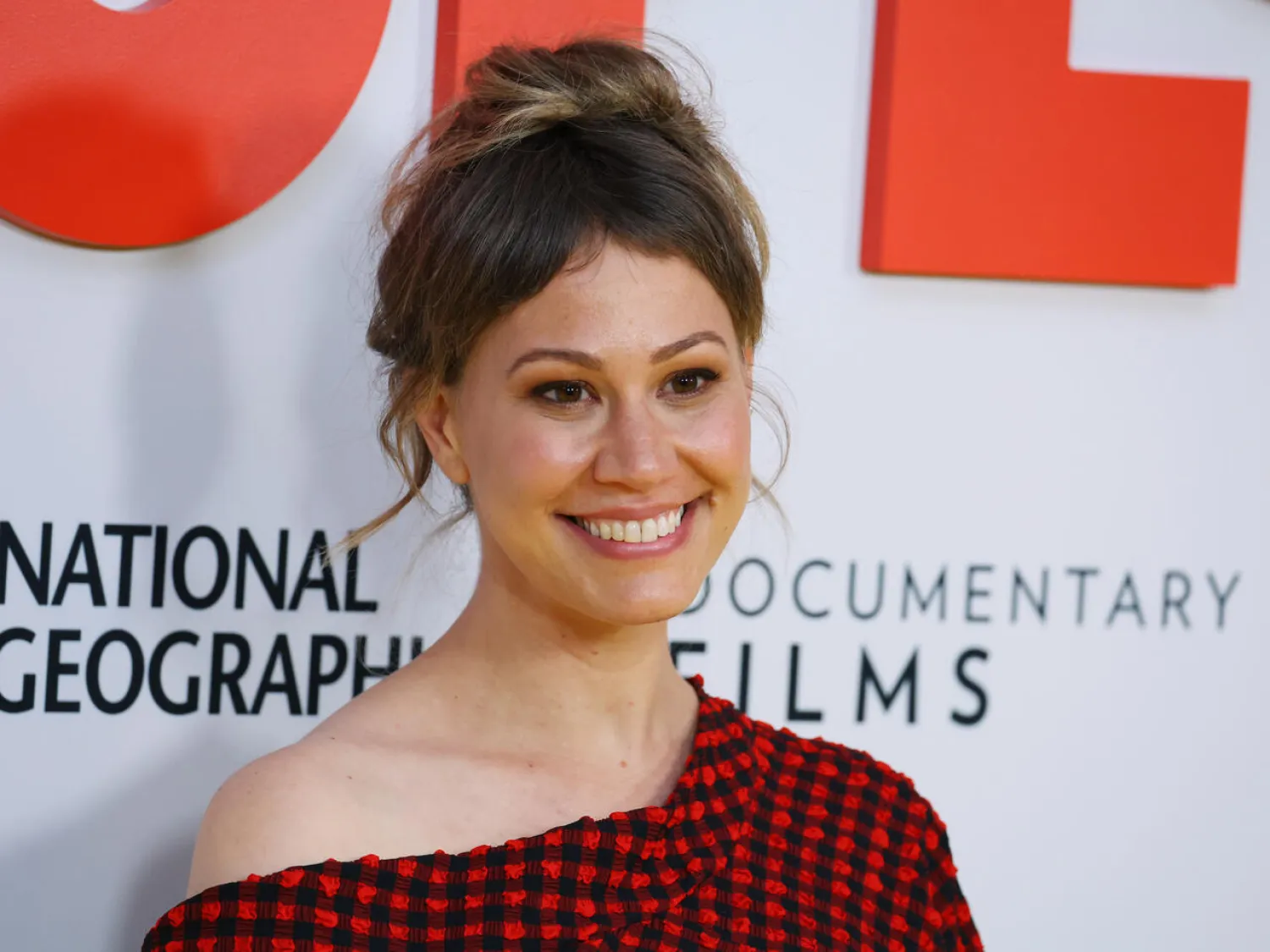
"Fire of Love" director Sara Dosa first stumbled upon Maurice and Katia Krafft's volcano footage while researching another documentary Leon Bennett GETTY IMAGES NORTH AMERICA/AFP/File
TT

'Fire of Love' Charts Romance and Death of Volcano-chasing Scientists

"Fire of Love" director Sara Dosa first stumbled upon Maurice and Katia Krafft's volcano footage while researching another documentary Leon Bennett GETTY IMAGES NORTH AMERICA/AFP/File

French scientists Maurice and Katia Krafft were brought together, and eventually killed, by their shared love of volcanoes.

Now the married couple are the subject of "Fire of Love," a new film constructed from hours of dazzling, terrifying and occasionally quirky footage they shot close to -- and even inside -- erupting craters.

Playing in a limited number of US theaters, the documentary from National Geographic and prestigious indie distributor Neon ("Parasite") is earning rave reviews and generating early awards buzz.

Director Sara Dosa first stumbled upon the pair's "spectacular imagery" while researching another documentary about Icelandic volcanoes -- but was drawn more to the "love that just radiates behind the lens, unlike anything else."

For 25 years, the Kraffts had traveled the world together in search of active volcanoes, writing some 20 books and making five feature films, plus countless television programs and lectures.

But they are perhaps best remembered today for their deaths side-by-side on Japan's Mount Unzen volcano, which erupted in 1991 after nearly two centuries dormant, sending a fatal cloud of gas and ash surging down its eastern flank.

"Fire of Love" begins and ends with this tragic information -- yet it spends the bulk of its running time on the "love triangle" between the couple and their lifelong obsession.

"Once we really learned about them as people... and the fact that they were married and also seemed to be in love with volcanoes -- that's when we thought, 'okay, we want to make a film of these people,'" Dosa told AFP.

"We wanted to tell kind of a mythic love story that was told through the language of volcanoes," she added.

"That's what drew them together in the first place, and that was the propulsive material, the fuel of their relationship."

- 'Reckless love' -
While Maurice was the more extroverted and ostensibly thrill-seeking of the pair -- he paddles in an acid lake and plots to kayak down an active lava stream -- Katia was similarly courageous in the face of peril.

Their gung-ho approach drew criticism from some of their scientific peers, but "I don't think that we ever found them reckless, quite honestly," said Dosa.

"They ultimately did lead a deeply meaningful life and die a meaningful death. And so much of that was this pursuit of love," she added.

"I'm sure many people will say perhaps it was a reckless love, but for us, it was the way for them to live."

After witnessing the staggering 1980 eruption of Mount St Helens in the northwestern United States, and the Nevado del Ruiz disaster that killed up to 25,000 Colombians five years later, the pair reoriented their work to lobby governments for better evacuation planning.

"Since they were some of the only people really capturing those images, they were uniquely suited to do that advocacy work," said Dosa.

"And that is literally what they were trying to do as they died on mountains in 1991."

- 'Salve' -
Aside from informing modern audiences about the pair's work, Dosa hopes the film can remind viewers that the planet is not simply "a resource to be capitalized upon."

"These kinds of stories about the aliveness, the sentience of the Earth, are all the more important to counteract the exploitation," she said.

Making the film during the pandemic and "having these guides, Katia and Maurice, teaching you how to navigate the unknown, and who knew how to reconcile fear -- that was such a salve and a refuge for us."

And then there is the aesthetic beauty of the footage itself, full of glowing red lava and alien-looking volcanic landscapes, all captured in a distinctive style with "the hallmarks of the French New Wave."

"For example, in the cinematography, there was a lot of playful snap zooms, which reminded us of films in France from the 60s and 70s," she said.

"And their own writing -- they authored nearly 20 books -- almost recalled the bombastic and playful spirit of narration in Truffaut films."

Dosa herself drew on that style, including the documentary's own, breathy narration.

"One of the great narrative devices of the French New Wave was love triangle stories," said Dosa.

"And for us, that was something that felt appropriate. Katia and Maurice truly did seem to have a third in their relationship -- volcanoes."



France Split over Bardot Tribute

Portraits of late French actress Brigitte Bardot and flowers are displayed on barriers at the entrance of "La Madrague" house, property of late Brigitte Bardot in Saint-Tropez, southeastern France on December 28, 2025. (AFP)
TT

France Split over Bardot Tribute

Portraits of late French actress Brigitte Bardot and flowers are displayed on barriers at the entrance of "La Madrague" house, property of late Brigitte Bardot in Saint-Tropez, southeastern France on December 28, 2025. (AFP)

French politicians were divided on Monday over how to pay tribute to the late Brigitte Bardot, who despite her screen legend courted controversy and convictions in later life with her far-right views.

The film star died on Sunday aged 91 at home in the south of France. Media around the globe splashed iconic images of her and tributes following the announcement.

Bardot shot to fame in 1956 and went on to appear in about 50 films, but turned her back on cinema in 1973 to throw herself into fighting for animal rights.

Her links to the far-right stirred controversy however.

Bardot was convicted five times for hate speech, mostly about Muslims, but also the inhabitants of the French island of Reunion whom she described as "savages".

She slipped away before dawn on Sunday morning with her fourth husband Bernard d'Ormale, a former adviser to the far right, by her side.

"She whispered a word of love to him ... and she was gone," Bruno Jacquelin, a representative of her foundation for animals, told BFM television.

- 'Cynicism' -

President Emmanuel Macron hailed the actor as a "legend" of the 20th century cinema who "embodied a life of freedom".

Far-right figures were among the first to mourn her.

Marine le Pen, whose National Rally party is riding high in polls called her "incredibly French: free, untamable, whole".

Bardot backed Le Pen for president in 2012 and 2017, and described her as a modern "Joan of Arc" she hoped could "save" France.

Conservative politician Eric Ciotti suggested a national farewell like one organized for French rock legend Johnny Hallyday who died in 2017.

He launched a petition online that had garnered just over 7,000 signatures on Monday.
But few left-wing politicians have spoken about Bardot's passing.

"Brigitte Bardot was a towering figure, a symbol of freedom, rebellion, and passion," Philippe Brun, a senior Socialist party deputy, told Europe 1 radio.

"We are sad she is gone," he said, adding he did not oppose a national homage.

But he did hint at her controversial political views.

"As for her political commitments, there will be time enough -- in the coming days and weeks -- to talk about them," he said.

Communist party leader Fabien Roussel called Bardot a divisive figure.

But "we all agree French cinema created BB and that she made it shine throughout the world," he wrote on X.

Greens lawmaker Sandrine Rousseau was more critical.

"To be moved by the fate of dolphins but remain indifferent to the deaths of migrants in the Mediterranean -- what level of cynicism is that?" she quipped on BlueSky.

- Garden burial? -

Bardot said she wanted to be buried in her garden with a simple wooden cross above her grave -- just like for her animals -- and wanted to avoid "a crowd of idiots" at her funeral.

Such a burial is possible in France if local authorities grant permission.

Born on September 28, 1934 in Paris, Bardot was raised in a well-off traditional Catholic household.

Married four times, she had one child, Nicolas-Jacques Charrier, with her second husband, actor Jacques Charrier.

After quitting the cinema, Bardot withdrew to her home in the Saint-Tropez to devote herself to animal rights.

Her calling apparently came when she encountered a goat on the set of her final film, "The Edifying and Joyous Story of Colinot". To save it from being killed, she bought the animal and kept it in her hotel room.

"I'm very proud of the first chapter of my life," she told AFP in a 2024 interview ahead of her 90th birthday.

"It gave me fame, and that fame allows me to protect animals -- the only cause that truly matters to me."


Perry Bamonte, Keyboardist and Guitarist for The Cure, Dies at 65

Perry Bamonte of The Cure performs at North Island Credit Union Amphitheater on May 20, 2023 in Chula Vista, California. (Getty Images/AFP)
TT

Perry Bamonte, Keyboardist and Guitarist for The Cure, Dies at 65

Perry Bamonte of The Cure performs at North Island Credit Union Amphitheater on May 20, 2023 in Chula Vista, California. (Getty Images/AFP)

Perry Bamonte, keyboardist and guitarist in The Cure, has died at 65, the English indie rock band confirmed through their official website on Friday.

In a statement, the band wrote that Bamonte died "after a short illness at home" on Christmas Day.

"It is with enormous sadness that ‌we confirm ‌the death of our ‌great ⁠friend and ‌bandmate Perry Bamonte who passed away after a short illness at home over Christmas," the statement said, adding he was a "vital part of The Cure story."

The statement said Bamonte was ⁠a full-time member of The Cure since 1990, ‌playing guitar, six-string bass, ‍and keyboards, and ‍performed in more than 400 shows.

Bamonte, ‍born in London, England, in 1960, joined the band's road crew in 1984, working alongside his younger brother Daryl, who worked as tour manager for The Cure.

Bamonte first worked as ⁠an assistant to co-founder and lead vocalist, Robert Smith, before becoming a full member after keyboardist Roger O'Donnell left the band in 1990.

Bamonte's first album with The Cure was "Wish" in 1992. He continued to work with them on the next three albums.

He also had various acting ‌roles in movies: "Judge Dredd,About Time" and "The Crow."


First Bond Game in a Decade Hit by Two-month Delay

'007 First Light' depicts a younger Bond earning his license to kill. Ina FASSBENDER / AFP
TT

First Bond Game in a Decade Hit by Two-month Delay

'007 First Light' depicts a younger Bond earning his license to kill. Ina FASSBENDER / AFP

A Danish video game studio said it was delaying the release of the first James Bond video game in over a decade by two months to "refine the experience".

Fans will now have to wait until May 27 to play "007 First Light" featuring Ian Fleming's world-famous spy, after IO Interactive said on Tuesday it was postponing the launch to add some final touches.

"007 First Light is our most ambitious project to date, and the team has been fully focused on delivering an unforgettable James Bond experience," the Danish studio wrote on X.

Describing the game as "fully playable", IO Interactive said the two additional months would allow their team "to further polish and refine the experience", giving players "the strongest possible version at launch".

The game, which depicts a younger Bond earning his license to kill, is set to feature "globe-trotting, spycraft, gadgets, car chases, and more", IO Interactive added.

It has been more than a decade since a video game inspired by Bond was released. The initial release date was scheduled for March 27.