PA Files Complaint to UN Security Council Against Lapid’s Gov’t

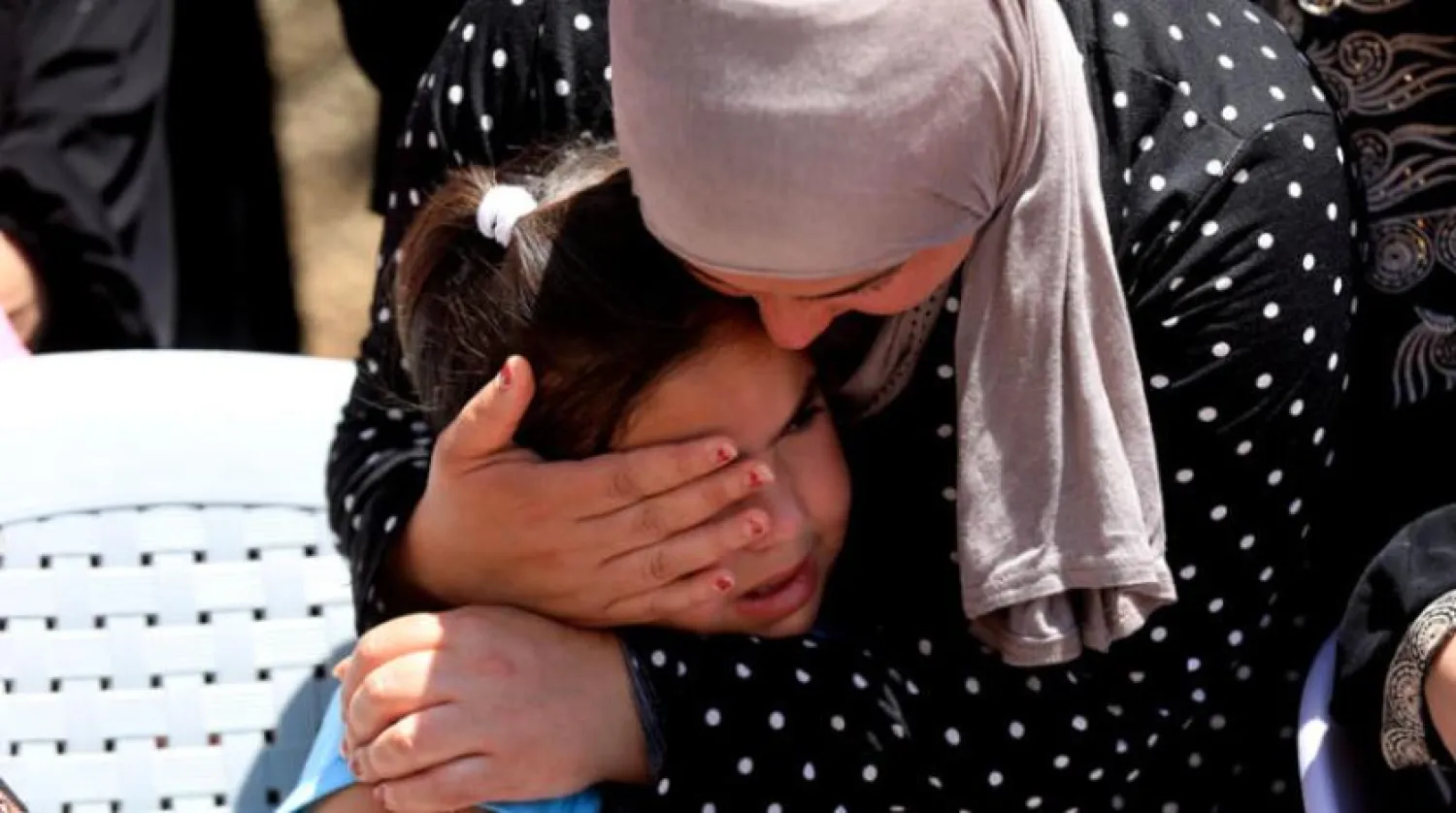
Signs of sadness and grief among relatives of Amjad Abu Alia during his funeral in al-Mughayyir town, north of Ramallah on Saturday, July 30, 2022. (EPA)
TT

PA Files Complaint to UN Security Council Against Lapid’s Gov’t

Signs of sadness and grief among relatives of Amjad Abu Alia during his funeral in al-Mughayyir town, north of Ramallah on Saturday, July 30, 2022. (EPA)

The Palestinian Authority filed a complaint to the United Nations Security Council against Israeli Prime Minister Yair Lapid’s caretaker government.

“The occupying power (Israel) has launched an illegal and massive campaign to colonize Palestinian land and build hundreds of other settlement units,” the PA noted, citing the ongoing violent attacks by the Israeli occupation forces and settlers on Palestinian civilians, including children.

Palestinian envoy to the UN Riyad Mansour sent letters to the UN Secretary-General, July’s President of the UN Security Council (Brazil) and President of the UN General Assembly.

He stressed that the occupation power is committing all its violations deliberately and systematically to dispossess and displace Palestinians.

Mansour underscored the importance of holding the Israeli occupation accountable for its crimes against Palestinians.

He renewed his call to the international community, especially the Security Council, to support the international law aimed at putting an end to impunity, opening the way for a political horizon to end this occupation, and realizing the inalienable rights of the Palestinian people.

In his letters, Mansour referred to Israel’s plans to build nearly 2,000 other illegal settlement units in the occupied Palestian territories, specifically in the area between Jabal Abu Ghneim in occupied East Jerusalem and Bethlehem.

“This step undermines the contiguity of the lands and the development and continuity of Palestinian societies,” the letters read, noting that settler gangs and militias continue to attack Palestinians and destroy their property.

Mansour further underlines the need to hold the occupation power fully responsible for its illegal colonial settlement project on Palestinian land, including terrorizing the settlers.

He pointed to the crisis facing 1,200 Palestinians in Masafer Yatta “due to Israel's ongoing ethnic cleansing campaign against hundreds of families in southern Hebron to establish a military training area for the occupation army there.”

The letters also cited a report by the UN Office for the Coordination of Humanitarian Affairs (OCHA) stating that the Israeli occupation forces demolished, confiscated, or forced people to demolish 51 Palestinian-owned structures in East Jerusalem and other occupied areas in a period of two weeks, displacing 40 people, including 21 children, and affecting the livelihoods of about 500 others.

In addition, Mansour pointed to several recent crimes committed by Israeli forces, including the killing of Amjad Abu Alia (16) near the West Bank town of al-Mughayyir, as well as Mohammad Bashar Azizi (25) and Abderrahman Jamal Soboh (28) in a raid by Israeli occupation forces on a neighborhood in Nablus and the injury of 10 others.

The letters also emphasized the suffering of two million Palestinians in the Gaza Strip as a result of the inhumane and illegal siege imposed on the enclave for 15 years, which has exacerbated poverty, hunger, isolation and insecurity there.



Sudan Drone Strikes Kill 21, Cause Mass Outages in East

FILE PHOTO: A Sudanese refugee father from Al-Fashir rides on a motorized cart with his family travelling between Chad and Sudan amid the ongoing conflict between the paramilitary Rapid Support Forces (RSF) and the Sudanese army, at the Tine border post in eastern Chad, November 22, 2025. REUTERS/Amr Abdallah Dalsh/File Photo
TT

Sudan Drone Strikes Kill 21, Cause Mass Outages in East

FILE PHOTO: A Sudanese refugee father from Al-Fashir rides on a motorized cart with his family travelling between Chad and Sudan amid the ongoing conflict between the paramilitary Rapid Support Forces (RSF) and the Sudanese army, at the Tine border post in eastern Chad, November 22, 2025. REUTERS/Amr Abdallah Dalsh/File Photo

Sudan's warring sides have traded drone strikes that killed 21 people in the western Darfur region and left vast swathes of the country's east without electricity, medics and witnesses said Tuesday.

A drone strike on a market in Nyala, the de facto capital of Sudan's paramilitary Rapid Support Forces in Darfur, killed 21 people and wounded at least 40 others, a medical source and witnesses told AFP.

One Nyala resident said a market in the city's north was struck by a drone on Monday around 8:00 pm (1800 GMT).

Another said the market was frequented by young men, particularly RSF fighters.

"Twenty-one people were killed in last night's bombing, and more than 40 others injured," a medic at Nyala Hospital said, though he was unable to identify how many were RSF fighters.

Sudan's military, at war with the RSF since April 2023, regularly strikes Nyala, where the RSF has declared an administration rivalling the army-backed internationally recognized government in Khartoum.

The RSF has in turn launched repeated strikes targeting Khartoum's airport, as well as dams and power stations across the country's east.

On Tuesday, "RSF militia drones targeted the Al-Markhiyat transformer station, disrupting the power supply across large parts of Khartoum and Al-Jazira states," a source in the national electricity company told AFP on condition of anonymity.

The strike comes a day after a coordinated RSF drone attack on six power stations left millions without power in Al-Jazira, White Nile, Sennar and Gedaref states.

- Famine risk -

The war is currently being fought primarily via drones, with both sides launching sophisticated attacks from across the country, killing dozens of civilians at a time.

In the first three weeks of October alone, drone strikes killed over 300 people and injured hundreds more, according to a UN tally.

Since it began, the war has killed more than 200,000 people, aid workers estimate, and has triggered the world's largest hunger and displacement crises.

The United Nations has repeatedly warned that attacks on power stations threaten health and services for millions of people.

Close to three million people have returned to Khartoum state since it was recaptured by the army last year, but many have struggled to rebuild their lives in a scarred city.

Power and water supplies remain unreliable, much of the capital remains unsafe from unexploded bombs and many struggle to put food on the table in a collapsed economy.

On Monday, 30 countries including the United States, France and the United Kingdom warned that urgent action was needed to prevent famine expanding across the country.

Sudan is facing "an alarming deterioration" of food security, they said, citing the war, a currency in freefall, higher fuel prices due to the Middle East war and a drought induced by the El Nino climate phenomenon.

Sudan's foreign ministry on Monday insisted the country's food security was "reassuring", in an attempt to "refute claims of famine".

It accused "some countries and organizations" of "politically exploiting the humanitarian situation".

The army has for years denied claims of documented famine and has been accused of blocking access to humanitarian aid.


Arrest Warrant Issued against Iraq’s Maysan Provincial Chairman for Refusing to Shut Crossing with Iran

Maysan Provincial Council Chairman Mustafa Duair al-Muhammadawi. (Social media)
TT

Arrest Warrant Issued against Iraq’s Maysan Provincial Chairman for Refusing to Shut Crossing with Iran

Maysan Provincial Council Chairman Mustafa Duair al-Muhammadawi. (Social media)

An Iraqi court issued an arrest warrant for Maysan Provincial Council Chairman Mustafa Duair al-Muhammadawi over his refusal to close the al-Sheeb border crossing with Iran.

The Iraqi News Agency (INA) reported on Monday that the Third Al-Karkh Investigation Court issued the warrant against the council chief in accordance with the Penal Code.

A court document showed that the warrant stems from a complaint filed by the Office of the Prime Minister, Ali al-Zaidi, following statements by al-Muhammadawi threatening civil disobedience and roadblocks, alongside a three-day ultimatum for the government to reopen the border crossing.

Al-Zaidi's office had on Sunday ordered a probe into the chairman’s statements that had been deemed as “harmful”. In a statement, it stressed that the move underscores the need to respect the law.

The arrest warrant was issued in accordance with the provisions of "Article 224 - Second Section" of the "amended Iraqi Penal Code No. 111 of 1969," which carries a penalty of up to "life imprisonment; a punishment applied to anyone who resorts to violence, threats, or any other illegal means against the head of state or whoever acts in his place."

A member of the pro-Iran Asaib Ahl al-Haq faction, al-Muhammadawi had given the government until Thursday to reopen the crossing.

During a press conference at the crossing, he threatened to "declare civil disobedience and block all roads linking Maysan to other Iraqi cities if the demand to open the crossing is not met."

He also threatened to "secede the Maysan governorate from Iraq if its demands are not fulfilled and the movement of trade and passengers is not restored."

He said that the technical justifications cited by the government for the closure "inflicted severe harm on the governorate's residents, drove up the prices of goods and construction materials, crippled commercial activity, and disrupted travel for medical patients."

Dozens of truck drivers in Maysan staged a protest on Sunday against the closure of the crossing. Al-Muhammadawi also took part.

Baghdad decided last Tuesday to close the Sheeb crossing until further notice. Government spokesperson Haider Al-Aboudi said the decision stemmed from an inability to complete the technical, technological, and developmental requirements necessary to operate the facility.

However, the Prime Minister's Advisor for Tribal and Marsh Affairs, Abdul Amir Al-Taiban, said the closure was due to the smuggling of narcotics and counterfeit currency from Iran.

The Iranian Embassy in Iraq slammed his remarks as "false allegations" and demanded that relevant Iraqi authorities take a stand against statements it claimed harm bilateral relations.


Yemen’s Ibb Becomes Houthis’ Main Source for Recruits

Houthi supporters during a rally in Sanaa. (EPA)
TT

Yemen’s Ibb Becomes Houthis’ Main Source for Recruits

Houthi supporters during a rally in Sanaa. (EPA)

The terrorist Houthi militia is depleting the population in Yemen's Ibb governorate by thrusting them onto the Taiz fronts, while expanding its use of local military sites and mountain ridges as ballistic missile launchpads, deepening the risks facing residents.

Local sources told Asharq Al-Awsat that the group has dispatched new military reinforcements from Ibb toward the Taiz fronts for the third time in less than a month. This reflects its ongoing reliance on recruiting the residents to offset human losses and replenish frontlines with new fighters as it faces mounting difficulties in mobilizing more residents and tribes across its territories.

Meanwhile, thousands of families are left to endure the loss of their sons and breadwinners, alongside the broader economic and social fallout of the continuous deployment of young men into combat.

Informed sources said that Ibb has become the primary source of fighters relied upon by Houthis to reinforce the Taiz fronts, followed by Dhamar, the Houthi-held capital Sanaa and its countryside, and the Amran governorate.

A young man from Ibb city, who escaped from a Taiz combat front days ago, recounted the recruitment tactics used by the militia to enlist youth and deploy them into battle under misleading slogans.

He revealed that he joined a military training course after being misled into believing it was preparation to confront Israel, only to find himself dispatched to Taiz to fight residents of a neighboring governorate who share fraternal bonds with the people of Ibb.

“They told us that the fighting in Taiz was part of the training and that we would later head to Palestine. Days passed and none of that happened,” he recalled.

Ibb has also been used as a launchpad for attacks on Taiz and other regions, said residents and local sources.

Activists warned that persisting with these policies threatens to spill the conflict's repercussions from the battlefields into the social fabric of both Ibb and Taiz, whose populations are bound by proximity, history, and shared interests.

Transforming these organic bonds into channels for mobilization and combat compounds local suffering, exposes more families to bereavement, and stokes divisions within communities, they said.

The activists called on notables and families in Ibb to resist Houthi recruitment drives and protect their sons from being lured to the frontlines, warning against the exploitation of ideological slogans to enlist youth and thrust them into clashes where families and local communities ultimately bear the human and social toll.

They also stressed the need of preventing residential areas and their vicinities from being transformed into military installations and ballistic missile launch sites, given the potential dangers such actions pose to civilians and their property.