Noah Baumbach’s ‘White Noise’ to Open New York Film Festival

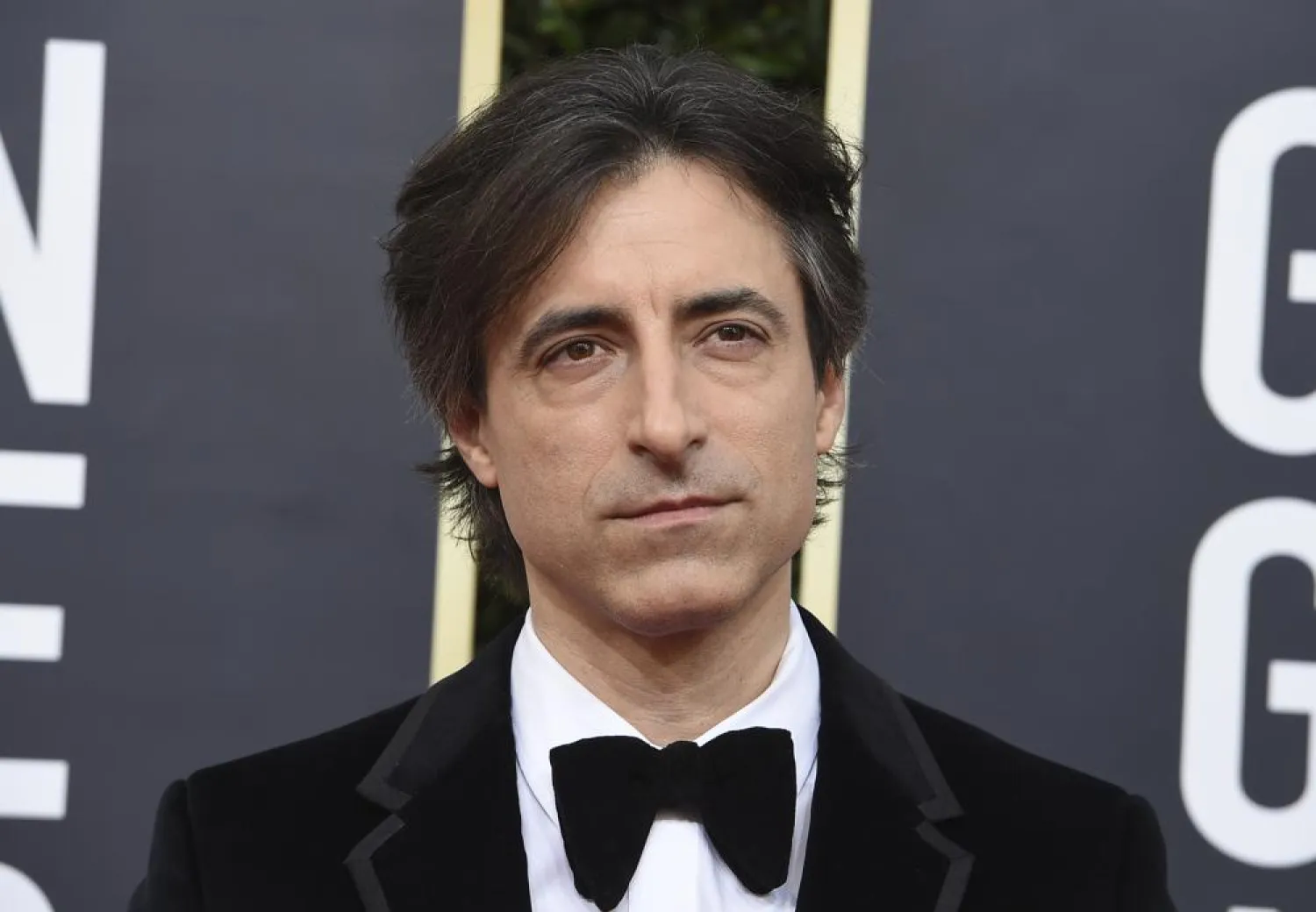
Noah Baumbach arrives at the 77th annual Golden Globe Awards at the Beverly Hilton Hotel in Beverly Hills, Calif., Sunday, Jan. 5, 2020. (AP)
TT

Noah Baumbach’s ‘White Noise’ to Open New York Film Festival

Noah Baumbach arrives at the 77th annual Golden Globe Awards at the Beverly Hilton Hotel in Beverly Hills, Calif., Sunday, Jan. 5, 2020. (AP)

In addition to opening this month’s Venice Film Festival, Noah Baumbach’s adaptation of Don DeLillo’s “White Noise” will also kick off the 60th New York Film Festival.

Film at Lincoln Center, which puts on the annual New York festival, announced Tuesday that “White Noise” will launch this year’s edition on Sept. 30 at Alice Tully Hall. Baumbach’s film, starring Adam Driver and Greta Gerwig, adapts DeLillo’s classic 1985 novel about a toxic event in a suburban college town.

The Netflix release is already slated to open the 79th Venice Film Festival on Aug. 31. But Baumbach, a New York native, has a long history with the New York Film Festival, which he regularly attended as a kid. Six of his previous films have played in NYFF’s main slate, from 1995′s “Kicking and Screaming” to 2019′s “Marriage Story,” which was the festival’s centerpiece selection that year.

“In 1985 my father and I drove from Brooklyn to see Kurosawa’s ‘Ran’ open the 23rd NYFF, the same year that he brought home the hardback of Don DeLillo’s ‘White Noise,’” said Baumbach in a statement. “Opening the 60th NYFF with ‘White Noise’ is truly special for me. This festival was part of my film education and has been a home for me and many of my movies over the years.”

Dennis Lim, the festival’s artistic director, called Baumbach’s adaptation “an unequivocal triumph: a wildly entertaining and morbidly funny meditation on the way we live now that is also the director’s most ambitious and expansive film.”

The New York Film Festival runs Sept. 30-Oct. 16.


K-Pop Might Win at the Grammys for the First Time

Grammy Awards are displayed at the Grammy Museum Experience at Prudential Center in Newark, N.J. on Oct. 10, 2017. (AP)
TT

K-Pop Might Win at the Grammys for the First Time

Grammy Awards are displayed at the Grammy Museum Experience at Prudential Center in Newark, N.J. on Oct. 10, 2017. (AP)

Two things can be true at once. K-pop is an inextricable force in global pop culture, and it has long been undercelebrated at institutions like the Grammys — where K-pop artists have performed but have never taken home a trophy.

That could change at next month's 2026 Grammy Awards ceremony. Songs released by K-pop artists — or K-pop-adjacent artists, more on that later — have received nominations in the big four categories for the first time. Rosé, perhaps best known as one-fourth of the juggernaut girl group Blackpink, is the first K-pop artist to ever receive a nomination in the record of the year field for “APT.,” her megahit with Grammys' favorite Bruno Mars.

The song of the year category also features K-pop nominees for the first time. “APT.” will go head-to-head with the fictional girl group HUNTR/X's “Golden,” performed by Ejae, Audrey Nuna and Rei Ami from the “KPop Demon Hunters” soundtrack.

And the girl group Katseye, the brain child of HYBE — the entertainment company behind K-pop sensation BTS and countless other international acts — fashioned in the image of the K-pop idol system, has been nominated for best new artist.

Is this a historic moment for K-pop? It depends on who you ask.

Areum Jeong, assistant professor of Korean Studies at Arizona State University and author of “K-pop Fandom: Performing Deokhu from the 1990s to Today” says the majority of these nominations strike her more as “a de-territorialized, hybrid idea of K-pop,” instead of a recognition of K-pop.

While Rosé “was recruited and trained under the K-pop system, and while ‘APT.’ does contain some motifs from the Korean drinking game,” Jeong says, “the song does not feel like a localized K-pop production. ... Same with Katseye, who was trained and produced under HYBE but marketed more toward Western fans and listeners.”

Jeong says that both “APT.” and Katseye's “Gabriela” — both of which will go head-to-head with “Golden” in the pop duo/group performance category — “seem less K-pop than other K-pop songs that could have been nominated over the years.”

She argues the same is true for the music of “Kpop Demon Hunters.” “It is very similar to ‘APT.’ in that it takes inspiration and motif from Korean culture,” where “K-pop serves as an idea, a jumping-off point, or a motif, creating alternatives or new possibilities.”

Mathieu Berbiguier, a visiting assistant professor in Korean Studies at Carnegie Mellon University, points out that these nominations differ from past K-pop Grammy nominations because “Golden,” “APT.” and Katseye all feature “a mainstream popular music factor.”

That's the connection of a massive popular Netflix film (“Kpop Demon Hunters”), a collaboration with Bruno Mars (“APT.”), and Katseye's international membership and Netflix series (“Pop Star Academy: Katseye”), respectively.

“It tells you that K-pop is not considered as something niche anymore,” he says. “Now, when we think about pop music in general, we also think of K-pop as part of it.”

Bernie Cho, industry expert and president of the South Korean agency, the DFSB Kollective, agrees that there is an international, mainstream appeal to the nominees.

“All the nominees represent a sort of post-idol K-pop, in the sense that Rosé, the three ladies of HUNTR/X and Katseye represent the globalized version of K-pop, where the ‘K’ is very much there, but some people might argue it’s silent. The songs are not necessarily for Korea, by Korea, from Korea, just kind of beyond Korea,” he says. “It’s a celebration and testament to how diverse and dynamic K-pop has become.”

Why are these acts being recognized now? “For years, the Recording Academy has snubbed K-pop acts that have set record-breaking standards, such as BTS, Seventeen and Stray Kids,” argues Jeong. “I think one of the main reasons is that the Western world is still so resistant to non-English lyrics.”

“It does not surprise me that ‘APT.’ and Katseye’s music, which mainly contain English lyrics and seem less K-pop, were nominated,” she continues.

Berbiguier adds that “is a reflection of K-pop nowadays, like, trends: the fact that there’s less and less Korean and more and more English.”

There may be an additional factor at play. Tamar Herman, a music journalist and author of the “Notes on K-pop” newsletter, says many critics and industry voices found 2025 to be a lackluster year for new pop music in the US — a fact that was all but confirmed in Luminate's 2025 Mid-Year Report, which found that streams of new music had slowed compared to the year prior, potentially due to a dearth of megahits dominating the charts.

“Yes, it's a big moment for K-pop, but it is so overdue, these recognitions are more of a sign of how poorly the music industry in the US did this year that we're looking externally,” she says.

She argues that acknowledgment of Korean entertainment from US entertainment industries is more symbolic of US cultural dominance slipping than “K-pop being really good, because K-pop has been really good for a really long time,” she says. “This is all recognition of just global storytelling improvement, global taste-making improvement.”

“I don't want to diminish it,” she adds. “These are all universally friendly, accessible, good pop songs.”

And if they weren't, they wouldn't connect.

“It's very obvious that they’re not just performers. They're artists. They're singers. They're songwriters,” says Cho.

Will a K-pop artist win a Grammy for the first time this year? The jury is still out.

“I think it’s not even a matter of if or when. It’s going to be who and how many,” says Cho.

Others are less committal. “It's hard to predict,” says Berbiguier. “For me, it's more possible that ‘Golden’ gets one.”

“Yes and no,” offers Herman. For her, it depends on an evolving and fluid definition of K-pop. After all, HUNTR/X is a fictional girl group from an animated film that did not debut through the K-pop music industry system. Would a victory for their song “Golden” mean a victory of K-pop? That's a matter of opinion.


Warner Bros Rejects Revised Paramount Bid as Risky Leveraged Buyout

A drone view shows the Warner Bros. studio lot in Burbank, California, US, December 8, 2025. (Reuters)
TT

Warner Bros Rejects Revised Paramount Bid as Risky Leveraged Buyout

A drone view shows the Warner Bros. studio lot in Burbank, California, US, December 8, 2025. (Reuters)

Warner Bros Discovery's board has unanimously turned down Paramount Skydance's latest attempt to acquire the studio, saying its revised $108.4 billion hostile bid amounted to a risky leveraged buyout that investors should reject.

In a letter to shareholders on Wednesday, Warner ​Bros' board said Paramount's offer hinges on "an extraordinary amount of debt financing" that heightens the risk of closing. It reaffirmed its commitment to streaming giant Netflix's $82.7 billion deal for the film and television studio and other assets.

Paramount and Netflix have been vying to win control of Warner Bros, and with it, its prized film and television studios and its extensive content library. Its lucrative entertainment franchises include "Harry Potter", "Game of Thrones", "Friends" and the DC Comics universe, as well as coveted classic films such as "Casablanca" and "Citizen Kane."

Paramount's financing plan would saddle the smaller Hollywood studio with $87 billion in debt once the acquisition closed, making it the largest leveraged buyout in history, the Warner Bros board told shareholders after voting against the $30-per-share cash offer on Tuesday.

The letter accompanied a 67-page amended merger filing where it laid out its case for rejecting Paramount's offer.

The ‌revised Paramount offer "remains inadequate particularly ‌given the insufficient value it would provide, the lack of certainty in PSKY’s ability ‌to ⁠complete ​the offer, ‌and the risks and costs borne by WBD shareholders should PSKY fail to complete the offer," the Warner Bros board wrote.

Paramount, which has a market value of about around $14 billion, proposed to use $40 billion in equity personally guaranteed by Oracle's billionaire co-founder Larry Ellison and $54 billion in debt to finance the deal.

Its financing plan would further weaken its credit rating, which S&P Global already rates at junk levels, and strain its cash flow – heightening the risk that the deal will not close, the Warner Bros board said.

Netflix, which has offered $27.75 a share in cash and stock, has a $400 billion market value and investment-grade credit rating.

The decision keeps Warner Bros on track to pursue the deal with Netflix, even after Paramount amended its bid on ⁠December 22 to address the earlier concerns about the lack of a personal guarantee from Ellison, who is Paramount's controlling shareholder and the father of its CEO David Ellison.

Warner Bros shares ‌closed at $28.47 on Tuesday.

HIGH BREAK-UP FEES

Wednesday's filing said Warner Bros' board met on ‍December 23 to review Paramount's amended offer and noted some improvements, including ‍Ellison's personal guarantee and a higher reverse termination fee of $5.8 billion, but found "significant costs" associated with Paramount's bid compared with a Netflix ‍deal.

Warner Bros would be obligated to pay the streaming service a $2.8 billion termination fee for abandoning its merger agreement with Netflix, $1.5 billion in fees to its lenders and about $350 million in additional financing costs.

Altogether, Warner Bros said it would incur about $4.7 billion in additional costs to terminate its deal with Netflix, or $1.79 per share.

The board repeated some concerns it had laid out on December 17, such as that Paramount would impose operating restrictions on the studio ​that would harm its business and competitive position, including barring the planned spin-out of the company's cable television networks into a separate public company, Discovery Global.

Paramount offered "insufficient compensation" for the damage done to the studio's business, if the Paramount ⁠deal failed to close, Warner Bros said.

Paramount "repeatedly failed to submit the best proposal" to Warner Bros shareholders, the board wrote, "despite clear direction" on the deficiencies in its bid and potential solutions.

TILTING THE POWER BALANCE IN HOLLYWOOD

The jockeying for Warner Bros has become Hollywood's most closely watched takeover battle, as studios race to scale up amid intensifying competition from streaming platforms and volatile theatrical revenues.

While Netflix's offer has a lower headline value, analysts have said it presents a clearer financing structure and fewer execution risks than Paramount's bid for the entire company, including its cable TV business.

Harris Oakmark, Warner Bros' fifth-largest investor, previously told Reuters that Paramount's revised offer was not "sufficient," noting it was not enough to cover the breakup fee.

Paramount has argued its bid would face fewer regulatory obstacles, but a combined Paramount-Warner Bros entity would create a formidable competitor to industry leader Disney and merge two major television operators and two streaming services.

The valuation of Warner Bros' planned Discovery Global spin-off, which includes cable television networks CNN, TNT Sports and the Discovery+ streaming service, is seen as a major sticking point.

Analysts peg the cable channels' value at up to $4 per share, while Paramount has suggested just $1.

Lawmakers ‌from both parties have raised concerns about further consolidation in the media industry, and US President Donald Trump has said he plans to weigh in on the landmark acquisition.


Sydney Sweeney Box-Office Hit ‘The Housemaid’ to Get a Sequel

Sydney Sweeney. (AFP/Getty Images)
TT

Sydney Sweeney Box-Office Hit ‘The Housemaid’ to Get a Sequel

Sydney Sweeney. (AFP/Getty Images)

After just two and half weeks of release, the Sydney Sweeney box-office hit “The Housemaid” is getting a sequel.

Lionsgate announced Tuesday that it will start production on “The Housemaid's Secret” later this year. The film will be based on the second of Freida McFadden's bestselling trilogy of books.

“The Housemaid” has been a hit at the holiday box office, grossing more than $75 million and $133 million worldwide in 17 days of release. The psychological thriller directed by Paul Feig cost a modest $35 million to make.

Lionsgate said “The Housemaid's Secret” is being developed with the aim of Feig and Sweeney returning, including Sweeney as an executive producer. “The Housemaid” screenwriter Rebecca Sonnenshine is writing the sequel.

“It’s clear from both the global box office and from the outpouring on social media that audiences have responded strongly — and audibly — to the totally unique and truly theatrical experience of The Housemaid and want to know what happens next,” said Adam Fogelson, Lionsgate Motion Picture Group chairman, in a statement.

“The Housemaid” has handed Sweeney a major box-office victory after a disappointing result for her awards-hopeful boxing drama “Christy” in November. That film grossed only $2 million worldwide. In “The Housemaid,” Sweeney stars a live-in housemaid hired by a wealthy couple played by Amanda Seyfried and Brandon Sklenar.