


Saudi Arabia Establishes New Authorities to Support the Investment, Development System

Saudi Arabia announces the allocation of an independent authority to develop road networks infrastructure and increase its efficiency (SPA)
TT

Saudi Arabia Establishes New Authorities to Support the Investment, Development System

Saudi Arabia announces the allocation of an independent authority to develop road networks infrastructure and increase its efficiency (SPA)

Saudi Arabia continued exerting efforts to attract investments and expand the local development project, announcing the establishment of two independent bodies to promote investment and another for roads.

The Saudi cabinet approved the establishment of the Saudi Investment Promotion Authority (SIPA) to achieve cooperation among various parties and support all business and services related to investment marketing. It will also manage the unified national identity to market investments and attract them to the Kingdom.

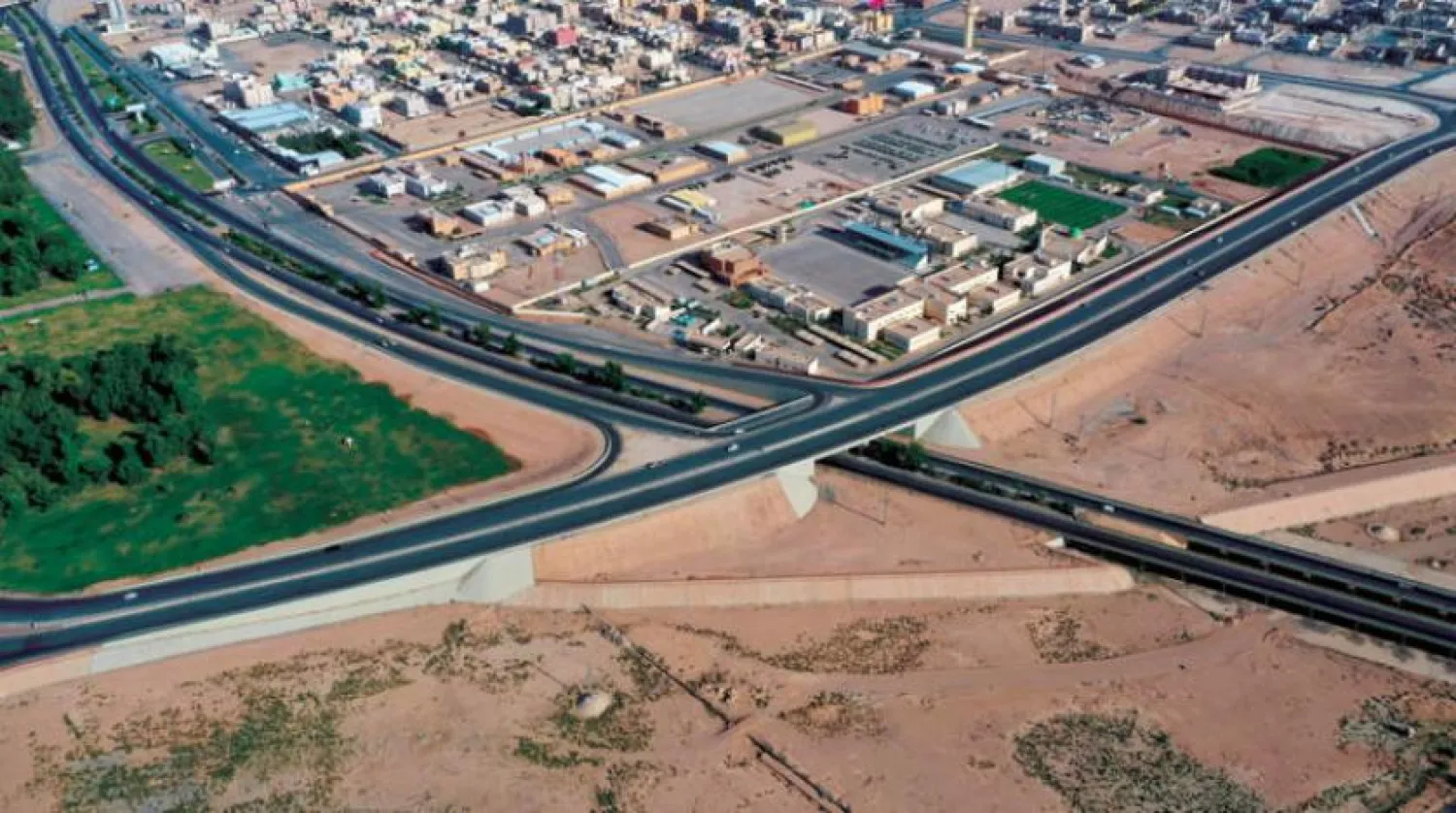
The cabinet also issued a decision to establish the Public Authority for Roads.

Experts stressed to Asharq Al-Awsat the importance of establishing the new authority to focus on marketing investment, accelerating businesses, and attracting capital following the state's plans to reflect positively on the national economy.

They believe the authority will achieve the National Investment Strategy (NIS) objectives laid out by Crown Prince Mohammed bin Salman.

Supporting the System

Investment Minister Khalid al-Falih said that SIPA "will be a strong supporter of the investment system in its quest to achieve the objectives of the National Investment Strategy by attracting and developing national and foreign investments."

The minister continued that the cabinet's decision would enhance all activities and services related to investment promotion and further boost partnerships between local and foreign investors.

"The establishment of SIPA would also bring about an integrated approach to investment between government agencies," he said.

The minister noted that the launch of SIPA is made possible by the Kingdom's first National Investment Strategy, which seeks to unleash the potential of the Kingdom's strong market fundamentals and the breadth and depth of opportunities created by Vision 2030.

Attracting investments

Public policy expert Akram Jadawi explained that the decision to establish the new authority is a step that reflects the Saudi government's excellence in supporting NIS and achieving the goals of Vision 2030.

Jadawi told Asharq Al-Awsat that the decision came to achieve the future vision planned by the state in an important sector of the national economy.

He added that the government attaches great importance to the investment sector in attracting foreign investors and capital to the local market, which will be reflected in the growth and prosperity of the Saudi market.

Modifying the systems

Economist Fahd bin Jumaa told Asharq Al-Awsat that the establishment of SIPA came at a time when the country was experiencing a qualitative leap in all sectors and was modifying many of its systems to motivate foreigners to enter the local market.

Jumaa explained that this move promotes the Kingdom as an attractive destination for international brands.

The expert noted that the Kingdom markets itself and its investments globally to achieve its ambition based on Vision 2030.

The new authority aims to prepare plans and programs related to marketing locally and internationally to enhance the attractiveness of investment in the Kingdom and manage the "Invest Saudi" platform.

It also supports partnerships that achieve development goals between local and foreign investors and encourages the marketing the Kingdom's investments.

Investment Opportunities

The Saudi government's strategy will push investment forward at a higher and faster pace by improving the investment environment and increasing its attractiveness and competitiveness.

It will also implement fundamental corrective measures at the regulatory and legislative framework level, identifying and developing investment opportunities and providing incentives for quality investment projects.

The NIS will also drive investment in the Kingdom by enhancing the business environment, increasing investment attractiveness and competitiveness, instigating key regulatory and legislative measures, and connecting investors with investment opportunities.

It offers incentive packages for selected projects and attracts regional headquarters to the Kingdom, not to mention helping local companies position their products and services successfully in regional and global markets.

The NIS complements the investment strategies of various Vision Realization Programs such as the Public Investment Fund Program (PIF), the National Industrial Development and Logistics Program (NIDLP), the Privatization Program, the Financial Sector Development Program, and the Quality of Life Program.

Capital formation

A comprehensive governance framework will ensure the implementation of the strategy through oversight from a new Supreme National Investment Committee chaired by the Crown Prince that will set and approve incentive packages for best investments and develop investment opportunities.

The strategy includes several initiatives, such as establishing special economic zones with competitive regulations and incentives that attract investments in priority sectors.

It also includes a program to transfer strategic supply chains to Saudi Arabia and acquire a market share in supply chain components; diversifying funding options which include developing new financing solutions for the private sector to promote capital formation, as well as the enhancement of "Invest Saudi" as the national platform for presenting and marketing investment opportunities in Saudi Arabia.

Road network development

The cabinet also approved the Public Authority for Roads to enhance the development of road networks in the Kingdom, raise operational efficiency, and improve quality according to the highest technical specifications.

Minister of transport Saleh al-Jasser stressed that the decision enables the ministry to lead the transport and logistics system and supervise the implementation of the national strategy.

Jasser stated that the authority would work on the sustainability of the country's infrastructure and the provision of highly efficient road networks to achieve Saudi international leadership.

It also aims to place Saudi Arabia in sixth place on the quality of roads index, expand connectivity between cities, and facilitate the movement of individuals and goods according to safe and high standards, which contribute to strengthening the Quality of Life and ambitious goals of the strategy.



Gold Bounces Back on Softer Dollar, US-Iran Concerns; Silver Rebounds

Gold and silver bars are stacked in the safe deposit boxes room of the Pro Aurum gold house in Munich, Germany, January 10, 2025. REUTERS/Angelika Warmuth
TT

Gold Bounces Back on Softer Dollar, US-Iran Concerns; Silver Rebounds

Gold and silver bars are stacked in the safe deposit boxes room of the Pro Aurum gold house in Munich, Germany, January 10, 2025. REUTERS/Angelika Warmuth

Gold rebounded on Friday and was set for a weekly gain, helped by bargain hunting, a slightly weaker dollar and lingering concerns over US-Iran talks in Oman, while silver recovered from a 1-1/2-month low.

Spot gold rose 3.1% to $4,916.98 per ounce by 09:31 a.m. ET (1431 GMT), recouping losses posted during a volatile Asia session that followed a fall of 3.9% on Thursday. Bullion was headed for a weekly gain of about 1.3%.

US gold futures for April delivery gained 1% to $4,939.70 per ounce.

The US dollar index fell 0.3%, making greenback-priced bullion cheaper for the overseas buyers.

"The gold market is seeing perceived bargain hunting from bullish traders," said Jim Wyckoff, senior analyst at Kitco Metals.

Iran and the US started high-stakes negotiations via Omani mediation on Friday to try to overcome sharp differences over Tehran's nuclear program.

Wyckoff said gold's rebound lacks momentum and the metal is unlikely to break records without a major geopolitical trigger.

Gold, a traditional safe haven, does well in times of geopolitical and economic uncertainty.

Spot silver rose 5.3% to $74.98 an ounce after dipping below $65 earlier, but was still headed for its biggest weekly drop since 2011, down over 10.6%, following steep losses last week as well.

"What we're seeing in silver is huge speculation on the long side," said Wyckoff, adding that after years in a boom cycle, gold and silver now appear to be entering a typical commodity bust phase.

CME Group raised margin requirements for gold and silver futures for a third time in two weeks on Thursday to curb risks from heightened market volatility.

Spot platinum added 3.2% to $2,052 per ounce, while palladium gained 4.9% to $1,695.18. Both were down for the week.


Europe, Türkiye Agree to Work Toward Updating Customs Union

European Union (R) and Turkish flags fly at the business and financial district of Levent in Istanbul, Türkiye September 4, 2017. REUTERS/Osman Orsal
TT

Europe, Türkiye Agree to Work Toward Updating Customs Union

European Union (R) and Turkish flags fly at the business and financial district of Levent in Istanbul, Türkiye September 4, 2017. REUTERS/Osman Orsal

The European enlargement chief and the Turkish foreign minister said on Friday they had agreed to continue work toward modernizing the EU-Türkiye customs union and to improve its implementation, Reuters reported.

European Commissioner for Enlargement Marta Kos met Turkish Foreign Minister Hakan Fidan in the capital Ankara on Friday.

"They shared a willingness to work for paving the way for the modernization of the Customs Union and to achieve its full potential in order to support competitiveness, and economic security and resilience for both sides," they said in a joint statement afterward.

The sides also welcomed the gradual resumption of European Investment Bank (EIB) operations in Türkiye and said they intended to support projects across the country and neighbouring regions in cooperation with the bank.


Bitcoin Falls 8% and Asian Shares Mostly Slip after Wall Street is Hit by Tech Stock Losses

FILE PHOTO: Representation of Bitcoin cryptocurrency in this illustration taken September 10, 2025. REUTERS/Dado Ruvic/Illustration/File Photo
TT

Bitcoin Falls 8% and Asian Shares Mostly Slip after Wall Street is Hit by Tech Stock Losses

FILE PHOTO: Representation of Bitcoin cryptocurrency in this illustration taken September 10, 2025. REUTERS/Dado Ruvic/Illustration/File Photo

US futures and Asian shares traded mostly lower on Friday, tracking Wall Street’s losses as technology stocks again dragged on markets.

Bitcoin sank to roughly half its record price, giving back all it gained since US President Donald Trump won the White House for his second term.

Tokyo’s Nikkei 225 was up 0.8% to 54,253.68, recovering from losses earlier this week, with technology-related stocks leading gains. SoftBank Group rose 2.2% and chipmaker Tokyo Electron rose 2.6%. Japan will also be holding its general election on Sunday, in which Prime Minister Sanae Takaichi expects to win a stronger public mandate for her policies.

Shares of Toyota Motor were up 2%. The carmaker said Friday its CEO Koji Sato will be stepping down in April, and is to be replaced by Chief Financial Officer Kenta Kon, The Associated Press said.

South Korea’s Kospi lost 1.4% to 5,089.14, weighed down by tech shares. Samsung Electronics, the country’s biggest listed company, fell 0.4%. Chipmaker SK Hynix was also down 0.4%.

Hong Kong’s Hang Seng fell 1.4% to 26,519.60. The Shanghai Composite index was down 0.3% to 4,065.58.

In Australia, the S&P/ASX 200 shed 2% to 8,708.80.

Taiwan’s Taiex was mostly flat. India's Sensex traded 0.1% lower.

Against the backdrop of the technology sell-off this week, bitcoin, the world’s largest cryptocurrency, saw dimming enthusiasm and was trading about 8% lower at just under $65,000 early Friday, after it briefly sank over 12% to below $64,000 on Thursday. That’s down from a record of above $124,000 in October.

The future for the S&P 500 was 0.2% lower, while that for the Dow Jones Industrial Average fell 0.1%.

On Thursday, the S&P 500 fell 1.2% to 6,798.40, its sixth loss in the seven days. The Dow Jones Industrial Average fell 1.2% to 48,908.72. The Nasdaq composite dropped 1.6% to 22,540.59.

Technology stocks were among the worst hit as concerns persist over whether massive AI investments by many of the Big Tech firms will pay off.

Chipmaker Qualcomm sank 8.5% despite better-than-expected quarterly revenues. Alphabet lost 0.5% as investors were focused on its huge spendings on AI.

Amazon fell 11% in after hours trading Thursday after it announced plans to boost capital spending by more than 50% to $200 billion in AI and other areas.

American artificial intelligence startup Anthropic ’s new AI tools also fueled the sell-off of software stocks on Wall Street this week, as its sophistication means many traditional software development services and products could be disrupted or replaced.

Gold and silver prices have been volatile this week following a monthslong rally as investors moved into safe haven assets prompted by factors including elevated geopolitical tensions. Gold prices fell 0.6% on Friday to $4,858.60 per ounce, after nearing $5,600 last week.

Silver prices dropped 5.5% to $72.52 per ounce after rising earlier this week. It lost more than 31% last Friday.

In other dealings early Friday, US benchmark crude oil gained 35 cents to $63.64 a barrel. Brent crude, the international standard, rose 36 cents to $67.91 a barrel.

The US dollar fell to 156.74 Japanese yen from 157.03 yen. The euro was trading at $1.1789, up from $1.1777.