


Will Hamas Distance Itself from Confrontation with Israel?

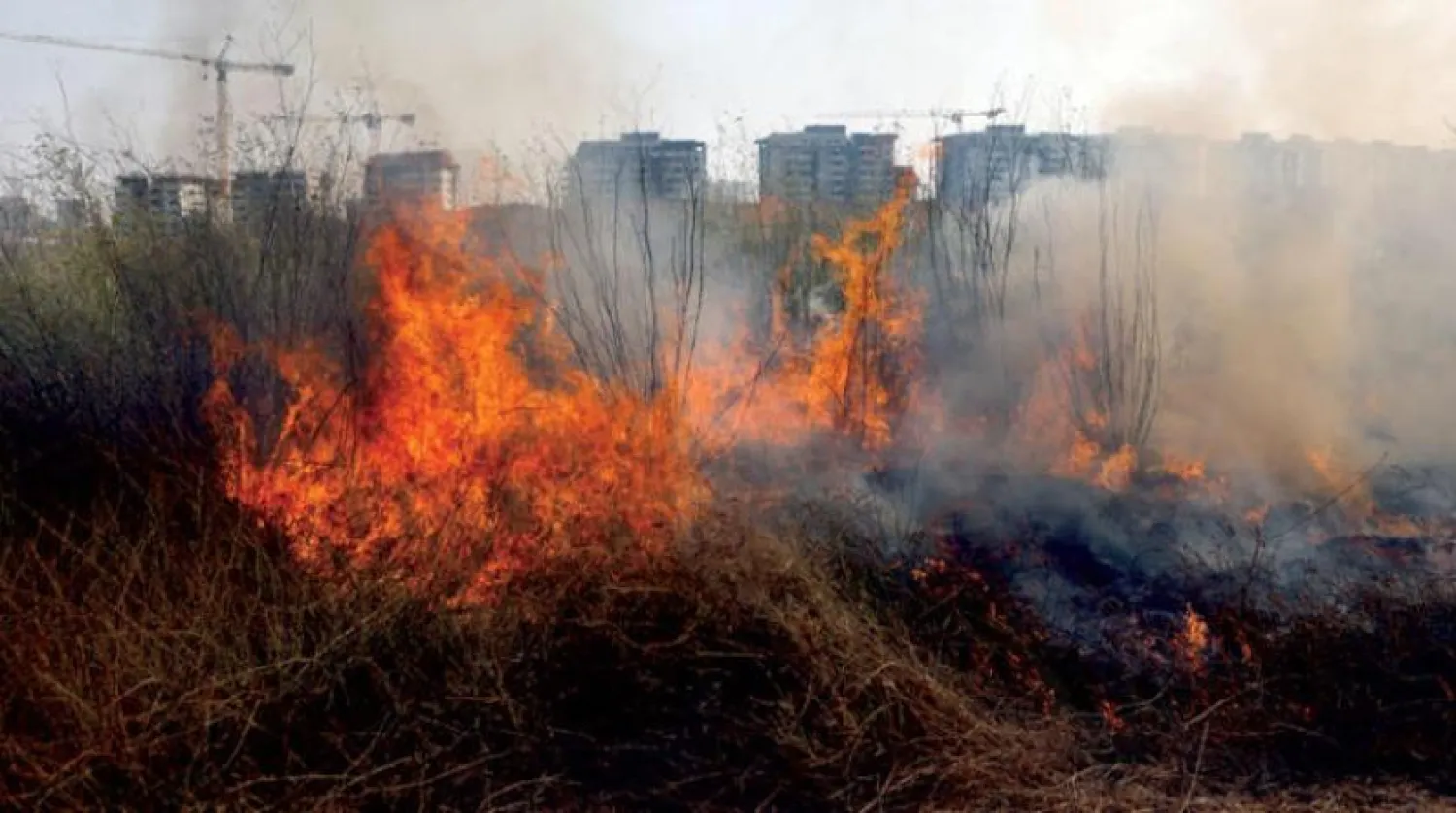
 A fire near Sderot settlement caused by rockets fired from Gaza on Saturday, August 6, 2022. (Reuters)
A fire near Sderot settlement caused by rockets fired from Gaza on Saturday, August 6, 2022. (Reuters)
TT

Will Hamas Distance Itself from Confrontation with Israel?

 A fire near Sderot settlement caused by rockets fired from Gaza on Saturday, August 6, 2022. (Reuters)
A fire near Sderot settlement caused by rockets fired from Gaza on Saturday, August 6, 2022. (Reuters)

Hamas movement, which has been ruling Gaza since 2007, has left the Palestinian Islamic Jihad (PIJ) alone in confronting Israel’s attacks on the enclave.

This is not the first time that Hamas distances itself from such a confrontation, a tactic that Israel succeeded in imposing on the Strip twice, the first in 2019 and the second in the current ongoing war.

A flare-up with the PIJ came in 2019, following Israel’s killing of the commander in al-Quds Brigades, Baha Abu al-Ata. Hamas did not join the fray in that conflict.

Al-Quds Brigades is the armed wing of the group.

The Israeli army announced then that it was not targeting Hamas, urging the group not to take sides.

Ahead of Israel’s war on the PIJ, Hamas and Egypt pressured the group to avoid any military escalation.

Both sides called on the PIJ not to be triggered by Israel’s misleading narrative, in which it accused the Islamic Jihad of seeking revenge following the humiliating arrest of its senior leader, Bassam al-Saadi, in the West Bank last week.

Tel Aviv later launched a sudden attack killing several PIJ officials.

While Israel seems to have embarrassed the mediators, including Hamas, it was keen not to provoke it to ensure it remains on the sidelines for reasons related to power.

There is a significant difference between the PIJ and Hamas, which enjoys greater influence and acquires more military equipment, number of fighters, and developed arms.

However, will Hamas remain on the sidelines? It is still early to decide. Political Analyst Talal Awkal said the movement can not distance itself any longer.

He told Asharq Al-Awsat that Palestine seems to be following a specific tactic in its aggression, which has been recently launched.

“The factions decided they will not respond all together by using force.” Awkal explained, adding that they believe it will be a long war of attrition and that even the PIJ still hasn’t used its basic power.

“I think we are facing a gradual use of force and a response that expands to include the participation of the rest of the factions.”

He warned of the moral and political consequences of Hamas’ decision to remain distant and leave the PIJ alone in the confrontation with Israel.

“Last year, the resistance’s rhetoric was different, unified and loud and called for uniting efforts,” Awkal stressed, noting that there is no guarantee that the battle will remain against the Islamic Jihad only and within the enclave’s borders.

Al-Quds Brigades issued a statement on Saturday saying that as part of the Unity of Battlefields operation, it launched an attack, along with the National Resistance Brigades, the Mujahideen Brigades and the al-Aqsa Martyrs' Brigades, targeting five Israeli settlements by salvo of rockets.

This statement could be aimed at pressuring Hamas to participate with the rest of the factions in the fight against Israel or showing that the factions are gradually taking part in the battle.

Israel is aware that Hamas’ participation will be the decisive factor that will determine the nature and duration of the battle.



Yemen Humanitarian Crisis to Worsen in 2026 amid Funding Cuts, Says UN

Children wait for lunch at their hut in Sanaa, Yemen August 29, 2022 (Reuters)
TT

Yemen Humanitarian Crisis to Worsen in 2026 amid Funding Cuts, Says UN

Children wait for lunch at their hut in Sanaa, Yemen August 29, 2022 (Reuters)

The UN warned on Monday that the humanitarian situation in Yemen is worsening and that gains made to tackle malnutrition ​and health would go into reverse due to funding cuts.

"The context is very concerning... We are expecting things to be much worse in 2026," Julien Harneis, UN Resident and Humanitarian Coordinator for Yemen, told reporters in Geneva.

Some 21 million people will need humanitarian assistance this year, an increase from ‌19.5 million the ‌previous year, according to the ‌UN. ⁠The ​situation ‌has been aggravated by economic collapse and disruption of essential services including health and education, and political uncertainty, Harneis said.

The US slashed its ⁠aid spending this year, and leading Western donors also pared back help ‌as they pivoted to raise defense ‍spending, triggering a funding ‍crunch for the UN.

Yemen has been the ‍focus of one of the world's largest humanitarian operations in a decade of civil war that disrupted food supplies.

"Children are dying and it's ⁠going to get worse," Harneis said. Food insecurity is projected to worsen across the country, with higher rates of malnutrition anticipated, he stated.

"For 10 years, the UN and humanitarian organizations were able to improve mortality and improve morbidity...this year, that's not going to be the case."

He said Yemen’s humanitarian crisis threatened the region with diseases like measles and polio that could cross borders.

In 2025 680 million dollars was afforded to ‌the UN in Yemen, about 28% of the intended target, Harneis said.


Israeli Minister Smotrich Calls for US-led Center for Gaza to Be Shuttered

US and Israeli soldiers convene at the Civil Military Coordination Center, the US-led center overseeing the implementation of President Donald Trump's plan to end the war in Gaza, in Kiryat Gat, southern Israel November 17, 2025. REUTERS/Alexander Cornwell
TT

Israeli Minister Smotrich Calls for US-led Center for Gaza to Be Shuttered

US and Israeli soldiers convene at the Civil Military Coordination Center, the US-led center overseeing the implementation of President Donald Trump's plan to end the war in Gaza, in Kiryat Gat, southern Israel November 17, 2025. REUTERS/Alexander Cornwell

Israeli Finance Minister Bezalel Smotrich urged Prime Minister Benjamin Netanyahu on Monday to shut a US-led multinational coordinating center that supports President Donald Trump’s plan to end the Gaza war.

Washington established the Civil Military Coordination Center (CMCC) last October as a center for civilian and military personnel from other countries to work alongside US and Israeli officials on post-war Gaza planning.

"The time has come to dismantle the headquarters in Kiryat Gat," said Smotrich, the far-right cabinet minister, in remarks shared by his office to media, referring to the Israeli city northeast of Gaza where the center is based.

The Israeli prime minister's office, the US State Department ‌and the US ‌military's Central Command did not immediately respond to requests ‌for ⁠comment on the ‌remarks.

Smotrich also said that Britain, Egypt and other countries that are "hostile to Israel and undermine its security" should be removed from the CMCC. The British and Egyptian foreign ministry did not immediately respond to requests for comment.

Central Command in December said that 60 countries and organizations were represented at the center. The CMCC has also been tasked with facilitating humanitarian aid entering Gaza.

The US-led CMCC was established after Trump announced his 20-point plan to end the war. Germany, ⁠France, and Canada are also among countries that have sent personnel there.

Smotrich, speaking at an event marking the ‌establishment of a new Jewish settlement in the Israeli-occupied West ‍Bank, said that Hamas should be given ‍a "very short" ultimatum to disarm and go into exile, and once that ultimatum expires, ‍the military should storm Gaza with "full force" to destroy the militant group.

"Mr. Prime Minister, it's either us or them. Either full Israeli control, the destruction of Hamas, and the continued long-term suppression of terrorism, encouragement of the enemy's emigration outward and permanent Israeli settlement," he said.

The plan, announced by Trump in September, states that members of Hamas who commit to peaceful coexistence and to decommission their weapons will be given amnesty. Those who want to leave ⁠Gaza will be given safe passage to other countries.

The White House last week announced that the president's plan to end the war was moving to the second phase, which would include the demilitarization and reconstruction of Gaza.

Under the initial phase of the plan, Israel and Hamas agreed to a ceasefire in Gaza that went into effect in October.

Hamas also released the remaining living hostages abducted from Israel during the October 2023 attack, who had been held in Gaza since then. The remains of all but one deceased hostage have been handed over as well.

Since the ceasefire started, Israel has repeatedly carried out air strikes in Gaza which it has said were responding to or fending off attacks carried out by Palestinian militants.

Over ‌460 Palestinians and three Israeli soldiers have been killed in Gaza since the ceasefire came into effect. 


Israel Army Says Struck Hezbollah Sites in South Lebanon

Smoke rises from the site of an Israeli airstrike that targeted the village of Sohmor, in southern Lebanon on January 15, 2026. (AFP)
TT

Israel Army Says Struck Hezbollah Sites in South Lebanon

Smoke rises from the site of an Israeli airstrike that targeted the village of Sohmor, in southern Lebanon on January 15, 2026. (AFP)

Israel's army said it carried out several strikes against Hezbollah infrastructure in southern Lebanon on Monday, despite Lebanon this month announcing progress in disarming the party.

Israel has continued to launch regular strikes in the area even after a ceasefire was agreed with Hezbollah in November 2024 to end more than a year of hostilities.

"A short while ago, the (Israeli military) struck terror infrastructure in several areas of southern Lebanon... used by Hezbollah to conduct drills and training for terrorists" to attack Israeli forces and civilians, the military said in a statement.

It did not specify the exact locations, but Lebanon's state-run National News Agency reported "a series of Israeli strikes" on at least five villages -- Ansar, Zarariyeh, Kfar Melki, Nahr al-Shita and Buslaya.

Last week, the Lebanese army said it had completed disarming Hezbollah south of the Litani River in the first phase of a nationwide plan, though Israel described those efforts as insufficient.

The five villages mentioned by NNA lie north of the Litani, an area not included in the first phase of disarmament.

On Friday, another Israeli strike killed one person in Lebanon's south, according to the country's health ministry.