


As Spider-Man Turns 60, Fans Reflect on Diverse Appeal

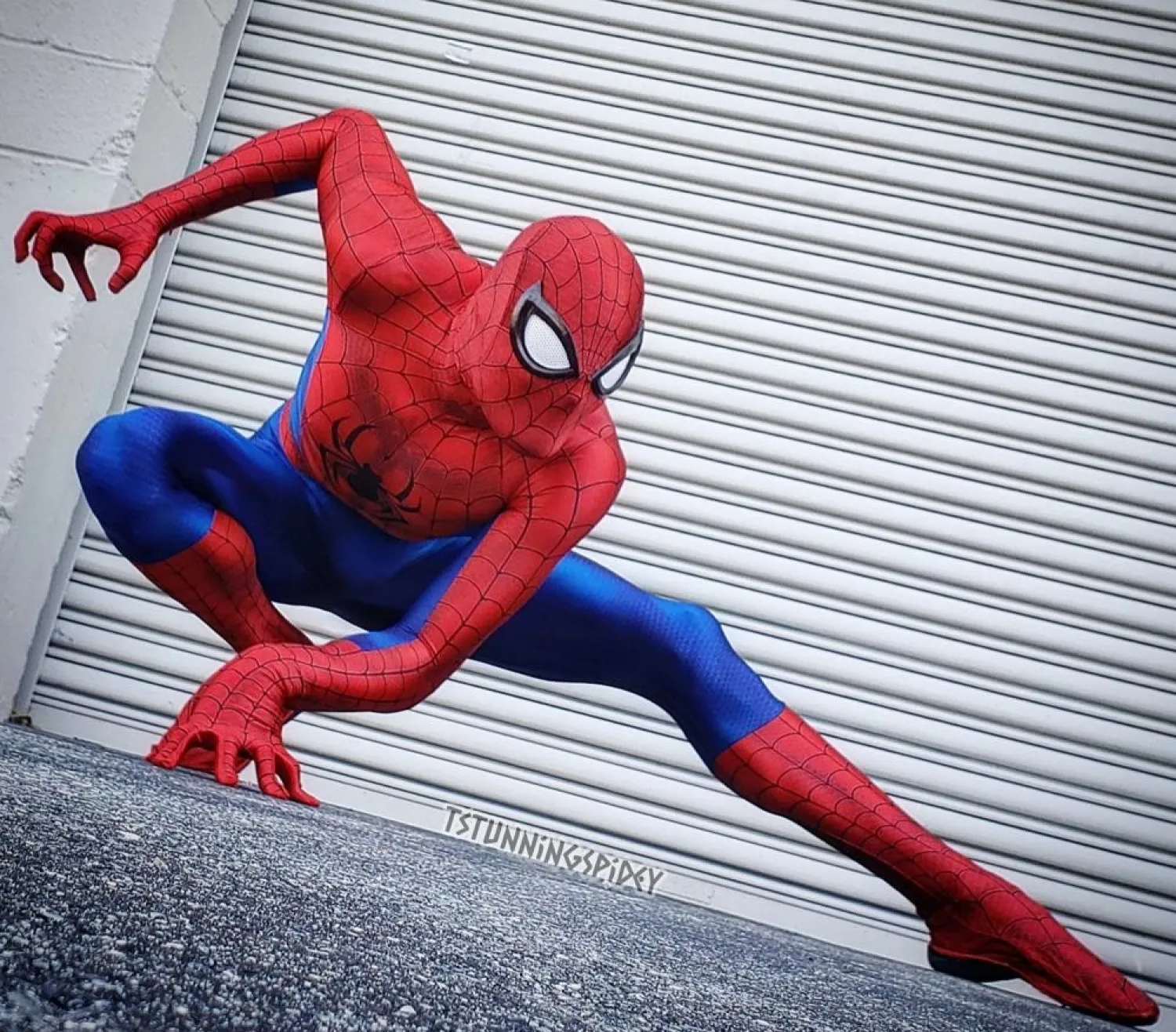
In these undated photos provided by Tyler Scott Hoover, a professional Spider-Man cosplayer and model, Hoover is pictured in the classic costume of the Marvel comic superhero. (AP)
TT

As Spider-Man Turns 60, Fans Reflect on Diverse Appeal

In these undated photos provided by Tyler Scott Hoover, a professional Spider-Man cosplayer and model, Hoover is pictured in the classic costume of the Marvel comic superhero. (AP)

Spider-Man fandom is in Tyler Scott Hoover’s blood — but not because he was bitten by an irradiated arachnid. His father had collected Marvel comic books featuring the character since the 1970s.

“He passed down a ton of comics to me,” says Hoover, 32, of Glen Burnie, Maryland. “It would have been hard for me not to become a fan of Spider-Man.”

There are legions of fans of Spider-Man, who this month marks 60 years in the vast, imaginative world of comic books, movies and merch. Among those fans are are devotees like Hoover, a professional Spider-Man cosplayer and model who doesn’t resemble the longtime “canon” presentation of the character. However, in the cinematic and comics universes, a Black Spider-Man is now reality.

Hoover is biracial — of Black and white ancestry — and stands at 6 feet 2 inches. And the story of his fandom illustrates an important point about New York City’s favorite super-powered wall-crawler: The appeal of the character long ago transcended its original iteration as a white, unimposing, orphaned teenager.

The Spider-Man character’s classic costume, complete with wide-eyed and web-patterned mask, is a key ingredient to the character’s appeal across race, gender and nationality. Almost anyone can imagine themselves behind it as this everyman — an underestimated smartypants who, after a quick change into head-to-toe spandex, becomes a force for good.

“The older I got, slowly but surely, I saw how relatable the character was,” Hoover says. “He had to work through his struggles while still maintaining a secret identity and doing good for the people. That kind of moral compass is powerful, especially for an impressionable mind.”

More importantly, Hoover says, it’s Spider-Man’s struggle to protect his hometown that makes the character more believable than superheroes whose origin stories include wealth and influence. No coincidence, surely, that he refers to himself as “your friendly neighborhood Spider-Man.”

Created by the late Stan Lee and Steve Ditko, Spider-Man appeared in comics as early as June 1962, although the canon date of his debut is Aug. 10, 1962, in Marvel’s Amazing Fantasy #15. Peter Parker, a high schooler bitten by a spider from a science experiment, developed superhuman strength, the ability to cling to solid surfaces and fast reflexes aided by the ability to sense and anticipate danger.

But on his journey to becoming a superhero, Parker fails to stop a burglar who kills his Uncle Ben, leaving his adoptive aunt widowed. The character then strives to honor the words etched at the end of that debut issue, later attributed to his uncle: “With great power, there must also come great responsibility.”

Racially and culturally diverse superheroes, generally absent from the mainstream comics scene during its first decades, began to emerge in the years after Spider-Man’s debut, particularly at Marvel.

In 1966, Black Panther, also known as Prince T’Challa of the fictional and reclusive African nation of Wakanda, became the first Black Marvel comic superhero. Debuting in the 1970s were characters such as Storm, the mutant goddess most known as a member of Marvel’s X-Men; Luke Cage, Marvel’s formerly imprisoned Black Harlemite with superhuman strength and nearly impenetrable skin; Shang-Chi, the master martial artist who is among the first Asian Marvel superheroes; and Red Wolf, the expert archer and first Native American Marvel superhero.

“Sometimes when we think of superheroes, we think of billionaires in suits, brilliant scientists or Norse gods,” says Angélique Roché, host of the podcast “Marvel’s Voices” and co-author of the upcoming book “My Super Hero Is Black.”

Spider-Man turned the idea of mostly privileged humans using their wealth and power to become heroes on its head, she says. Spider-Man iterations, in the comics and in film, have appeared across multiple universes, or the so-called “spiderverse.” Miles Morales, a teenage, Afro Latino Spider-Man, has become wildly popular and starred in his own animated feature film. Cindy Moon, a Korean-American known as Silk, was bitten by the same spider as Peter Parker.

“Because Spider Man means so much to us, we should always be open to the possibilities,” Roché says. “We should always hope and believe that there’s never going to be a dearth of people who want to fight for what’s right.”

In July, Spider-Man was inducted into the Comic-Con Hall of Fame during the annual convention in San Diego. Fans flooded the convention hall in costumes that spanned various iterations of the character.

Because of the mask, Spider-Man has been a safer choice for cosplayers hoping to avoid the staunch purists, or those who criticize others for deviating from canonized representations of superheroes. But cosplay doesn’t have to be canon, says Andrew Liptak, a historian and author of the book “Cosplay, a History: The Builders, Fans, and Makers Who Bring Your Favorite Stories to Life.”

“Ultimately, it’s about your relationship to the character,” he says. “You’re literally wearing your fandom on your sleeves.”

Liptak also says it’s unfair to expect fans of color to dress up only as superheroes whose appearance or skin color matches their own.

In the recent film “Spider-Man: No Way Home,” Electro, the villain played by Academy Award-winning actor Jamie Foxx, joked to Andrew Garfield’s Spider-Man that he was surprised Spider-Man wasn’t Black. Whether or not that opens the door to a live-action Black Spider-Man in future films, Hoover says Spider-Man should never be boxed into just one look.

“You will get those who argue, if you turn Spider-Man Black then you can turn T’Challa white,” Hoover says. “Spider-Man was never really defined by his ethnicity, but more so his social status and the struggles he went through. That’s even more relatable for people of color and different ethnicities, because there’s a lot of struggle involved in life that you have to persevere through.”




Actor Blake Lively and Director Justin Baldoni Go to New York in Required Effort to Avoid Trial

Blake Lively leaves a courthouse in New York, Wednesday, Feb. 11, 2026, who came to the courthouse to see if her lawsuit alleging sexual harassment on the set of the 2024 romantic drama “It Ends With Us” could be settled before a May trial. (AP Photo/Seth Wenig)
TT

Actor Blake Lively and Director Justin Baldoni Go to New York in Required Effort to Avoid Trial

Blake Lively leaves a courthouse in New York, Wednesday, Feb. 11, 2026, who came to the courthouse to see if her lawsuit alleging sexual harassment on the set of the 2024 romantic drama “It Ends With Us” could be settled before a May trial. (AP Photo/Seth Wenig)

Actor Blake Lively and director Justin Baldoni came to a New York courthouse on Wednesday to see if her lawsuit alleging sexual harassment on the set of the 2024 romantic drama “It Ends With Us” could be settled before a May trial.

The talks between lawyers went on over a six-hour period before Lively and Baldoni left the Manhattan federal courthouse separately and went straight to their waiting cars without saying anything. Lively looked stern as she walked out while Baldoni was smiling.

Baldoni's attorney Bryan Freedman said in an email that the talks did not result in a settlement, The Associated Press said.

Mandatory settlement talks are generally required before a civil case proceeds to trial. They are not held in public.

Their acrimonious yearlong litigation has cast a wide net across the entertainment world, drawing into the headlines other actors, musicians and celebrities and raising questions about the power, influence and gender dynamics in Hollywood.

Lively sued Baldoni and his hired crisis communications expert alleging harassment and a coordinated campaign to attack her reputation after she complained about his treatment of her on the movie set.

Baldoni and his Wayfarer Studios production company countersued Lively and her husband, “Deadpool” actor Ryan Reynolds, accusing them of defamation and extortion. Judge Lewis J. Liman dismissed that suit last June.

The trial, scheduled for May 18, was expected to be star-studded. Lively’s legal team had indicated in court papers that people likely to have information about the case included singer Taylor Swift, model Gigi Hadid, actors Emily Blunt, Alexis Bledel, America Ferrera and Hugh Jackman, influencer Candace Owens, media personality Perez Hilton and designer Ashley Avignone.


'Dawson's Creek' Star James Van Der Beek Has Died at 48

(FILES) Actor James Van Der Beek arrives for a special screening of 'Downsizing' on December 18, 2017 at the Regency Village Theatre in Los Angeles, California. (Photo by Robyn Beck / AFP)
TT

'Dawson's Creek' Star James Van Der Beek Has Died at 48

(FILES) Actor James Van Der Beek arrives for a special screening of 'Downsizing' on December 18, 2017 at the Regency Village Theatre in Los Angeles, California. (Photo by Robyn Beck / AFP)

James Van Der Beek, a heartthrob who starred in coming-of-age dramas at the dawn of the new millennium, shooting to fame playing the titular character in “Dawson’s Creek” and in later years mocking his own hunky persona, has died. He was 48.

“Our beloved James David Van Der Beek passed peacefully this morning. He met his final days with courage, faith and grace. There is much to share regarding his wishes, love for humanity and the sacredness of time. Those days will come,” said a statement from the actor's family posted on Instagram.

“For now we ask for peaceful privacy as we grieve our loving husband, father, son, brother and friend.”

Van Der Beek revealed in 2024 that he was being treated for colorectal cancer.

Van Der Beek made a surprise video appearance in September at a “Dawson's Creek” reunion charity event in New York City after previously dropping out due to illness.

He appeared projected onstage at the Richard Rodgers Theatre during a live reading of the show’s pilot episode to benefit F Cancer and Van Der Beek. Lin-Manuel Miranda subbed for him on stage.

"Thank you to every single person here,” The Associated Press quoted Van Der Beek as saying.

A one-time theater kid, Van Der Beek would star in the movie “Varsity Blues” and on TV in “CSI: Cyber” as FBI Special Agent Elijah Mundo, but was forever connected to “Dawson’s Creek,” which ran from 1998 to 2003 on The WB.

The series followed a group of high school friends as they learned about falling in love, creating real friendships and finding their footing in life. Van Der Beek, then 20, played 15-year-old Dawson Leery, who aspired to be a director of Steven Spielberg quality.


How the Coveted Bronze BAFTA Mask Trophies Are Made

Completed British Academy Film Awards masks at the FSE Foundry in Braintree, England on Tuesday, Feb. 10, 2026. (AP)
TT

How the Coveted Bronze BAFTA Mask Trophies Are Made

Completed British Academy Film Awards masks at the FSE Foundry in Braintree, England on Tuesday, Feb. 10, 2026. (AP)

Those winning a prize at the upcoming British Academy Film Awards will bag a coveted bronze mask trophy — and get a bit of an arm workout taking it home.

Along with the honor of being named the best of the year in the industry, winners at the BAFTA ceremony on Feb. 22 will be awarded one of the dozens of the 3-kilogram (6.6-pound) prizes.

This year the cast and crew of “One Battle After Another,” “Sinners,” “Hamnet,” “Marty Supreme,” and “Sentimental Value” are in the running for the trophies at the EE BAFTA ceremony, to be held at London's Royal Festival Hall.

As with many things in show business, all that glitters is not gold. The BAFTA masks are made of phosphor bronze, polished to a mirror finish that will reflect the happy face of its new owner.

Craftsmen at the AATi Foundry in Braintree, about 50 miles (80 kilometers) northeast of London, use a sandcasting technique to make about 350 bronze trophies each year for all the BAFTA ceremonies — covering the film, television and gaming industries.

They are created in batches, and making one from start to finish takes around a week, the foundry's director Hugh Bisset said Tuesday.

The process starts with a pattern by the tooling team, often out of timber or 3D printing. That tool moves to the molding team which uses sand to make two recessed impressions of the mask, one each side. They are then closed together, ready for molten hot bronze — up to 1,200 degrees Celsius (2,192 Fahrenheit) — to be poured into it.

The metal takes about three or four hours to cool down, when it can then be removed from the sand. The masks' surfaces look dull and a bit rough around the edges at this stage, but after fettling, threading and polishing they are ready to be assembled before being checked over extremely carefully.

Bisset says it’s important that the masks are shiny and have no polish left on them.

“The thing I’m always conscious of is that these amazing actors and actresses, they pick up their awards and my big concern is that a smudge of polish will end up over their lovely, beautiful white dress,” he said. “There’s lots of things we need to think about.”

Bisset reckons the diligence and care that his skilled team puts into the making of the masks reflects the hard work of the winning filmmakers and movie stars.

While it’s still unknown if favorites Jessie Buckley, Timothée Chalamet and Teyana Taylor will get the glory on Sunday, whoever does win will take home something worth more than its heavy weight in bronze.

“There’s a lot of metal in it,” but each mask also has “a lot of time and love being put into it,” Bisset said.