


Iran Brands US Claim of Assassination Plot 'Fiction'

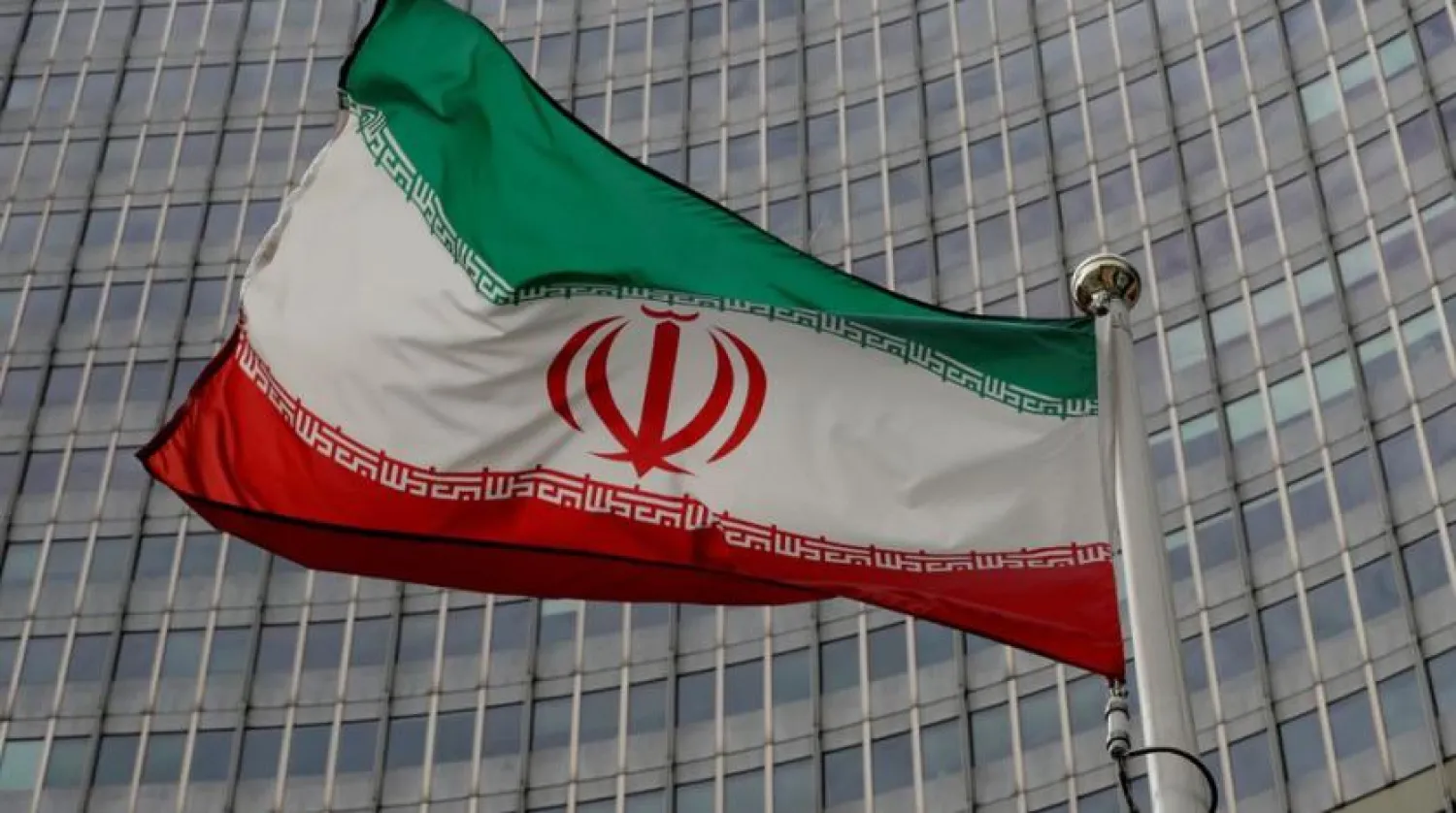
An Iranian flag flutters in front of the International Atomic Energy Agency (IAEA) headquarters in Vienna, Austria, September 9, 2019. REUTERS/Leonhard Foeger
TT

Iran Brands US Claim of Assassination Plot 'Fiction'

An Iranian flag flutters in front of the International Atomic Energy Agency (IAEA) headquarters in Vienna, Austria, September 9, 2019. REUTERS/Leonhard Foeger

Iran dismissed as "fiction" Thursday US allegations it had plotted to kill former White House national security adviser John Bolton in retaliation for the assassination of one of its top commanders.

The US claim comes at a crunch moment in talks on reviving a nuclear deal between Iran and major powers that Washington had abandoned in 2018 but has said it wants to rejoin. Iran is now considering what European Union mediators have called a "final" text, reported AFP.

"The US Justice Department has made allegations without providing valid evidence, creating a new work of fiction," Iran's foreign ministry spokesman Nasser Kanani said.

"This time they have come up with a plot involving individuals like Bolton whose political career has failed," Kanani scoffed.

"The Iranian Republic warns against any action that targets Iranian citizens by resorting to ridiculous accusations."

On Wednesday the US Justice Department announced it had stifled a plot by a member of Iran's Revolutionary Guard Corps (IRGC) to kill Bolton, offering an unidentified person inside the United States $300,000 to carry out the job.

The alleged plan was likely set in retaliation for the US killing of top Guards commander Qasem Soleimani in Iraq in January 2020, the department said.

The plot, which stretched from October 2021 until April this year, never made headway because the ostensible assassin was an informant of the Federal Bureau of Investigation.

But court documents show the FBI let the plotting continue to collect information on mastermind Shahram Poursafi, a member of the IRGC's elite Quds force, and on Iran's broader plans, including another plot to kill an even more prominent former US official, reported to be former secretary of state Mike Pompeo.

Poursafi, who is believed to still be in Iran, was charged by the Justice department with two counts relating to plotting a murder.

- Nuclear talks at stake -
In an interview Thursday with CNN, Bolton said the alleged plot reveals Iran's approach to foreign policy.

"What's important to understand is just how detailed the work was to send me off to the great beyond, and really the extent to which the government of Iran had thought this through, was engaged in planning," he said.

"I think it's very clear that it's not just former government officials that Iran is after," he said.

There was no indication of whether the US allegations would impact efforts to restore the 2015 Joint Comprehensive Plan of Action (JCPOA), the agreement between Iran and major powers to limit its nuclear program so that Tehran does not develop atomic weapons.

In a move that had been advocated by Bolton and Pompeo, former US president Donald Trump unilaterally withdrew from the pact in 2018, opening the way for Tehran to step up its nuclear program.

President Joe Biden has sought to return the United States to the deal, offering an easing of sanctions in exchange for Iran returning to full compliance.

But a final agreement has been held up since early this year, according to officials, in part by Tehran's demand that Washington remove its formal designation of the IRGC as sponsors of terrorist activity.

Brokering the Vienna negotiations, the European Union recently submitted a "final" draft agreement to both the United States and Iran for review.

"There is no more space for negotiations," a spokesman for the bloc, Peter Stano, said Tuesday.

"We have a final text. So it's the moment for a decision: yes or no."

Bolton though said the assassination plot was reason to avoid any agreement with Tehran.

"I think we ought to put the kibosh on these negotiations and deal with the growing threat that Iran poses and not try to appease them," he told CNN.

- 'The choice is theirs' -
US State Department spokesman Vedant Patel said late Thursday that Washington was waiting for Tehran's response on the draft nuclear agreement.

"We and the Europeans have made quite clear that we are prepared to immediately conclude and implement the deal we negotiated in Vienna for a mutual return to the full implementation of the JCPOA," he told reporters.

"For that to happen, Iran needs to decide to drop their additional demands that go beyond the JCPOA. Ultimately, the choice is theirs," he said.


Trump Says ‘Very Negative Forces’ Raising Exaggerated Concerns Over AI

 A message reading "AI artificial intelligence", a keyboard, and robot hands are seen in this illustration taken January 27, 2025. (Reuters)
A message reading "AI artificial intelligence", a keyboard, and robot hands are seen in this illustration taken January 27, 2025. (Reuters)
TT

Trump Says ‘Very Negative Forces’ Raising Exaggerated Concerns Over AI

 A message reading "AI artificial intelligence", a keyboard, and robot hands are seen in this illustration taken January 27, 2025. (Reuters)
A message reading "AI artificial intelligence", a keyboard, and robot hands are seen in this illustration taken January 27, 2025. (Reuters)

US President Donald Trump said on Sunday a lot of "very negative forces" are bringing things up about AI that won't happen and said that he wanted to make sure that the United States remains the industry leader.

"We're leading China in AI. We're the most sophisticated country in the world, and frankly I want to keep it that way because whoever wins AI wins," Trump, at ‌his Ireland ‌golf course, told reporters when asked if ‌the ⁠AI industry should ⁠slow down or be more regulated.

"We could put guardrails. We can do this and that. But I think you have a lot of very negative forces that are bringing it up that shouldn't be bringing it up and they're bringing up things that won't happen."

Trump has resisted ⁠stirring concerns about AI.

His latest comments ‌come after a week of ‌concerns in the United States after two Anthropic researchers issued ‌warnings that rapidly progressing artificial intelligence could lead to the ‌extinction of the human race in the not-too-distant future.

In his second term, Trump's administration has largely embraced AI firms. These AI leaders and other technology companies have also supported Trump's initiatives.

Yet, ‌the Pentagon earlier this year warned of risks from Anthropic's model.

After the researcher warnings, ⁠some AI ⁠CEOs are pushing for slowing advancement of the models.

Anthropic CEO Dario Amodei on Saturday outlined a three-step framework intended to pace development and create more time to manage its risks.

Jacob Coxon, one of the Anthropic researchers who resigned and then issued the warnings, pushed for the US to work with other countries to ensure pace.

"I feel we need international coordination, or else we risk running the same race with China, which could be equally dangerous," Coxon said on NBC's Meet the Press.


Trump Says Zelensky ‘Has to Stop’ Attacking Russian Refineries

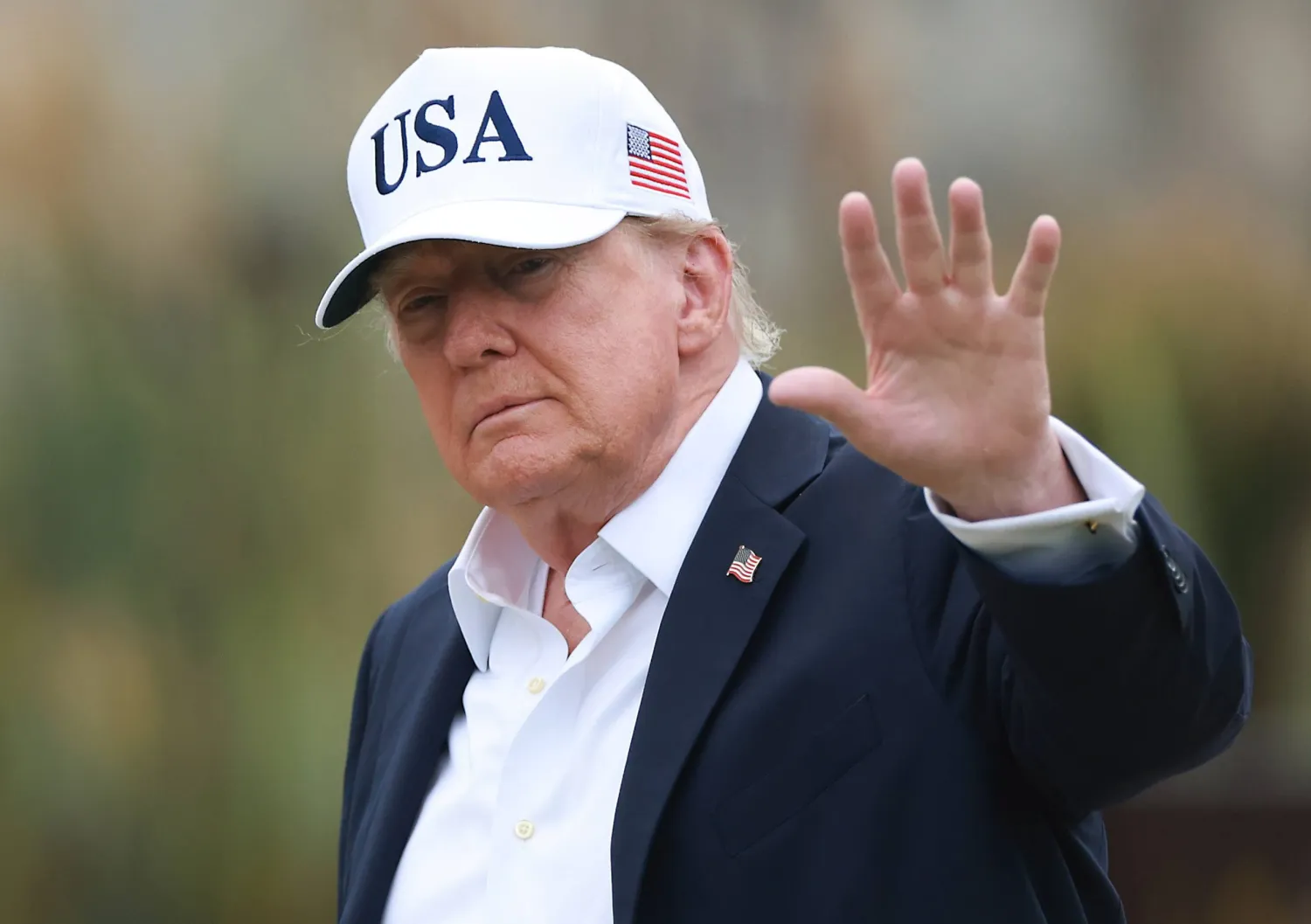
US President Donald Trump waves during a visit to Trump International Golf Links and Hotel in Doonbeg, Ireland, 13 September 2026. (EPA)
TT

Trump Says Zelensky ‘Has to Stop’ Attacking Russian Refineries

US President Donald Trump waves during a visit to Trump International Golf Links and Hotel in Doonbeg, Ireland, 13 September 2026. (EPA)

US President Donald Trump said Sunday he had warned Ukrainian President Volodymyr Zelensky to "stop knocking out diesel fuel" refineries in Russia because it was causing shortages and "hurting" other countries.

"Mr. Zelensky has to do one thing," Trump told reporters while on a visit to Ireland. "He has to stop knocking out diesel fuel in Russia.

"Let him go after targets, but not diesel fuel, because he's causing a shortage of diesel. This isn't done by the Middle East, this is done by what's happening with Russia and Ukraine."

Trump added he had spoken to Ukraine's leader about the country's stepped-up attacks on such sites over recent months.

"There are plenty of other targets. Don't hit diesel fuel because that's hurting. That's hurting the world. We don't want him to hit diesel fuel... He's hitting diesel refineries."

Ukraine has hit numerous Russian oil refineries hundreds of kilometers from its border with Russia, while Moscow has also intensified its long-range attacks in recent months, leading to a jump in civilian deaths.

Kyiv has been firing record numbers of drones at Russia, while Moscow has been launching all-time high missile attacks.

On Sunday, a Russian drone struck a Warsaw-bound passenger train from Kyiv but caused no casualties, both Warsaw and Kyiv said, as Zelensky said western regions had come under attack.

The strikes came days after US envoys visited both Moscow and Kyiv in an effort to revive talks led by Washington on ending Europe's worst conflict since World War II.

With conflict again intensifying in the Middle East, oil prices have spiked, in turn raising American fuel costs and inflation.

That has prompted speculation that the Federal Reserve will hike interest rates just as voters in the US prepare to vote in key midterm elections in November.


France Apologizes for UN Diplomatic Spat with Washington

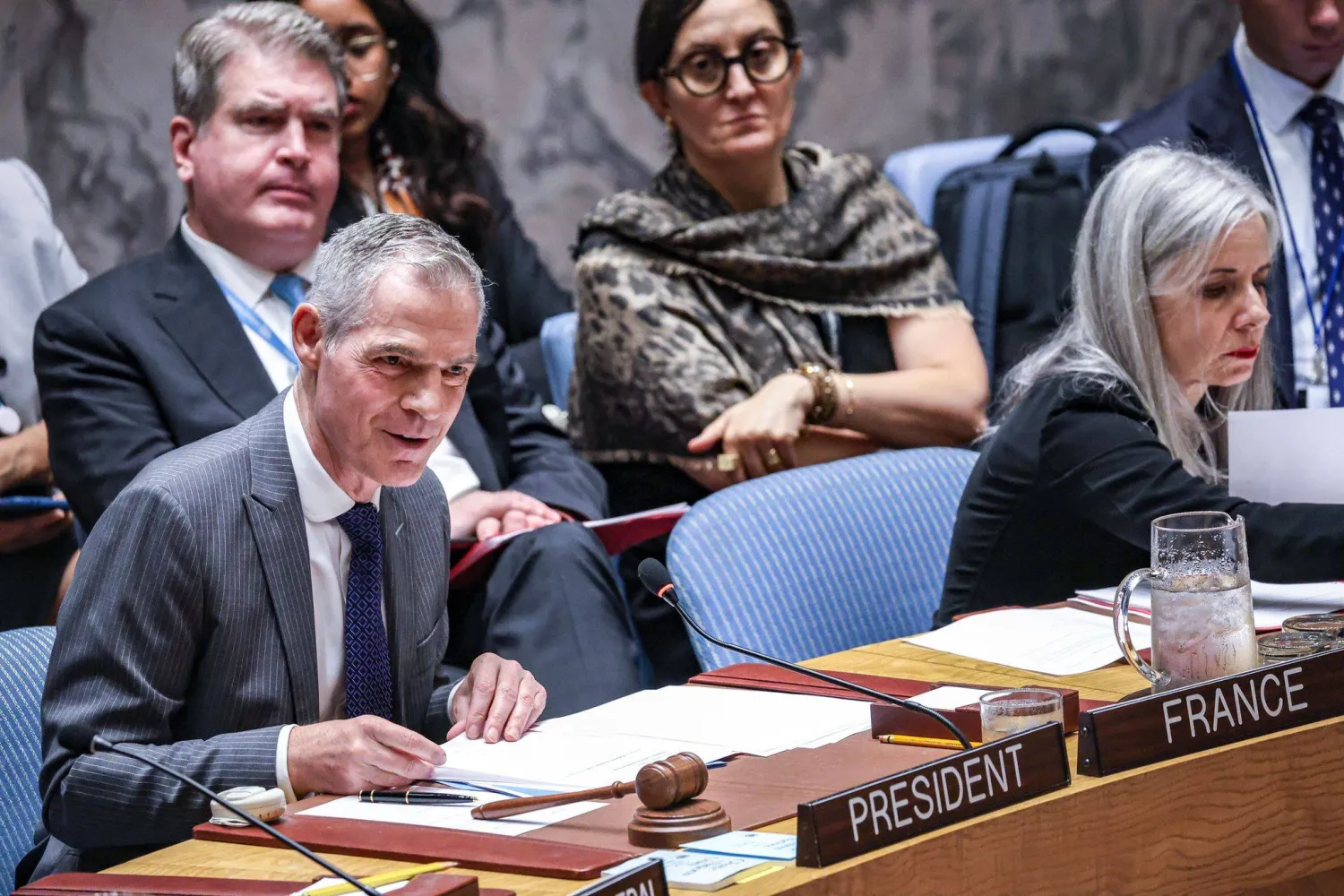
11 September 2026, US, New York: France's Permanent Representative to the UN, Jerome Bonnafont, speaks during a UN Security Council meeting marking the 25th anniversary of the 11 September 2001 terrorist attacks and examining the evolving global terrorist threat and international efforts to counter terrorism. Photo: Bianca Otero/ZUMA Press Wire/dpa
TT

France Apologizes for UN Diplomatic Spat with Washington

11 September 2026, US, New York: France's Permanent Representative to the UN, Jerome Bonnafont, speaks during a UN Security Council meeting marking the 25th anniversary of the 11 September 2001 terrorist attacks and examining the evolving global terrorist threat and international efforts to counter terrorism. Photo: Bianca Otero/ZUMA Press Wire/dpa

The French UN mission said it regretted an online post criticizing how the United States voted during a UN General Assembly meeting, with US officials telling AFP on Saturday that Washington appreciated the statement.

France's permanent mission to the UN published the apology Friday, saying it regretted a post on X criticizing the United States' commitment to human rights.

"France and the United States recently took different positions on a vote at the United Nations General Assembly. This difference concerned one vote, and not the defense of human rights," the mission said in an English statement on its website.

"Public differences of opinion on one vote do not stand in the way of close dialogue with the United States, and do not call into question our historical alliance, nor our ability to work together to advance peace, stability and prosperity, including within multilateral forums," the statement continued.

The mea culpa was well-received by Washington, which has been holding up the appointment of France's next US ambassador as a result of the dispute.

"We note and appreciate France's statement and look forward to working together to further shared values and interests," a US State Department official told AFP on condition of anonymity.

The US State Department has held up the approval of Aurelien Lechevallier, French President Emmanuel Macron's choice as France's next envoy to Washington, replacing Laurent Bili.

Lechevallier is currently French Foreign Minister Jean-Noel Barrot's chief of staff.

US approval of a choice of French envoy is usually a formality but has remained in limbo since the dispute.

On July 24, the United States was one of 10 countries to vote in the UN General Assembly against extending Volker Turk's term as UN human rights chief, joining the ranks of North Korea, Russia and Nicaragua, among others.

"The US used to be a beacon of human rights. Not anymore," the French mission wrote in a post on X after the United States strongly opposed another term by Turk, who has repeatedly questioned US policies under President Donald Trump.

The criticism was met with immediate backlash from Washington, with the US representative walking out of a UN Security Council meeting days later when France's ambassador took the floor, in protest of the comments.