
South Korean Founder of Failed Terra Coin Admits He Was 'Wrong'

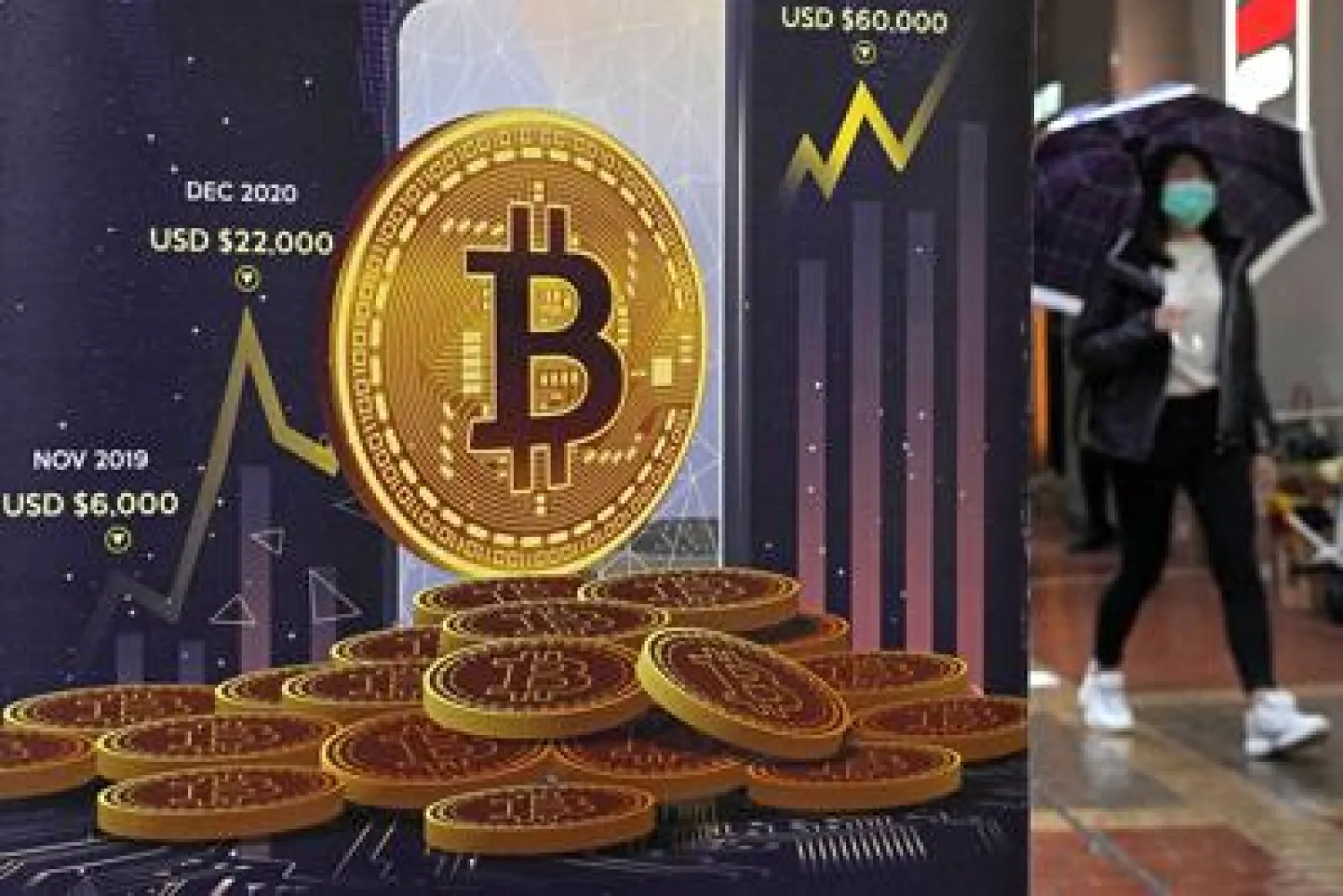
FILE - An advertisement for Bitcoin cryptocurrency is displayed on a street in Hong Kong, Thursday, Feb. 17, 2022. (AP Photo/Kin Cheung, File)
TT

South Korean Founder of Failed Terra Coin Admits He Was 'Wrong'

FILE - An advertisement for Bitcoin cryptocurrency is displayed on a street in Hong Kong, Thursday, Feb. 17, 2022. (AP Photo/Kin Cheung, File)

The co-founder of the failed Terra cryptocurrency, which collapsed and wiped out about $40 billion of investors' money in May, has admitted he was "wrong", but said that he was not talking to South Korean investigators.

The dramatic disintegration of stablecoin TerraUSD and its sister token Luna -- which both dropped to nearly zero in value -- hit the wider crypto market, sparking over $500 billion in losses, said AFP.

Stablecoins are designed to have a relatively stable price and are usually pegged to a real world commodity or currency.

Many retail investors lost their life savings when Luna and Terra entered a "death spiral" and collapsed, and South Korean authorities have opened multiple criminal probes into the crash.

In his first public comments since, Do Kwon, the 31-year-old South Korean founder of Terraform Labs, spoke to crypto media start-up Coinage from Singapore, saying the collapse had been "brutal".

"I think in terms of healing wounds, the best that I can do is to just be upfront with everything that happened. You know, just admit that I was wrong," Kwon said.

South Korean prosecutors last month raided the home of Do Kwon's co-founder Daniel Shin as part of a probe into allegations of illegal activity behind Terra's collapse.

Authorities have also banned key former and current employees of Terraform Labs from leaving the country -- and have required Kwon to notify them when he returns.

But Kwon said in his interview that he had not been contacted by the prosecutors, and has not decided whether he would return to South Korea to cooperate.

"It's kind of hard to make that decision, because we've never been in touch with the investigators," he said, adding: "They've never charged us with anything."

- 'Cautionary tale' -
Critics say Do Kwon and Terra are a cautionary tale for the crypto market.

TerraUSD was once the fourth-largest stablecoin and the 10th-largest cryptocurrency by market value, according to CoinMarketCap.

Unlike other stablecoins backed by real world assets like cash, TerraUSD was algorithmic -- using code to maintain its price at around one US dollar based on a complex system of minting and burning.

A TerraUSD token was created by destroying some of the sister cryptocurrency Luna to maintain the dollar peg.

To maintain demand for Terra, Terraform Labs started offering eye-watering interest rates, which many critics derided as a Ponzi scheme.

When the TerraUSD crashed, investors panicked and tried to pull out their money, causing a vicious, self-perpetuating bank run.

Many experts had predicted precisely this eventuality, saying the model was fundamentally flawed.

"If demand falls away, then the price will go to zero," Hilary Allen, a professor of financial regulation at the US-based American University, told AFP.

"This is a characteristic of almost all crypto assets, and so Terra/Luna should be seen as a cautionary tale for all crypto investors."

- Ponzi scheme -
Prior to the May crisis, Kwon had two starkly different reputations, depending on who you asked: he was either a genius mastermind, or the head of a Ponzi scheme.

A Stanford graduate from South Korea who had done stints at Microsoft and Apple, Kwon frequently belittled critics online who expressed doubt over his algorithmic stablecoin model.

When British economist Frances Coppola tweeted that self-correction mechanisms -- used by TerraUSD -- will fail when panicking investors are stampeding for the exit, Kwon tweeted back: "I don't debate the poor on Twitter."

In the interview, Kwon said he still believes in Terra.

Just weeks after the coin failed he launched a fresh iteration dubbed Terra 2.0, but its value dropped quickly from as high as $11 to $2.

"I'm always going to be doing things on Terra and for the Terra community," Kwon said. "This is my home and this is where I feel like there's the brightest future."

But with multiple lawsuits and investigations pending, analysts say Kwon's next projects are unlikely to succeed.

"Do Kwon's name basically now carries negative goodwill," said Kelvin Low, a law professor at the National University of Singapore.

"His involvement in a project hurts rather than helps it."


Nvidia Boss Insists 'Huge' Investment in OpenAI on Track

Nvidia CEO Jensen Huang insists the US tech giant is going to make 'a huge investment in OpenAI'. Patrick T. Fallon / AFP/File
TT

Nvidia Boss Insists 'Huge' Investment in OpenAI on Track

Nvidia CEO Jensen Huang insists the US tech giant is going to make 'a huge investment in OpenAI'. Patrick T. Fallon / AFP/File

Nvidia chief executive Jensen Huang has insisted the US tech giant will make a "huge" investment in OpenAI and dismissed as "nonsense" reports that he is unhappy with the generative AI star.

Huang made the remarks late Saturday in Taipei after the Wall Street Journal reported that Nvidia's plan to invest up to $100 billion in OpenAI had been put on ice, said AFP.

Nvidia announced the plan in September to invest $100 billion in OpenAI, building infrastructure for next-generation artificial intelligence.

The Wall Street Journal, citing unnamed sources, said some people inside Nvidia had expressed doubts about the deal and that the two sides were rethinking the partnership.

"That's complete nonsense. We are going to make a huge investment in OpenAI," Huang told journalists, when asked about reports that he was unhappy with OpenAI.

Huang insisted that Nvidia was going ahead with its investment in OpenAI, describing it as "one of the most consequential companies of our time".

"Sam is closing the round, and we will absolutely be involved in the round," Huang said, referring to OpenAI chief executive Sam Altman.

"We will invest a great deal of money, probably the largest investment we've ever made."

Nvidia has come to dominate spending on the processors needed for training and operating the large language models (LLM) behind chatbots like OpenAI's ChatGPT or Google Gemini.

Sales of its graphics processing units (GPUs) -- originally developed for 3D gaming -- powered the company's market cap to over $5 trillion in October, although the figure has since fallen back by more than $600 billion.

LLM developers like OpenAI are directing much of the mammoth investment they have received into Nvidia's products, rushing to build GPU-stuffed data centers to serve an anticipated flood of demand for AI services.


Meta Shares Skyrocket, Microsoft Slides on Wall Street after Earnings

A Microsoft logo is seen a day after Microsoft Corp's $26.2 billion purchase of LinkedIn Corp, in Los Angeles, California, US, June 14, 2016. REUTERS/Lucy Nicholson
TT

Meta Shares Skyrocket, Microsoft Slides on Wall Street after Earnings

A Microsoft logo is seen a day after Microsoft Corp's $26.2 billion purchase of LinkedIn Corp, in Los Angeles, California, US, June 14, 2016. REUTERS/Lucy Nicholson

Shares in Meta skyrocketed by 10 percent at opening on Wall Street on Thursday, a day after the social media giant posted better than expected earnings as the company invests heavily in artificial intelligence.

Microsoft, whose earnings disappointed analysts, saw its share price tumble by 10 percent, with investors showing concern for the return on investment for the software giant's spending on AI.


Samsung Logs Best-ever Profit on AI Chip Demand

South Korean tech giant Samsung Electronics posted record quarterly profits on Thursday, riding strong market demand for its artificial intelligence chips. Jung Yeon-je / AFP/File
TT

Samsung Logs Best-ever Profit on AI Chip Demand

South Korean tech giant Samsung Electronics posted record quarterly profits on Thursday, riding strong market demand for its artificial intelligence chips. Jung Yeon-je / AFP/File

South Korean tech giant Samsung Electronics posted record quarterly profits Thursday, riding massive market demand for the memory chips that power artificial intelligence.

A global frenzy to build AI data centers and develop the fast-evolving technology has sent orders for advanced high bandwidth memory microchips soaring.

That is also pushing up prices for less flashy chips used in consumer electronics -- threatening higher prices for phones, laptops and other devices worldwide.

In the quarter to December 2025, Samsung said it saw "its highest-ever quarterly consolidated revenue at KRW 93.8 trillion (US$65.5 billion)", a quarter-on-quarter increase of nine percent.

"Operating profit was also an all-time high, at KRW 20.1 trillion," the company said.

The dazzling earnings came a day after a key competitor, South Korean chip giant SK hynix, said operating profit had doubled last year to a record high, also buoyed by the AI boom.

The South Korean government has pledged to become one of the top three AI powers, behind the United States and China, with Samsung and SK hynix among the leading producers of high-performance memory.

Samsung said Thursday it expects "AI and server demand to continue increasing, leading to more opportunities for structural growth".

Annual revenue stood at 333.6 trillion won, while operating profit came in at 43.6 trillion won. Sales for the division that oversees its semiconductor business rose 33 percent quarter-on-quarter.

The company pointed to a $33.2 billion investment in chip production facilities -- pledging to continue spending in "transitioning to advanced manufacturing processes and upgrading existing production lines to meet rising demand".

- 'Clearly back' -

Major electronics manufacturers and industry analysts have warned that chipmakers focusing on AI sales will cause higher retail prices for consumer products across the board.

This week US chip firm Micron said it was building a $24 billion plant in Singapore in response to AI-driven demand that has caused a global shortage of memory components.

SK hynix announced Wednesday that its operating profit had doubled last year to a record 47.2 trillion won.

The company's shares have surged some 220 percent over the past six months, while Samsung Electronics has risen about 130 percent, part of a huge global tech rally fueled by optimism over AI.

Both companies are on the cusp of producing next-generation high-bandwidth "HBM4" chips for AI data centers, with Samsung reportedly due to start making them in February.

American chip giant Nvidia -- now the world's most valuable company -- is expected to be one of Samsung's customers for HBM4 chips.

But Nvidia has reportedly allocated around 70 percent of its HBM4 demand to SK hynix for 2026, up from the market's previous estimate of 50 percent.

"Samsung is clearly back and we are expecting them to show a significant turnaround with HBM4 for Nvidia's new products -- helping them move past last year's quality issues," Hwang Min-seong, research director at market analysis firm Counterpoint, told AFP.

But SK still "maintains a market lead in both quality and supply" of a number of key components, including Dynamic Random Access Memory chips used in AI servers, he said.

SK also this week said it will set up an "AI solutions firm" in the United States, committing $10 billion and weighing investments in US companies.