


Gantz Demands US Retains ‘Military Option’ to Deter Iran

Israeli Defense Minister Benny Gantz inspecting the K-135 air refueling unit at the US Central Command headquarters in Florida
TT

Gantz Demands US Retains ‘Military Option’ to Deter Iran

Israeli Defense Minister Benny Gantz inspecting the K-135 air refueling unit at the US Central Command headquarters in Florida

Israeli Defense Minister Benny Gantz said that the United States needs to maintain a viable "military option" against Iranian nuclear facilities, even if a new agreement is reached with Tehran.

Gantz met with US National Security Advisor Jake Sullivan on Friday.

During the meeting, he indicated he had reached a "strong agreement" with Washington to enhance operational capabilities to confront Iran and coordinate defenses to counter its influence in countries such as Lebanon, Syria, and Iraq.

Informed sources indicated that the meeting lasted for about an hour. Gantz stressed that Israel will also retain its operational freedom even if an agreement is reached and that the dispute over the proposed deal does not prevent the alliance between the US and Israel against Iranian violations.

Gantz expressed his belief that the nuclear agreement “is not a peace treaty,” stressing the Israeli vision of the necessity of preserving the military option, which helps create a deterrent force even with a deal on the table, according to the Jerusalem Post.

Gantz spoke with Sullivan about the need to continue joint US-Israeli activities against Iran as part of global efforts to undermine Tehran’s nuclear progress.

NSC Spokesperson Adrienne Watson said Sullivan met with the Israeli Minister of Defense to continue consultations on security issues of mutual concern.

Sullivan emphasized President Biden’s unwavering commitment to Israel’s security, and the two exchanged views on ways to deepen the US-Israel security partnership, including via regional cooperation and coordination.

They discussed the US commitment to ensuring Iran never obtains a nuclear weapon and the need to counter threats from Iran and Iran-based proxies.

Officials said that Gantz and Sullivan had two main concerns about the potential deal: the so-called sunset clause, which will lift limitations on Iran’s nuclear program when the accord expires; and the sanctions relief that would allow Iran to increase funding to its proxies.

Newsweek magazine quoted a National Security Council spokesman said that the aim is to restore Iran's compliance with that deal.

“The focus on sunsets is a red herring. The deal blocks every pathway to a weapon."

Israeli government officials have failed to arrange an “urgent” phone call between Prime Minister Yair Lapid and US President Joe Biden, Channel 13 reported.

When asked by Israeli officials for the phone call, the White House replied that Biden was unavailable as he was on “vacation.” It, however, said that the conversation between the two would eventually occur, and possibly soon.

The channel also indicated that Gantz, who left for Washington on Wednesday evening, will not be able to meet his US counterpart Lloyd Austin since he is also outside Washington.

Gantz arrived in the United States on Thursday and began his meetings by visiting the Central Command Center in Florida and holding a meeting with General Michael Corella, the head of the US Central Command, and Staff Sergeant John Innoha.

Israeli officials have sounded the alarm recently amid reports of an emerging nuclear pact with Iran.

Mossad chief David Barnea has reportedly called the agreement between Iran and the West a "very bad" deal that would only benefit the Islamist republic, while Defense Minister Benny Gantz arrived in the United States to relay Israel's concerns, reported Israel Hayom.

However, US officials said the nuclear deal restoration could not be linked to the safeguards issue.

US State Department deputy spokesperson Vedant Patel said in a press briefing on Thursday that the US has been clear that “we do not believe there should be any conditionality between reimplementation of the JCPOA and the investigations related to Iran’s legal obligations,”

He said the only way to address these issues is for Iran to answer International Atomic Energy Agency (IAEA) questions.

“Once the IAEA director general reports to the board of governors that the outstanding issues have been clarified and resolved, we expect them to come off the board’s agenda, but not before that,” he said.



First Flight of Deported Venezuelan Migrants Arrives in Caracas after Maduro's Capture

A migrant participating in the government's program Great Mission Return to the Homeland, waves upon arrival at Maiquetia International Airport, in Venezuela 16 January 2026. EPA
TT

First Flight of Deported Venezuelan Migrants Arrives in Caracas after Maduro's Capture

A migrant participating in the government's program Great Mission Return to the Homeland, waves upon arrival at Maiquetia International Airport, in Venezuela 16 January 2026. EPA

A flight with 231 Venezuelan migrants deported from the US city of Phoenix arrived Friday to their home country, nearly two weeks after the United States captured former President Nicolás Maduro and took him to New York to face drug trafficking charges.

The Eastern Airlines plane arrived at an airport outside the capital, Caracas, marking the resumption of flights after Washington — according to Venezuelan officials — unilaterally suspended direct deportation air transfers in mid-December, The Associated Press reported.

The previous direct flight from the US was on Dec. 10.

Return flights for deported migrants had been regularized since late March as part of the transfers agreed upon by both governments.

The transfers were successively affected amid heightened tensions since US military forces began to execute a series of deadly attacks against boats suspected of smuggling drugs in international waters of the Caribbean and Pacific Ocean, including several vessels that they claim departed from Venezuela.

Maduro maintained at all times that US President Donald Trump could order military action to try to overthrow him.

The flight’s arrival comes 13 days after Maduro was captured along with his wife, Cilia Flores, during a military intervention in Caracas. Subsequently, he was transferred to US territory, where both appeared on Jan. 5 before a New York court to face narcoterrorism charges. Both have pleaded not-guilty.


Putin in Contact with Israel, Iran Leaders to Help 'De-escalate', Says Kremlin

Russian President Vladimir Putin takes part in a ceremony to receive letters of credence from newly appointed foreign ambassadors at the Grand Kremlin Palace in Moscow on January 15, 2026. (Photo by Ramil Sitdikov / POOL / AFP)
TT

Putin in Contact with Israel, Iran Leaders to Help 'De-escalate', Says Kremlin

Russian President Vladimir Putin takes part in a ceremony to receive letters of credence from newly appointed foreign ambassadors at the Grand Kremlin Palace in Moscow on January 15, 2026. (Photo by Ramil Sitdikov / POOL / AFP)

Russian President Vladimir Putin on Friday held phone calls with the leaders of Israel and Iran, the Kremlin said, offering mediation amid large-scale protests in Iran that have raised fears of a military confrontation in the region. 

Independent monitors say Iranian security forces have killed thousands in a forceful response to nationwide anti-government protests -- a crackdown that prompted threats of military action by the United States, Israel's key ally. 

Iran and Israel fought a brief war in June that saw unprecedented Israeli attacks on Iranian military and nuclear facilities. The United States had briefly joined those strikes, hitting three major Iranian nuclear sites. 

On Friday, Russia announced Putin was in contact with both Israeli Prime Minister Benjamin Netanyahu and Iranian President Masoud Pezeshkian in a bid to cool tensions between the two rivals. 

"The situation in the region is highly tense, and the president continues his efforts to facilitate de-escalation," Kremlin spokesman Dmitry Peskov said. 

Moscow is a close ally of Iran. It has also strived for good relations with Israel, though those ties became strained amid Russian criticsm of Israel's actions in Gaza since October 7, 2023. 

In a call with Israel's Netanyahu on Friday, the Kremlin said Russia had expressed its "readiness to continue its mediation efforts." 

It did not clarify what current efforts were being undertaken or comment on the protests in Iran. 

Moscow had previously offered mediation during the June war. 

Peskov said that Moscow would announce "the results of our telephone conversation with the Iranian President very soon." 

Netanyahu said Sunday that he hoped Iran would soon be freed from what he described as the "yoke of tyranny", amid the protests. 

However, the rallies appear to have diminished over the last few days in the face of repression and a week-long internet blackout. 

Iran has repeatedly accused the United States and Israel of inciting the unrest and trying to undermine the Islamic republic's national unity. 


Trump Accepts Nobel Medal from Venezuelan Opposition Leader Machado

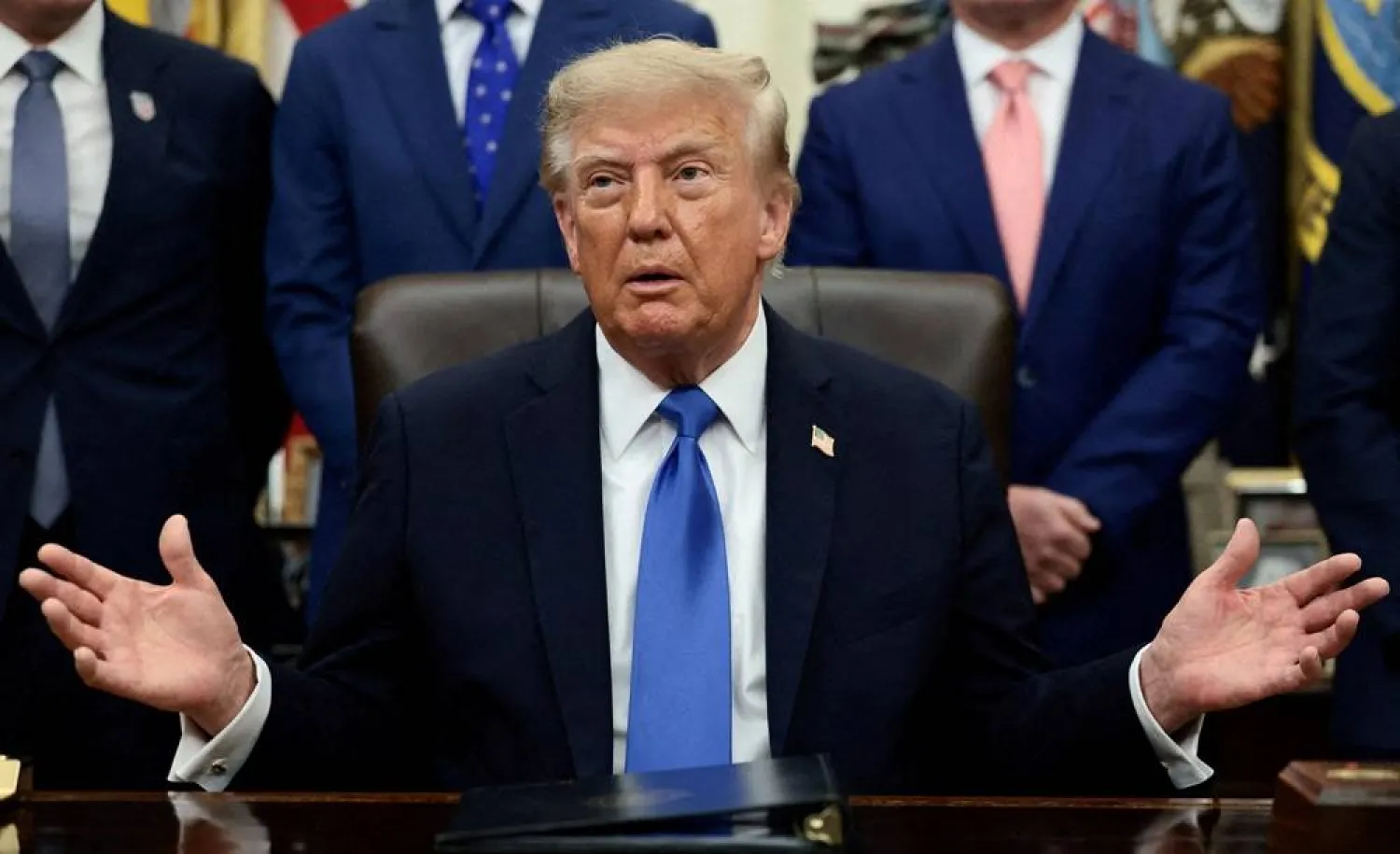
(COMBO) This combination of pictures created on January 14, 2026 shows US President Donald Trump at the White House in Washington, DC, on March 26, 2025 and Nobel peace laureate Maria Corina Machado in Oslo, Norway, on December 11, 2025. On January 15 US President Donald Trump is scheduled to meet with Venezuelan opposition leader Maria Corina Machado, whose pro-democracy movement he has sidelined since toppling her country's leader, and whose Nobel Peace Prize he openly envies.
TT

Trump Accepts Nobel Medal from Venezuelan Opposition Leader Machado

(COMBO) This combination of pictures created on January 14, 2026 shows US President Donald Trump at the White House in Washington, DC, on March 26, 2025 and Nobel peace laureate Maria Corina Machado in Oslo, Norway, on December 11, 2025. On January 15 US President Donald Trump is scheduled to meet with Venezuelan opposition leader Maria Corina Machado, whose pro-democracy movement he has sidelined since toppling her country's leader, and whose Nobel Peace Prize he openly envies.

Venezuelan opposition leader Maria Corina Machado gave her Nobel Peace Prize medal to US President Donald Trump on Thursday during a White House meeting, in a bid to influence his efforts to shape her country's political future.

A White House official confirmed that Trump intends to keep the medal, Reuters reported.

In a social media post on Thursday evening, Trump wrote: "Maria presented me with her Nobel Peace Prize for the work I have done. Such a wonderful gesture of mutual respect. Thank you Maria!"

Machado, who described the meeting as "excellent," said the gift was in recognition of what she called his commitment to the freedom of the Venezuelan people.

The White House later posted a photo of Trump and Machado with the president holding up a large, gold-colored frame displaying the medal. Accompanying text read, "To President Donald J. Trump In Gratitude for Your Extraordinary Leadership in Promoting Peace through Strength," and labeled ‌the gesture as a "Personal ‌Symbol of Gratitude on behalf of the Venezuelan People."

Machado's attempt to sway Trump ‌came ⁠after he dismissed ‌the idea of installing her as Venezuela's leader to replace the deposed Nicolas Maduro.

Trump openly campaigned for the prize before Machado was awarded it last month and complained bitterly when he was snubbed.

Though Machado gave Trump the gold medal that honorees receive with the prize, the honor remains hers; the Norwegian Nobel Institute has said the prize cannot be transferred, shared or revoked.

Asked on Wednesday if he wanted Machado to give him the prize, Trump told Reuters: "No, I didn't say that. She won the Nobel Peace Prize."

The Republican president has long expressed interest in winning the prize and has at times linked it to diplomatic achievements.

The lunch meeting, which appeared to last slightly over ⁠an hour, marked the first time the two have met in person.

Machado then met with more than a dozen senators, both Republican and Democratic, on Capitol Hill, ‌where she has generally found more enthusiastic allies.

During the visit, White House press ‍secretary Karoline Leavitt said Trump had looked forward to meeting ‍Machado, but stood by his "realistic" assessment that she did not currently have the support needed to lead the country in the ‍short term.

Machado, who fled the South American nation in a daring seaborne escape in December, is competing for Trump's ear with members of Venezuela's government and seeking to ensure she has a role in governing the nation going forward. After the United States captured Maduro in a snatch-and-grab operation this month, opposition figures, members of Venezuela's diaspora and politicians throughout the US and Latin America expressed hope for Venezuela to begin a process of democratization.

HOPES OF A MOVE TO DEMOCRACY

Democratic Senator Chris Murphy, one of the senators who met with Machado, said the opposition leader had told senators that repression in Venezuela was no different now ⁠than under Maduro.

Venezuela's interim President Delcy Rodriguez is a "smooth operator" who was growing more entrenched by the day thanks to Trump's support, he said.

"I hope elections happen, but I'm skeptical," said Murphy, of Connecticut.

Trump has said he is focused on securing US access to the country's oil and economically rebuilding Venezuela. Trump has on several occasions praised Rodriguez, Maduro's second-in-command, who became Venezuela's leader upon his capture. In an interview with Reuters on Wednesday, Trump said, "She's been very good to deal with."

Machado was banned from running in Venezuela's 2024 presidential election by a top court stacked with Maduro allies.

Outside observers widely believe Edmundo Gonzalez, an opposition figure backed by Machado, won by a substantial margin, but Maduro claimed victory and retained power. While the current government has freed dozens of political prisoners in recent days, outside groups and advocates have said the scale of the releases has been exaggerated by Caracas.

In an annual address to lawmakers, Rodriguez called for diplomacy with the United States and said should she need to travel to Washington, she would do so "walking on ‌her feet, not dragged there."

She also said she would propose reforms to her country's oil industry aimed at increasing access for foreign investors.