


Internet Shutdowns Hit Cash-Strapped Lebanon Due to Strike

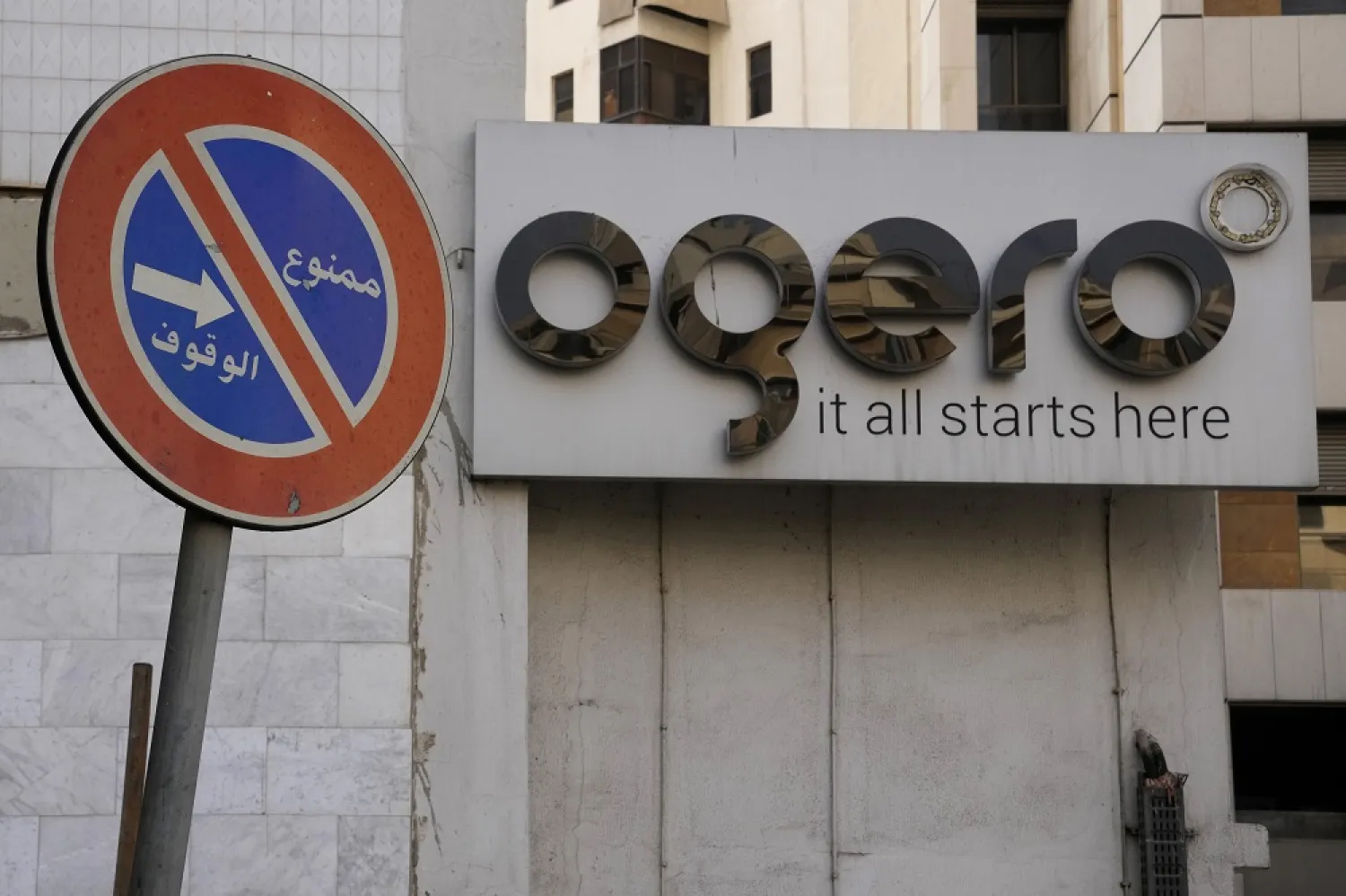
A sign of the state-owned telecom and internet company, Ogero, is displayed on one of their buildings, in Beirut, Lebanon, Wednesday, Aug. 31, 2022. (AP)
TT

Internet Shutdowns Hit Cash-Strapped Lebanon Due to Strike

A sign of the state-owned telecom and internet company, Ogero, is displayed on one of their buildings, in Beirut, Lebanon, Wednesday, Aug. 31, 2022. (AP)

Internet shutdowns rippled through cash-strapped Lebanon on Tuesday after employees of the country's state-owned telecom company went on strike, demanding higher wages.

It was the latest reflection of one of the world's worst economic disasters, which has pulled three quarters of Lebanon's 6 million people into poverty. The Lebanese pound in three years has lost over 90 percent of its value against the US dollar.

Employees of Ogero and other public sector institutions have not had their wages adjusted to accommodate the pound’s depreciation and skyrocketing inflation.

Striking Ogero employees told The Associated Press that they want their salaries raised after the government's recent hike on telecom fees and internet subscriptions. They say some of the salaries are now worth about $125.

“At first we were able to tolerate the inflation just like everyone else, but then people started to sell their cars, jewelry, and personal belongings to get by,” one employee told the AP on condition of anonymity, because they fear they may lose their job. “All we have left is to sell our homes, but then we would end up on the streets.”

Ogero Chairman Imad Kreidieh urged the Lebanese government to take swift action to resolve the situation.

“Unfortunately, at my level there is very little to do,” Kreidieh told the AP. “Ogero does not have the funds to deal with the matter.”

According to Lebanon’s state-run National News Agency, internet shutdowns have hit several towns across the country, including in several neighborhoods of Beirut.

Caretaker Telecommunications Minister Johnny Corm did not immediately respond to the AP when asked if the government is working to resolve the internet shutdowns. Another Ogero employee said they would not break the strike until they hold negotiations with Corm and reach a settlement.

Internet shutdowns are expected to reach more parts of the country as electricity generators run out of fuel.

Legislator Paula Yacoubian told the AP that Parliament's telecommunications committee will meet Monday next week to discuss the issue.

Parliament meanwhile has yet to pass a 2022 state budget, as the country scrambles to reform its corrupt and unproductive economy.

Thousands of public sector workers have already been on strike for almost two months, demanding higher wages and transportation stipends.

The Lebanese government in May approved raising internet and telephone subscription prices, saying the hikes are crucial for the survival of the country’s ailing telecom sector, which is struggling to maintain its infrastructure and afford diesel fuel for its generators.

Lebanon's already frail infrastructure further deteriorated after the massive Beirut port blast on Aug. 4, 2020, that killed over 200 people, wounded thousands, and destroyed several neighborhoods in the Lebanese capital.

Lebanon’s economic crisis continues to pulverize public life. The cash-strapped country already struggles with soaring gasoline, electricity, and food prices, as well as rampant power cuts and water shortages. Residents rely almost entirely on expensive private diesel generator subscriptions, as the country’s indebted and bloated state electricity company provides no more than about two hours of power daily.

Ogero over the past two years has struggled with upkeeping its infrastructure, affording fuel for its generators, and to prevent theft of copper and metal wires. In January, about 26,000 subscribers in Beirut went offline due to diesel fuel shortages, including the Internal Security Forces’ operations room.



Thousands of Syrians Face Legal Fallout From Assad-Era Cases

Syrians queue at Aleppo International Airport. (Civil Aviation Authority)
TT

Thousands of Syrians Face Legal Fallout From Assad-Era Cases

Syrians queue at Aleppo International Airport. (Civil Aviation Authority)

For many Syrians, the fall of Bashar al-Assad’s government did not end the cases against them. Activists and politicians are still discovering convictions issued in their absence and criminal wanted notices that remain in force, despite government measures to end security prosecutions of opponents.

Syria’s People’s Assembly has taken a leading role in transitional justice, repealing exceptional laws, including the law establishing the terrorism court.

But criminal cases brought during the conflict remain unresolved. Some Syrians returning by land or air discover the problem only when they reach the border.

Successive decisions and decrees have sought to dismantle the former government’s legacy. Yet thousands still face legal complications. Rights advocates say implementation has lagged behind legislative change, leaving people caught between promises of justice and institutional bureaucracy.

In March 2025, the Interior Ministry canceled travel-ban notices covering requests for arrest, notification or reporting, as well as failure to perform compulsory or reserve military service.

It said more than eight million people, roughly a third of Syrians, had been wanted by the former government’s intelligence and security agencies.

Last December, Justice Minister Mazhar al-Wais announced the abolition of exceptional courts and their rulings, in line with the repeal of Law No. 22 of 2012, which established the Court of Terrorism Cases. The judges who ran the court were removed.

The measure covered political cases, cases involving expressions of opinion and malicious charges. It excluded serious felonies involving personal rights, such as causing a person’s death, and organized crimes such as drug trafficking.

Those cases were referred to the regular military judiciary for consideration under fair legal procedures, leaving criminal prosecutions in place.

Repeal does not erase charges

People’s Assembly member Aqil Hussein says the assembly must legislate to repeal the terrorism and military courts and the “exceptional” security decisions and decrees issued against Syrians during the uprising. That must include canceling all resulting decisions and rulings, he said.

The measure does not cover criminal convictions, which the relevant institutions must resolve, Hussein said. But it could speed up that work and end the suffering of those affected. Agencies are working together on a mechanism to process cases faster and respond directly, he added.

Security sources told Asharq Al-Awsat that the former government used criminal charges, among other means, to pressure Syrians. It focused on terrorism allegations because of their international sensitivity, they said.

A large share of those allegations has been resolved, the sources said. Criminal charges and cases involving personal claims are harder to untangle because of technical complications and the number of agencies involved.

The sources acknowledged delays caused by the volume of cases and their links to complex civil matters. Claims brought by individuals can create further difficulties.

They said people affected by exceptional problems, such as a wanted notice that remains active after a case has been closed, or a lost case file, can approach the relevant offices in Damascus.

Records that outlast the cases

For many people still listed as wanted, settling their legal status means navigating a long bureaucratic process that restricts their freedom and civil rights.

Some said they learned that individuals had filed criminal complaints against them while they were abroad. Others said they could find no complainant.

Some returnees discovered arrest orders on criminal charges, only to learn from judicial offices that their case documents had been lost or damaged while the proceedings remained active.

People caught in this process cited poor links between databases and limited experience among new staff. Some said judicial offices and criminal investigation branches in Damascus had removed their records, but arrest warrants sent to border crossings were still in force.

Rights sources said political and security decisions had not been fully reconciled with prosecutors’ and courts’ records. Criminal entries are not removed automatically.

Canceling a wanted notice or overturning a conviction issued in a person’s absence requires a lengthy legal process, starting with a request to withdraw the notice and a visit to the judicial authority that issued it.

A proposed solution

“The new authorities have taken important steps in this direction, but they are still insufficient. The continued suffering of those affected shows the problem has not been resolved,” lawyer and rights activist Michel Shammas told Asharq Al-Awsat.

Issuing a general decision is one thing; carrying it through to every database, agency and case file is another, Shammas said. The former government created the files, but the new state inherited its institutions and records and must review and correct them.

Repealing the terrorism court and ending the exceptional laws used against opponents are necessary steps, he said. Neither automatically erases the effects of thousands of rulings, warrants and records issued by the court or other agencies.

Shammas proposed an independent judicial committee and a unified database to separate genuine criminal cases from political and security cases.

Political entries could then be removed collectively, he said, while an official service would let people check their legal status without an intermediary.


Sisi Stresses Egypt’s Support for Iraq’s Security, Stability

Egyptian President Abdel Fattah al-Sisi holds talks with the head of Iraq’s Hikma Movement in Cairo on Thursday. (Egyptian Presidency)
TT

Sisi Stresses Egypt’s Support for Iraq’s Security, Stability

Egyptian President Abdel Fattah al-Sisi holds talks with the head of Iraq’s Hikma Movement in Cairo on Thursday. (Egyptian Presidency)

Egyptian President Abdel Fattah al-Sisi met Ammar al-Hakim, head of Iraq’s Hikma Movement, in Cairo on Thursday and pledged continued support for Iraq’s security and stability.

Sisi said Egypt backed measures taken by the Iraqi state to protect its sovereignty, unity and territorial integrity. The talks also covered Baghdad’s efforts to fight corruption and bring weapons under state control.

Hikma Movement deputy head Mohsen al-Hakim, adviser Ahmed al-Hakim, Egyptian intelligence chief Hassan Rashad and Iraqi Ambassador Qahtan Taha al-Janabi attended the meeting.

Sisi visited Baghdad in June 2021, becoming the first Egyptian president to travel to Iraq in decades. The visit was part of a trilateral initiative with Iraq and Jordan to deepen political, economic and security coordination.

Egyptian presidential spokesperson Mohamed al-Shennawy said Sisi stressed the countries’ historic ties and Egypt’s commitment to engaging with Iraqi state institutions and political groups.

Sisi praised Iraq’s fight against terrorism and extremist ideology. He also commended al-Hakim’s efforts to strengthen stability, narrow political differences and put Iraq’s national interests first.

Al-Hakim said Egypt played a central role in regional security and stability, including by supporting Iraq’s efforts to regain its leading place in the Arab world and the wider region.

He said he wanted Sisi’s views on how to ease current regional tensions and shield Iraq from their effects.

Security and stability

Salah Halima, a member of the Egyptian Council for Foreign Affairs and a former assistant foreign minister, said some elements in Iraq were at odds with efforts to secure the country.

Action was needed to prevent activities beyond the control of Iraq’s governing authorities, he said.

“The situation may require a very high degree of cooperation between Egypt and Iraq,” Halima told Asharq Al-Awsat.

“Iraq’s national security is an integral part of Arab national security and closely linked to security and stability in the Red Sea and the Gulf.”

Halima said al-Hakim’s visit underscored the need for agreement on removing threats in Iraq and preventing any escalation that could destabilize the country. It could also spur broader cooperation between Cairo and Baghdad, he said.

The Egyptian presidency said the two leaders discussed the regional situation and its impact, particularly on Egypt and Iraq. Sisi outlined Egypt’s call for peaceful solutions to crises and conflicts, support for legitimate institutions and an inclusive nation-state.

He also described Egyptian efforts to lower tensions and avert another round of escalation. Iraq should continue playing a constructive role in strengthening collective Arab security and safeguarding the region’s resources, he said.

Visits gather pace

Contacts between Cairo and Baghdad have intensified. Sisi received former Iraqi Prime Minister Mohammed Shia al-Sudani on Aug. 27, 2024, for talks on energy, trade, investment and reconstruction. The two countries’ foreign ministers have also discussed ways to ease regional tensions.

In late August, Iraqi Prime Minister Ali al-Zaidi met Egypt’s intelligence chief, who delivered a message from Sisi.

According to the Iraqi cabinet, Sisi praised the countries’ strategic ties and expressed his readiness to support efforts to meet the aspirations of their peoples.

A senior delegation from Iraq’s Ministry of Water Resources visited Egypt early this month to strengthen technical cooperation and exchange expertise.

The Palestinian issue also featured in Thursday’s meeting. Sisi described Egypt’s efforts to implement the second phase of the Sharm el-Sheikh agreement and the US peace plan, deliver aid and expand humanitarian relief in Gaza.

He reiterated Egypt’s position that a Palestinian state with East Jerusalem as its capital must be established in accordance with international resolutions, calling it the only comprehensive and just solution to the Palestinian issue.


'A Challenge and Blank Ballots': What Is Happening in Hamas’s Leadership Election in Gaza?

This handout picture released by the office of Iran's Supreme Leader Ayatollah Ali Khamenei on February 8, 2025, shows (L to R) member of the Hamas political bureau Nizar Awadallah, deputy chairman of the Hamas political bureau Khalil al-Hayya and the head of the political council of Hamas Mohammad Ismail Darwish, meeting with him in Tehran. (Photo by KHAMENEI.IR / AFP)
TT

'A Challenge and Blank Ballots': What Is Happening in Hamas’s Leadership Election in Gaza?

This handout picture released by the office of Iran's Supreme Leader Ayatollah Ali Khamenei on February 8, 2025, shows (L to R) member of the Hamas political bureau Nizar Awadallah, deputy chairman of the Hamas political bureau Khalil al-Hayya and the head of the political council of Hamas Mohammad Ismail Darwish, meeting with him in Tehran. (Photo by KHAMENEI.IR / AFP)

Four Hamas sources inside and outside the Gaza Strip told Asharq Al-Awsat in separate accounts that the runoff election to choose the head of the movement’s political bureau in Gaza had been suspended after the first round, held three weeks ago, failed to produce a result.

The sources agreed that the first round failed to produce a decisive result because eligible voters cast blank ballots, repeating a phenomenon that had occurred during the election to choose the overall head of the political bureau last May. That election went to a second round, which Khalil Al-Hayya won over Khaled Meshaal.

Three sources from inside and outside the Gaza Strip also said that the suspension of the runoff for the leadership of Hamas’s Gaza political bureau came after Nizar Awadallah, who is based outside Gaza and is running against Ali Al-Amoudi, who is based inside the Strip, challenged some of the procedures followed during the runoff. Both are members of the political bureau.

The fourth source, who is outside Gaza, said that “other disagreements” had also contributed to the temporary suspension of the election, which is expected to resume soon after “some arrangements” are made, without providing further details. The source described these as “normal disagreements, within the framework of the laws and regulations governing any electoral process within the movement.”

Some sources attributed part of the delay in reaching a decision to “the security situation and the circumstances facing the Strip, as well as the challenges of conducting elections in the aftermath of the Gaza war.” Another source said the election was being held while Israel was tracking substantial intelligence aimed at trying to locate participants in the election and others. These factors, the source said, had contributed to legal gaps that led to the current situation.

Why Have Blank Ballots Returned?

Regarding the renewed use of blank ballots, two sources inside the Gaza Strip said this was a normal outcome stemming from differences over the competing figures and the approach they might pursue, which some viewed as unsuitable for the current phase, as had also occurred in the general election.

None of the sources specified whether the head of Hamas’s political bureau, Khalil Al-Hayya, supports either of the two candidates, Ali Al-Amoudi or Nizar Awadallah.

Hamas is going through an exceptionally complex period, unlike any it has experienced since its establishment in 1987, following the October 7, 2023 attack it launched against Israeli sites and towns adjacent to the Gaza Strip, which prompted Israel to wage a prolonged war.

What Do We Know About Ali Al-Amoudi?

Sources told Asharq Al-Awsat in December that Al-Amoudi, a former prisoner and member of the political bureau who was responsible for the movement’s media division before the war, had become responsible for running the political bureau’s affairs in the Gaza Strip. He was appointed, along with a number of associates of the late Hamas leader Yahya Sinwar, to manage the movement in the Strip. Most of them are based in Khan Younis in southern Gaza.

Al-Amoudi, who was released in 2011 as part of the prisoner exchange deal involving Israeli soldier Gilad Shalit, has emerged over the past year as a central figure in the administration of the Gaza Strip. He was among Sinwar’s closest associates during their imprisonment in Israeli prisons and after their release. He frequently accompanied Sinwar at meetings, events and other engagements. He was appointed through an endorsement and consultation process to manage the Strip, while some sources at the time said the move had circumvented the movement’s internal regulations. This may help explain the holding of the internal election in Gaza.

In recent months, considerable controversy has arisen over Al-Amoudi’s decisions in Gaza, including changes he made and the dismissal of officials from their positions. This reportedly caused anger among local leaders in the Strip and prompted some members of the political bureau outside Gaza to intervene in an attempt to resolve the resulting disputes.

What Do We Know About Nizar Awadallah?

Nizar Awadallah is considered one of Hamas’s founding generation. He secretly led the movement’s political bureau during the period from late 2004 to early 2007. He also played a prominent role in several important stages in the movement’s modern history, including leading the negotiations over the Shalit prisoner exchange deal and taking an active and important part in negotiations during the most recent war. He also played a significant role in Palestinian reconciliation talks held in several capitals following Hamas’s takeover of the Gaza Strip in 2007.

Awadallah was very close to Sheikh Ahmed Yassin, the founder of Hamas, as well as Abdel Aziz Al-Rantisi and other early and historic leaders of the movement, of whom he was one.

Awadallah, a 68-year-old architect, rose to prominence. He lives in the Sheikh Radwan neighborhood of Gaza City, and his home has been struck several times during previous wars.

During the last internal elections, held in 2021, Awadallah competed against Yahya Sinwar for leadership of Hamas’s political bureau in the Gaza Strip. He lost to Sinwar after a second runoff was held.

Clarify the opening election sequenceFix Awadallah’s biography paragraph