Egypt, Russia Discuss Nuclear Science Research Cooperation https://english.aawsat.com/home/article/3852466/egypt-russia-discuss-nuclear-science-research-cooperation
Egypt, Russia Discuss Nuclear Science Research Cooperation
Egyptian Higher Education and Scientific Research Minister Ayman Ashour meets with head of JINR in Russia Dmitry Kamanin. (Egyptian Higher Education Ministry)
Egypt, Russia Discuss Nuclear Science Research Cooperation
Egyptian Higher Education and Scientific Research Minister Ayman Ashour meets with head of JINR in Russia Dmitry Kamanin. (Egyptian Higher Education Ministry)
Egyptian Higher Education and Scientific Research Minister Ayman Ashour held talks on Friday with head of the International Cooperation Department of Joint Institute for Nuclear Research (JINR) in Russia Dmitry Kamanin.
The talks focused on means to activate a cooperation agreement signed with Moscow on the peaceful uses of nuclear energy through training programs for students and researchers.
Ashour stressed the Egyptian government's keenness on holding cooperation with friendly countries in scientific research to achieve Sustainable Development Goals (SDGs), a press statement said.
He hailed the distinguished ties binding Egypt and Russia, especially in scientific research and fields related to nuclear research and its peaceful applications.
The minister further underlined the importance of building the capabilities of young researchers through intense training.
“The Egyptian government places youth at the forefront of its priorities,” Ashour declared.
The Minister also lauded the ongoing cooperation between Egypt's Academy of Scientific Research and Technology (ASRT) and Russia's JINR in this respect.
The meeting covered the procedures for dispatching this month, the second group of 15- and 16-year-old students excelling in physics to JINR, as part of an integrated plan adopted by ASRT to advance basic sciences, especially physics and mathematics, and support geniuses.
The meeting also pointed out to the JINR's decision to raise the status of Egypt up to a full-fledged JINR Member State.
At the end of the meeting, Ashour received an invitation from Kamanin to attend along with a high-level Egyptian delegation the proceedings of the training, which is organized by the JINR for a number of experts, politicians and decision-makers from the member states.
Cooperation between Moscow and Cairo in the field of nuclear energy includes the construction of the Egyptian El-Dabaa Nuclear Plant.
The construction by Russia's state-owned energy corporation Rosatom, began last month.
The 4.8-gigawatt plant is located 300 kilometers west of Cairo in the Matrouh province on the Mediterranean.
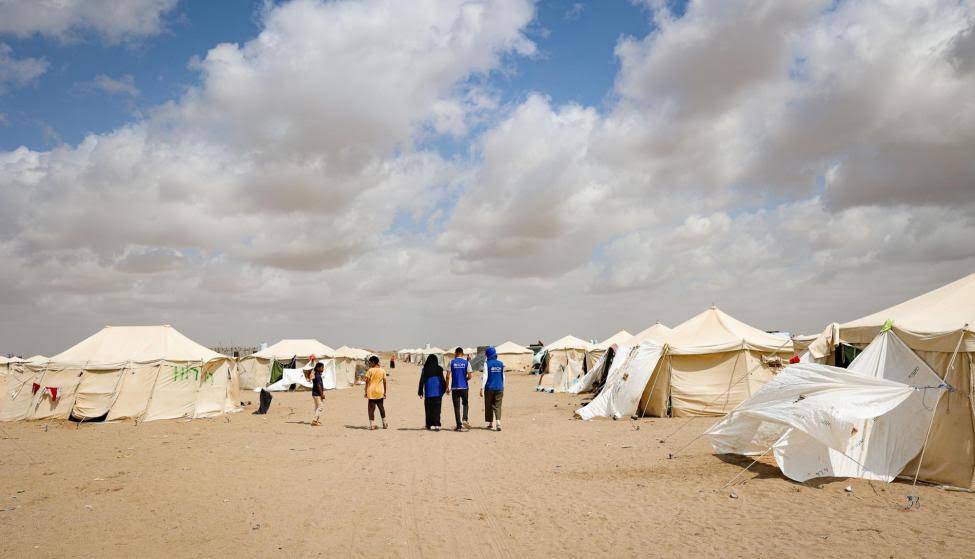
A displaced Yemeni child sits outside a tent at the Al-Fardous displacement camp in Ras Imran, on the outskirts of Aden, Yemen, Sunday, Oct. 25, 2026. (AP Photo/Abdulnasser Alseddik)
Houthi Attacks Displace 270,000 Yemenis in Two Months
A displaced Yemeni child sits outside a tent at the Al-Fardous displacement camp in Ras Imran, on the outskirts of Aden, Yemen, Sunday, Oct. 25, 2026. (AP Photo/Abdulnasser Alseddik)
Caught between displacement camps that lack even the most basic necessities and perilous sea crossings, hundreds of thousands of Yemenis are facing yet another journey of displacement as the Houthis' military escalation has expanded since September of last year.
The crisis has extended far beyond the front lines, placing increasing pressure on governorates hosting displaced populations and spilling across Yemen's borders, all amid dwindling humanitarian funding and a declining capacity to meet growing needs.
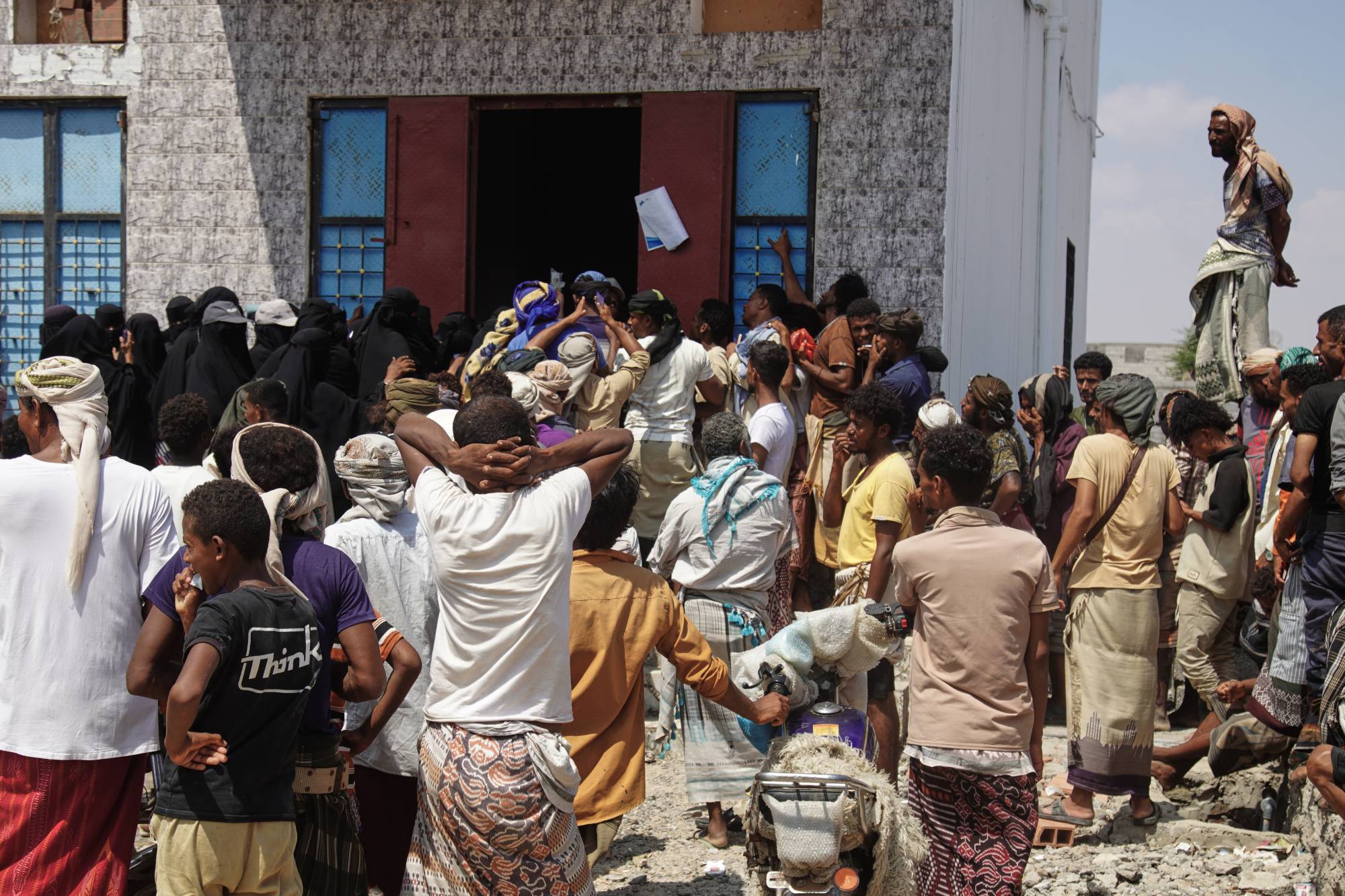
Yemenis displaced by fighting in Taiz gather to receive food aid in the Salah al-Din area on the outskirts of Aden, Yemen, Sunday, Oct. 25, 2026. (AP Photo/Abdulnasser Alseddik)
As of October 23, more than 268,000 people had been displaced, almost all of them since the beginning of September, the International Organization of Migration (IOM) said. Displaced families are now sheltering in 62 districts across ten governorates.
As of October 17, 3,836 Yemenis have arrived in Djibouti, half of them children, including 282 under the age of five.
These figures reflect the growing scale of displacement from conflict zones, particularly in western Taiz, Lahj, and southern Hodeidah, where families have been forced to flee their homes in search of safety. At the same time, host areas are increasingly struggling to absorb the rising numbers of displaced people and provide for their basic needs.
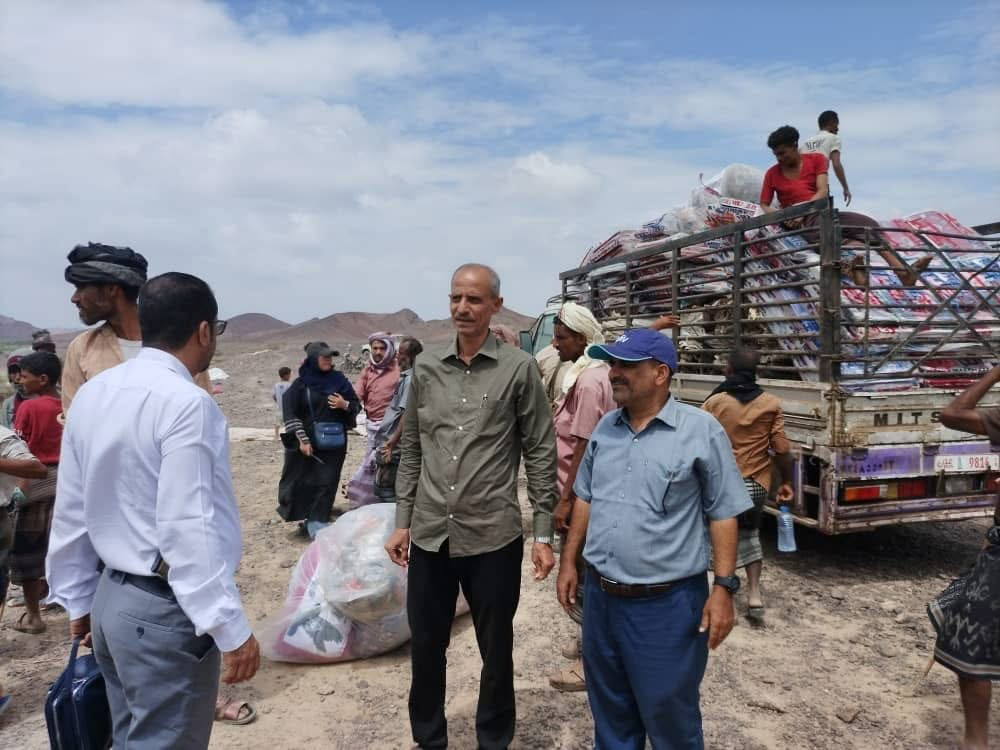
The wave of displacement due to Houthi attacks has expanded, exacerbating the humanitarian situation (Local media)
In Aden, the number of displaced people has more than doubled since October 7 to more than 42,000, while Lahj now hosts around 67,000.
The flight from violence has not been limited to land routes. Yemeni families have also taken to the sea in an attempt to escape areas of escalating conflict. Some boats reached shore before arriving at their intended destinations after running out of fuel, highlighting the dangers civilians face as they seek safer refuge.
As the number of arrivals continues to grow, families who fled their homes in haste are struggling to secure shelter, safe drinking water, healthcare, and other essential services.
At the same time, pressure is mounting on host communities that already suffer from limited resources, while humanitarian needs are increasing at a pace that far exceeds the capacity of available response efforts.
The suffering of the displaced does not end once they leave conflict zones. Many families are forced to take shelter in overcrowded public buildings, while others sleep in the open due to a lack of adequate accommodation.
Continuous flow of displaced persons from the outskirts of Lahij governorate (Local media)
The shortage of sanitation facilities and basic services further compounds their hardship. These conditions heighten the risks faced by children, women, the elderly, and people with disabilities.
"The scale and speed of this displacement is leaving families in desperate need of help, and our response is struggling to keep pace," said IOM Yemen Chief of Mission Abdusattor Esoev. "Our teams are reaching people every day, but funding is falling far short. Without urgent support, more families will go without assistance that could save their lives."
With 44,736 families displaced, many are struggling to access clean water, health care and basic services amid severe fuel shortages and skyrocketing prices for basic food items and medicine.
Humanitarian access constraints in Taiz continue to slow aid delivery and the IOM faces a critical funding gap of $30 million over the next six months to provide shelter, emergency cash, protection, health care, clean water and sanitation, and to track displacement.
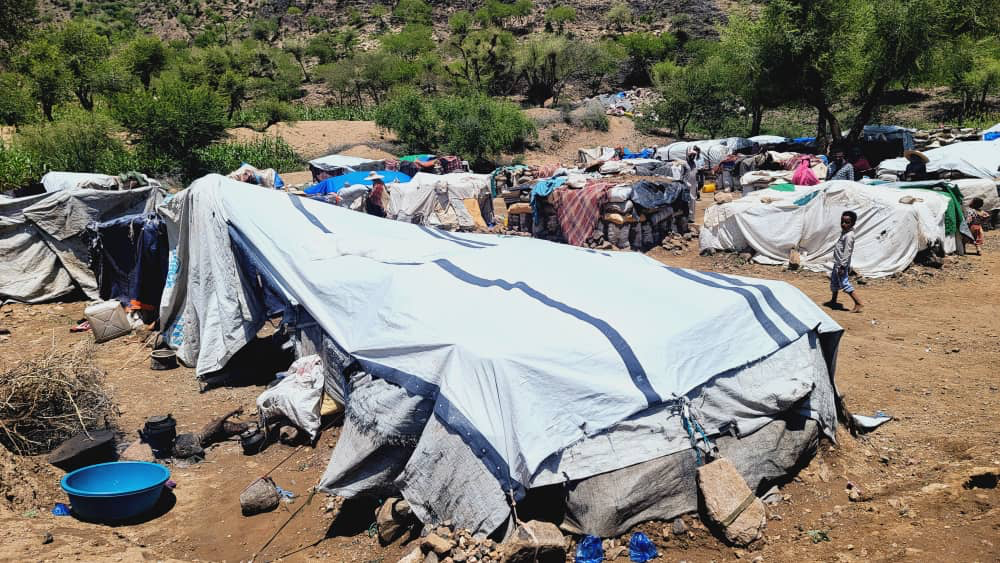
Displacement camps in Yemen lack the most basic necessities (Local media)
"Many families have had to flee more than once, each time facing the struggle to find somewhere safe to stay and access the support they need," said Esoev. "Support must reach both displaced families and the communities hosting them now, before more lives are put at risk."
Since August 1, IOM has worked with local authorities, UN partners and local organizations to reach 11,178 conflict-affected households with emergency shelter, household items, water, sanitation and hygiene supplies and multi-purpose cash assistance.
IOM has also provided protection services to 6,757 migrants and displaced people and carried out 56,863 primary health care consultations.
The organization urged donors “to urgently scale up support to keep pace with rapidly growing needs, and on all parties to protect civilians and humanitarian workers and to ensure safe, unimpeded access to people in need.”
Libya Says International Aviation Restrictions Lifted After 11 Yearshttps://english.aawsat.com/arab-world/5334133-libya-says-international-aviation-restrictions-lifted-after-11-years
Airplanes are seen at Mitiga airport in Tripoli, Libya April 8, 2019. (Reuters)
TT
TT
Libya Says International Aviation Restrictions Lifted After 11 Years
Airplanes are seen at Mitiga airport in Tripoli, Libya April 8, 2019. (Reuters)
Libya's Ministry of Transport said on Monday that airspace restrictions issued by the UN's International Civil Aviation Organization in 2015 during the country's civil war have been removed.
The ministry said the decision, which was formally issued on October 23, was announced by ICAO Secretary General Juan Carlos Salazar at the opening of a meeting of civil aviation officials from the Middle East in Doha.
"This measure comes as a result of the notable progress made and the confidence placed in the capabilities of the Libyan civil aviation sector in recent times," the Tripoli-based Ministry of Transport said in a statement on its verified Facebook page.
The ministry, in a separate statement, said the North African country has received requests for permits to transit Libyan airspace that it characterized as "unprecedented demand from international airlines."
"The total number of permits registered for 2026-2027 winter season has surged to 61,968 flights per month, effective from this November," the ministry said, calling it a significant jump from an average of 2,000 transit flights per month during the 2025-2026 season.
"Such an increase will generate substantial financial revenues using Libyan airspace," it added.
Libya slid into chaos after the fall of Moammar al-Gaddafi in a NATO-backed uprising in 2011. Three years later, a civil war broke out between armed factions vying for power and divided the country between eastern and western administrations.
The war caused damage to up to 20 aircraft, including Airbus models, at Tripoli International Airport in 2014.
There are currently few airlines operating flights in and out of Libya, with destinations such as Tunisia, Jordan, Türkiye, Egypt, Saudi Arabia and Sudan.
The ICAO's decision would be circulated to all 193 member states for their implementation, the ministry added.
Iraq Sentences Seven French Nationals to Life in Prison for Joining ISIShttps://english.aawsat.com/arab-world/5334131-iraq-sentences-seven-french-nationals-life-prison-joining-isis
Iraq Sentences Seven French Nationals to Life in Prison for Joining ISIS
Iraqi Supreme Judicial Council (archive - local media)
An Iraqi court on Tuesday sentenced seven French nationals of Algerian origin to prison terms ranging from 15 years to life for joining the ISIS extremist group and terrorizing civilians, the German news agency dpa reported.
The verdicts were handed down during a public hearing attended by court-appointed defense lawyers. Six of the defendants received life sentences of 20 years, while the seventh was sentenced to 15 years for membership in the militant group, working with it in Syria, and spreading fear among civilians.
The judge said the rulings were intended to rehabilitate the convicts and give them an opportunity to put their lives back on track.
لم تشترك بعد
انشئ حساباً خاصاً بك لتحصل على أخبار مخصصة لك ولتتمتع بخاصية حفظ المقالات وتتلقى نشراتنا البريدية المتنوعة