Palestinian Presidency Urges ‘Calm’ after Armed, Popular Clashes in Nablus

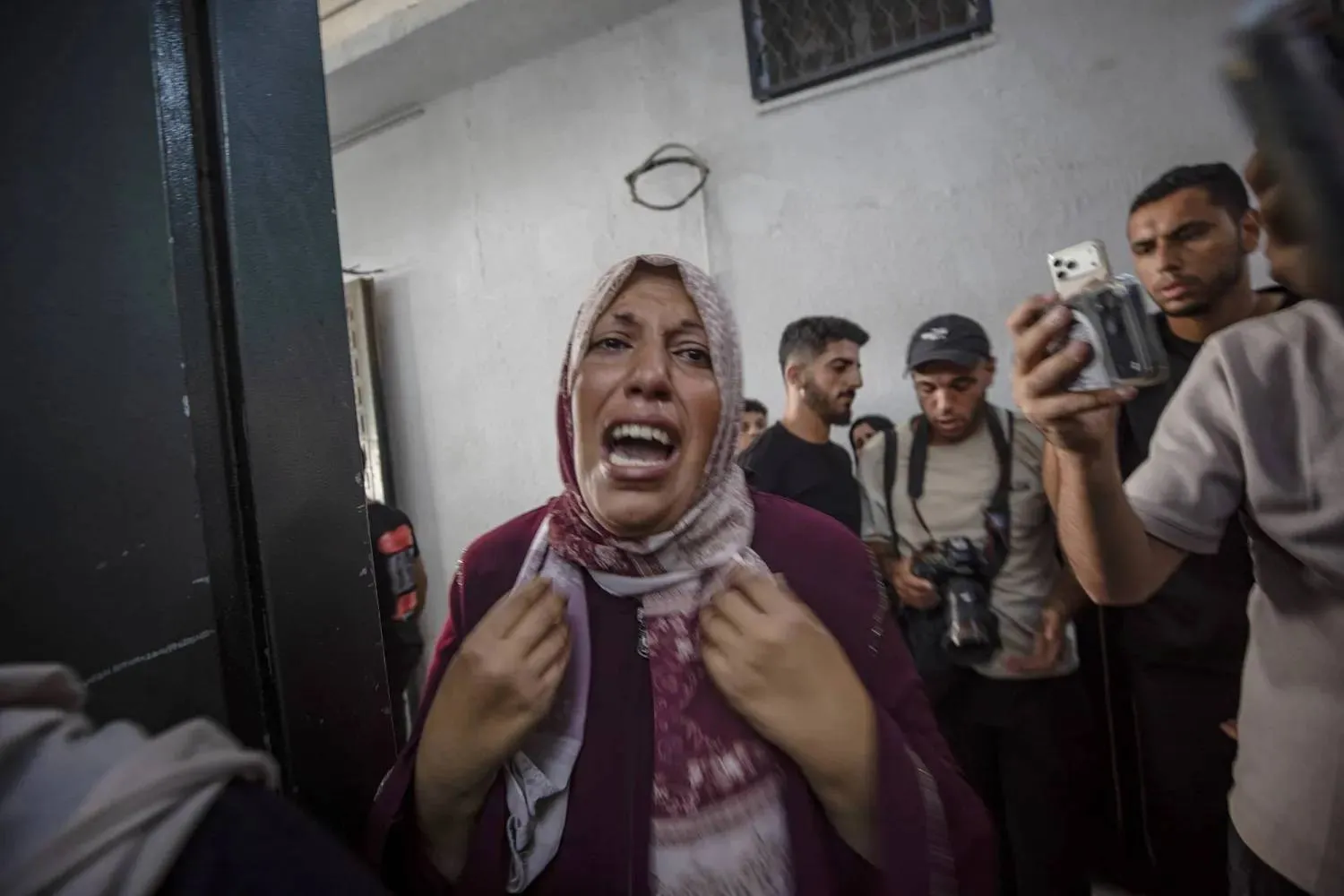
A side of the clashes in Nablus (AP)
TT

Palestinian Presidency Urges ‘Calm’ after Armed, Popular Clashes in Nablus

A side of the clashes in Nablus (AP)

The Palestinian presidency on Wednesday has urged Palestinians to maintain “calm” after violent confrontations having erupted between angry gunmen and security forces in the city of Nablus north of the West Bank.

Prior to the breakout of violence, the angry gunmen were protesting the arrest of wanted armed individuals being pursued by Israel.

Presidential spokesperson Nabil Abu Rudeineh urged calm in Nablus in order not to give way to those conspiring against the national Palestinian project.

Abu Rudeineh also called for “confronting the conspiracies of the occupation and some regional countries that want to harm the Palestinian national project.”

According to Abu Rudeineh, the presidency called on Palestinians “to unite at this dangerous stage that their national cause is going through.”

The spokesperson also warned against Palestinians being drawn behind malicious agendas and reaffirmed that spilling Palestinian blood was unacceptable.

“We affirm the sanctity of Palestinian blood, the need to maintain order and security in the Palestinian street, and to display a spirit of responsibility,” noted Abu Rudeineh, stressing that the main battle is with the Israeli occupation.

The appeal for calm to prevail came during unprecedented confrontations in Nablus, where clashes continued throughout Monday and Tuesday night.

The altercations took two forms. Shooting confrontations took place between armed Palestinian organizations and members of the security services on one side, and popular confrontations, during which angry youths blocked roads and threw stones and bottles at the Palestinian security forces.

Clashes and widespread confrontations erupted after Palestinian Authority security forces arrested two individuals wanted by the Israelis, Musab Shtayyeh and Ameed Tabila.

Shatayyeh and Tabila were arrested in a tight ambush in Nablus.

The arrest of Shtayyeh, who is a Hamas operative, came amid a wave of Israeli operations against militants in the West Bank, concentrated largely in the cities of Jenin and Nablus.

The Israeli operations have been met by many confrontations and clashes over the past few weeks.


Israel Targets Last Litani Bridges, Raising Fears of South Lebanon Isolation

Civil defense personnel inspect damage caused by an Israeli strike targeting the Qasmiyeh bridge over the Litani River in South Lebanon (AFP). 
TT

Israel Targets Last Litani Bridges, Raising Fears of South Lebanon Isolation

Civil defense personnel inspect damage caused by an Israeli strike targeting the Qasmiyeh bridge over the Litani River in South Lebanon (AFP). 

Israel is intensifying strikes on bridges over Lebanon’s Litani River, raising concerns it aims to isolate the entire area south of the river from the north, Lebanese officials and state media said.

The Israeli military struck the Qasmiyeh coastal bridge, the last functioning crossing linking areas south of the Litani with the north, damaging it and further restricting movement. A second strike later hit the same area, according to Lebanon’s National News Agency (NNA).

Civil defense teams worked to clear high-voltage cables severed in the attack, allowing limited traffic to resume on a single lane.

Over the past two weeks, Israel has targeted seven main bridges over the Litani, leaving Qasmiyeh as the final link before it was partially damaged in Wednesday night’s strike.

Lebanese authorities warn that continued attacks could effectively besiege around 50,000 civilians in the southern city of Tyre, its suburbs and nearby Palestinian refugee camps, as well as thousands of Lebanese troops and UN peacekeepers deployed in the area.

Several families south of the river have appealed for evacuation under international supervision, citing what they describe as a “complete siege” following the damage to the bridge.

Official sources told Asharq Al-Awsat that food stocks in the area would last no more than 15 days, warning of shortages of food and medicine if supply routes are not restored within two weeks.

The Lebanese Army said Thursday it had reopened the Qasmiyeh bridge with the help of civil defense and local groups, and deployed a unit nearby to secure it.

Authorities are studying contingency plans with the United Nations to supply the area if access routes are fully cut, in a bid to avert a humanitarian crisis.

“We are trying to address the repercussions by all means. We will not allow the area to be isolated from the rest of Lebanon,” the sources said, adding that practical proposals were under review.

The impact extends beyond civilians to military personnel. Around 7,700 Lebanese soldiers are deployed south of the Litani, alongside roughly 7,500 troops from the United Nations Interim Force in Lebanon (UNIFIL), according to sources familiar with the deployment.

Most UN peacekeepers are stationed south of the river, though troop numbers have declined in recent months due to financial constraints at the United Nations, the sources said.

They added that UNIFIL, a military peacekeeping force, is adapting its operations to evolving conditions, as it has done since fighting escalated on March 2.

UNIFIL troops are currently positioned in areas where clashes are taking place between Israeli forces and Hezbollah.


US Summons Iraqi Ambassador Over Drone Strike on Diplomatic Facility in Baghdad

A man waves the flags of Iraq and Iran from the sunroof of a vehicle during celebrations welcoming the two-week ceasefire between the United States and Iran in Baghdad's central Tahrir Square on April 8, 2026. (AFP)
TT

US Summons Iraqi Ambassador Over Drone Strike on Diplomatic Facility in Baghdad

A man waves the flags of Iraq and Iran from the sunroof of a vehicle during celebrations welcoming the two-week ceasefire between the United States and Iran in Baghdad's central Tahrir Square on April 8, 2026. (AFP)

US Deputy Secretary of State Christopher Landau summoned Iraqi Ambassador Nizar Khirullahon Thursday after a drone struck a major US diplomatic facility in Baghdad, the State Department said in a statement.

The US Embassy in Baghdad said earlier that Iraqi "terrorist militias," who Washington accused of being aligned with ‌Iran, had ‌conducted multiple drone attacks near ‌the ⁠Baghdad Diplomatic Support Center ⁠and Baghdad International Airport on Wednesday.

The State Department said Landau acknowledged the Iraqi security forces' efforts to respond while emphasizing "the Iraqi government's failure to prevent these attacks."

The State Department said Washington expects the Iraqi government to take measures to dismantle ⁠Iran-aligned factions in Iraq.

It also ‌said that "some elements associated ‌with the Iraqi government continue to actively provide political, ‌financial, and operational cover for the militias."

Dozens of ‌people have been killed in Iraq since the start of the Iran war, according to Iraqi health authorities. Those include civilians, members of the Iran-affiliated Popular ‌Mobilization Forces, US-allied Kurdish Peshmerga fighters, police and army.

The Iran war began ⁠when the ⁠US and Israel attacked Iran on February 28. Iran responded with its own strikes on Israel and Gulf states with US bases. US-Israeli strikes on Iran and Israeli attacks on Lebanon have killed thousands and displaced millions.

US President Donald Trump announced a two-week ceasefire with Iran on Tuesday, which has remained fragile. The US president had previously threatened to destroy Iran's entire civilization in remarks that were widely condemned.


Israel-Lebanon Direct Negotiations Expected Next Week in Washington

The Israeli Ambassador to the United States, Yechiel Leiter, who is expected to lead the negotiations on the Israeli side. (Reuters)
TT

Israel-Lebanon Direct Negotiations Expected Next Week in Washington

The Israeli Ambassador to the United States, Yechiel Leiter, who is expected to lead the negotiations on the Israeli side. (Reuters)

Negotiations between Israel and Lebanon are expected next week in Washington, according to a person familiar with the matter, a day after deadly Israeli strikes targeted several areas simultaneously around the country and pounding the capital, Beirut.

"We can confirm that the Department will host a meeting next week to discuss ongoing ceasefire negotiations with Israel and Lebanon," the US official told AFP.

The announcement came after Israeli Prime Minister Benjamin Netanyahu said he had approved direct talks focused on disarming Iran-backed Hezbollah.

Netanyahu said there is no ceasefire in Lebanon and his country will keep striking Hezbollah.

According to several Israeli media outlets, Israel’s ambassador to Washington, Yechiel Leiter, is expected to lead the negotiations on behalf of the Israeli side.

Quoted by his office, Netanyahu said: “Following Lebanon’s repeated requests to begin direct negotiations with Israel, I gave my instructions yesterday to engage in direct talks with Lebanon as soon as possible”.

He added that the negotiations will address the disarmament of Hezbollah and the establishment of peaceful relations between Israel and Lebanon.

But a Lebanese government official said on Thursday that Lebanon seeks a ceasefire before the onset of negotiations with Israel.

Meanwhile a Hezbollah lawmaker confirmed the party’s rejection of any direct negotiations between Lebanon and Israel, calling instead for an Israeli withdrawal from the south of the country.

New Strikes

Previously, Netanyahu had affirmed that strikes against “Hezbollah” would continue “wherever necessary” until security is fully restored for residents of northern Israel.

On Thursday evening, the Israel army said it struck Hezbollah rocket launch platforms in Lebanon.

Two days after a US-Iran ceasefire, the international community fears that the truce could be undermined by the continued Israeli strikes in Lebanon.

In Beirut, rescue teams are still searching through the rubble for victims of the simultaneous strikes carried out by Israel on several areas on Wednesday. The strikes left more than 300 dead and over 1,100 injured, according to Lebanese authorities.

In southern Lebanon, strikes killed at least five people, while Hezbollah announced that its fighters are engaged in direct confrontations with Israeli forces in the area.

The Israeli army again warned residents of several neighborhoods in Beirut’s southern suburbs to evacuate ahead of new airstrikes.

The US-Iran ceasefire is faltering after Israel pounded Beirut and as Iran maintains its grip on the Strait of Hormuz while truce talks remain uncertain.

Both Tehran and Washington are claiming victory and exerting pressure, with talks on a permanent deal set to begin soon in Islamabad and US Vice President JD Vance set to lead the US delegation.

Israeli strikes made Wednesday the deadliest day in Lebanon since the war began, with more than 300 people killed. There are lingering disagreements over whether the ceasefire covers the Lebanese militant group Hezbollah. Iran is warning of “STRONG responses” if attacks on its militant ally don’t stop.