


KSA: Global Logistics Crisis Delays Vehicle Deliveries

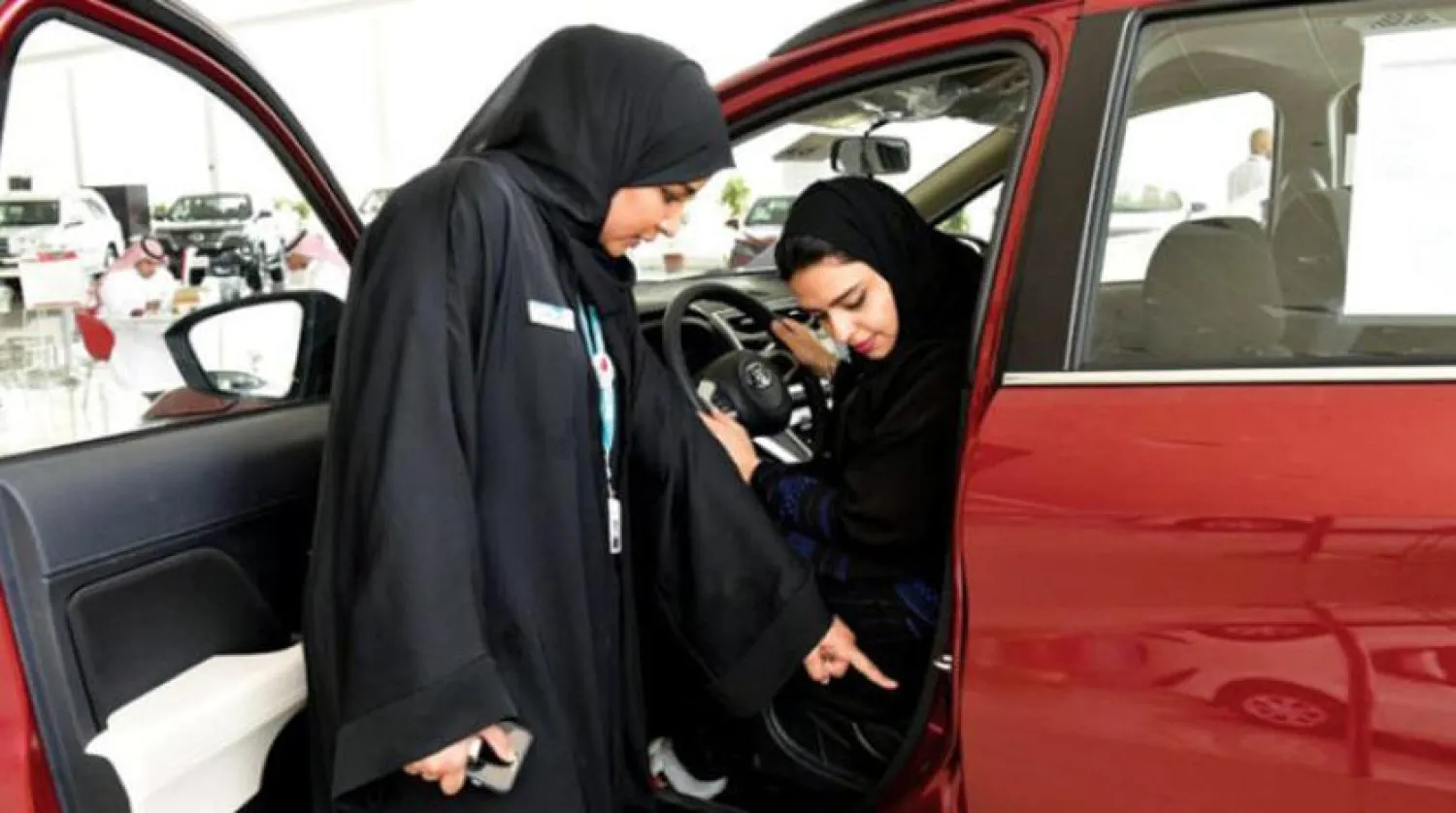
The growing interest among Saudi women to buy vehicles coincides with the scarcity of cars in Saudi Arabia. (Photo: Asharq Al-Awsat)
TT

KSA: Global Logistics Crisis Delays Vehicle Deliveries

The growing interest among Saudi women to buy vehicles coincides with the scarcity of cars in Saudi Arabia. (Photo: Asharq Al-Awsat)

Noura Al-Subaie, an employee in the education sector, paid a deposit to book her new car, which was expected to be delivered in a two-month period.

However, as soon as she left the showroom, the salesperson contacted her to inform her that the delivery would be postponed for reasons beyond their control, due to the global logistics crisis.

The growing interest among Saudi women to buy vehicles coincides with the scarcity of cars in Saudi Arabia, as the world is currently facing a disruption in the logistics chain, as a result of the effects of the Covid-19 pandemic, which led to a slowdown in transport movement in ports and international lines with the continued partial closures in producing countries.

In remarks during the Iron and Steel Conference last month in Riyadh, Saudi Industry Minister Khaled al-Falih said that the global energy crisis and epidemics have disrupted ports operations and supply chains.

The Saudi Ministry of Commerce had acknowledged months ago that there were large lists of vehicle reservations and delivery delays, due to the effects of the Covid-19 pandemic and the supply chain crisis.

On the other hand, recent statistics revealed that the unemployment rate of Saudi females decreased to 19.3 percent in the second quarter of 2022, a decline of 3 percent over the same period last year.

Speaking to Asharq Al-Awsat, Al-Subaie said that the salesperson told her that delivery delays were due to the failure of car manufacturers to fulfill their commitment, pointing to scarcity of stock and shipment supplies.

In a decision issued in September 2017, the Saudi authorities allowed women to drive, in a step that meets the objectives of societal transformation in the Kingdom and enables women to actively contribute to the economic life.

Khaled Al-Qahtani, a logistics services specialist, said that the logistics sector in the world was still facing a crisis that affects the movement of transport, pointing to three main factors in this context.

He first pointed to flexibility and the need to restructure the supply chain through a more balanced risk-taking approach.

The second factor is economic sustainability of the supply chain in particular. Al-Qahtani said that the companies’ transportation logistics budgets were consumed in a very short period of time during 2022 due to the increase of freight rates.

As for the third factor, Al-Qahtani points to the continuous imbalance between supply and demand.

A report issued by a London-based institution on the development of the Saudi car market between 2012 and 2022, showed that the market would grow to $29.3 billion by 2022 thanks to many factors, including the right of women to drive, the development of the country’s infrastructure and the growth of per capita income.



Media Minister Opens Fifth Saudi Media Forum in Riyadh

Saudi Minister of Media Salman Al-Dossary launches the fifth edition of the Saudi Media Forum 2026 in Riyadh. (SPA)
TT

Media Minister Opens Fifth Saudi Media Forum in Riyadh

Saudi Minister of Media Salman Al-Dossary launches the fifth edition of the Saudi Media Forum 2026 in Riyadh. (SPA)

Under the patronage of Custodian of the Two Holy Mosques King Salman bin Abdulaziz Al Saud, Saudi Minister of Media Salman Al-Dossary launched on Monday the fifth edition of the Saudi Media Forum 2026 in Riyadh.

The minister stressed that the royal patronage of the forum by King Salman is a badge of pride and honor for media professionals, as it grants the forum broader dimensions and a deeper vision and views media as a tool for awareness and a means of development.

Held under the theme “Media in an Evolving World,” the forum is witnessing the participation of more than 300 media leaders and experts from over 20 countries. They will engage in more than 150 specialized dialogue sessions discussing the intersection of media with politics, economy, culture, technology, and innovation, with the attendance of international and regional think tanks, reflecting the Kingdom’s leadership in the media industry.

The forum is accompanied by the creative edition of the Future of Media Exhibition (FOMEX), with the participation of more than 250 local and international companies.

Al-Dossary stressed the responsibility of media toward younger generations, noting that protecting future generations in the digital age is not achieved through prohibition or isolation, but through creating aware media environments governed by ethics and values and present content as a tool for building awareness rather than a commodity for consumption.

The objective of safeguarding children is to prepare them to interact with the world with confidence without losing their identity or moral compass, he added.

He announced the launch of 12 flagship initiatives at the forum, most notably the Saudi Media Innovation Bootcamp (Saudi MIB) in the fields of augmented journalism, intelligent content creation, and virtual presenters, in partnership with the Saudi Data and Artificial Intelligence Authority (SDAIA).

Other initiatives include the Tamkeen Initiative to support entrepreneurial ideas and startups, and the Numo Initiative in partnership with the Kafalah Program, to transform media ideas into sustainable business models.

Al-Dossary announced the issuance of the Artificial Intelligence Principles in Media document in partnership with SDAIA, to entrench the principle of responsible use of modern technologies and open the door to advanced stages of activation, support, and empowerment.

The minister announced the hosting of more than 2,000 content creators and influencers from over 90 countries within the Influence Track, as part of the second edition of "The ImpaQ Impact Makers Forum" in Qiddiya City.

He congratulated the winners of the Saudi Media Award 2026, held in partnership with the Human Capability Development Program across four main tracks and 16 categories. The award received more than 500 nominated works from over 20 countries, with international participation growing by more than 200%.

The first day of the forum witnessed several dialogue sessions and the launch of FOMEX, which includes exhibitor pavilions attracting government entities and local and international private companies to showcase their contributions and products in media, radio, and television, as well as a platform that allows exhibitors to present their services and innovations to visitors.

The exhibition includes the Launch Zone, a dedicated space where companies can showcase their latest media innovations and technologies and conclude strategic partnerships that help develop the future media ecosystem.

The FOMEX Theater presents comprehensive insights into the media sector through discussion sessions, dialogues, and workshops featuring leading local and international speakers, while also providing opportunities to sign cooperation agreements and partnerships.


Algeria Inaugurates Strategic Railway to Giant Sahara Mine

A view shows the Santa Cruz chapel in the city of Oran, Algeria May 22, 2024. REUTERS
TT

Algeria Inaugurates Strategic Railway to Giant Sahara Mine

A view shows the Santa Cruz chapel in the city of Oran, Algeria May 22, 2024. REUTERS

Algerian President Abdelmadjid Tebboune inaugurated a nearly 1,000-kilometre (621-mile) desert railway to transport iron ore from a giant mine, one of the longest in the country.

The line will bring iron ore from the Gara Djebilet deposit in the south to the city of Bechar located 950 kilometres north, to be taken to a steel production plant near Oran further north.

The project is financed by the Algerian state and partly built by a Chinese consortium, according to AFP.

During the inauguration, Tebboune hailed "the completion of a strategic and historic national achievement, long spoken of as a distant dream".

This project aims to increase Algeria's iron ore extraction capacity, as the country aspires to become one of Africa's leading steel producers.

The iron ore deposit is also seen as a key driver of Algeria's economic diversification as it seeks to reduce its reliance on hydrocarbons, according to experts.

President Tebboune attended an inauguration ceremony in Bechar, welcoming the first passenger train from Tindouf in southern Algeria and sending towards the north a first charge of iron ore, according to footage broadcast on national television.

The mine is expected to produce four million tonnes per year during the initial phase, with production projected to triple to 12 million tonnes per year by 2030, according to estimates by the state-owned Feraal Group, which manages the site.

It is then expected to reach 50 million tonnes per year in the long term, it said.

The start of operations at the mine will allow Algeria to drastically reduce its iron ore imports and save $1.2 billion per year, according to Algerian media.


Container Traffic at Morocco's Tanger Med Port Rises 8% in 2025

Cars, made in Morocco and intended for export, wait to be shipped at Tanger Med Port, on the Strait of Gibraltar, east of Tangier, Morocco June 6, 2024. REUTERS/Abdelhak Balhaki
TT

Container Traffic at Morocco's Tanger Med Port Rises 8% in 2025

Cars, made in Morocco and intended for export, wait to be shipped at Tanger Med Port, on the Strait of Gibraltar, east of Tangier, Morocco June 6, 2024. REUTERS/Abdelhak Balhaki

Morocco's Tanger Med Port said on Monday it maintained its position as the Mediterranean and Africa's leading port, handling 11.1 million containers in 2025, up 8.4% from a year earlier.

The growth was partly driven by the expansion of a terminal operated by APM Terminals, the port authority said in a statement.

The port saw truck traffic grow 3.6% to 535,203 units, driven by higher exports of industrial products and agri-food goods.

Passenger traffic totalled 3,220,422 in 2025, up 5.7%, while cars using the port to cross into or out of Morocco reached 895,341 vehicles in 2025, up 5%, it said, Reuters reported.

The number of vehicles exported through the port dropped 12% to 526,862, mostly produced by Renault and Stellantis plants in the country, the port authority said.

Morocco’s automotive exports fell 2% last year to $17 billion but remained the country's biggest export, according to official trade data.

Overall, the port handled a total of 161 million tons of cargo in 2025, up 13.3% from 2024, it said.

Last week, Morocco said it will start operating Nador West Med, its second Mediterranean deep sea port, in the fourth quarter of this year.

The $5.6 billion facility will open with an annual capacity of 5 million containers, expandable to 12 million.

Further south on the Atlantic coast, Morocco is building a $1 billion deepwater port in Dakhla, in Western Sahara.