


Saudi Arabia, Qatar Review Strategy for Joint Business Council

The Saudi-Qatari Business Council meeting at the Federation of Saudi Chambers (Asharq Al-Awsat)
TT

Saudi Arabia, Qatar Review Strategy for Joint Business Council

The Saudi-Qatari Business Council meeting at the Federation of Saudi Chambers (Asharq Al-Awsat)

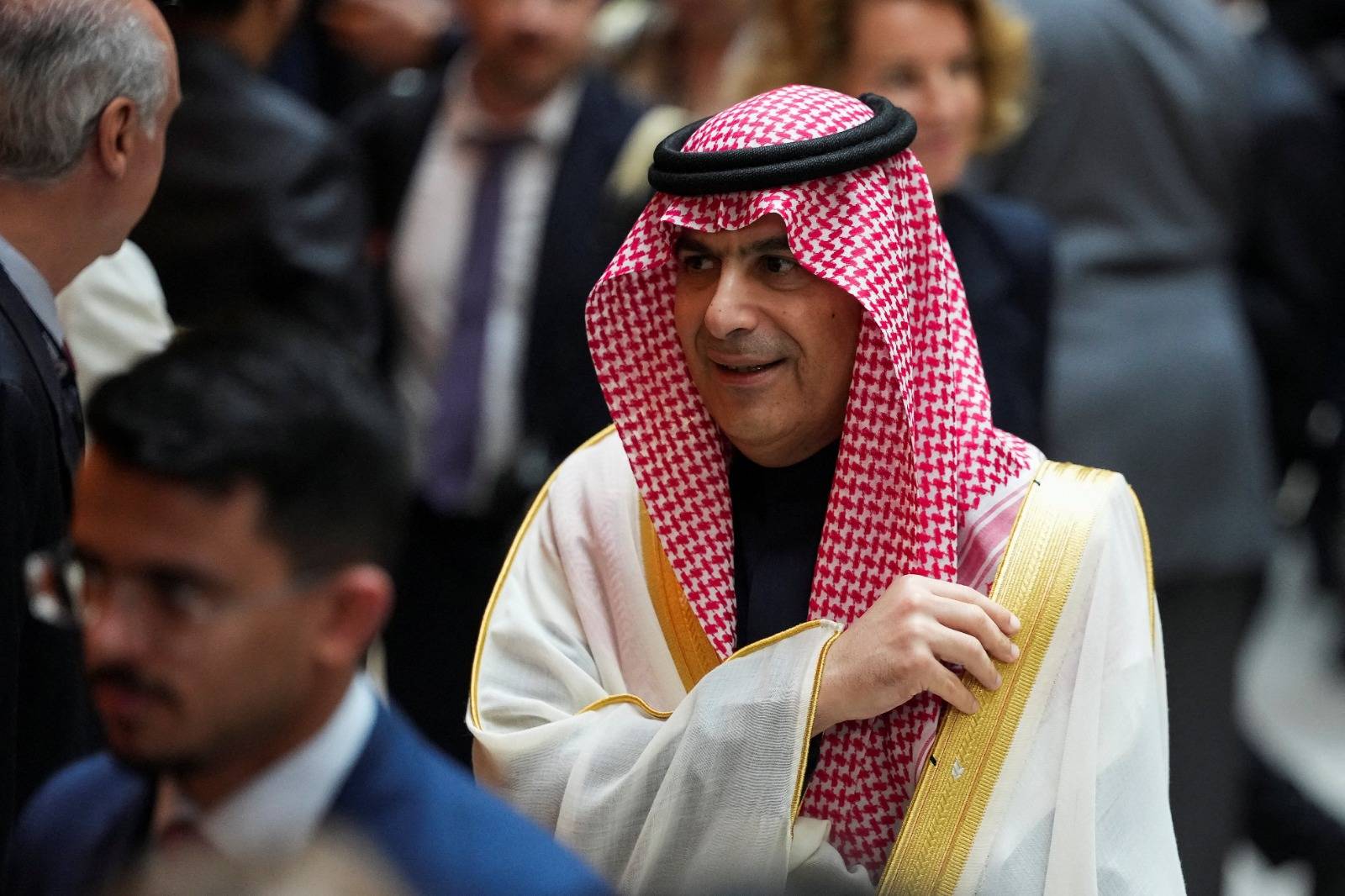
Saudi Minister of Investment Khalid al-Falih held talks at the Federation of Saudi Chambers headquarters with the chairman and members of the Saudi-Qatari Business Council. This comes as Saudi Arabia and Qatar are preparing a joint strategy for business in the private sector in the two countries.

The meeting addressed the role and agenda of the council in enhancing the economic relations between the Kingdom and Qatar.

The Saudi Minister underscored the role of the Saudi-Qatari relations at the highest levels, stating that Saudi Arabia represents an economic, strategic depth for Qatar, while Doha represents significant economic importance for the Kingdom.

He stressed the importance of continuing efforts and communication to open more opportunities for the business sectors in both countries and enhance joint trade and investment.

Falih praised the role of the Ministry of Investment as a supporter and enabler of Saudi investment abroad, stressing that the Saudi-Qatari Business Council is one of the important councils.

Saudi Arabia is keen to support it in a way that upgrades the economic ties between the two countries to the highest levels, asserted the Minister.

During the meeting, Falih was briefed on the plans, goals, initiatives, and projects of the council in strengthening economic relations between the two countries.

The Chairman of the Council, Hamad al-Shuwaier, said that the council wants to draft a study analyzing the economic development witnessed by the Saudi Arabia and Qatar.

Shuwaier announced that the trade exchange amounted to $213.8 million in the first half of 2022, noting that the council plans to forge innovative programs and initiatives to increase investment, provide qualitative partnerships and enhance economic integration.

The meeting recommended holding a Saudi-Qatari investment forum to showcase the available opportunities and continue the efforts leading to a smooth trade and export flow between the two countries.

Meanwhile, the Saudi Industrial Development Fund launched its first sustainability report: "Enabling Sustainable Industrial Growth in Saudi Arabia."

The report aims to clarify the efforts and practices of the Fund and review examples of the clients' application concerning environmental sustainability, societal impact, and corporate governance, which would positively reflect on the future development of the industrial, mining, energy, and logistics sectors in the Kingdom.

The report reviewed environmental sustainability, such as climate change and emissions reduction, efficient use of energy, rational use of water resources, and others.

The report reveals the Fund's commitment to it since its establishment.

It also clarifies the Fund's practices that seek to enhance societal impact through positive influence through internal and external policies and procedures, which would contribute to supporting and maximizing the potential of the Saudi society through educational and career opportunities in pursuit of national goals.

The report also refers to the Fund's journey towards the governance of its business supported by corporate governance and responsible management, designed to ensure sustainable growth in the Fund and the targeted sectors.

The Fund issued this report knowing the great importance of these statements in creating the principles of sustainable development in response to the needs of all actors in the local industry and Saudi society in the Kingdom.

The Industrial Development Fund is a member of the Sustainability Council established by the Ministry of Industry and Mineral Resources in 2021. It provides a unified platform for consultation on sustainability issues that positively impact the industrial sectors and the local community.


Bulgaria Adopts Euro Amid Fear and Uncertainty

Customers shop in a grocery store in the village of Chuprene, northwestern Bulgaria on December 7, 2025. (Photo by Nikolay DOYCHINOV / AFP)
TT

Bulgaria Adopts Euro Amid Fear and Uncertainty

Customers shop in a grocery store in the village of Chuprene, northwestern Bulgaria on December 7, 2025. (Photo by Nikolay DOYCHINOV / AFP)

Bulgaria will become the 21st country to adopt the euro on Thursday, but some believe the move could bring higher prices and add to instability in the European Union's poorest country.

A protest campaign emerged this year to "keep the Bulgarian lev", playing on public fears of price rises and a generally negative view of the euro among much of the population.

But successive governments have pushed to join the eurozone and supporters insist it will boost the economy, reinforce ties to the West and protect against Russia's influence.

The single currency first rolled out in 12 countries on January 1, 2002, and has since regularly extended its influence, with Croatia the last country to join in 2023.

But Bulgaria faces unique challenges, including anti-corruption protests that recently swept a conservative-led government from office, leaving the country on the verge of its eighth election in five years.

Boryana Dimitrova of the Alpha Research polling institute, which has tracked public opinion on the euro for a year, told AFP any problems with euro adoption would be seized on by anti-EU politicians.

Any issues will become "part of the political campaign, which creates a basis for rhetoric directed against the EU", she said.

While far-right and pro-Russia parties have been behind several anti-euro protests, many people, especially in poor rural areas, worry about the new currency.

"Prices will go up. That's what friends of mine who live in Western Europe told me," Bilyana Nikolova, 53, who runs a grocery store in the village of Chuprene in northwestern Bulgaria, told AFP.

The latest survey by the EU's polling agency Eurobarometer suggested 49 percent of Bulgarians were against the single currency.

After hyperinflation in the 1990s, Bulgaria pegged its currency to the German mark and then to the euro, making the country dependent on the European Central Bank (ECB).

"It will now finally be able to take part in decision making within this monetary union," Georgi Angelov, senior economist at the Open Society Institute in Sofia, told AFP.

An EU member since 2007, Bulgaria joined the so-called "waiting room" to the single currency in 2020, at the same time as Croatia.

The gains of joining the euro are "substantial", ECB president Christine Lagarde said last month in Sofia, citing "smoother trade, lower financing costs and more stable prices".

Small and medium-sized enterprises stand to save an equivalent of some 500 million euros ($580 million) in exchange fees, she added.

One sector expected to benefit in the Black Sea nation is tourism, which this year generated around eight percent of the country's GDP.

Lagarde predicted the impact on consumer prices would be "modest and short-lived", saying in earlier euro changeovers, the impact was between 0.2 and 0.4 percentage points.

But consumers -- already struggling with inflation -- fear they will not be able to make ends meet, according to Dimitrova.

Food prices in November were up five percent year-on-year, according to the National Statistical Institute, more than double the eurozone average.

Parliament this year adopted empowered oversight bodies to investigate sharp price hikes and curb "unjustified" surges linked to the euro changeover.

But analysts fear wider political uncertainty risks delaying much needed anti-corruption reforms, which could have a knock-on effect on the wider economy.

"The challenge will be to have a stable government for at least one to two years, so we can fully reap the benefits of joining the euro area," Angelov said.


Syria Prepares to Launch New Currency Amid Major Challenges

Syrian Central Bank Governor Abdulkader Husrieh (X)
TT

Syria Prepares to Launch New Currency Amid Major Challenges

Syrian Central Bank Governor Abdulkader Husrieh (X)

Syria’s central bank governor, Abdulkader Husrieh, said the new Syrian pound is not merely a means of exchange but a symbol of the success of the Syrian revolution, national belonging, and confidence in the country’s ability to recover.

In a Facebook post, Husrieh said that with the launch of the new currency, Syrians were not just celebrating a banknote, but also celebrating their sovereignty and national identity, noting that many international experiences show that national currencies become strong when people rally around them, according to the Syrian Arab News Agency.

He pointed to Germany’s experience, where the introduction of the mark after the war marked the starting point of economic recovery, and to France, where the new French franc became the financial symbol of the new republic, known as the Fifth Republic.

Husrieh said the central bank would carry out its role with a clear understanding of the challenges and opportunities, while committing to responsibility, transparency, and the protection of the national currency. He added that the cornerstone remains public solidarity and trust, because a strong currency begins with the people's belief in it.

He called for turning the launch into a dignified national occasion through which Syrians express awareness, confidence, and adherence to the pound as a symbol of sovereignty and a national choice.

Husrieh added that supporting the pound is supporting the nation, and taking pride in it is a matter of pride in the future for Syrians and their children. He described the move as an opportunity for a new success following the success of the revolution in liberation and the lifting of economic sanctions that had shackled Syria’s economy for nearly fifty years.

Husrieh had recently announced that Jan. 1, 2026, would mark the launch of the new Syrian currency and the start of the exchange process for the old notes, with the exchange to be carried out through 66 companies and 1,000 designated outlets.

Restoring confidence

Political and economic researcher Bassel Kouwefi said the exchange plans, if well implemented, could serve as an entry point for rebuilding confidence in the national economy, encouraging domestic investment, and paving the way for broader reforms in the financial sector. However, he warned against failing to address the root causes of inflation and economic collapse during the previous regime's rule.

Speaking to Asharq Al-Awsat, Kouwefi described currency exchange and the removal of zeros as complex economic measures.

He said their main benefits include simplifying daily transactions, reducing the volume of banknotes in circulation, boosting confidence in stability, lowering printing and transportation costs, simplifying accounting records and financial software, and reducing currency speculation driven by corruption networks seeking to undermine stability in Syria.

Kouwefi said the exchange plans, if well-executed, could help restore confidence in the macroeconomy, but stressed the challenges posed by failing to tackle the fundamental causes of past inflation and collapse, including fiscal deficits, instability, and weak production. He said a comprehensive economic and financial program was therefore essential.

He added that the process also requires strong banking infrastructure, an organized transition period, and sufficient liquidity in the new denominations.

He said these remain major challenges under current Syrian conditions, alongside the need to mitigate social impacts that could lead to public confusion, market exploitation, and difficulties for less informed segments of society.


Russia Extends Ban on Gasoline Exports Until February

Gasoline tank trucks are seen outside the Rosneft Achinsk oil refinery plant, one of the biggest Siberian fuel suppliers, near the town of Achinsk, some 188 km (117 miles) west of Krasnoyarsk, April 28, 2011. REUTERS/Ilya Naymushin
TT

Russia Extends Ban on Gasoline Exports Until February

Gasoline tank trucks are seen outside the Rosneft Achinsk oil refinery plant, one of the biggest Siberian fuel suppliers, near the town of Achinsk, some 188 km (117 miles) west of Krasnoyarsk, April 28, 2011. REUTERS/Ilya Naymushin

Russia has extended the temporary ban on gasoline and fuel exports, including producers and intermediaries, until the end of next February, the Russian news agency Interfax said, citing a government website.

“The new decree extended the temporary ban on the export of gasoline outside the country until February 28, 2026, inclusive. It will be valid for all exporters, including direct producers,” the website wrote.

The decree also extends the ban on the export of marine fuel, vacuum gas oil and other types of gas oils, including volumes purchased at exchange auctions, until 28 February 2026. In this case, the restriction will not apply to direct producers of petroleum products.

Russia introduced the measures at the end of August due to the exacerbation of the fuel crisis.

Several major refineries were attacked by drones in August and September, including Surgutneftegaz's Kirishinefteorgsintez refinery, Lukoil's Volgograd refinery and Rosneft's Samara group of refineries.

Prices for gasoline, which are tightly monitored by authorities, were up 10.2%, above general inflation, since the start of the year, with the spike in part attributed to a step up in Ukrainian attacks on Russian refineries.

Last October, US President Donald Trump mentioned “long lines waiting for gasoline” and said the Russian “economy is going to collapse.”

Trump said his Russian counterpart Vladimir Putin should settle the war in Ukraine which was making Russia look bad.

Asked about Trump's remarks at an energy conference in Moscow, Deputy Prime Minister Alexander Novak, who oversees energy and the economy for the government, said that Russia had a stable supply of gasoline.

“We have a stable domestic market supply, we see no problems in this regard,” Novak said.

“The balance is maintained between production and consumption, and we, on the part of the government and the relevant ministries, are doing everything to ensure that this remains the case.”

Russia's seaborne oil product exports fell 17.1% in September from August to 7.58 million metric tons due to less fuel production as various refineries were impacted by drone attacks, data from industry sources and Reuters calculations showed.

The economy is slowing sharply this year and the government forecasts gross domestic product (GDP) growth of 1.0% after 4.3% growth in 2024 and 4.1% growth in 2023, though the International Monetary Fund has downgraded its 2025 forecast to 0.6% from 0.9%.
