High Hopes for Nasal Covid Vaccines despite 'Disappointing' Trial

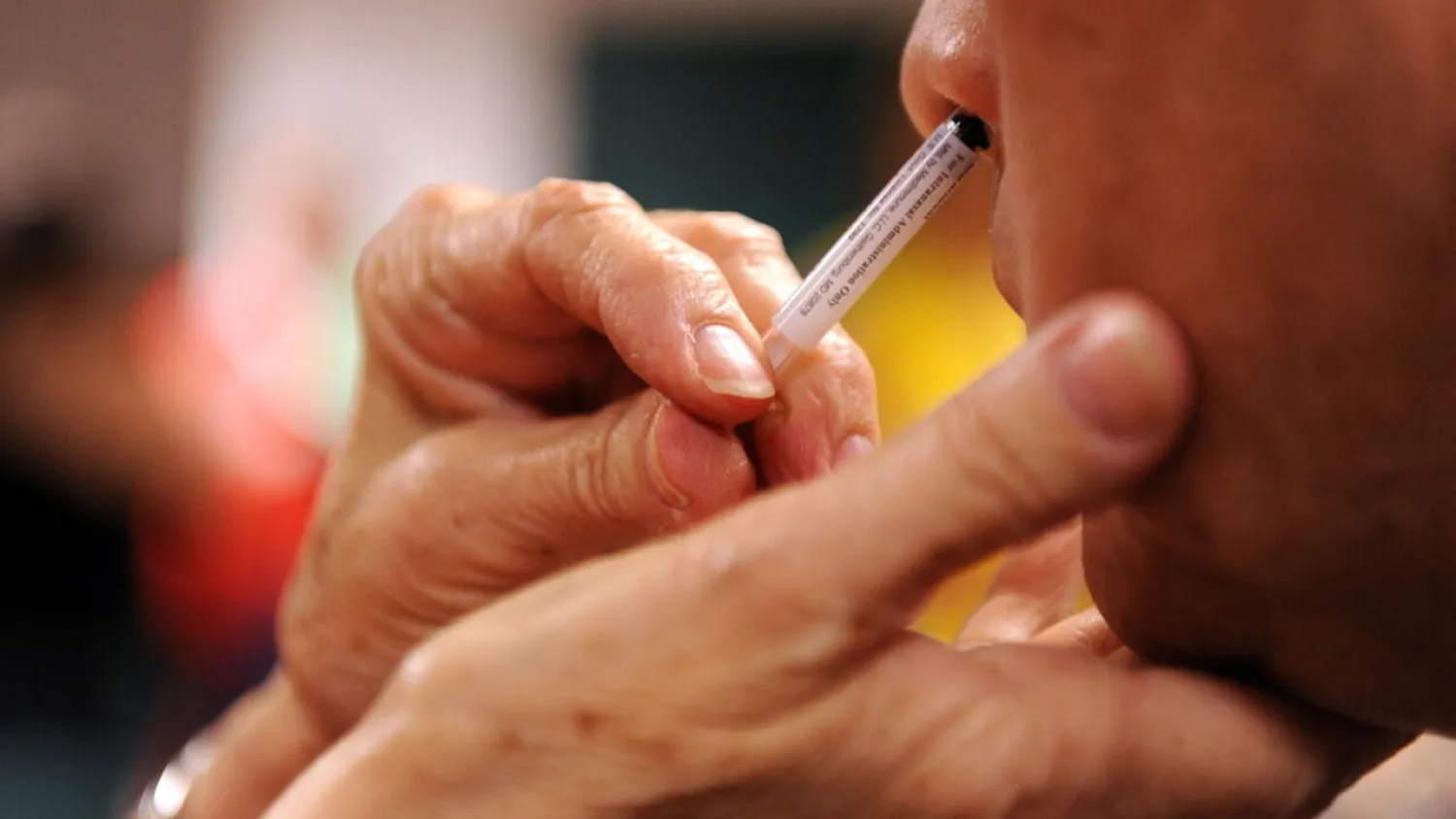
Can nasal vaccines stop Covid where it enters the body? Around 100 different versions are under development TIM SLOAN AFP/File
TT

High Hopes for Nasal Covid Vaccines despite 'Disappointing' Trial

Can nasal vaccines stop Covid where it enters the body? Around 100 different versions are under development TIM SLOAN AFP/File

Nasal vaccines could still be a powerful future weapon in the fight against Covid-19 despite "disappointing" recent trial results for an AstraZeneca spray, experts say.

By entering the body the same way as the virus, nasal vaccines aim to build immunity in the mucous membrane that lines the nose and mouth.

This could block people from getting infected in the first place -- and also potentially hamper those who have Covid from spreading it further, AFP said.

That would represent a huge boost compared to traditional shots in the arm, which have proved very effective at preventing severe Covid but perform far less well when it comes to stopping transmission.

Last month China became the first country to approve a needle-free Covid vaccine, an aerosolized mist inhaled through the nose and mouth using a nebulizer device, while India greenlit a homegrown nasal drop vaccine days later.

With some wondering when Western nations would catch up, last week Oxford researchers revealed the results of a phase 1 trial for a simple nasal spray using the AstraZeneca vaccine.

However, the vaccine promoted mucosal antibodies only in a minority of the participants, and the immune responses were weaker compared to those from traditional vaccines, according to a study published in the journal eBioMedicine.

- Don't be 'too downhearted' -
"The nasal spray did not perform as well in this study as we had hoped," said the trial's chief investigator, Sandy Douglas of Oxford University.

"This was quite different from recent data from China, which has suggested good results can be achieved by delivery of a similar vaccine deep into the lungs with a more complex nebulizer device," Douglas said in a statement.

"One possibility is simply that the majority of the nasal spray vaccine ends up being swallowed and destroyed in the stomach -- delivery to the lungs could avoid that."

Connor Bamford, a virologist at Queen's University Belfast, told AFP that it was important to "not be too downhearted" about the AstraZeneca results.

He said that working out exactly why the nasal spray fell short could help researchers discover how to make a future version more effective.

Unlike AstraZeneca, successful nasal vaccines used for other diseases such as polio, rotavirus and influenza are all live vaccines, which means they replicate inside the nose, Bamford said, potentially pointing a way forwards for researchers.

Eric Tartour, an immunologist at the European Hospital Georges Pompidou in Paris, said that while the AstraZeneca results "are indeed disappointing", he did not think the news "dampens hope for nasal vaccines".

It was "reassuring" that the AstraZeneca, Chinese and Indian nasal vaccines have not shown any serious side effects, he added.

Around 100 different intranasal Covid vaccines are under development worldwide, according to analysis by health data firm Airfinity and Nature last month, with some 20 being tested on humans.

Russia and Iran have also approved nasal vaccines. However, like China and India, they have not published trial data showing that their vaccines stop transmission in a peer-reviewed journal.

And with falling inoculation rates worldwide leading some countries to destroy millions of expired doses, the demand for a new Covid vaccine remains unclear.

- 'Wake up and lead' -
For example, in 2020 France's Pasteur Institute and biotech firm TheraVectys developed a nasal vaccine candidate that was found to block transmission and produce antibodies for different variants in tests on animals, according to chief scientific officer Pierre Charneau.

However, the vaccine has not "aroused enough interest from funding agencies or 'Big Pharma' to hold trials on humans," so the firm has turned its focus back towards cancer vaccines, Charneau said.

US biotech firm Meissa Vaccines has developed a nasal vaccine shown to produce an immune response in phase 1 trials on humans, said its chief scientific officer Martin Moore.

So how long could it take for such a nasal vaccine to be made available to the public? It depends, Moore said.

He called for the world to put similar resources into creating a nasal vaccine as it did into the first round of Covid jabs, which were developed and deployed en masse in less than a year -- the fastest rate in history.

"If there was a Warp Speed 2.0, and there should be, our vaccine could be available to the public with a similar timeline," Moore said.

"Reducing transmission is the best way to gain control over the virus," Moore said. "The challenge is proving that a nasal vaccine can actually do this," he added.

"The upside to our health and economies is enormous. Western countries need to wake up and lead."


Saudi Reef: Coffee Production Reaches 7,400 Tons in 2026

The program also provides specialized training in organic farming, pest control, modern irrigation, and coffee cultivation - SPA
TT

Saudi Reef: Coffee Production Reaches 7,400 Tons in 2026

The program also provides specialized training in organic farming, pest control, modern irrigation, and coffee cultivation - SPA

The Sustainable Agricultural Rural Development Program (Saudi Reef) reported that Saudi coffee production rose from 800 tons annually in 2020 to approximately 7,400 tons in 2026, an increase of more than 825%, supporting Saudi Vision 2030 objectives.

Saudi Reef spokesperson Majed Al-Buraikan said the number of beneficiaries in the coffee sector exceeded 6,200 in 2026, up 207% from 2021, while total support surpassed SAR 185 million, SPA reported.

The funding supports small-scale producers, agricultural investment, and coffee value chains.

Al-Buraikan said approximately 4.4 million coffee seedlings are expected to raise production to more than 20,000 tons at full capacity.

The program also provides specialized training in organic farming, pest control, modern irrigation, and coffee cultivation.

Development efforts included producing 1,000 improved cuttings to enhance varieties and productivity, agricultural projects involving 8,000 coffee seedlings, and cultivation trials at 12 sites to expand cultivation and improve yields, quality, and sustainability.

The program’s 2026 targets included increasing annual production to 7,000 tons and raising self-sufficiency from 0.5% to 4.4%. Actual production exceeded the target, reaching 7,400 tons.


KAUST Unveils Landmark Coral Facility on Red Sea, Advancing Saudi Scientific Expertise and Marine Conservation

KCRI is designed to restore the Red Sea reefscape and offer a framework that coral restoration programs worldwide can adopt. (SPA)
TT

KAUST Unveils Landmark Coral Facility on Red Sea, Advancing Saudi Scientific Expertise and Marine Conservation

KCRI is designed to restore the Red Sea reefscape and offer a framework that coral restoration programs worldwide can adopt. (SPA)

The King Abdullah University of Science and Technology (KAUST) launched the KAUST Coral Restoration Initiative’s large-scale coral facility, restoring and advancing one of Saudi Arabia’s most precious natural assets, reported the Saudi Press Agency on Wednesday.

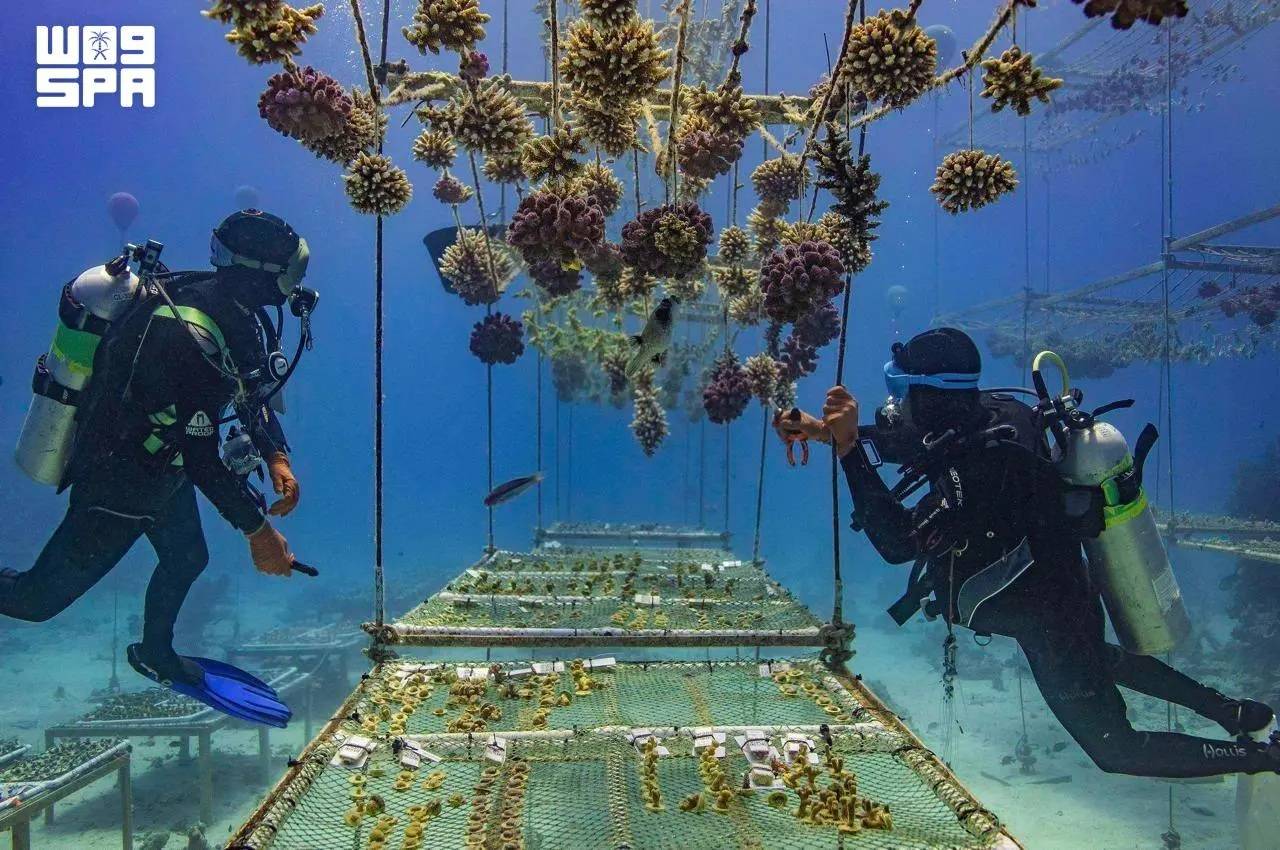
On Saudi Arabia’s Red Sea coast, the KAUST Coral Restoration Initiative (KCRI) land-based nursery and research campus is now growing corals at scale. It is designed to produce up to 360,000 corals a year, to outplant more than two million corals across 100 hectares of reef at Shushah Island by 2030, and to establish a resilient reef ecosystem by 2040.

This opening of the world’s largest coral restoration facility, announced at COP31 in Antalya, arrives at a moment of acute urgency for the world’s reefs. The fourth global coral bleaching event, confirmed by NOAA as the most severe in recorded history, affected more than 84% of the world’s reef area between 2023 and 2025.

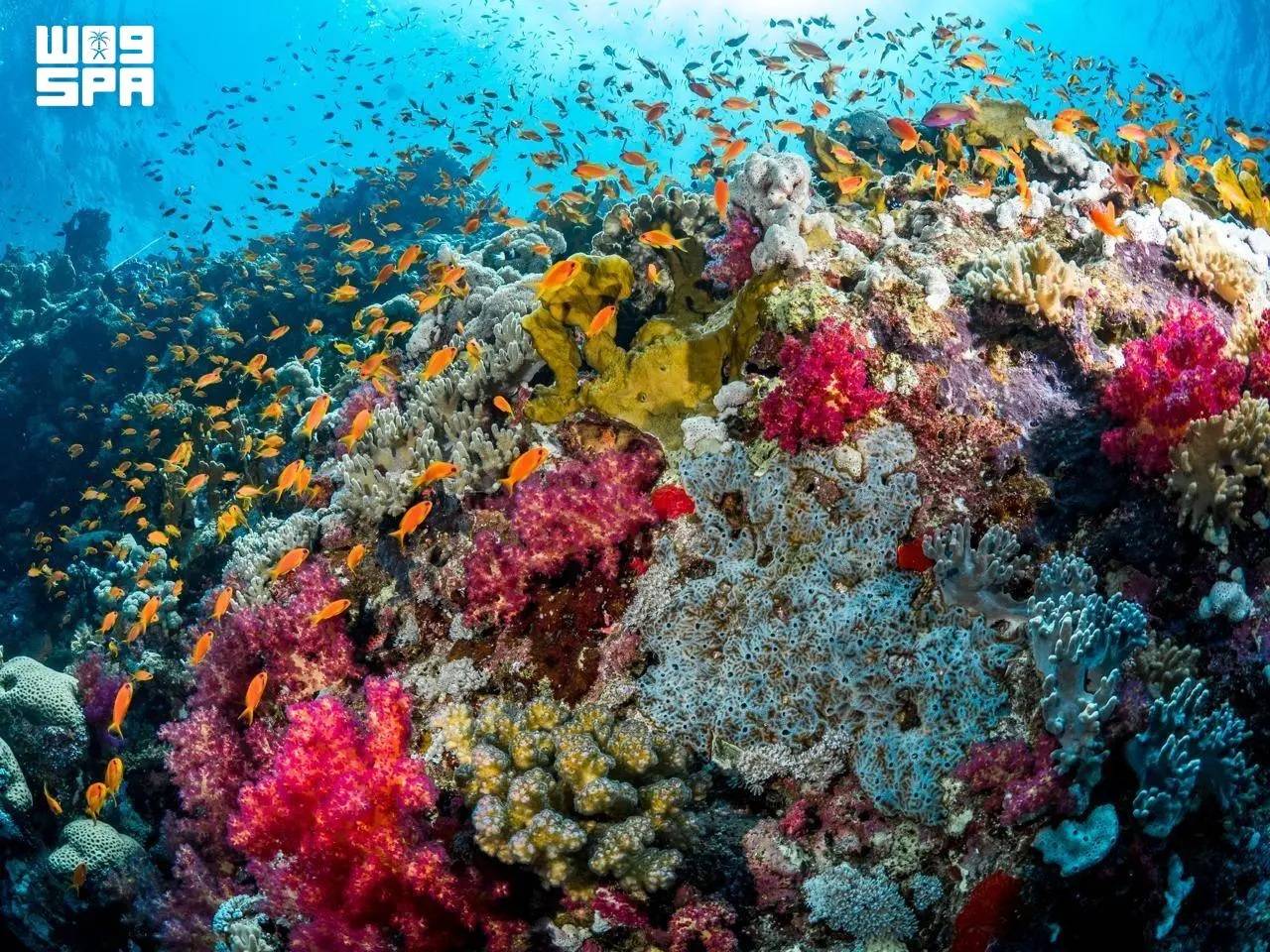
Coral reefs support around a quarter of all marine species, protect coastlines from storms and sustain the livelihoods of more than 500 million people. (SPA)

The Red Sea is the right place to start. Its corals live in some of the warmest, saltiest waters on Earth, and they hold lessons about resilience that reefs everywhere will need. KCRI combines the Red Sea’s unique corals with KAUST’s world-class marine science to learn how corals can be grown at scale and conditioned to withstand warmer water before they return to the reef.

The initiative also draws on the expertise of the Coral Research and Development Accelerator Platform (CORDAP), which works internationally to accelerate scientific and technological solutions for coral reef conservation and restoration.

KCRI brings four components together in a single restoration system, including a large-scale land-based coral nursery, sea-based nurseries, more than 50 research programs spanning coral probiotics, heat-resilient corals, robotics and AI-driven modelling and eCoral, an AI-driven digital twin of the reefscape that guides where and how every coral is planted and monitored.

Saudi scientists, divers and aquarists are playing an important role in KCRI’s restoration efforts, developing specialist expertise in coral cultivation, marine science and reef restoration. (SPA)

Saudi scientists, divers and aquarists are playing an important role in KCRI’s restoration efforts, developing specialist expertise in coral cultivation, marine science and reef restoration. Beyond its restoration activities, KCRI represents a long-term investment in Saudi Arabia’s marine science capabilities.

Coral reefs support around a quarter of all marine species, protect coastlines from storms and sustain the livelihoods of more than 500 million people. KCRI is designed to restore the Red Sea reefscape and offer a framework that coral restoration programs worldwide can adopt.

KAUST is also working with international partners on how coral diversity can be safeguarded for future generations.


Portugal Closes All Schools and Non-Essential Services Ahead of a Major Atlantic Storm

Heavy machinery clears the debris from a landslide along the Marocos road in Machico municipality, on the Portuguese island of Madeira, due to severe weather caused by the passage of Storm Charles, 11 November 2026. (EPA)
TT

Portugal Closes All Schools and Non-Essential Services Ahead of a Major Atlantic Storm

Heavy machinery clears the debris from a landslide along the Marocos road in Machico municipality, on the Portuguese island of Madeira, due to severe weather caused by the passage of Storm Charles, 11 November 2026. (EPA)

Portugal closed all schools and shuttered non-essential public services on Wednesday as a major Atlantic storm headed for the country's mainland.

Streets remained largely deserted ahead of the arrival of Storm Charles after the government told people to stay at home as heavy rain and rough seas were expected to batter the Portuguese coast, with wind gusts of up to 140 kph (85 mph).

It was the first time in living memory that Portugal’s roughly 8,000 schools had canceled classes nationwide over a storm forecast.

Buses without passengers drove through the country's capital, Lisbon, where some streets flooded due to clogged drains. A national supermarket chain closed its stores, while an international technology conference in Lisbon attended by around 70,000 people called off the day's events.

In January, the country's center-right government faced harsh criticism for its weak response when Storm Kristin hit central Portugal, felling thousands of trees and causing widespread property damage that is still being repaired.

The brunt of Storm Charles was expected to hit the Atlantic coast on Wednesday afternoon and evening, coming from the southwest after it had struck the Portuguese island of Madeira on Tuesday with 130 kph (81 mph) winds.