UN Satellite Analysis Tracks Ukraine Cultural Damage

So far in the war, none of the seven world heritage sites have been damaged Fabrice COFFRINI AFP
TT

UN Satellite Analysis Tracks Ukraine Cultural Damage

So far in the war, none of the seven world heritage sites have been damaged Fabrice COFFRINI AFP

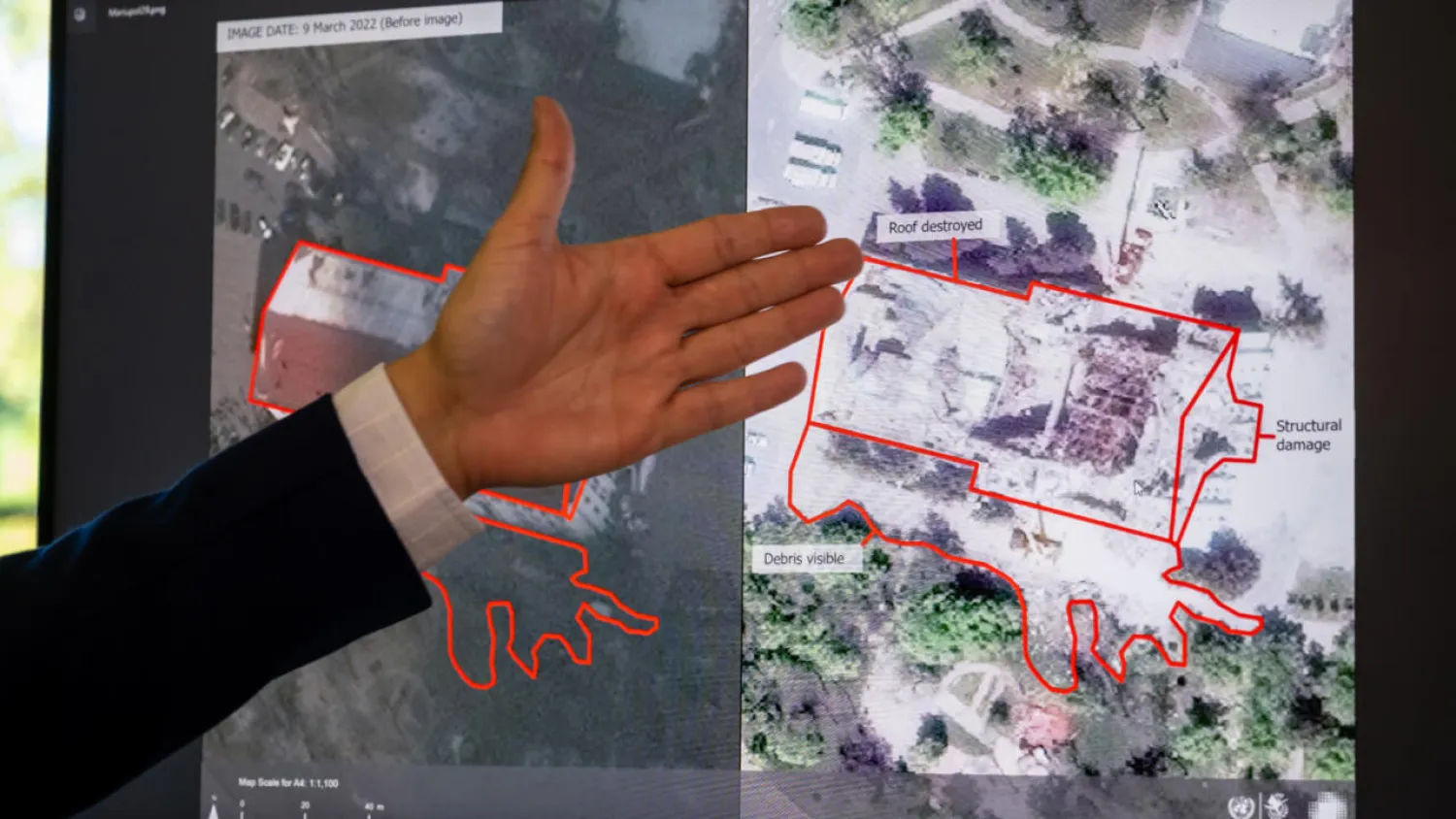
The United Nations is using before-and-after satellite imagery to monitor the cultural destruction inflicted by Russia's war in Ukraine, announcing Wednesday it will launch its tracking platform publicly within weeks.

The UN's culture agency UNESCO said it had verified damage to 207 cultural sites in Ukraine since the Russian invasion began on February 24, AFP said.

They include 88 religious sites, 15 museums, 76 buildings of historical and or artistic interest, 18 monuments and 10 libraries.

The worst-affected regions are in eastern Ukraine and around the capital, with Donetsk region having 59 verified damaged cultural sites, followed by Kharkiv with 51, Kyiv with 30 and Luhansk with 25.

"Our conclusion is it's bad, and it may continue to get even worse," UNESCO's cultural and emergencies director Krista Pikkat told reporters at a briefing in Geneva.

"Cultural heritage is very often collateral damage during wars but sometimes it's specifically targeted as it's the essence of the identity of countries."

- Hi-res imagery -
UNESCO -- the UN Educational, Scientific and Cultural Organization -- has joined forces with the UN Satellite Centre UNOSAT to produce the platform.

Based on reports from the field, UNESCO sends a list of potentially damaged sites to UNOSAT. It then asks for satellite images from commercial suppliers.

UNESCO pays for the very high resolution images bought from Maxar and Airbus, costing around 10 euros ($10) per square kilometre.

A small team of UNOSAT experts study the difference in before-and-after pictures.

"We conduct daily analysis on Ukraine using satellite images in order to have a better understanding of the situation on the ground," Manuel Fiol, the senior imagery analyst, told AFP.

The team matches up the images, analyses the degree of damage and is able to give a time window in which the damage took place.

Whether an image can be obtained depends on the weather, with the Ukraine work expected to be harder during the coming winter, as cloud cover sets in, while snow can blanket a site.

The affected locations are marked on a map and the platform has a searchable database. The platform does not attribute blame for the damage.

"We are not in the business of saying who did what and why," said Pikkat.

"Our primary responsibility is to make sure that we have information available about the sites and the situation they're in, to be ready for recovery," she told AFP.

"But we know that in previous circumstances this documentation has been used also by the country authorities if they want to look into allegations of war crimes."

- World heritage sites -
Pikkat said the platform was a pilot experiment to see how UNESCO could usefully compile such information, and in the longer term, potentially widen its scope beyond Ukraine and have it as a real-time, interactive tool for experts to work with.

So far in the war, none of the seven world heritage sites in Ukraine have been damaged.

Earlier this month, Ukrainian President Volodymyr Zelensky officially requested that UNESCO add the historic port city of Odessa to its World Heritage List in a bid to protect it from Russian air strikes.

UNESCO is working with the Odessa authorities to make sure that its main monuments and cultural sites are marked with a blue shield -- the emblem used during armed conflicts to denote cultural property that should be protected.

UNESCO is also working with museums and collections in Ukraine to try to combat the threat of looting -- a common problem in war.

The agency has been discussing with Kyiv the possibility of removing cultural heritage items from the country for the duration of the war, but Pikkat acknowledged that it was a "difficult call", with the first move being to evacuate collections to safer parts of Ukraine.


Saudi Reef: Coffee Production Reaches 7,400 Tons in 2026

The program also provides specialized training in organic farming, pest control, modern irrigation, and coffee cultivation - SPA
TT

Saudi Reef: Coffee Production Reaches 7,400 Tons in 2026

The program also provides specialized training in organic farming, pest control, modern irrigation, and coffee cultivation - SPA

The Sustainable Agricultural Rural Development Program (Saudi Reef) reported that Saudi coffee production rose from 800 tons annually in 2020 to approximately 7,400 tons in 2026, an increase of more than 825%, supporting Saudi Vision 2030 objectives.

Saudi Reef spokesperson Majed Al-Buraikan said the number of beneficiaries in the coffee sector exceeded 6,200 in 2026, up 207% from 2021, while total support surpassed SAR 185 million, SPA reported.

The funding supports small-scale producers, agricultural investment, and coffee value chains.

Al-Buraikan said approximately 4.4 million coffee seedlings are expected to raise production to more than 20,000 tons at full capacity.

The program also provides specialized training in organic farming, pest control, modern irrigation, and coffee cultivation.

Development efforts included producing 1,000 improved cuttings to enhance varieties and productivity, agricultural projects involving 8,000 coffee seedlings, and cultivation trials at 12 sites to expand cultivation and improve yields, quality, and sustainability.

The program’s 2026 targets included increasing annual production to 7,000 tons and raising self-sufficiency from 0.5% to 4.4%. Actual production exceeded the target, reaching 7,400 tons.


KAUST Unveils Landmark Coral Facility on Red Sea, Advancing Saudi Scientific Expertise and Marine Conservation

KCRI is designed to restore the Red Sea reefscape and offer a framework that coral restoration programs worldwide can adopt. (SPA)
TT

KAUST Unveils Landmark Coral Facility on Red Sea, Advancing Saudi Scientific Expertise and Marine Conservation

KCRI is designed to restore the Red Sea reefscape and offer a framework that coral restoration programs worldwide can adopt. (SPA)

The King Abdullah University of Science and Technology (KAUST) launched the KAUST Coral Restoration Initiative’s large-scale coral facility, restoring and advancing one of Saudi Arabia’s most precious natural assets, reported the Saudi Press Agency on Wednesday.

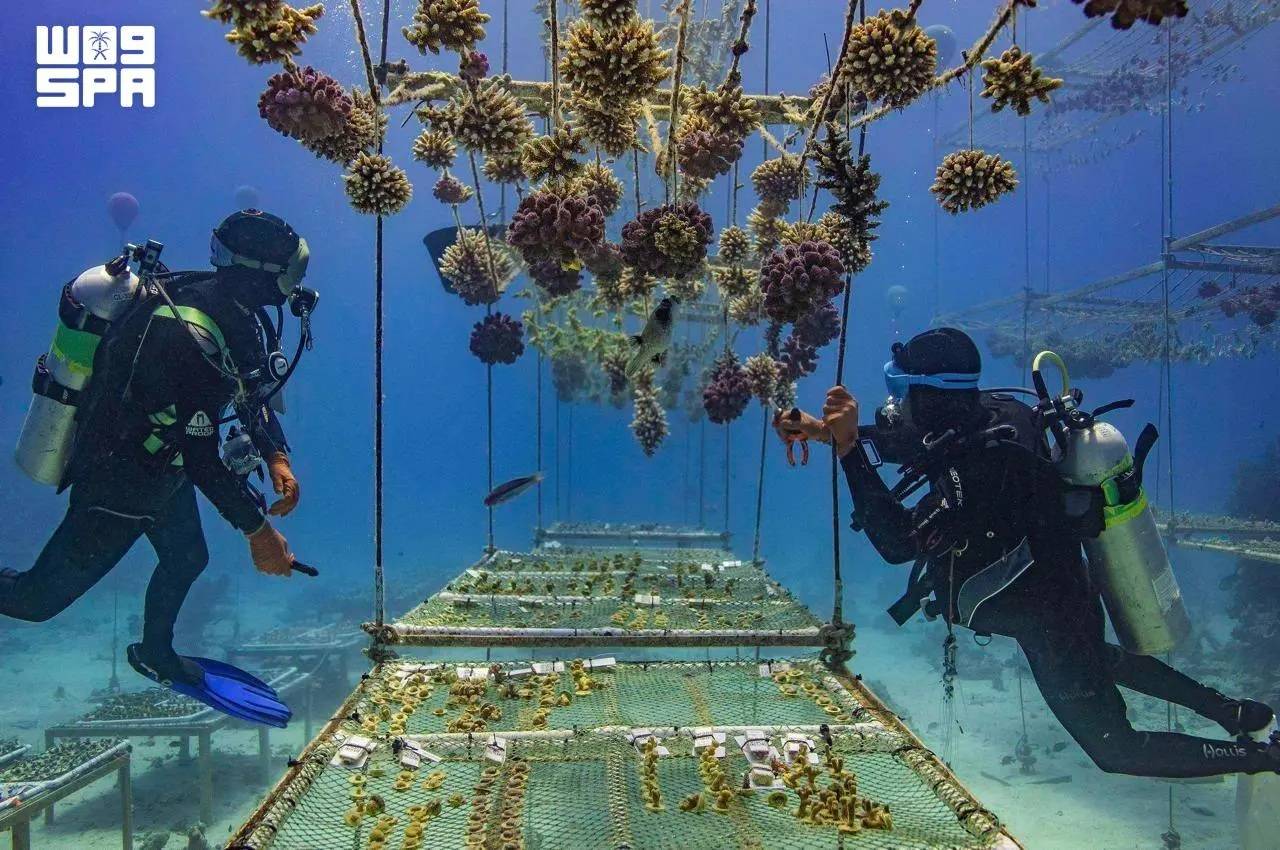
On Saudi Arabia’s Red Sea coast, the KAUST Coral Restoration Initiative (KCRI) land-based nursery and research campus is now growing corals at scale. It is designed to produce up to 360,000 corals a year, to outplant more than two million corals across 100 hectares of reef at Shushah Island by 2030, and to establish a resilient reef ecosystem by 2040.

This opening of the world’s largest coral restoration facility, announced at COP31 in Antalya, arrives at a moment of acute urgency for the world’s reefs. The fourth global coral bleaching event, confirmed by NOAA as the most severe in recorded history, affected more than 84% of the world’s reef area between 2023 and 2025.

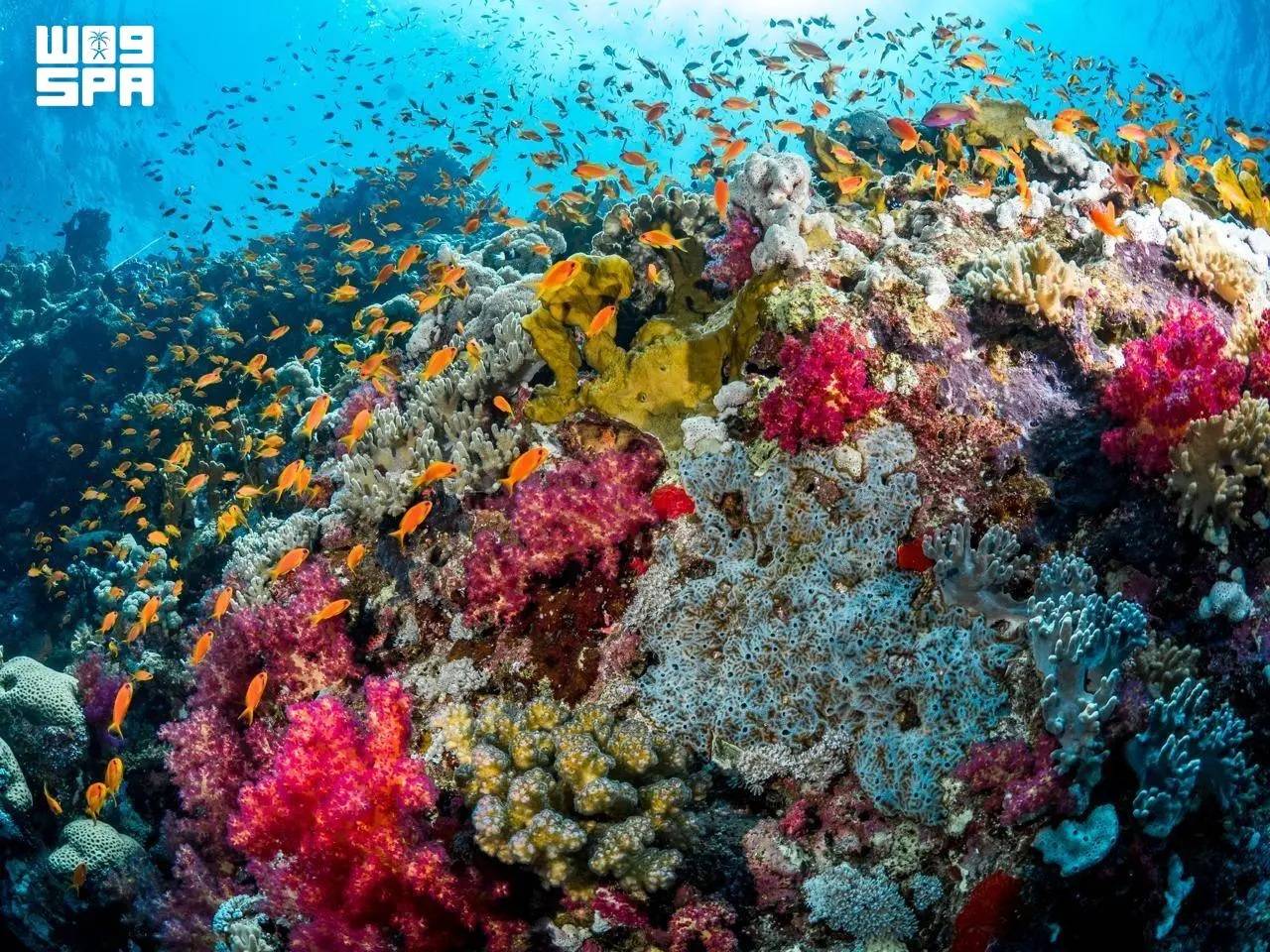
Coral reefs support around a quarter of all marine species, protect coastlines from storms and sustain the livelihoods of more than 500 million people. (SPA)

The Red Sea is the right place to start. Its corals live in some of the warmest, saltiest waters on Earth, and they hold lessons about resilience that reefs everywhere will need. KCRI combines the Red Sea’s unique corals with KAUST’s world-class marine science to learn how corals can be grown at scale and conditioned to withstand warmer water before they return to the reef.

The initiative also draws on the expertise of the Coral Research and Development Accelerator Platform (CORDAP), which works internationally to accelerate scientific and technological solutions for coral reef conservation and restoration.

KCRI brings four components together in a single restoration system, including a large-scale land-based coral nursery, sea-based nurseries, more than 50 research programs spanning coral probiotics, heat-resilient corals, robotics and AI-driven modelling and eCoral, an AI-driven digital twin of the reefscape that guides where and how every coral is planted and monitored.

Saudi scientists, divers and aquarists are playing an important role in KCRI’s restoration efforts, developing specialist expertise in coral cultivation, marine science and reef restoration. (SPA)

Saudi scientists, divers and aquarists are playing an important role in KCRI’s restoration efforts, developing specialist expertise in coral cultivation, marine science and reef restoration. Beyond its restoration activities, KCRI represents a long-term investment in Saudi Arabia’s marine science capabilities.

Coral reefs support around a quarter of all marine species, protect coastlines from storms and sustain the livelihoods of more than 500 million people. KCRI is designed to restore the Red Sea reefscape and offer a framework that coral restoration programs worldwide can adopt.

KAUST is also working with international partners on how coral diversity can be safeguarded for future generations.


Portugal Closes All Schools and Non-Essential Services Ahead of a Major Atlantic Storm

Heavy machinery clears the debris from a landslide along the Marocos road in Machico municipality, on the Portuguese island of Madeira, due to severe weather caused by the passage of Storm Charles, 11 November 2026. (EPA)
TT

Portugal Closes All Schools and Non-Essential Services Ahead of a Major Atlantic Storm

Heavy machinery clears the debris from a landslide along the Marocos road in Machico municipality, on the Portuguese island of Madeira, due to severe weather caused by the passage of Storm Charles, 11 November 2026. (EPA)

Portugal closed all schools and shuttered non-essential public services on Wednesday as a major Atlantic storm headed for the country's mainland.

Streets remained largely deserted ahead of the arrival of Storm Charles after the government told people to stay at home as heavy rain and rough seas were expected to batter the Portuguese coast, with wind gusts of up to 140 kph (85 mph).

It was the first time in living memory that Portugal’s roughly 8,000 schools had canceled classes nationwide over a storm forecast.

Buses without passengers drove through the country's capital, Lisbon, where some streets flooded due to clogged drains. A national supermarket chain closed its stores, while an international technology conference in Lisbon attended by around 70,000 people called off the day's events.

In January, the country's center-right government faced harsh criticism for its weak response when Storm Kristin hit central Portugal, felling thousands of trees and causing widespread property damage that is still being repaired.

The brunt of Storm Charles was expected to hit the Atlantic coast on Wednesday afternoon and evening, coming from the southwest after it had struck the Portuguese island of Madeira on Tuesday with 130 kph (81 mph) winds.